
Colobopsis corallina
- Nome científico
- Colobopsis corallina
- Tribo
- Camponotini
- Subfamília
- Formicinae
- Autor
- Roger, 1863
- Distribuição
- Encontrada em 1 países
Introdução
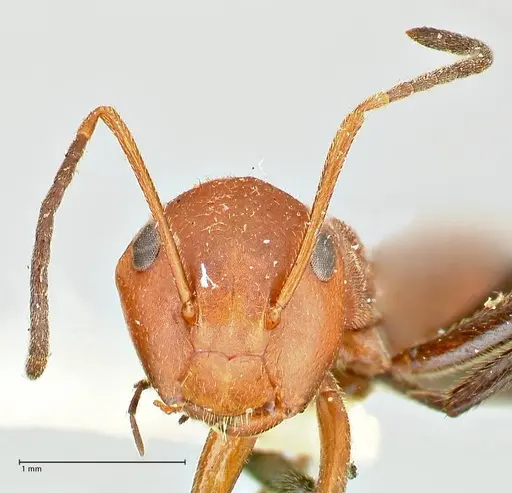
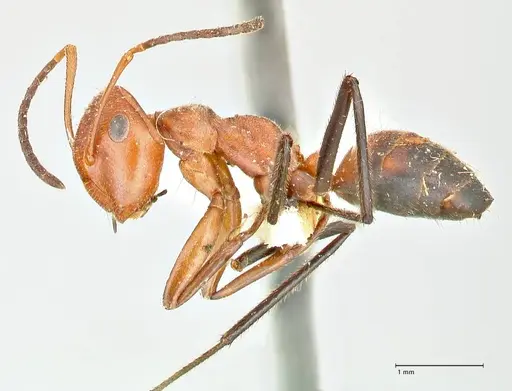
Colobopsis corallina is a small ant endemic to the Philippines, found on Luzon and Mindanao islands. Workers have a distinctive glossy forehead, sparse body hairs, and a blunt node. The neck attaches to the head well below the vertex, and the head sides are convex and tapering. Originally described by Roger in 1863 from Manila specimens, this species has a complex taxonomic history, having been moved through several subgenera before being placed in the genus Colobopsis in 2016. It was formally synonymized with Camponotus solenobius in 2018. This is one of the less-studied Philippine endemics with limited documented observations in scientific literature .
Quick Summary
- Difficulty: Unknown, limited keeper data
- Origin & Habitat: Philippines (Luzon and Mindanao islands), Indomalaya region. Found in tropical forest habitats, collected by beating vegetation or opportunistically [4][3].
- Colony Type: Unconfirmed colony structure.
- Size & Growth:
- Queen: Size data unavailable, estimated 6-8mm based on genus patterns
- Worker: Approximately 4-7mm, estimated based on genus patterns [1]
- Colony: Unknown, no colony size data available
- Growth: Unknown
- Development: Unknown, estimated 6-10 weeks based on related genus patterns at tropical temperatures (Development timeline is estimated from related genus patterns, specific data for this species does not exist)
- Antkeeping:
- Temperature: Keep at 24-28°C. As a Philippine endemic from tropical forests, they require warm conditions year-round. Use a heating cable on one side of the nest to create a gentle gradient if room temperature is below this range.
- Humidity: Keep moderately humid, around 60-80%. Mist the outworld occasionally and ensure the nest substrate stays slightly moist but not waterlogged.
- Diapause: No, as a tropical species from the Philippines, they do not require hibernation. Keep temperatures stable year-round.
- Nesting: In nature, likely nests in rotting wood, hollow twigs, or under bark in forest habitats. In captivity, a Y-tong (AAC) nest or plaster formicarium with narrow chambers works well. The chambers should be appropriately scaled to their worker size. Provide some damp substrate for nest humidity.
- Behavior: Colobopsis species are known for their unique caste system where major workers have enlarged, plug-shaped heads used to seal nest entrances, this behavior may be present in C. corallina but is not confirmed. Generally peaceful and not aggressive toward keepers. Escape risk is moderate, use standard barrier methods. Their small size means escape prevention should be taken seriously. Activity level is moderate, with workers foraging for honeydew and small prey.
- Common Issues: limited species-specific information makes care recommendations uncertain, tropical humidity requirements can lead to mold if ventilation is poor, wild-caught colonies may be stressed from collection and transport, small worker size requires fine mesh barriers to prevent escapes, lack of documented captive breeding means colonies may be difficult to establish
Species Background and Distribution
Colobopsis corallina is a rare Philippine endemic ant species originally described by Julius Roger in 1863 from Manila specimens collected on Luzon Island. The species was subsequently found on Mindanao Island as well, and was historically placed in the genus Camponotus under various subgenera before being transferred to Colobopsis in 2016. The species was considered obscure for decades, Wheeler noted in 1909 that it had 'not been seen since' the original description. It was formally synonymized with Colobopsis corallina in 2018, confirming its status as a distinct species within the Philippines. This ant is part of the Indomalaya bioregion and represents one of the less-studied Philippine endemics [1][2][3].
Identification and Morphology
Colobopsis corallina workers are small ants measuring approximately 4-7mm. Key identification features include: the neck attaches to the head well below the vertex, head sides are convex and tapering, the forehead has glossy integument, and body setae are sparse on the mesosoma. The propodeal angle is rounded, the propodeal dorsum is mostly straight, and the node is blunt. Unlike some Colobopsis species, this species lacks setae on the cheeks and under the head. These morphological features help distinguish it from related species in the Philippines [1].
Temperature and Tropical Care
As a Philippine endemic from tropical forest habitats, Colobopsis corallina requires warm and humid conditions year-round. Keep the nest area at 24-28°C, which mimics their natural tropical environment. Unlike temperate species, they do not enter diapause or hibernation, maintaining stable temperatures is important for colony health. A heating cable placed on top of the nest can help maintain warmth if your room temperature runs cool. Avoid temperature drops below 22°C, as this could stress the colony. The outworld can be slightly cooler than the nest area, creating a natural gradient that ants can choose between.
Nesting and Habitat Setup
In the wild, Colobopsis species typically nest in rotting wood, hollow twigs, or under bark, this is likely true for C. corallina as well. For captive care, a Y-tong (AAC) nest or plaster formicarium with appropriately sized chambers works well. The chambers should be scaled to worker size. Keep the nest substrate consistently moist but not waterlogged to maintain 60-80% humidity. Provide a water tube in the outworld for drinking water. Good ventilation is important to prevent mold while maintaining humidity. Naturalistic setups with cork or wood pieces can mimic their natural nesting preferences.
Feeding and Diet
Like other Formicinae ants, Colobopsis corallina likely has an omnivorous diet. Feed sugar water or honey water as a constant energy source. For protein, offer small insects like fruit flies, small mealworms, or cricket pieces. In the wild, they probably tend aphids or scale insects for honeydew and hunt small arthropods. Feed protein 2-3 times per week, removing uneaten prey after 24 hours. Fresh water should always be available. Given the limited specific data on this species, observe your colony's preferences and adjust feeding accordingly.
Colony Establishment and Growth
Colony structure for this species has not been documented in scientific literature. Based on related Camponotus species, they may be monogyne (single queen) colonies. The founding queen likely seals herself in a chamber and raises the first brood alone, this is claustral founding where she lives off stored fat reserves. First workers will be smaller than mature workers. Growth rate is unknown but likely moderate. Colonies probably remain small to moderate in size given the limited documented observations of this species in the wild.
Frequently Asked Questions
How long does it take for Colobopsis corallina to produce first workers?
The exact timeline is unknown for this species, but based on related Camponotus and Colobopsis species, expect 6-10 weeks from egg to first worker at optimal tropical temperatures (24-28°C). The queen seals herself in and raises the first brood alone using stored fat reserves.
What temperature do Colobopsis corallina ants need?
Keep them at 24-28°C year-round. As a Philippine tropical endemic, they do not tolerate cool temperatures and do not require hibernation. Maintain stable warmth for colony health.
Is Colobopsis corallina good for beginners?
This species is not recommended for beginners due to limited species-specific care information. The lack of documented captive breeding and unknown colony requirements make it challenging. Experienced antkeepers interested in rare Philippine species may have better success.
What do Colobopsis corallina ants eat?
They likely accept an omnivorous diet similar to other Formicinae: sugar water or honey for energy, and small insects like fruit flies or mealworms for protein. They probably also forage for honeydew in the wild.
How big do Colobopsis corallina colonies get?
Colony size is unknown, no scientific data exists on maximum colony size. Based on related species, they likely reach moderate sizes of several hundred workers rather than large supercolonies.
Can I keep multiple Colobopsis corallina queens together?
This has not been documented. Based on related Camponotus patterns, they likely form single-queen colonies. Combining unrelated queens is not recommended without evidence they can coexist.
What type of nest should I use for Colobopsis corallina?
A Y-tong (AAC) nest or plaster formicarium with appropriately sized chambers works well. Keep the nest slightly humid and ensure chambers are scaled to their worker size. Good ventilation is important.
Where is Colobopsis corallina found?
This species is endemic to the Philippines, specifically found on Luzon and Mindanao islands. It is part of the Indomalaya bioregion and considered a rare Philippine endemic [1][2][3].
Why is there so little information about this ant?
Colobopsis corallina was originally described in 1863 but was considered 'not seen since' for decades. It was only confirmed as a valid species and transferred to the genus Colobopsis in recent years. The species remains poorly studied with limited field observations [2][3].
Report an Issue
The current care sheet is based fully on literature. See inconsistencies, or something that's incorrect? Please , it will be resolved after review from an admin. Contributing to the blogs tab also helps providing information, to make us be able to further improve the caresheets. Thank you for your support!
References

Este guia de cuidados está sob a licença CC BY-SA 4.0 .
Posts da comunidade
FOCOL2499
Ver no AntWeb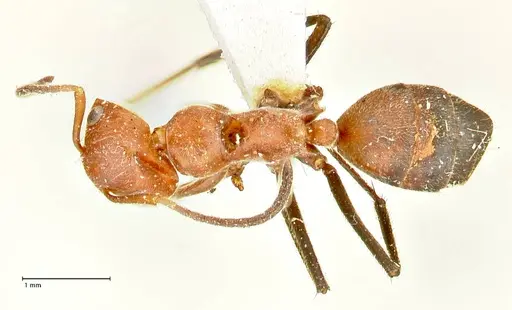
Literatura
Carregando mapa de distribuição...Carregando produtos...