
Chelaner bifidus
- Nome científico
- Chelaner bifidus
- Tribo
- Solenopsidini
- Subfamília
- Myrmicinae
- Autor
- Heterick, 2001
- Distribuição
- Encontrada em 1 países
Introdução
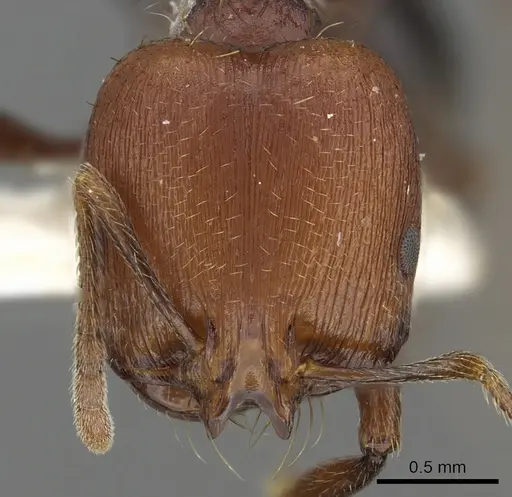
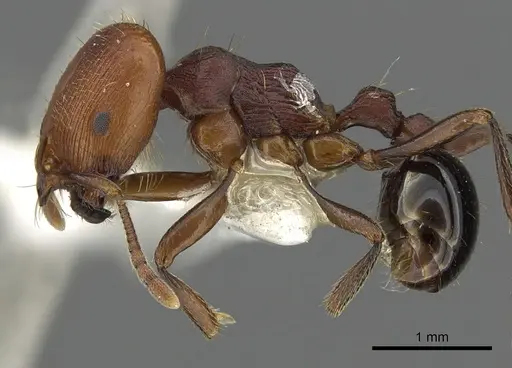
Chelaner bifidus is a small Australian ant belonging to the Myrmicinae subfamily. Workers have a distinctive appearance with a uniform russet to reddish body, sometimes with a black gaster. The species is remarkable for having only two mandibular teeth - the only known Chelaner species with this trait - with the bottom tooth larger than the top, both broad and flattened with a scissor-like edge. The clypeus features prominent projections that give this ant a unique facial profile. Originally described as Monomorium bifidum in 2001, it was reclassified to Chelaner in 2019 based on genetic analysis . The species is restricted to northern Australia, particularly the Northern Territory and Western Australia .
Quick Summary
- Difficulty: Medium
- Origin & Habitat: Northern Australia, specifically the Northern Territory and Western Australia. Found in Eucalyptus forest habitats, foraging on the ground [3]. The species is restricted to north-western Australia [2].
- Colony Type: Colony structure is not well documented. Workers are monomorphic, meaning all workers are the same size and form.
- Size & Growth:
- Queen: Size data unavailable, queen measurements not described in available literature
- Worker: Approximately 3.4-3.9mm total length, inferred from worker measurements [3]
- Colony: Unknown, no colony size data available
- Growth: Unknown, no development data available
- Development: Unknown, no direct development data exists for this species (No development data available. Related Monomorium species typically develop from egg to worker in 6-8 weeks at warm temperatures.)
- Antkeeping:
- Temperature: Aim for 24-28°C, typical for Australian tropical/subtropical species. Room temperature (22-25°C) is likely suitable.
- Humidity: Moderate humidity preferred. Keep nest substrate slightly moist but not waterlogged. Australian Eucalyptus forest species typically tolerate drier conditions than rainforest ants.
- Diapause: Likely a minor winter slowdown given northern Australian distribution, but full hibernation is probably not required. Reduce feeding and slightly lower temperature during winter months may be beneficial.
- Nesting: Natural nesting occurs in soil under stones or in rotting wood in Eucalyptus forest. In captivity, a test tube setup works well for founding colonies. For established colonies, a Y-tong or plaster nest with some moisture provision will suit their needs.
- Behavior: This is a relatively calm species. Workers forage on the ground in nature. Their unique mandibles with two broad, scissor-like teeth suggest they may be adapted for processing plant material (possibly grass seeds), though they likely also accept standard ant foods. Escape risk is moderate, these are small ants but not among the tiniest, so standard escape prevention measures should suffice. As a member of the Solenopsidini tribe, they possess a sting mechanism, though the potency is not well documented.
- Common Issues: limited biological data makes precise care recommendations uncertain, growth rate is unknown so keepers may not know if their colony is progressing normally, diet preferences are not well documented, may be specialized graminivores, wild-caught colonies may have parasites that affect survival in captivity, limited availability in the antkeeping hobby means few keeper experiences to draw from
Housing and Nest Setup
Chelaner bifidus can be started in a simple test tube setup for the founding queen. Fill a test tube about one-third with water, plug with a cotton ball, then add the queen. The cotton keeps water contained while allowing humidity to reach the colony. Once workers establish, you can transition to a small formicarium. A Y-tong or plaster nest works well for this species. Keep the nest slightly moist but not wet. A small outworld for foraging allows you to observe workers hunting and collecting food. Because they are small ants, ensure any connections between nest and outworld have tight barriers to prevent escapes. [3]
Feeding and Diet
The unique mandible structure of Chelaner bifidus, two broad, flattened teeth, suggests this species may be adapted for a graminivorous (grass-eating) diet [3]. In the wild, they have been found foraging on the ground in Eucalyptus forest. In captivity, offer a varied diet to determine preferences: small protein sources like fruit flies, pinhead crickets, or mealworm pieces, sugar sources like honey water or sugar water, and experiment with grass seeds or small grains. Start with protein offerings 2-3 times per week and always have sugar water available. Remove uneaten food after 24-48 hours to prevent mold.
Temperature and Seasonal Care
As a northern Australian species, Chelaner bifidus prefers warm conditions. Aim for 24-28°C during the active growing season. Room temperature (22-25°C) in most homes should be suitable. You can provide a gentle temperature gradient by placing a heating cable on one side of the nest, this allows ants to regulate their own temperature by moving between warmer and cooler areas. During winter, a slight reduction with reduced feeding mimics their natural seasonal cycle. Full hibernation is likely not required given their tropical distribution, but a cool period may help trigger natural breeding behaviors. [3]
Behavior and Colony Dynamics
This is a docile species that builds moderate-sized colonies. Workers are monomorphic, meaning all workers look the same size, there are no major or minor worker castes. The distinctive two-toothed mandibles give them a unique appearance among Australian ants. Workers forage on the ground and likely establish well-defined foraging trails. The colony will grow gradually over many months, patience is key as this is not a fast-growing species. [3]
Frequently Asked Questions
How long does it take for Chelaner bifidus to produce first workers?
The exact timeline is unknown. Based on related Monomorium species patterns, expect several weeks from egg to first worker at optimal temperature (24-28°C). The founding period (queen sealed in, living off fat reserves) typically lasts several weeks before eggs appear.
What do Chelaner bifidus ants eat?
They likely have a graminivorous (grass-eating) tendency based on their unique mandible structure. In captivity, offer small protein sources like fruit flies, tiny crickets, or mealworm pieces, along with sugar water or honey. Experiment with small seeds or grains to see if they accept plant matter.
Are Chelaner bifidus good for beginners?
This species is rated as Medium difficulty. While not the most challenging ant to keep, there is limited biological data available, which means keepers may need to experiment to find optimal care conditions. Their calm temperament makes them manageable, but their specific dietary needs are not well understood.
Do Chelaner bifidus need hibernation?
Full hibernation is likely not required given their northern Australian (tropical/subtropical) distribution. A slight winter cooldown with reduced feeding is probably sufficient to mimic natural seasonal changes.
How big do Chelaner bifidus colonies get?
Colony size is not well documented in scientific literature. Based on related Monomorium species, colonies likely reach several hundred workers at maximum.
Can I keep multiple Chelaner bifidus queens together?
Colony type (monogyne vs polygyne) is not documented for this species. Combining unrelated queens is not recommended as it has not been studied and could result in fighting.
What makes Chelaner bifidus different from other Australian ants?
They are the only known Chelaner species with exactly two mandibular teeth, giving them a unique scissor-like bite. Their clypeus also has prominent projections not seen in most related species.
Report an Issue
The current care sheet is based fully on literature. See inconsistencies, or something that's incorrect? Please , it will be resolved after review from an admin. Contributing to the blogs tab also helps providing information, to make us be able to further improve the caresheets. Thank you for your support!
References

Este guia de cuidados está sob a licença CC BY-SA 4.0 .
Posts da comunidade
CASENT0902292
Ver no AntWeb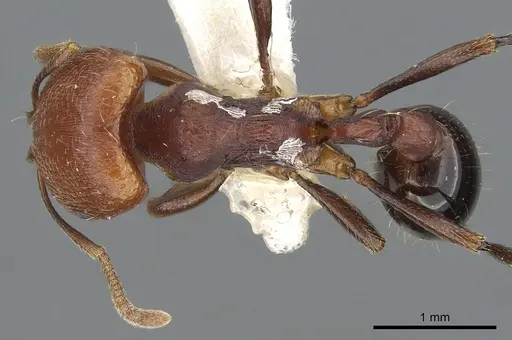
Literatura
Carregando mapa de distribuição...Carregando produtos...