
Centromyrmex longiventris
- Nome científico
- Centromyrmex longiventris
- Tribo
- Ponerini
- Subfamília
- Ponerinae
- Autor
- Santschi, 1919
- Distribuição
- Encontrada em 0 países
Introdução
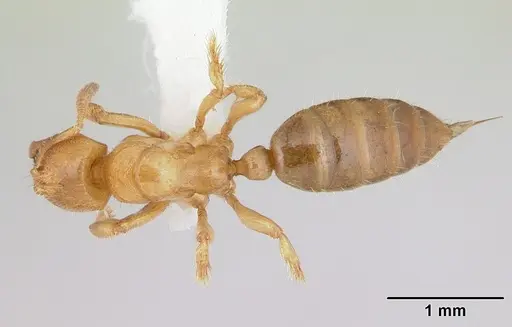
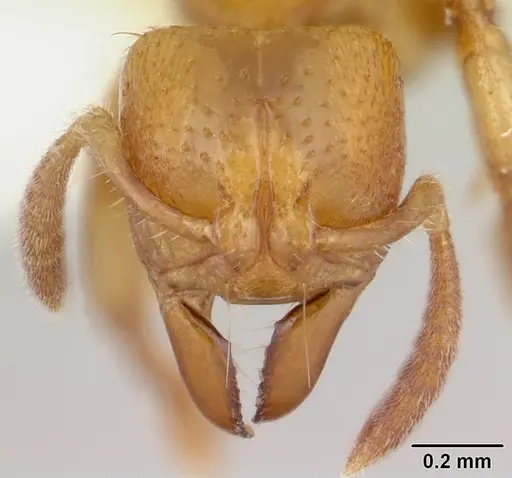
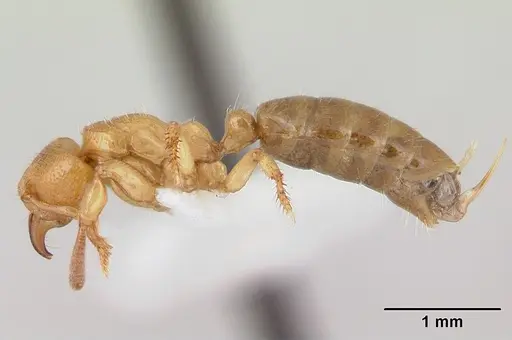
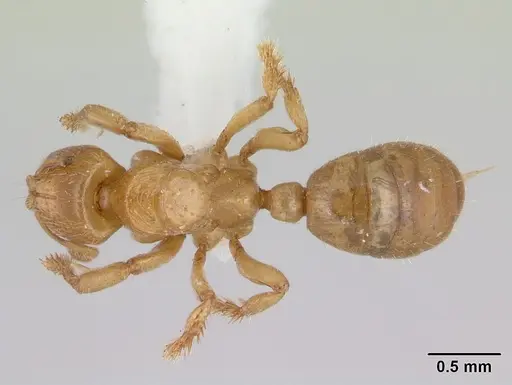
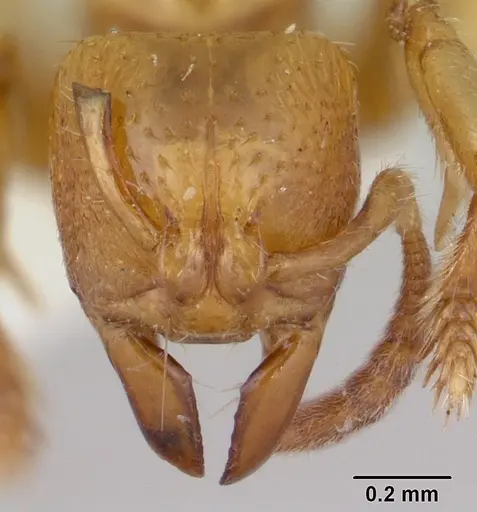
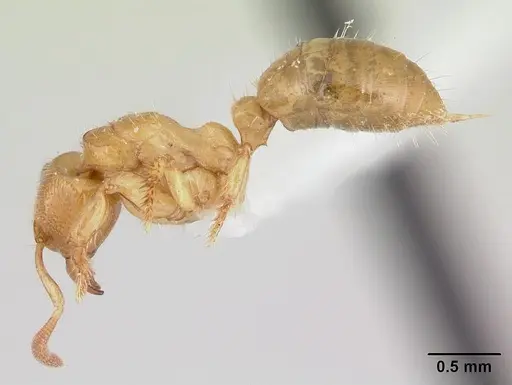
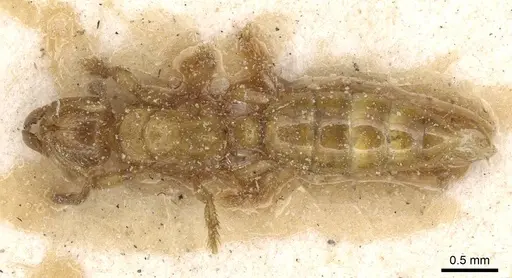
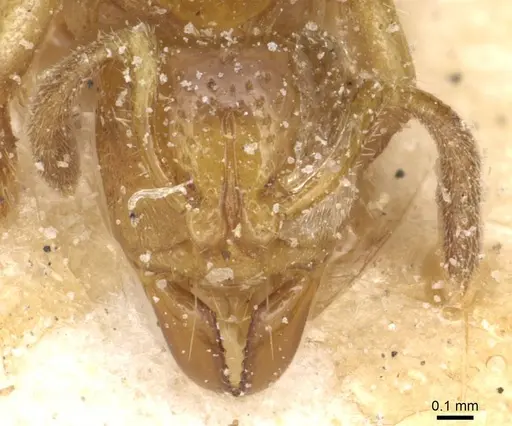
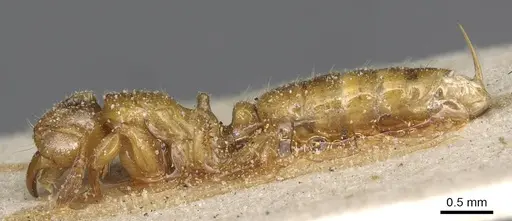
Centromyrmex longiventris is a tiny yellow to light brownish-yellow ponerine ant measuring 3.5-3.6mm in total length . This species belongs to the feae species group and is closely related to C. ereptor and C. angolensis, from which it can be distinguished by having two spiniform setae at the anterior apex of the metatibia instead of one . The name 'longiventris' is misleading - the gaster is not proportionally longer than in other members of the group, but appeared distended in the type specimen due to preservation issues . This is one of the rarest ant species in the world, with only four specimens ever collected from Cameroon and Gabon . The biology is completely unknown - no queen, male, or colony observations have ever been documented [AntWiki]. Centromyrmex are specialized subterranean predators, likely hunting termites and other small invertebrates in rotting wood or soil chambers.
Quick Summary
- Difficulty: Expert
- Origin & Habitat: Central African forest zones, collected in Cameroon (Victoria, Dja Reserve) and Gabon (Plateau d'Ipassa) [1]. Likely inhabits rotting wood or soil in humid tropical forest environments.
- Colony Type: Unknown, only worker specimens have been collected. Colony structure is unconfirmed.
- Size & Growth:
- Antkeeping:
- Temperature: Keep warm, aim for 24-28°C based on Central African origin. Use a heating cable on one side of the nest to create a gentle gradient.
- Humidity: High humidity required, keep nest substrate consistently moist but not waterlogged. These are forest-floor species requiring damp conditions.
- Diapause: Unknown, likely no true diapause given tropical origin. Some reduction in activity during cooler months may occur.
- Nesting: Use a naturalistic setup with moist substrate (soil/peat mix) or a Y-tong/plaster nest with tight chambers scaled to their tiny size. Provide shallow foraging areas.
- Behavior: Behavior is unknown for this specific species. Based on genus patterns, they are likely predaceous on termites and other small invertebrates, with workers hunting individually underground. Escape risk is low given their small size and likely cryptic lifestyle, but use standard barriers anyway. Ponerine ants can deliver a sting.
- Common Issues: completely unknown biology means all care is speculative, start with conservative parameters and adjust based on colony response, no established captive breeding, wild-caught colonies may be the only option, and collecting is extremely difficult given their rarity, small size makes them vulnerable to drying out, maintain consistent humidity, no confirmed food acceptance, start with small live prey (termites, springtails, fruit flies) and sugar water, specialized substrate needs, likely requires rotting wood or very moist soil chambers
Why This Species Is So Challenging
Centromyrmex longiventris is arguably one of the most poorly known ants in the world. Only four worker specimens have ever been collected, all from museum collections [1]. No queen, male, nuptial flight, colony structure, or behavioral observations exist in scientific literature. This means every piece of care advice is either a guess based on genus-level patterns or inference from related species. For this reason, this species is recommended only for expert antkeepers who understand that they are essentially pioneering captive husbandry for a species with zero established protocols.
What We Know About the Genus
While C. longiventris specifically is a mystery, the genus Centromyrmex provides some clues. These ants are sometimes called 'spiny-legged ants' due to their distinctive leg spines [1]. They are specialized predators, likely hunting termites and other small soil invertebrates. The genus is entirely subterranean or cryptic, living in rotting wood chambers or soil. Workers are not commonly observed foraging on the surface. Ponerine ants in this genus can sting. The yellow coloration is typical of subterranean ants, pale because they rarely encounter light. Expect colonies to be reclusive, spending most of their time in humid nest chambers.
Housing and Nest Setup
Given their likely natural habitat in rotting wood within humid African forests, a naturalistic setup works best. Use a moist soil/peat mixture as substrate, or a Y-tong/plaster nest with very small chambers scaled to their tiny 3.5mm worker size. Provide a shallow outworld for feeding. The nest should have excellent humidity retention, these ants will likely desiccate quickly in dry conditions. Use a water reservoir or moisture gradient to maintain damp substrate. Because they are likely cryptic and subterranean, provide deep substrate layers with multiple chambers. Keep the setup in a dim location away from bright lighting.
Feeding and Diet
Based on genus patterns, Centromyrmex are predators. Offer small live prey: springtails, fruit flies, tiny crickets, and ideally termites. Start with very small prey items proportional to their tiny workers. Sugar sources may be accepted, offer occasional honey or sugar water, but do not rely on sugars as a primary food. Feed every 2-3 days, removing uneaten prey to prevent mold. Because so little is known, experiment with different small prey types and observe what gets consumed.
Temperature and Seasonal Care
As a Central African species, keep them warm year-round. Aim for 24-28°C with minimal temperature fluctuation. A heating cable on one side of the nest creates a gradient allowing the ants to choose their preferred temperature. Room temperature in most homes may be too cool, monitor colony activity as an indicator. If workers are sluggish or cluster near the heat source, increase temperature slightly. No diapause is expected given their tropical origin, but some reduction in activity during cooler months is possible. Maintain warm, stable conditions throughout the year.
Frequently Asked Questions
How hard is Centromyrmex longiventris to keep?
This is an expert-level species. Literally nothing is known about its biology, no queen, no male, no colony observations, no captive breeding records exist. All care is speculative based on genus patterns. Only attempt if you have extensive experience with difficult species and understand you are pioneering captive husbandry for a species with zero established protocols.
Where does Centromyrmex longiventris live?
Only known from specimens collected in Cameroon and Gabon in Central Africa [1]. Likely inhabits rotting wood or soil in humid tropical forest environments.
How big do Centromyrmex longiventris colonies get?
Unknown. Only four worker specimens have ever been collected [1]. Colony size data does not exist for this species.
What do Centromyrmex longiventris eat?
Based on genus patterns, they are predaceous on termites and small soil invertebrates. Feed small live prey like springtails, fruit flies, and tiny crickets. Sugar sources may be accepted but should not be relied upon.
What temperature do Centromyrmex longiventris need?
Keep warm at 24-28°C based on their Central African origin. Use a heating cable to maintain warm, stable conditions. Room temperature alone may be too cool.
How long does development take from egg to worker?
Unknown, no development data exists for this species.
Can beginners keep Centromyrmex longiventris?
No. This species is not suitable for beginners. The complete absence of biological data means every aspect of care is speculative. Even experienced antkeepers should approach this species with caution.
What is the best nest type for Centromyrmex longiventris?
Use a naturalistic setup with moist substrate or a Y-tong/plaster nest with small chambers scaled to their tiny size. Excellent humidity retention is critical.
Is Centromyrmex longiventris aggressive?
Aggression level is unknown but Ponerine ants can defend themselves. Given their tiny size and cryptic lifestyle, they are likely to flee rather than engage when disturbed. Standard escape prevention is recommended.
Do they need a hibernation period?
No true diapause is expected given their tropical African origin. Maintain warm conditions year-round. Some reduction in activity during cooler months may occur naturally.
Where can I get a Centromyrmex longiventris colony?
Extremely unlikely to find commercially available. This is one of the rarest ant species known, with only four specimens ever collected. Any colony would likely need to be wild-caught in Cameroon or Gabon, which presents significant practical and legal challenges.
Report an Issue
The current care sheet is based fully on literature. See inconsistencies, or something that's incorrect? Please , it will be resolved after review from an admin. Contributing to the blogs tab also helps providing information, to make us be able to further improve the caresheets. Thank you for your support!
References

Este guia de cuidados está sob a licença CC BY-SA 4.0 .
Posts da comunidade
Literatura
Carregando mapa de distribuição...Carregando produtos...