
Cataulacus pullus
- Nome científico
- Cataulacus pullus
- Tribo
- Crematogastrini
- Subfamília
- Myrmicinae
- Autor
- Santschi, 1910
- Distribuição
- Encontrada em 4 países
Introdução
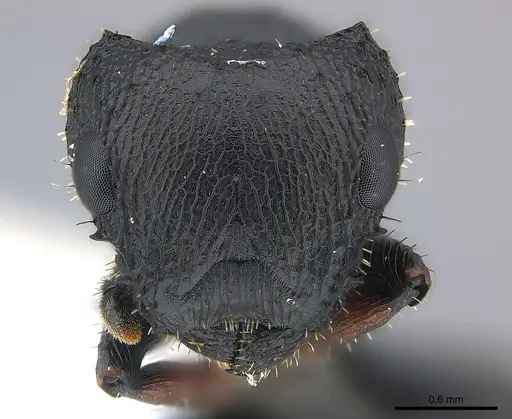
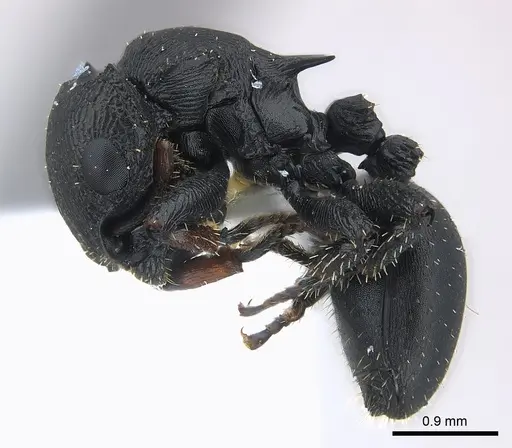
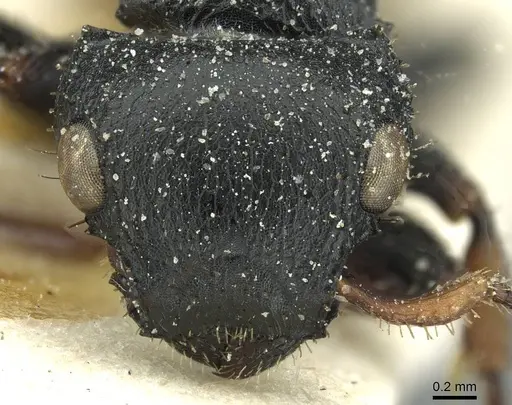
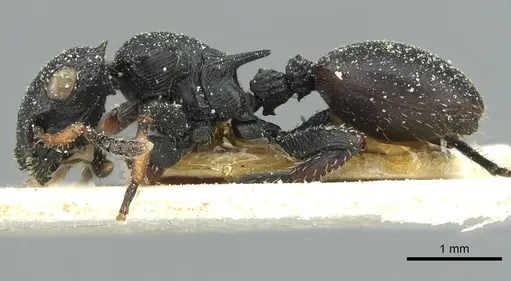
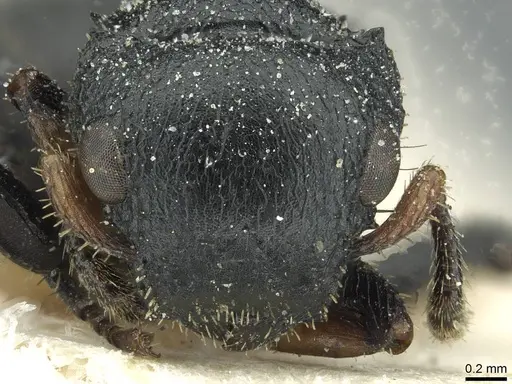
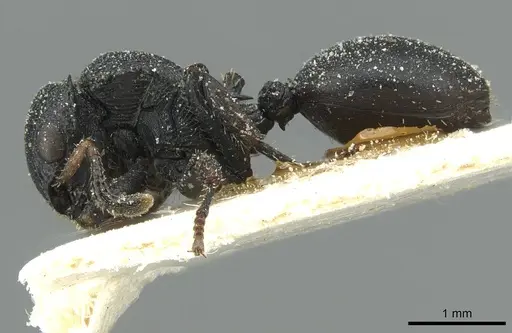
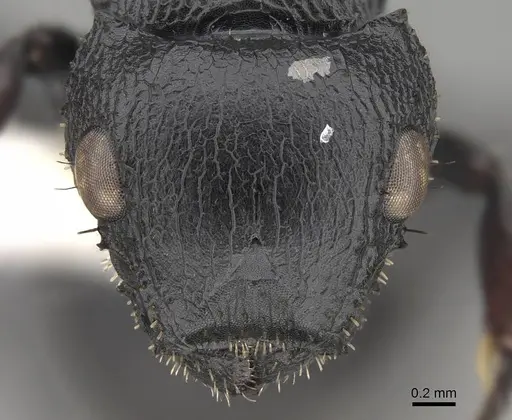
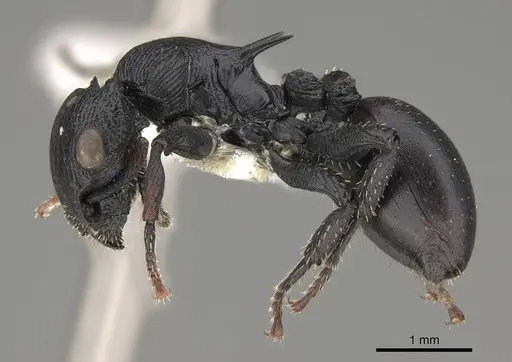
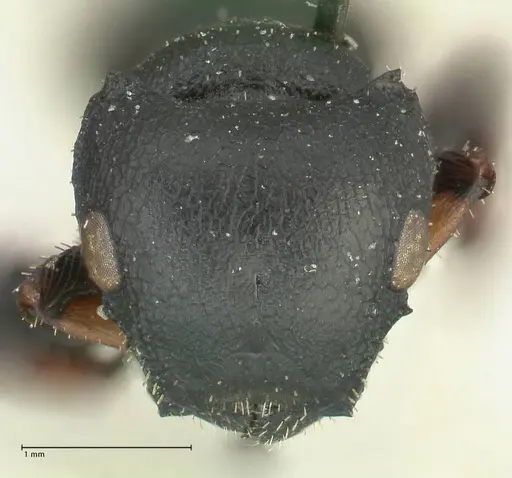
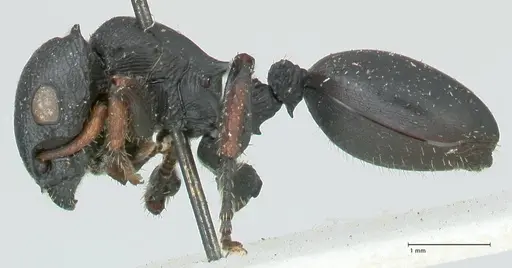
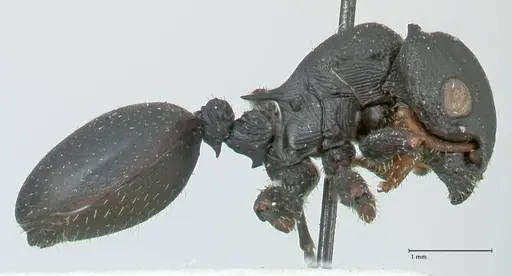
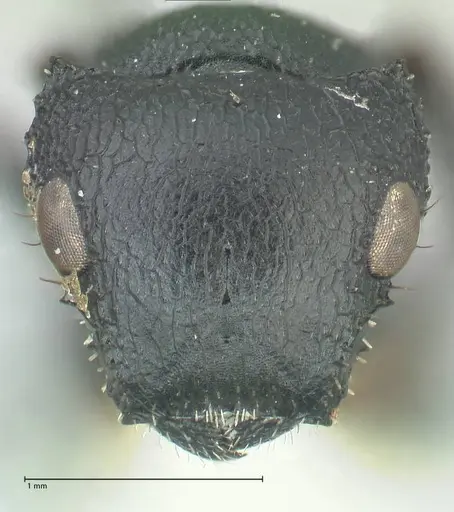
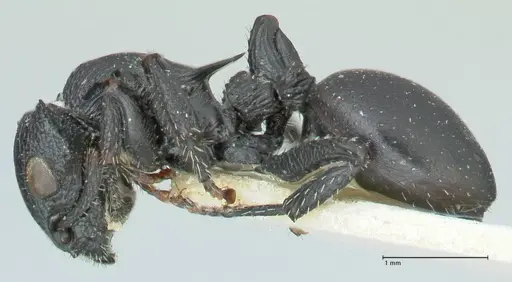
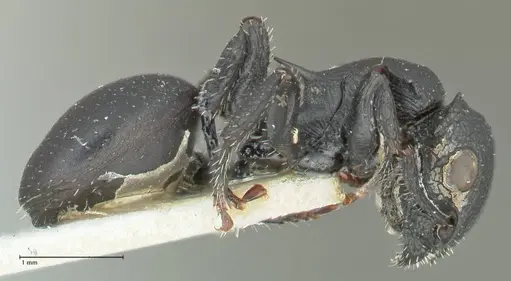
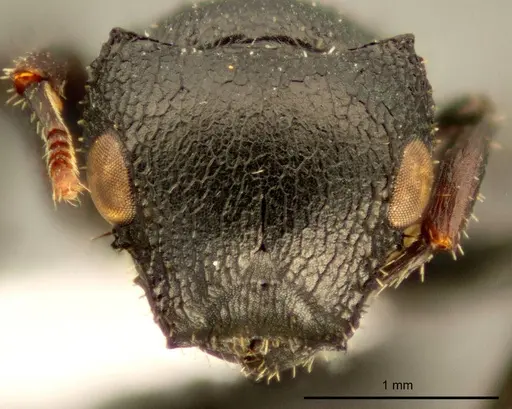
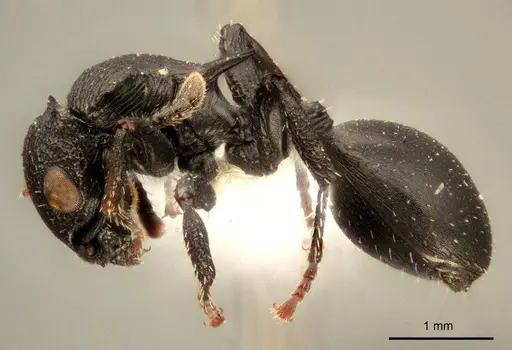
Cataulacus pullus is a small, dark ant species native to Central Africa. Workers measure approximately 5mm in length, with some specimens reaching 6.5mm when the head is extended. The body is distinctive black with red-brown antennae scapes and tibiae, featuring a unique leather-like matte texture created by fine ridges running across the body . This ant was originally described from the Congo region and has more recently been recorded in Rwanda's Akagera National Park, indicating a broader distribution than initially known . The genus Cataulacus is known for its arboreal habits and distinctive flattened body shape. These ants are relatively rare in antkeeping collections due to their limited distribution and the challenges of establishing colonies from wild-caught queens.
Quick Summary
- Difficulty: Medium
- Origin & Habitat: Central Africa, Democratic Republic of Congo (provinces BC, EQ, TO) and Rwanda (Akagera National Park). Found at elevations around 600m in tropical habitats [1][3][4].
- Colony Type: Colony structure is unconfirmed. Based on typical Cataulacus genus patterns, likely single-queen colonies.
- Size & Growth:
- Queen: Size data unavailable, no documented queen measurements
- Worker: 5mm, with some specimens reaching 6.5mm with extended head [1][2]
- Colony: Unknown, no colony size data available
- Growth: Unknown, no development data available
- Development: Estimated 6-8 weeks based on typical Cataulacus genus patterns (No direct development data exists for this species.)
- Antkeeping:
- Temperature: Keep at 24-28°C, these are tropical ants requiring warm conditions. A heating cable on one side of the nest creates a suitable gradient.
- Humidity: Moderate to high humidity. As arboreal-nesting ants, they prefer somewhat humid conditions but need good ventilation to prevent mold.
- Diapause: No, being a tropical species, they do not require hibernation. Maintain warm temperatures year-round.
- Nesting: Based on typical Cataulacus behavior, they likely nest in dead wood, tree hollows, or under bark. In captivity, a Y-tong (AAC) nest or plaster formicarium with wood elements works well. They prefer tight chambers and narrow passages.
- Behavior: These ants are relatively calm and not particularly aggressive. Workers are active foragers that likely search for honeydew and small prey. Their small size means escape prevention is important, they can squeeze through small gaps. They are arboreal by nature, so they may prefer climbing surfaces and higher areas within the nest. Cataulacus ants have a modified stinger used to smear venom onto enemies rather than piercing flesh.
- Common Issues: tropical species requires consistent warmth, cold drafts can be fatal, small size means escape prevention must be excellent, use fine mesh barriers, no documented captive breeding means establishing colonies is challenging, wild-caught colonies may have parasites that are difficult to treat, arboreal nature requires vertical space and climbing structures in the nest
Natural History and Distribution
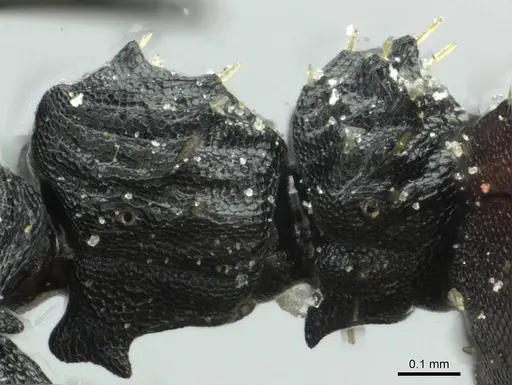
Cataulacus pullus is native to Central Africa, with confirmed records from the Democratic Republic of Congo and Rwanda. The species was originally described from Congolese locations at approximately 600m elevation, and was more recently documented in Akagera National Park in eastern Rwanda [1][4]. The genus Cataulacus consists of arboreal ants that typically nest in dead wood, tree hollows, or under bark. The workers are distinctive with their black coloration, red-brown antennae scapes and leg tibiae, and a unique leather-like textured surface created by fine ridges running across their body [2]. The morphological description notes distinctive spines on the thorax and a barrel-shaped petiole. This is a poorly documented species with limited research, meaning many aspects of its biology in the wild remain unstudied.
Housing and Nest Preferences
Based on typical Cataulacus arboreal behavior, these ants should be provided with nest conditions that mimic their natural habitat in dead wood. A Y-tong (AAC) nest or plaster formicarium with wood elements works well for this species. They prefer tight chambers and narrow passages scaled to their 5mm size. Include vertical climbing structures since they are arboreal by nature. Good ventilation is important to prevent mold while maintaining moderate humidity. The nest should have a water reservoir to maintain humidity without over-wetting the substrate. Avoid tall, open spaces, these ants do better in compact nest configurations.
Temperature and Heating Requirements
As a tropical species from Central Africa, Cataulacus pullus requires warm temperatures to thrive. Maintain the nest area at 24-28°C consistently. A heating cable placed on one side of the nest creates a gentle temperature gradient, allowing the ants to self-regulate by moving between warmer and cooler areas. Avoid placing the heating directly on the nest material as this can cause drying. Room temperature may be insufficient unless your home is already in this range. Cold temperatures can be fatal to these tropical ants, so ensure they are protected from air conditioning drafts and cold seasons.
Feeding and Diet
Based on typical Cataulacus feeding behavior, these ants likely forage for honeydew from aphids and scale insects, along with small insects. In captivity, offer sugar water or honey as a constant energy source. For protein, provide small live prey such as fruit flies, small mealworms, or other appropriately-sized insects. Feed protein sources 2-3 times per week, removing any uneaten prey after 24 hours. Fresh water should always be available. Since this species has limited documented captive history, monitor for food acceptance and adjust offerings accordingly.
Colony Establishment
Establishing Cataulacus pullus colonies in captivity presents challenges due to the limited documented captive breeding history for this species. If acquiring a colony, wild-caught queens may have been used, which can be difficult to establish. Queens likely follow claustral founding patterns typical of the genus, sealing themselves in a chamber and raising the first workers on stored body reserves. Expect the founding period to take several months. Be patient with slow initial growth. Wild-caught colonies may carry parasites that can be difficult to treat, so quarantine and careful observation are recommended when introducing new colonies.
Frequently Asked Questions
How long does it take for Cataulacus pullus to develop from egg to worker?
No specific development data exists for this species. Based on typical Cataulacus genus patterns, estimate approximately 6-8 weeks from egg to first worker at optimal warm temperatures (24-28°C).
What temperature do Cataulacus pullus ants need?
Keep them at 24-28°C. These are tropical ants requiring consistent warmth. A heating cable on one side of the nest creates a suitable gradient.
Do Cataulacus pullus ants need hibernation?
No, being a tropical Central African species, they do not require hibernation. Maintain warm temperatures year-round.
What do Cataulacus pullus ants eat?
Based on typical Cataulacus behavior, they likely accept honeydew (sugar water/honey), small insects, and other protein sources. Offer sugar constantly and protein 2-3 times per week.
Are Cataulacus pullus good for beginners?
This species is not ideal for beginners due to limited documented captive care information and the challenges of establishing wild-caught colonies. More established species with better care documentation are recommended for those new to antkeeping.
How big do Cataulacus pullus colonies get?
Colony size is not documented in available research. Based on typical Cataulacus patterns, colonies likely reach several hundred workers over time.
Do Cataulacus pullus ants sting?
Cataulacus ants have a modified stinger used to smear venom onto enemies rather than piercing flesh. They are not known for aggressive behavior. Their small size and calm temperament make them unlikely to pose any threat to keepers.
What size nest do Cataulacus pullus need?
Use a compact nest with tight chambers and narrow passages scaled to their 5mm worker size. A Y-tong or plaster formicarium with wood elements works well for their arboreal nature.
Can I keep multiple Cataulacus pullus queens together?
Colony structure is unconfirmed for this species. Based on typical Cataulacus patterns, they likely form single-queen colonies. Combining unrelated queens is not recommended without documented evidence of success.
Why is my Cataulacus pullus colony dying?
Common causes include cold temperatures (tropical species are sensitive), inadequate humidity, poor escape prevention allowing escapes, or parasites from wild-caught colonies. Ensure warm, stable conditions and monitor colony health closely.
Report an Issue
The current care sheet is based fully on literature. See inconsistencies, or something that's incorrect? Please , it will be resolved after review from an admin. Contributing to the blogs tab also helps providing information, to make us be able to further improve the caresheets. Thank you for your support!
References

Este guia de cuidados está sob a licença CC BY-SA 4.0 .
Posts da comunidade
CASENT0217088
Ver no AntWeb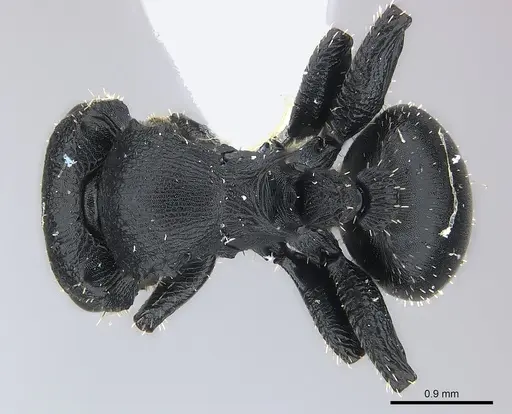
CASENT0912564
Ver no AntWeb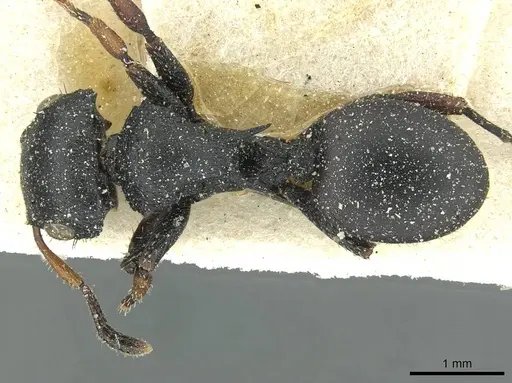
CASENT0912565
Ver no AntWeb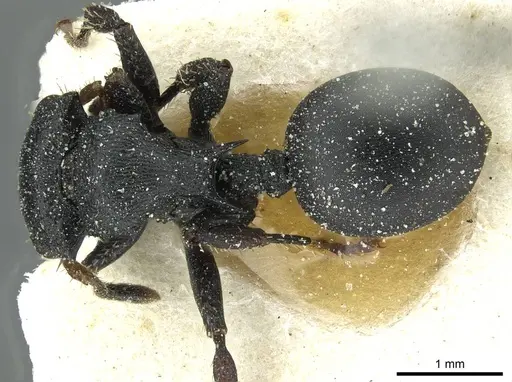
CASENT0922504
Ver no AntWeb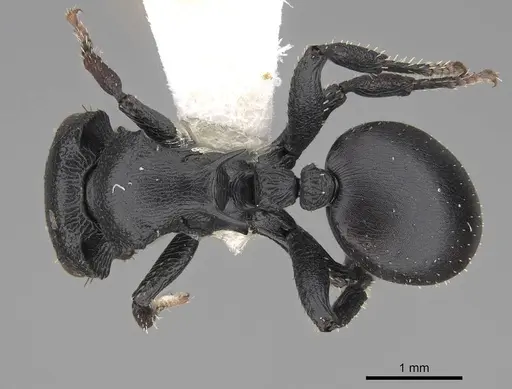
FOCOL2128
Ver no AntWeb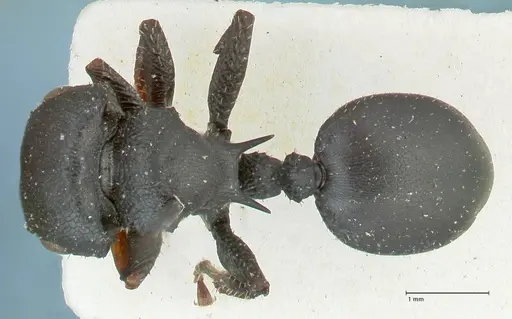
FOCOL2129
Ver no AntWeb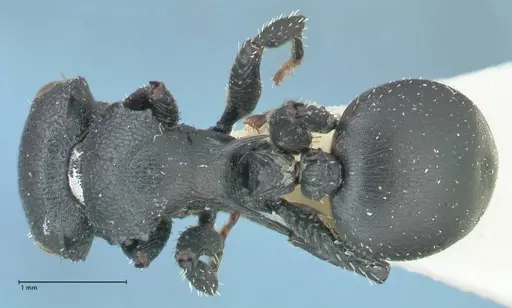
ZMUC00045109
Ver no AntWeb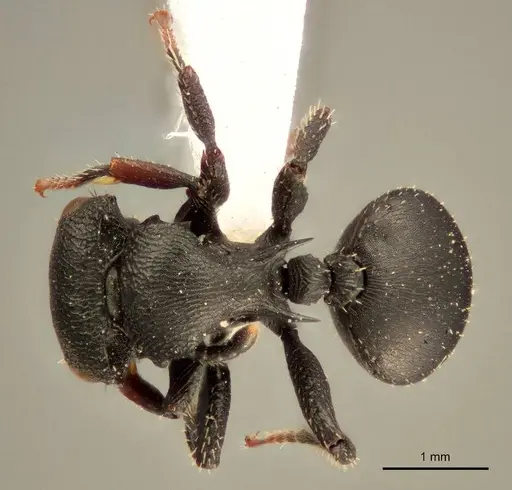
Literatura
Carregando mapa de distribuição...Carregando produtos...