
Carebara tanana
- Nome científico
- Carebara tanana
- Tribo
- Crematogastrini
- Subfamília
- Myrmicinae
- Autor
- Azorsa & Fisher, 2018
- Distribuição
- Encontrada em 1 países
Introdução
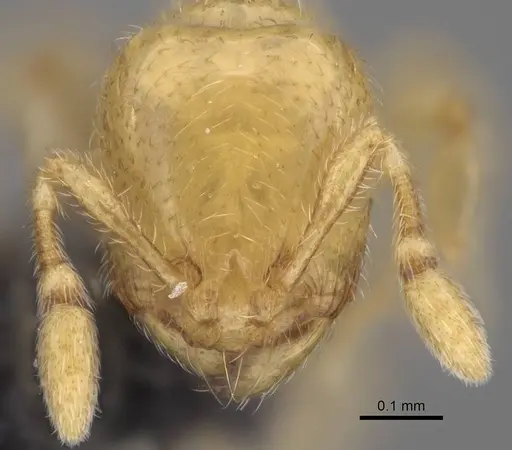
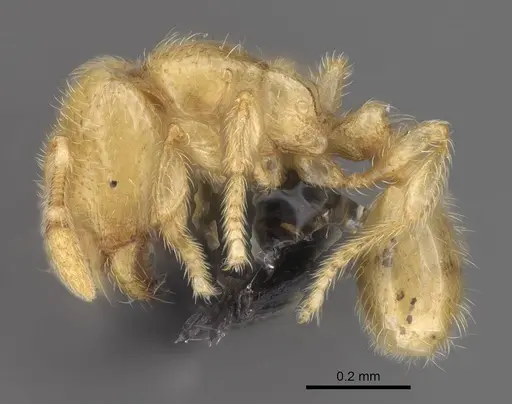
Carebara tanana is an extremely tiny ant species native only to the highlands of central Madagascar. Major workers have a head length of 0.62mm and head width of 0.48mm, while minor workers measure 0.40mm and 0.34mm respectively - making them among the smallest ants in the world. They have a yellowish-ferruginous color, ten-segmented antennae, and their propodeum lacks spines, appearing nearly angulate. These ants were discovered in savannah grassland at 1984m elevation, living in leaf mold and rotten wood . This species was formally described in 2018,making it one of the newest described Carebara from Madagascar. As a high-elevation species from a relatively cool tropical region, they likely have different temperature needs than typical lowland tropical ants. Their tiny size means they require excellent escape prevention and specialized care .
Quick Summary
- Difficulty: Expert
- Origin & Habitat: Known only from the central highlands of Madagascar (Antananarivo region), specifically from savannah grassland at 1984m elevation. They were collected from leaf mold and rotten wood using maxi-Winkler traps [1].
- Colony Type: Colony structure is unconfirmed. The genus Carebara typically forms single-queen colonies, but this has not been studied for this specific species.
- Size & Growth:
- Queen: Not yet described in scientific literature, queen measurements unavailable
- Worker: Full body size data unavailable. The context provides head measurements only: major workers 0.62mm head length, minor workers 0.40mm head length. Based on Carebara genus patterns, total body length is likely 1-2mm for minor workers and 2-3mm for major workers.
- Colony: Unknown, no colony size data exists for this species [1]
- Growth: Unknown, development has not been studied
- Development: Unknown, no development data exists for this species. (Development timeline is unconfirmed. Specific data for this species does not exist.)
- Antkeeping:
- Temperature: High-elevation origin suggests they prefer cooler conditions than typical tropical ants. Start around 18-22°C and observe colony behavior. Avoid overheating, they naturally occur at nearly 2000m elevation where temperatures are cooler [1].
- Humidity: Found in leaf mold and rotten wood indicates they prefer humid conditions with some decay material. Keep the nest substrate consistently moist but not waterlogged. Provide a moisture gradient so ants can choose their preferred humidity level.
- Diapause: Unknown, no seasonal data exists for this species. The high elevation location suggests they may experience cooler temperatures seasonally, but specific diapause requirements are unconfirmed.
- Nesting: In nature they nest in leaf mold and rotten wood. In captivity, they need a naturalistic setup with fine, damp substrate or a small nest with tight chambers scaled to their tiny size. Test tubes may work for founding colonies but require very small water reservoirs to prevent flooding.
- Behavior: This species has not been studied in captivity, so behavioral observations are limited. Based on genus patterns, they are likely generalist foragers that scavenge and may tend aphids for honeydew. Their tiny size makes them excellent escape artists, they can squeeze through the smallest gaps. Exercise extreme caution with escape prevention. Major workers show distinct morphology from minors with no intermediate forms, suggesting strong caste differentiation [1].
- Common Issues: tiny size makes escape likely without fine mesh barriers, these ants are extremely small, no captive husbandry information exists, you will be pioneering keeping methods, humidity control is critical, too dry kills them, too wet causes drowning in their tiny nests, development is unstudied, colonies may fail for unknown reasons, queen has never been described, finding a fertilized queen may be impossible
Discovery and Taxonomy
Carebara tanana was formally described in 2018 by Frank Azorsa and Brian Fisher as part of a comprehensive revision of the Carebara genus in Madagascar. The species is known only from a single collection site in the central highlands, Antaponimanadala I Non Protected Area, about 6.59km east of Manalalondo in Antananarivo province. The type series was collected in May 2010 using maxi-Winkler traps, a specialized method for extracting tiny insects from leaf litter and decaying wood. What makes this species distinctive is that major workers show no intermediate forms with minor workers, the caste difference is abrupt rather than gradual [1].
Natural Habitat and Elevation
This species was collected at an elevation of 1984 meters in savannah grassland, this is unusually high for Madagascar ant species. The collection data indicates they were found in leaf mold and rotten wood, suggesting they nest in decaying organic material on the forest floor. This high-elevation habitat likely means they prefer cooler temperatures than typical tropical ants. The environment would experience more temperature variation and cooler average temperatures compared to lowland Madagascar. This is one of the most important factors to consider when keeping this species, they are not your typical warm-tropical ant [1].
Size and Morphology
Carebara tanana is an extremely small ant. The context provides head length measurements: major workers 0.62mm and minor workers 0.40mm. Full body size data is not available in the original description. They have ten-segmented antennae (unlike many related genera which have more), and their mandibles have five teeth. The propodeum, the rear portion of the mesosoma, is unarmed, meaning it lacks the spines or teeth seen in many other Carebara species. Their gaster (the rear body section) has abundant subdecumbent to suberect hairs, giving them a somewhat fuzzy appearance. The body color is yellowish ferruginous. These measurements make them among the smallest ants in the world, smaller than many springtails that other ants prey upon [1].
Housing and Escape Prevention
Because of their extremely small size, Carebara tanana requires exceptional escape prevention. Standard ant keeping barriers may not work, these ants can squeeze through gaps that are invisible to the naked eye. Use fine mesh (at least 0.5mm or smaller), and ensure all enclosure seams are completely sealed. For nesting, a naturalistic setup with damp leaf litter and small rotten wood pieces works well since that's their natural habitat. Alternatively, a small nest with very tight chambers and small water channels can work, but you must ensure water cannot flood into the foraging areas. Test tubes can work for founding colonies, but use very small diameter tubes with minimal water reservoirs to prevent drowning accidents [1].
Feeding and Diet
The natural diet of Carebara tanana has not been studied, but Carebara species are typically generalist scavengers and predators. In captivity, you should offer small live prey appropriate to their size, springtails are likely ideal, as these tiny ants probably cannot tackle larger insects. They may also accept honey or sugar water, though this is unconfirmed. Given their tiny size, any prey offered should be genuinely small. Start with springtails and small fruit flies as safe options, and experiment cautiously with other tiny arthropods. Remove any uneaten prey promptly to prevent mold issues in their small enclosures [1].
Temperature and Seasonal Care
Based on their high-elevation origin (1984m), Carebara tanana likely prefers cooler temperatures than typical tropical ants. Start with a range of 18-22°C and monitor colony activity. If workers cluster together and show reduced movement, the temperature may be too low. If they seem overly active or restless, it may be too warm. Avoid placing them on heating cables unless absolutely necessary, they come from a cool highland environment. Seasonal temperature changes may be beneficial, allowing slight cooling in winter months. However, since this is an unstudied species in captivity, you will need to observe your specific colony and adjust accordingly. Never exceed 25°C given their natural habitat [1].
Defense Mechanism
Carebara tanana belongs to the subfamily Myrmicinae and tribe Crematogastrini. Members of this tribe have a modified, flattened stinger used to wipe or smear venom onto enemies rather than piercing flesh. This is their primary defense mechanism.
Frequently Asked Questions
How long does it take for Carebara tanana to develop from egg to worker?
The development timeline is unconfirmed, no scientific data exists for this species. Your colony development may differ significantly from other Carebara species given the lack of specific data [1].
What size enclosure do Carebara tanana need?
Because of their tiny size, they need appropriately scaled enclosures. For a founding colony, a small test tube or tiny nest works. As the colony grows, a small naturalistic setup with damp substrate works well. The key is ensuring all gaps are tiny, standard ant barriers will not contain these ants [1].
Do Carebara tanana ants sting?
Given their extremely small size, any sting would be negligible to humans. Their mandibles are tiny and their venom delivery system would be virtually undetectable. However, they may still bite if handled roughly [1].
What temperature should I keep Carebara tanana at?
Based on their high-elevation Madagascar origin (1984m), start around 18-22°C and adjust based on colony behavior. Avoid overheating, they are not typical tropical ants and likely prefer cooler conditions. Monitor how your colony responds and adjust accordingly [1].
Are Carebara tanana good for beginners?
No, this species is best classified as expert-level due to their extremely tiny size, lack of captive husbandry information, and specific habitat requirements. There is essentially no information on keeping this species in captivity, so you will be pioneering the husbandry methods. They are not recommended for beginners [1].
What do Carebara tanana eat?
The natural diet is unstudied, but based on genus patterns they are generalist scavengers. In captivity, offer small live prey, springtails and tiny fruit flies are likely appropriate. Sugar sources may be accepted but this is unconfirmed. Start with springtails as a safe option [1].
How big do Carebara tanana colonies get?
Colony size is unknown, no data exists for this species [1].
Can I keep multiple queens together?
Colony structure is unconfirmed for this species. The genus Carebara typically forms single-queen colonies, but combining unrelated queens has not been documented. Do not attempt to keep multiple foundress queens together without specific information about this species [1].
Why are my Carebara tanana escaping?
Their extremely small size makes them excellent escape artists. Standard barriers will not contain them. You need fine mesh (0.5mm or smaller), sealed seams, and careful attention to any potential gaps. Even seemingly airtight containers may have microscopic gaps [1].
Do Carebara tanana need hibernation?
Diapause requirements are unknown. Their high-elevation origin suggests they may experience seasonal temperature changes, but specific hibernation needs have not been documented. Observe your colony's seasonal behavior and adjust accordingly [1].
Report an Issue
The current care sheet is based fully on literature. See inconsistencies, or something that's incorrect? Please , it will be resolved after review from an admin. Contributing to the blogs tab also helps providing information, to make us be able to further improve the caresheets. Thank you for your support!
References

Este guia de cuidados está sob a licença CC BY-SA 4.0 .
Posts da comunidade
CASENT0211683
Ver no AntWeb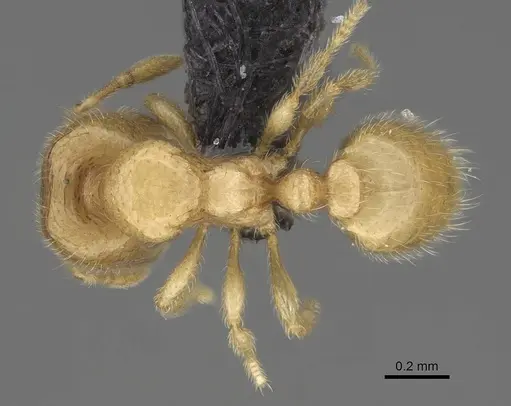
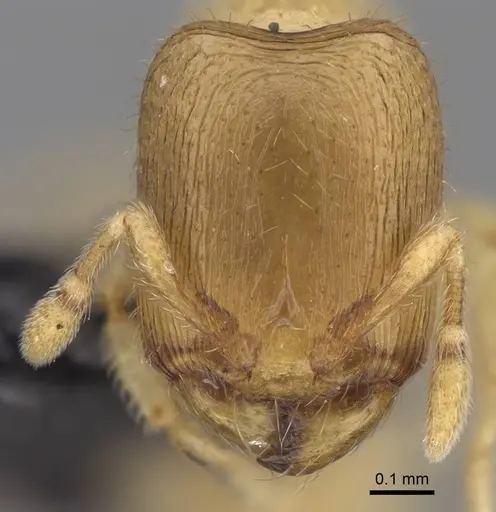
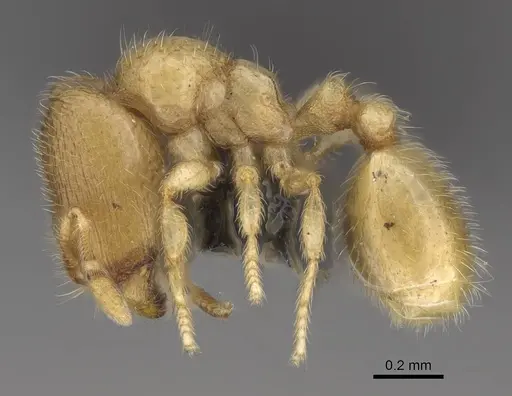
CASENT0211714
Ver no AntWeb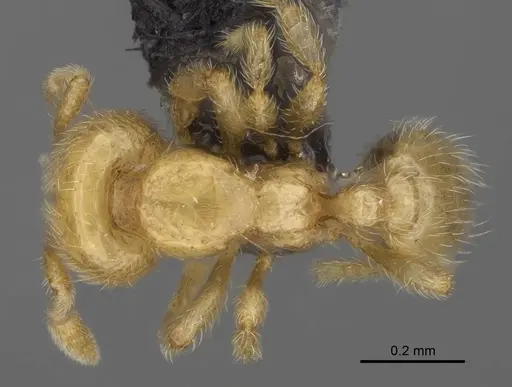
Literatura
Carregando mapa de distribuição...Carregando produtos...