
Cardiocondyla weserka
- Nome científico
- Cardiocondyla weserka
- Tribo
- Crematogastrini
- Subfamília
- Myrmicinae
- Autor
- Bolton, 1982
- Distribuição
- Encontrada em 0 países
Introdução
Cardiocondyla weserka is a tiny ant species native to the Afrotropical region, found in Cameroon and Nigeria. Workers measure approximately 1.9mm in total length, making them among the smaller ant species commonly kept. They belong to the Cardiocondyla wroughtonii species group and are characterized by their dark brown to blackish-brown coloration, with lighter appendages. The most distinctive feature is their nearly flat propodeal dorsal profile, which separates them from most related species that have a convex shape in this area. The queen caste remains undescribed, and nothing is known about their biology in the wild. This species uses a smear defense mechanism - they have a flattened stinger that wipes venom onto enemies rather than piercing flesh.
Quick Summary
- Difficulty: Expert
- Origin & Habitat: Afrotropical region, Cameroon and Nigeria. Type locality is Nkoemvon, Cameroon. Specific habitat preferences are unconfirmed [1].
- Colony Type: Unconfirmed, only worker caste known, queen caste undescribed.
- Size & Growth:
- Antkeeping:
- Temperature: Unknown, likely prefers warm conditions given Afrotropical origin. No specific data available.
- Humidity: Unknown, likely requires moderate humidity typical of Central African species. No specific data available.
- Diapause: Unknown, as an Afrotropical species from tropical regions, likely does not require hibernation but this is unconfirmed.
- Nesting: Natural nesting habits unconfirmed. Likely nests in soil or under stones like other Cardiocondyla species.
- Behavior: Behavior is completely unstudied. Their tiny 1.9mm size means escape prevention is critical, they can squeeze through very small gaps. Defense mechanism is smear type (flattened stinger that wipes venom).
- Common Issues: queen caste undescribed means you cannot establish a colony from a wild-caught queen, very small size makes escape prevention challenging, use fine mesh barriers, no biological data exists, keeping this species is entirely experimental, no established care protocols in the antkeeping hobby, may be difficult to locate even in their native range, temperature and humidity requirements are completely unknown
Identification and Morphology
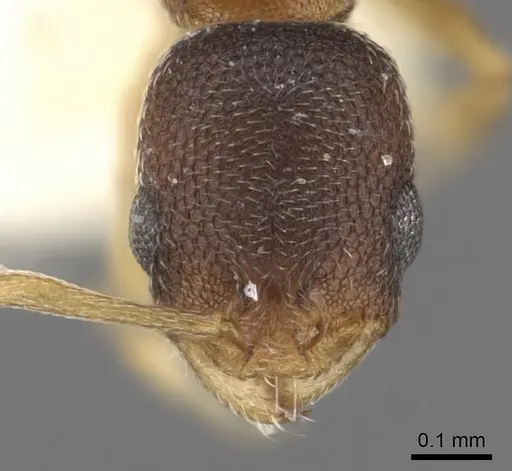
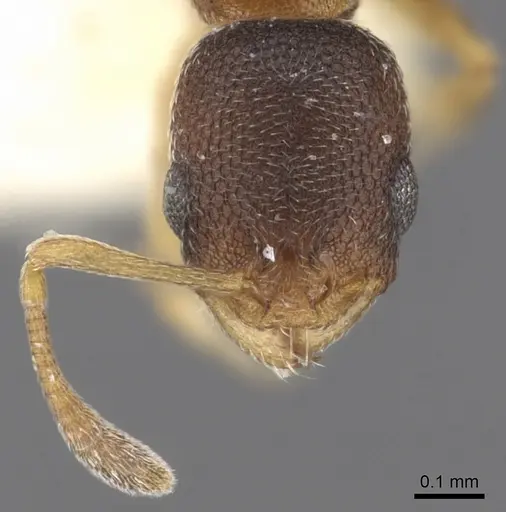
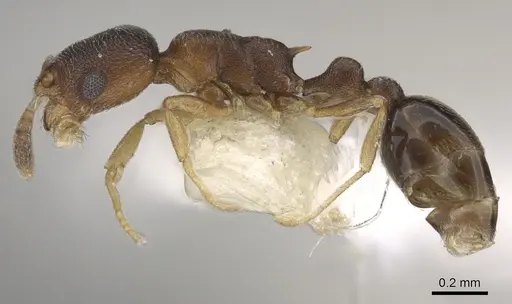
Cardiocondyla weserka workers are tiny ants measuring approximately 1.9mm in total length. They can be identified by their distinctive propodeal shape, the dorsal profile is nearly flat rather than convex, which separates them from most other Cardiocondyla species in the region. The head is very elongated, and the propodeal spines are long and incurved. Body coloration is dark brown to blackish-brown, with the lateral pronotum and appendages being noticeably lighter. The species is most similar to Cardiocondyla neferka, differing primarily in the less convex dorsal mesosoma profile [3][4].
Distribution and Range
Cardiocondyla weserka is known from two countries in the Afrotropical region: Cameroon (type locality at Nkoemvon) and Nigeria. The Nigerian record represents a recent finding, with one queen collected at Badagry [1]. The species appears to have a limited distribution within Central Africa, though this may reflect limited sampling rather than actual rarity. Nothing is known about their specific habitat preferences or elevational range.
Current State of Knowledge
This is one of the least studied ant species in the hobby. Nothing has been published about their biology, no observations on colony structure, founding behavior, diet, nuptial flights, or any aspect of their natural history exist in the scientific literature. The queen caste remains undescribed, meaning we cannot confirm whether they have ergatoid (wingless) queens like some other Cardiocondyla species, or typical alate queens. This makes keeping C. weserka essentially an experimental endeavor with no established protocols [2].
Housing and Care Recommendations
Since no species-specific care information exists, recommendations must be based on general Cardiocondyla genus patterns and the known Afrotropical origin. Use a small test tube setup or appropriately sized Y-tong nest, chambers should be small given their tiny 1.9mm size. Temperature and humidity requirements are completely unknown. Provide sugar water and small protein sources like fruit flies or tiny arthropods. Excellent escape prevention is essential due to their minute size, standard barrier methods may be insufficient. This species is best suited for experienced antkeepers willing to experiment and document their findings.
Research Gaps and Opportunities
Cardiocondyla weserka represents a significant opportunity for antkeepers interested in contributing to science. Any observations on colony behavior, founding, queen morphology, or nuptial flights would be novel contributions to entomology. The 2024 taxonomic revision by Seifert notes that more material is needed to confirm the distinction between C. weserka and the similar C. neferka [3]. Keepers who obtain wild-caught colonies should document everything carefully, these observations could help fill major knowledge gaps about this species.
Frequently Asked Questions
Can I keep Cardiocondyla weserka in a test tube?
A test tube setup may work but no established protocols exist. Use a small test tube with excellent escape prevention, their 1.9mm size means they can squeeze through very small gaps. This is entirely experimental.
How long until first workers in Cardiocondyla weserka?
This is completely unknown, the species has never been kept in captivity. No development data exists for this or most other Cardiocondyla species.
What do Cardiocondyla weserka ants eat?
Diet is completely unconfirmed for this species. No observations exist. Based on general Cardiocondyla patterns, they likely accept sugar sources and small protein items, but this is speculative.
Are Cardiocondyla weserka good for beginners?
No, this species cannot be recommended for beginners. The queen caste is undescribed, meaning you cannot establish a colony from a wild-caught queen. No established care protocols exist, and their tiny size presents significant challenges. This is an experimental species for advanced antkeepers.
Do Cardiocondyla weserka ants sting?
Sting capability is unknown. Given their tiny 1.9mm size, any sting would likely be imperceptible to humans. Most small Myrmicinae have stingers but cannot penetrate human skin effectively.
Can I keep multiple Cardiocondyla weserka queens together?
This is completely unknown. Colony structure has not been documented for this species. Do not attempt combining unrelated queens without specific evidence.
Do Cardiocondyla weserka need hibernation?
Diapause requirements are unknown. As an Afrotropical species from Cameroon and Nigeria, they likely come from a tropical climate without distinct winter. Most tropical ants do not require hibernation, but this has not been confirmed for this specific species.
Where can I get Cardiocondyla weserka?
This species is extremely rare in the antkeeping hobby. It is only known from Cameroon and Nigeria, and the queen caste remains undescribed. Unless you are collecting in the Afrotropical region yourself, obtaining this species would be extremely difficult.
Why are my Cardiocondyla weserka dying?
Without established care protocols, colony failure is likely. Temperature, humidity, and dietary requirements are completely unknown for this species. Some trial and error is expected given the complete lack of biological data.
Are Cardiocondyla weserka aggressive?
Aggression levels are completely unknown. No behavioral observations have been documented for this species.
Report an Issue
The current care sheet is based fully on literature. See inconsistencies, or something that's incorrect? Please , it will be resolved after review from an admin. Contributing to the blogs tab also helps providing information, to make us be able to further improve the caresheets. Thank you for your support!
References

Este guia de cuidados está sob a licença CC BY-SA 4.0 .
Posts da comunidade
CASENT0901748
Ver no AntWeb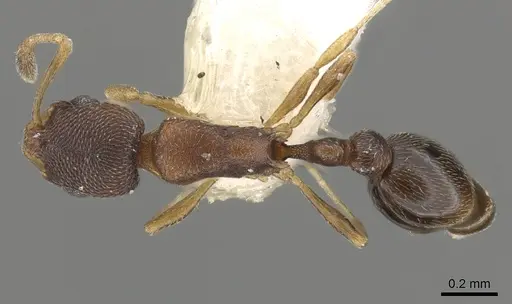
Literatura
Carregando mapa de distribuição...Carregando produtos...