
Cardiocondyla semiargentea
- Nome científico
- Cardiocondyla semiargentea
- Tribo
- Crematogastrini
- Subfamília
- Myrmicinae
- Autor
- Seifert, 2023
- Distribuição
- Encontrada em 0 países
Introdução
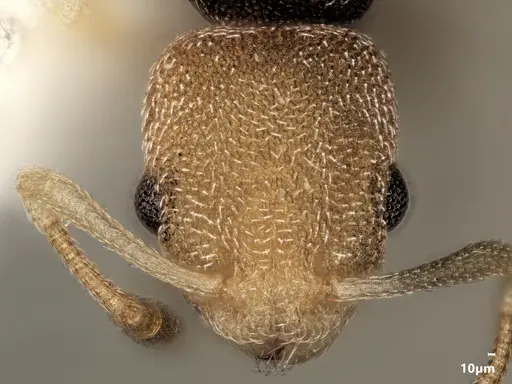
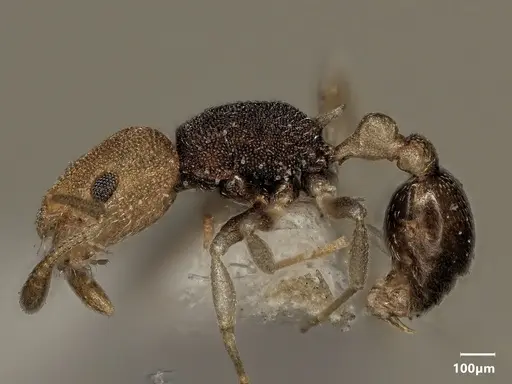
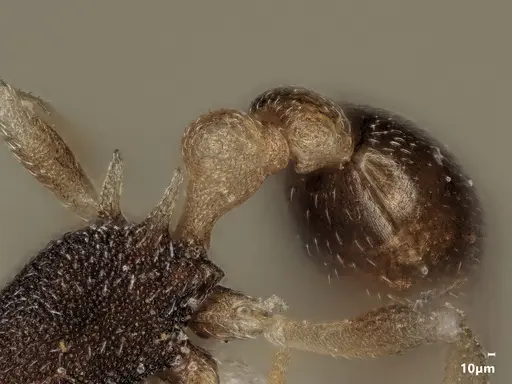
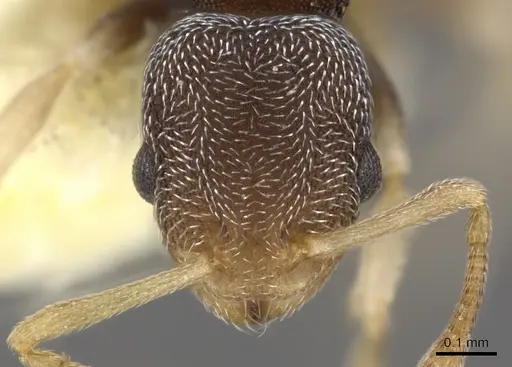
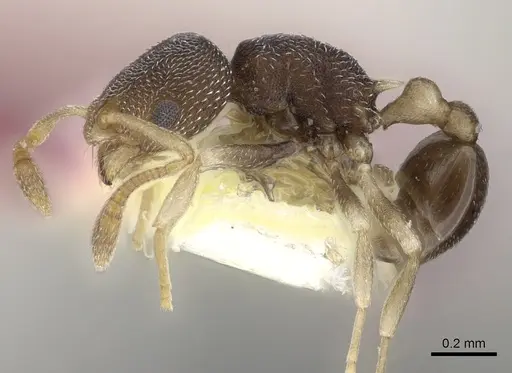
Cardiocondyla semiargentea is an exceptionally tiny ant species from North Sulawesi, Indonesia, newly described in 2022 . Workers belong to the Cardiocondyla argentea species group and show remarkable color polymorphism - some individuals are dark brown while others have striking bicolored patterns with light yellow heads and blackish mesosomas . These ants live in the highlands of Sulawesi at elevations between 385 and 1150 meters . Their biology remains completely unstudied, but it's believed to be similar to their well-researched relative Cardiocondyla argyrotricha. This species is so new that there's no established husbandry knowledge in the antkeeping hobby yet.
Quick Summary
- Difficulty: Expert
- Origin & Habitat: North Sulawesi, Indonesia, found east of the Wallace Line at 385-1150m elevation in highland areas [1]. The specific habitat type is unknown, but related Cardiocondyla species typically nest in soil, under stones, or in decaying wood in forest edges and disturbed areas.
- Colony Type: Unconfirmed, the colony structure of this specific species has not been studied. Most Cardiocondyla species are monogyne (single queen), but this needs confirmation for C. semiargentea.
- Size & Growth:
- Queen: Unknown, no queen specimens have been described yet.
- Worker: Size data unavailable, the research provides only head measurements (CS 439µm), not total body length. Based on the genus Cardiocondyla, workers are typically 1.5-3mm.
- Colony: Unknown, no colony size data exists for this species.
- Growth: Unknown, no development data exists for this species.
- Development: Unknown, no direct measurements exist for this species. (No developmental studies exist for this species.)
- Antkeeping:
- Temperature: Unknown specifically. Based on their highland Sulawesi origin (385-1150m elevation), they likely prefer cooler conditions than tropical lowland ants, probably 20-24°C. Start in the mid-range and observe colony behavior.
- Humidity: Unknown. Most Cardiocondyla prefer moderately humid conditions. Keep nest substrate moist but not waterlogged, with some drier areas for the ants to choose.
- Diapause: Unknown, no seasonal data exists. Sulawesi has less pronounced seasons than temperate regions, so they may not require a true diapause. However, highland populations might experience cooler periods.
- Nesting: Natural nesting is unconfirmed. Related species nest in soil, under stones, or in small cavities in decaying wood. For captivity, very small test tubes with fine hydration or small nests with tight chambers would work. Their tiny size means escape prevention must be excellent.
- Behavior: Completely unstudied. Based on related Cardiocondyla, they are likely docile and non-aggressive. Workers are tiny and likely slow-moving. Their small size means excellent escape prevention is critical, they can squeeze through gaps that seem sealed. Foraging style is unknown but probably similar to other Cardiocondyla, they likely scavenge and tend aphids for honeydew.
- Common Issues: this species has no established care guidelines, you will be pioneering its husbandry, their extreme tiny size makes escape prevention extremely difficult, even standard test tube barriers may not work, no developmental data exists so you cannot compare your colony's growth to expected timelines, the species was only described in 2022, so no antkeeping resources exist, related species may have specific humidity requirements that differ from generic Cardiocondyla care, no information on what foods they accept, you may need to experiment
Why This Species Is Challenging
Cardiocondyla semiargentea represents a unique challenge in the antkeeping hobby, it was only described in 2022 and has no published biological studies. This means you're operating almost entirely without guidance. The worker head size of 439µm makes them extremely small, which creates practical difficulties: standard test tube setups may need modification, escape prevention becomes critical (they can squeeze through gaps invisible to the naked eye), and feeding requires appropriately sized prey items. The lack of any species-specific information means you'll need to document your observations carefully and potentially adapt care based on what works for related species like Cardiocondyla argyrotricha or Cardiocondyla argentea. [1]
Housing and Escape Prevention
Given their extreme tiny size, standard antkeeping equipment may not provide adequate containment. Use test tubes with cotton plugs that are packed tightly, and consider adding a fluon barrier (PFTE liquid) around the rim. Even then, check for escapes daily. If using nests, ensure all connections are sealed with silicone and consider double-barrier systems. The nest chambers should be appropriately scaled, tiny ants in large chambers can become stressed. A small formicarium or modified test tube setup would be more suitable than a large naturalistic setup initially. Keep the outworld simple to make escape detection easier.
Feeding and Diet
The diet of Cardiocondyla semiargentea has not been studied. Most Cardiocondyla species are omnivorous, they scavenge, collect honeydew from aphids and scale insects, and hunt small prey. For this tiny species, you'll need to offer appropriately sized foods: very small insects like fruit flies, pinhead crickets, or tiny mealworms. Sugar water or honey diluted with water may be accepted. Start with small amounts of live prey and sugar sources, observe what gets consumed, and adjust. Given their tiny size, even small fruit flies may be large prey, consider cultures of wingless fruit flies for easier feeding.
Temperature and Humidity
Since this species comes from highland Sulawesi (385-1150m elevation), they likely prefer cooler temperatures than typical tropical ants. Aim for 20-24°C as a starting point, avoid the high end of typical ant room temperatures. Use a thermometer to monitor and adjust based on colony activity. For humidity, keep the nest substrate moist but not saturated. Cardiocondyla generally prefer moderate humidity. Provide a gradient by keeping one part of the nest slightly drier so the ants can choose their preferred conditions. Observe where they cluster most and adjust accordingly. [1]
Related Species as Reference
Since direct information on C. semiargentea is unavailable, care must be extrapolated from closely related species in the Cardiocondyla argentea group. Cardiocondyla argyrotricha has been better studied and can serve as a reference point. In general, Cardiocondyla are adaptable ants that can thrive in various conditions, but they prefer stable environments. The key is to start with reasonable assumptions based on their origin (highland Sulawesi), monitor your colony closely, and be prepared to adjust. Document your observations, you may discover aspects of their care that differ from related species. [1]
Frequently Asked Questions
How long does it take for Cardiocondyla semiargentea to produce first workers?
This is unknown, no developmental studies exist for this species.
What do Cardiocondyla semiargentea ants eat?
Their diet is unstudied. Based on related species, they likely accept small live prey (fruit flies, tiny insects), sugar sources (honey water, sugar water), and probably tend aphids for honeydew. Start with small prey items and sugar water, then observe what gets consumed.
Are Cardiocondyla semiargentea good for beginners?
No, this is an expert-level species. It was only described in 2022, has no published biological data, and is extremely small. There are no established care guidelines in the hobby. You should have experience with other small Myrmicinae species before attempting this ant.
What temperature do Cardiocondyla semiargentea need?
Unknown specifically, but based on their highland Sulawesi origin (385-1150m elevation), they likely prefer 20-24°C, cooler than typical tropical ants. Start in this range and adjust based on colony activity.
Do Cardiocondyla semiargentea need hibernation?
Unknown, no seasonal data exists. Sulawesi has less pronounced seasons than temperate regions, so a true diapause may not be required. However, highland populations might experience cooler periods that could serve as a rest period. Monitor your colony for natural slowdowns.
How big do Cardiocondyla semiargentea colonies get?
Unknown, colony size has not been documented for this species.
Can I keep multiple Cardiocondyla semiargentea queens together?
Unknown, colony structure has not been studied for this species. Most Cardiocondyla are monogyne (single queen), but combining unrelated queens has not been documented. Do not attempt until more is known about their colony structure.
How do I prevent Cardiocondyla semiargentea from escaping?
This is critical, their tiny size means they can escape through gaps invisible to the naked eye. Use tightly packed cotton in test tubes, apply fluon barriers around rims, and check daily. Consider double-barrier systems and ensure all formicarium connections are sealed with silicone.
What nest type is best for Cardiocondyla semiargentea?
Unknown, natural nesting is unconfirmed. Based on related species, they likely nest in soil or small cavities. Small test tubes with fine hydration or tiny nests with appropriately scaled chambers would be most suitable. Avoid large naturalistic setups initially.
Is Cardiocondyla semiargentea aggressive?
Unknown, behavior has not been studied. Based on related Cardiocondyla species, they are likely docile and non-aggressive. Workers are tiny and probably pose no threat to humans. Their small size makes them more vulnerable than dangerous.
Report an Issue
The current care sheet is based fully on literature. See inconsistencies, or something that's incorrect? Please , it will be resolved after review from an admin. Contributing to the blogs tab also helps providing information, to make us be able to further improve the caresheets. Thank you for your support!
References

Este guia de cuidados está sob a licença CC BY-SA 4.0 .
Posts da comunidade
ANTWEB1048536
Ver no AntWeb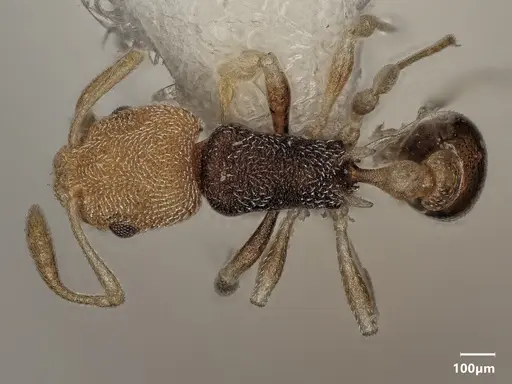
CASENT0901763
Ver no AntWeb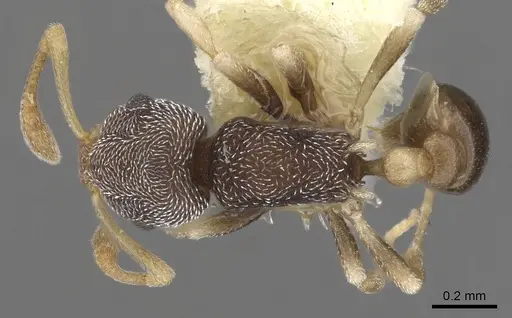
Literatura
Carregando mapa de distribuição...Carregando produtos...