
Camponotus vittatus
- Nome científico
- Camponotus vittatus
- Subgênero
- Tanaemyrmex
- Tribo
- Camponotini
- Subfamília
- Formicinae
- Autor
- Forel, 1904
- Distribuição
- Encontrada em 1 países
Introdução
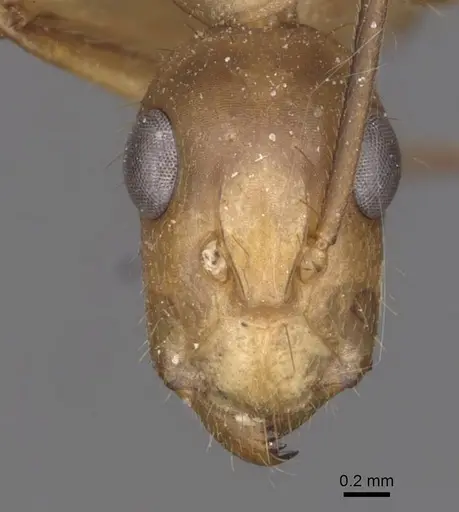
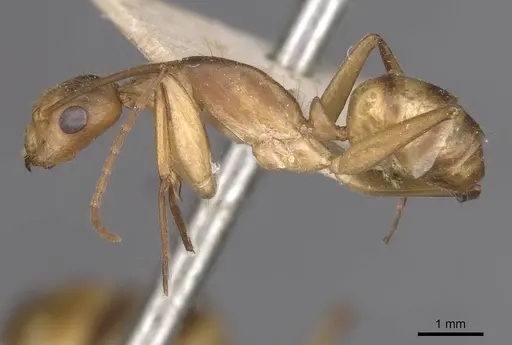
Camponotus vittatus is a Neotropical carpenter ant found across Brazil, French Guiana, and Argentina . Workers are dimorphic, with two distinct sizes: smaller minors and larger majors . This species belongs to the subgenus Tanaemyrmex and stands out for its adaptability to urban environments. In one survey in Uberlândia, Brazil, it made up 23.5% of all ants collected - the most frequent species in that city . They have the typical carpenter ant look with a rounded abdomen and uniform dark coloration. Their foraging activity follows a clear seasonal pattern: much more active during the dry season compared to the rainy season .
Quick Summary
- Difficulty: Easy
- Origin & Habitat: Native to the Neotropical region, specifically Brazil, French Guiana, and Argentina. Found in diverse habitats including Cerrado savanna, Caatinga dry forest, Atlantic Forest fragments, and Amazon-influenced areas. Nests in soil, under stones, and in rotting wood. Forages on trees and shrubs [6][7][8]. Also very common in urban settings [3].
- Colony Type: Unknown, likely monogyne (single queen) based on typical Camponotus patterns, but no specific studies confirm this. No ergatoid replacement queens have been documented. Colonies contain both minor and major workers.
- Size & Growth:
- Queen: Size data unavailable, inferred from Camponotus genus (approximately 12-15mm).
- Worker: Size data unavailable for adults, inferred from Camponotus genus (minors ~4-6mm, majors ~8-12mm). Pupae reach about 6.64mm [2].
- Colony: Estimated several thousand workers at maturity (based on typical Camponotus).
- Growth: Moderate
- Development: Unclear in research, likely 6-8 weeks at optimal temperature based on genus patterns. (Eggs are about 1.18mm long. Larvae go through three instars. Pupae develop inside silky cocoons and are about 6.64mm long [2].)
- Antkeeping:
- Temperature: Keep at 24-28°C. As a Neotropical species, they need warmth. A heating cable on one side of the nest creates a useful gradient. Avoid temperatures below 18°C for long periods [4][5].
- Humidity: Provide a moisture gradient. Include a water-filled test tube with a cotton plug so workers can drink and choose a humid zone. Keep the substrate slightly moist in one area but not waterlogged. This species handles both dry and humid conditions well.
- Diapause: No true hibernation required. As a tropical species, they don't need cold dormancy. You may notice reduced activity in cooler months, which is normal. A small temperature drop to 18-20°C is acceptable but not needed.
- Nesting: Use a Y-tong (AAC) nest, plaster nest, or a simple test tube setup. Make sure the nest has chambers that match colony size. Connect to an outworld for feeding. Standard escape prevention works well, they are medium to large ants.
- Behavior: Generally calm and not aggressive toward keepers, based on typical Camponotus behavior. Workers are moderately active foragers. Like other Formicinae, they lack a functional sting. Instead, they bite and spray formic acid into the wound. Larger workers may give a bite if disturbed, but it's mild. Escape risk is moderate, they can climb smooth surfaces, so use standard barriers.
- Common Issues: colonies may decline if kept too cold, maintain warm temperatures year-round., wild-caught specimens from urban areas may carry bacteria (hospital studies found 37.5-50% contamination), practice good hygiene and quarantine new colonies., foraging activity naturally drops during rainy seasons, which is normal and not a problem., acid spraying may irritate sensitive skin or pets if the colony is disturbed, avoid direct contact., ensure escape prevention is adequate, they are not tiny but can still climb smooth surfaces.
Natural History and Distribution
Camponotus vittatus is a widespread Neotropical carpenter ant found in Brazil, French Guiana, and Argentina [1]. It has been recorded in many habitat types: the Cerrado savanna, Caatinga dry forests, Atlantic Forest fragments, and Amazon-influenced areas [6][7][8]. New records include the state of Pará [9] and urban areas like Salvador, Bahia [10]. This species handles disturbed environments well and is especially common in Brazilian cities. In a major survey in Uberlândia, it represented 23.5% of all ants and appeared in all neighborhood types regardless of house condition [3]. It was also found inside a hospital bakery [11]. In natural habitats, it nests in soil, under stones, and in rotting wood, and forages on trees and shrubs.
Colony Structure and Development
Colonies are dimorphic, with both minor and major workers [2]. The species shows strong seasonal patterns in foraging. Research in Caatinga ecosystems found them much more active during the dry season (52 individuals captured) than the rainy season (only 9 individuals), suggesting they prefer drier conditions [4][5]. Development from egg to worker likely takes 6-8 weeks at warm temperatures. Eggs are ovoid, about 1.18mm long. Larvae go through three instars and are covered in a huge variety of hairs, this species has the greatest diversity of hair types ever recorded in an ant larva, with hairs branching up to six times [2]. Pupae develop inside silky cocoons and average about 6.64mm in length [2].
Feeding and Diet
Camponotus vittatus is omnivorous. In the wild, they forage for nectar, likely feed on honeydew from aphids, and hunt small insects. Studies classify their feeding habit as omnivorous [12]. They have been observed attacking and excluding termites from host plants [13]. In captivity, offer sugar water or honey as a constant energy source. Provide protein foods such as mealworms, fruit flies, or small crickets twice a week. They readily accept standard ant foods. Always provide fresh water, a test tube water reservoir works well.
Temperature and Seasonal Care
As a Neotropical species from Brazil, Camponotus vittatus prefers warm temperatures. Keep the nest area at 24-28°C for best brood development. Use a heating cable on one side of the nest to create a temperature gradient so workers can choose their preferred spot. They do not need a true hibernation period, but you may see reduced activity during winter if your room is cooler. The species is naturally more active in the dry season, so expect some variation in foraging over the year [4][5]. Avoid prolonged temperatures below 18°C.
Nesting Requirements
In the wild, Camponotus vittatus nests in soil, under stones, and in rotting wood, typical carpenter ant sites. They are not wood-destroying pests, they simply use existing cavities. For captivity, a Y-tong (AAC) or plaster nest works well. Test tube setups are fine for founding colonies. Connect a foraging area (outworld) where you offer food. Keep a moisture gradient: a water test tube provides drinking water and a humid zone. Standard escape prevention (Fluon on rims, barriers) is sufficient for these medium-to-large ants. [1]
Health and Hygiene Considerations
Camponotus vittatus is an urban-adapted species, and studies in Brazilian hospitals found it carrying harmful bacteria. Contamination rates ranged from 37.5% to 50% for bacteria including Staphylococcus and Gram-negative bacilli [14][15]. This is mainly a public health concern but reminds keepers to maintain good hygiene. Clean enclosures regularly, remove uneaten food, and wash your hands before and after handling the colony. Wild-caught colonies may also carry bacteria, so quarantine new colonies for a few weeks before adding them to established setups. These are not dangerous ants, just follow basic hygiene.
Frequently Asked Questions
Is Camponotus vittatus a good species for beginners?
Yes, this is a good beginner species. They are adaptable, tolerate various conditions, and are not aggressive. Their moderate size makes them easy to watch, and they accept many foods. However, they need warmth (24-28°C) since they are tropical.
How long until the first workers show up?
The exact time isn't known from research. Based on typical Camponotus development, expect the first workers (nanitics) to emerge about 6-8 weeks after the queen lays eggs, provided temperatures are around 24-28°C [2].
What do Camponotus vittatus eat in captivity?
Offer sugar water or honey as a constant energy source, and protein foods like mealworms, fruit flies, or small crickets twice a week. They are omnivorous and accept most standard ant foods. Always have fresh water available [12].
Do they need hibernation or diapause?
No, they do not need hibernation. As a Neotropical species, they don't experience cold winters. You may see less activity in cooler months, which is normal. A slight drop to 18-20°C in winter is fine but not required.
How big do colonies get?
Based on typical Camponotus colony sizes, mature colonies likely reach several thousand workers. They have two worker castes (major and minor), which gives the colony flexibility in tasks.
Can I keep multiple queens together?
It's not recommended. There is no evidence that Camponotus vittatus is polygynous (multi-queen). Based on typical Camponotus patterns, they are likely monogyne (single queen). Combining unrelated queens would probably lead to aggression. A single queen will establish a colony on her own.
What temperature should I keep them at?
Keep them warm at 24-28°C. As a Brazilian tropical species, they need warmth. A heating cable on part of the nest creates a useful gradient. Room temperature in heated homes may be enough, but check with a thermometer.
When should I move them to a formicarium?
Start them in a test tube setup. When the colony outgrows the test tube and you see many workers active, you can move them to a Y-tong (AAC) or plaster nest. There's no magic number, watch their space and move when they seem cramped.
Are they escape artists?
Moderate escape risk. They are larger ants but can still climb smooth surfaces. Use standard barriers (Fluon, PTFE, or mineral oil on the rim edges). They are not as tricky as tiny species, but you still need to be careful.
Report an Issue
The current care sheet is based fully on literature. See inconsistencies, or something that's incorrect? Please , it will be resolved after review from an admin. Contributing to the blogs tab also helps providing information, to make us be able to further improve the caresheets. Thank you for your support!
References

Este guia de cuidados está sob a licença CC BY-SA 4.0 .
Posts da comunidade
CASENT0909994
Ver no AntWeb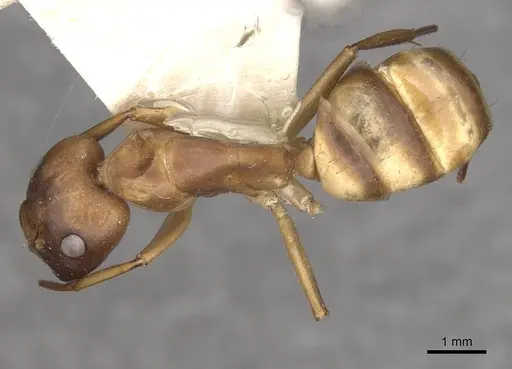
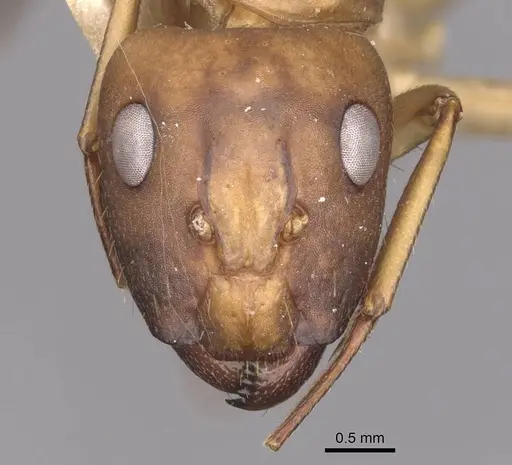
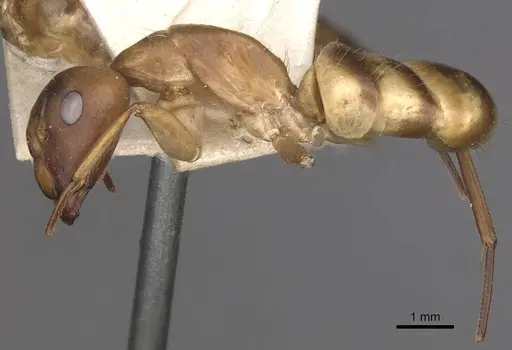
CASENT0909995
Ver no AntWeb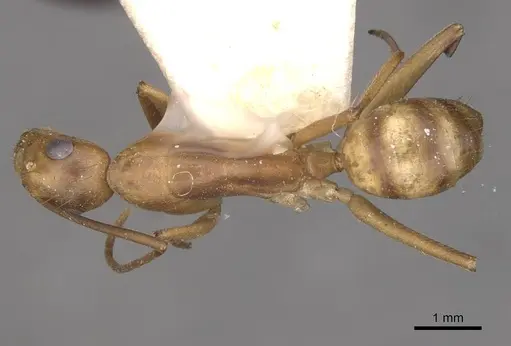
Literatura
Carregando mapa de distribuição...Carregando produtos...