
Camponotus tonkinus
- Nome científico
- Camponotus tonkinus
- Tribo
- Camponotini
- Subfamília
- Formicinae
- Autor
- Santschi, 1925
- Distribuição
- Encontrada em 0 países
Introdução
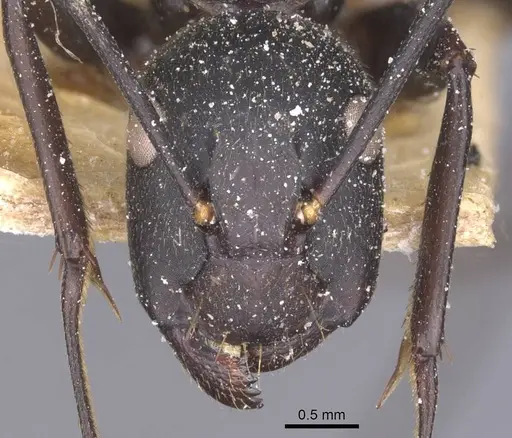
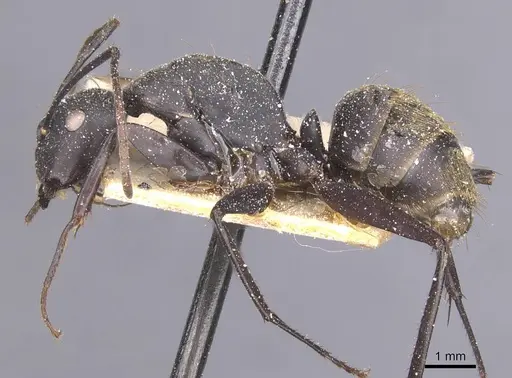
Camponotus tonkinus is a medium to large carpenter ant species native to southern China and northern Vietnam. Workers have a distinctive appearance with dark body coloration combined with very conspicuous golden or golden-yellow pubescence that gives them a slightly fuzzy or silky sheen . The species was originally described as a variety of Camponotus japonicus in 1925 but was raised to full species status in 1989 based on morphological differences . These ants are found across multiple provinces in southern China including Henan, Shaanxi, Sichuan, and Yunnan, with their range extending into northern Vietnam .
Quick Summary
- Difficulty: Easy
- Origin & Habitat: Native to southern China and Vietnam, primarily in temperate to subtropical forest regions. Found across Henan, Shaanxi, Sichuan, and Yunnan provinces in China [2]. In their natural range, they typically nest in rotting wood, under stones, or in soil cavities in forested areas.
- Colony Type: Single-queen colonies. As a typical Camponotus species, colonies establish with one founding queen.
- Size & Growth:
- Queen: ~12-15 mm, inferred from Camponotus genus patterns
- Worker: ~6-12 mm, inferred from Camponotus genus patterns
- Colony: Up to several thousand workers at maturity
- Growth: Moderate
- Development: 6-8 weeks at optimal temperature (around 24-26°C) (Development time is inferred from typical Camponotus genus patterns. First workers (nanitics) are smaller than normal workers and appear within 6-8 weeks under warm conditions.)
- Antkeeping:
- Temperature: Keep nest area at 24-26°C. Research shows activity is limited at 15°C during early spring and late autumn, indicating they prefer warmer conditions [3]. A heating cable on one side of the nest creates a temperature gradient. Room temperature is acceptable if within this range.
- Humidity: Moderate humidity around 50-60%. These ants prefer slightly drier conditions compared to tropical species. Keep the nest substrate modestly moist but allow some drying between waterings. Avoid both waterlogged conditions and complete drying out.
- Diapause: Yes, based on their temperate distribution in southern China, colonies benefit from a winter rest period. Reduce temperature to 10-15°C for 2-3 months during winter, mimicking natural seasonal cycles.
- Nesting: Y-tong (AAC) nests work well for this species. They also do well in plaster nests or naturalistic setups with rotting wood pieces. Provide narrow to medium chambers scaled to colony size. Avoid overly large chambers as these ants prefer snug fit.
- Behavior: Typical carpenter ant temperament, generally peaceful but will defend the nest if threatened. Workers are moderately active foragers, primarily hunting for protein and collecting honeydew. They can bite, though their bite is not particularly strong. Escape risk is moderate due to their larger size, standard barrier methods like fluon on test tube rims are usually sufficient. They are not aggressive toward keepers but will alert to disturbances.
- Common Issues: colonies often struggle if kept too cold, maintain temperatures above 20°C for active development, poor escape prevention can lead to escapes despite their larger size, use fluon barriers and secure lids, overfeeding can cause mold in nests, remove uneaten food promptly, newly founded colonies frequently fail if disturbed during founding, minimize nest interference until workers emerge, winter die-offs occur if humidity is too high during diapause, keep colonies slightly drier during hibernation
Housing and Nest Setup
Camponotus tonkinus adapts well to various nest types commonly used in antkeeping. Y-tong (AAC) nests provide excellent visibility and work well for colonies of all sizes. Plaster nests with built-in water reservoirs maintain appropriate humidity levels. For founding colonies, a simple test tube setup with a cotton water reservoir suffices, the queen seals herself in a chamber created by cotton and raises her first brood in darkness. As the colony grows, transfer to a larger formicarium. These ants prefer chambers that are snug rather than spacious. If using a naturalistic setup, include pieces of rotting wood or bark for them to potentially chew and establish galleries.
Feeding and Diet
Like most Camponotus species, C. tonkinus is omnivorous with a preference for protein-rich foods. Offer protein sources such as mealworms, small crickets, or other small insects 2-3 times per week. Sugar sources are also readily accepted, provide sugar water, honey, or diluted maple syrup on a constant basis via a cotton ball or small container. In the wild, these ants forage for honeydew from aphids and scale insects, so sugar is an important energy source. Fresh fruit can occasionally be offered. Remove uneaten prey within 24-48 hours to prevent mold. During founding, the queen does not forage, she relies entirely on stored fat reserves until her first workers emerge.
Temperature and Seasonal Care
Maintain nest temperatures between 24-26°C for optimal brood development. Research specifically notes that activity is limited at 15°C during early spring and late autumn, confirming this species prefers warmer conditions [3]. Use a heating cable or heating mat on one side of the nest to create a gentle thermal gradient, allowing ants to self-regulate by moving between warmer and cooler areas. During winter (roughly November-February in the northern hemisphere), reduce temperatures to 10-15°C to provide a diapause period. This mimics their natural seasonal cycle in southern China. Keep humidity slightly lower during diapause to prevent fungal issues. Do not feed during deep hibernation but ensure a small water source is available.
Colony Development and Growth
Colonies start with a single queen who seals herself in a chamber and raises the first brood without leaving to forage. She relies on stored fat reserves and metabolic energy to produce eggs and feed the developing larvae. The first workers, called nanitics, are typically smaller than subsequent workers. Once nanitics emerge (typically 6-8 weeks after founding at optimal temperature), the colony enters a growth phase. Workers begin foraging for food to feed the queen and developing brood. Growth rate is moderate, expect the colony to reach 50-100 workers within the first year under good conditions. Mature colonies can contain several thousand workers over several years of growth.
Behavior and Temperament
Camponotus tonkinus displays typical carpenter ant behavior, they are generally docile and focused on their tasks rather than aggressive. Workers are moderately active, with foraging activity increasing in warmer months. The distinctive golden-yellow pubescence makes them visually striking compared to more common dark carpenter ants. They are not known for being particularly defensive, but workers will attempt to bite if the nest is threatened. Their larger size compared to many common ant species makes them easier to observe and handle. Escape prevention is still important, while not as agile as tiny ants, they can still find gaps in poorly maintained setups. Standard fluon barriers on test tube rims and formicarium openings work well. [1]
Handling and Interaction
These ants are among the more handleable species for antkeepers. Their larger size makes them easy to observe and they move at a pace that allows for observation. They can be gently coaxed onto a feeding dish or moved between containers using a soft brush. Avoid handling directly with fingers as this can damage their exoskeleton and cause stress. If you need to move them, use a piece of paper or a soft brush. They are not suitable for free-range handling but are excellent for observation-focused keeping. Their distinctive golden pubescence makes them a visually appealing species for those interested in observing carpenter ant behavior.
Frequently Asked Questions
How long does it take for Camponotus tonkinus to produce first workers?
Expect first workers (nanitics) to emerge 6-8 weeks after the queen lays eggs, provided temperatures are maintained at 24-26°C. This timeline is based on typical Camponotus development patterns. Cooler temperatures will significantly slow development.
What temperature is best for Camponotus tonkinus?
Keep nest temperatures between 24-26°C. Research shows activity is limited at 15°C, confirming they prefer warmer conditions [3]. A heating cable on one side of the nest creates a gradient for self-regulation.
Do Camponotus tonkinus ants need hibernation?
Yes, based on their temperate distribution in southern China, colonies benefit from a winter diapause. Reduce temperatures to 10-15°C for 2-3 months during winter. Keep humidity slightly lower during this period to prevent fungal growth.
What do Camponotus tonkinus eat?
They are omnivorous with a protein preference. Feed protein sources like mealworms, small crickets, or insects 2-3 times per week. Provide constant access to sugar water, honey, or diluted syrup. Remove uneaten food promptly to prevent mold.
How big do Camponotus tonkinus colonies get?
Mature colonies can reach several thousand workers over several years. Growth is moderate, expect 50-100 workers in the first year under good conditions, with growth accelerating as the colony establishes a strong worker force.
Are Camponotus tonkinus good for beginners?
Yes, this is an excellent species for beginners. They are larger and more visible than many ant species, tolerate handling better, and have straightforward care requirements. Their founding behavior and moderate growth rate make them manageable for new antkeepers.
Do Camponotus tonkinus ants bite?
They have the ability to bite but are not particularly aggressive. They may bite if the nest is directly threatened, but their bite is not strong and causes minimal discomfort. They are considered safe for household keeping.
When should I move Camponotus tonkinus to a formicarium?
Move from a test tube setup to a formicarium once the colony reaches 30-50 workers and the test tube shows signs of crowding or mold. Ensure the new setup has appropriately sized chambers, these ants prefer snugger spaces rather than overly large open areas.
Why is my Camponotus tonkinus colony not growing?
The most common causes are temperatures below 20°C, insufficient protein feeding, or disturbance during founding. Check that temperatures are consistently 24-26°C, protein is offered 2-3 times weekly, and the queen is not being disturbed. Also ensure sugar water is constantly available.
What makes Camponotus tonkinus visually distinctive?
This species has very conspicuous golden or golden-yellow pubescence (fine hairs) that gives it a distinctive silky or fuzzy appearance against its darker body coloration [1]. This makes them one of the more visually striking Camponotus species available in antkeeping.
Report an Issue
The current care sheet is based fully on literature. See inconsistencies, or something that's incorrect? Please , it will be resolved after review from an admin. Contributing to the blogs tab also helps providing information, to make us be able to further improve the caresheets. Thank you for your support!
References

Este guia de cuidados está sob a licença CC BY-SA 4.0 .
Posts da comunidade
CASENT0911622
Ver no AntWeb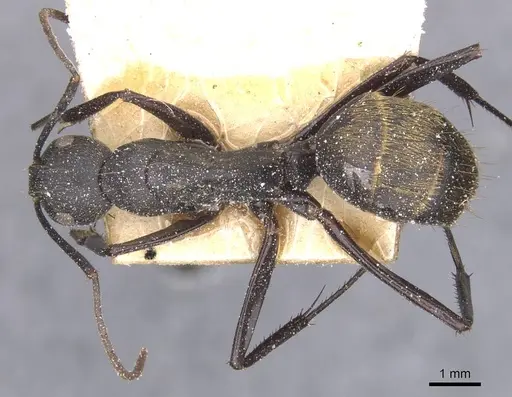
Literatura
Carregando mapa de distribuição...Carregando produtos...