
Camponotus thysanopus
- Nome científico
- Camponotus thysanopus
- Subgênero
- Myrmeurynota
- Tribo
- Camponotini
- Subfamília
- Formicinae
- Autor
- Wheeler, 1937
- Distribuição
- Encontrada em 1 países
Introdução
Camponotus thysanopus is a small ant species endemic to Cuba, known only from the worker caste. Workers measure 3-4mm and are black with red mandibles, antennae, and legs. They are closely related to Camponotus albistramineus from Haiti but are smaller in size. The species was described by Wheeler in 1937 and has been collected only a handful of times, making it one of the least studied Camponotus species in the Caribbean. [AntWiki] This species inhabits the mountainous regions of eastern Cuba, specifically the Sierra Maestra and Nipe-Sagua-Baracoa areas at elevations of 3000-3500 feet. They live in humid forest environments including pluviforest, evergreen forest, and semideciduous forest. Their rarity and limited distribution make them a challenging species to keep, as very little is known about their specific biology or captive care requirements.
Quick Summary
- Difficulty: Expert
- Origin & Habitat: Eastern Cuba, specifically Oriente Province in the Sierra de Purias and Sierra del Cobre mountain ranges at elevations of 3000-3500 feet. They inhabit humid tropical forests including pluviforest, evergreen forest, and semideciduous forest. [2][1]
- Colony Type: Unknown colony structure, only workers have been collected, no queens or reproductive castes have been documented.
- Size & Growth:
- Antkeeping:
- Temperature: Keep warm and stable, roughly 22-26°C based on their Cuban montane forest habitat. Provide a slight gradient allowing workers to regulate.
- Humidity: High humidity required, native to pluviforest and evergreen forest habitats. Keep nest substrate consistently moist but not waterlogged.
- Diapause: Unlikely to require true diapause, being a Cuban tropical species, they probably experience year-round activity. A slight reduction in temperature during winter months may be beneficial.
- Nesting: In nature they likely nest in rotting wood or under stones in humid forest floor areas. In captivity, a Y-tong (AAC) nest or plaster nest with good moisture retention works well. Provide narrow chambers scaled to their small size. Avoid dry, airy setups.
- Behavior: Temperament is unknown but likely similar to other small Camponotus, relatively docile with moderate foraging activity. They probably forage for honeydew and small insects. Escape risk is moderate due to their small size, use standard Camponotus escape prevention. No sting documented, but Camponotus species can bite if threatened. As Formicinae, they lack a functional sting but can spray formic acid from their acidopore when threatened.
- Common Issues: extreme rarity makes finding colonies nearly impossible, only a handful of specimens have ever been collected, complete lack of documented captive care means all advice is estimated from genus patterns, high humidity requirements can lead to mold problems if ventilation is inadequate, small size makes escape prevention important, they can squeeze through small gaps, unknown colony structure means you may not know proper queen care if you ever acquire a queen
Rarity and Collection History
Camponotus thysanopus is one of the rarest ant species in the Caribbean. The species was originally described by Wheeler in 1937 from specimens collected in the Sierra de Purias in Oriente Province, Cuba. Since then, it has been collected only twice in the 21st century, with these new specimens more than doubling the total known specimens. This extreme rarity makes wild collection virtually impossible and also means almost nothing is known about their biology in captivity. [1] The species is listed as endemic to Cuba, meaning it is found nowhere else in the world. [3][4] This makes them both scientifically valuable and practically impossible for most antkeepers to obtain.
Natural Habitat and Distribution
This species is restricted to the mountainous regions of eastern Cuba, specifically the Sierra Maestra mountain range and the Nipe-Sagua-Baracoa massif. They have been collected at elevations between 3000-3500 feet in areas receiving high rainfall. Their habitat includes pluviforest (tropical rain forest), evergreen forest, and semideciduous forest, all characterized by high humidity and dense vegetation. [2] The combination of high elevation and humid forest suggests they prefer cooler temperatures than typical lowland tropical ants.
Identification and Morphology
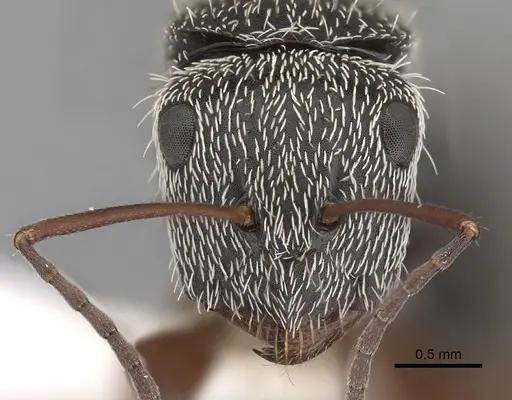
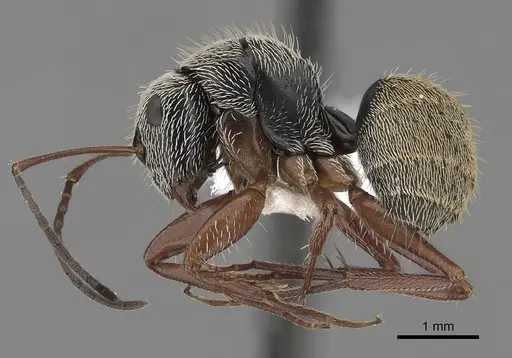
Workers measure 3-4mm, making them a small Camponotus species. They are black in color with notably red mandibles, antennae, and legs, this distinctive coloration helps separate them from other Cuban Camponotus. The head is trapezoidal and shorter than typical for the genus, not longer than broad. The eyes are more convex than related species, and the antennae are slender. [1] The pilosity (hair coverage) is distinctive, they have abundant flattened snow-white hairs on the dorsal surface, particularly on the head and thorax. The gaster (abdomen) is shining rather than matte. These ants are closely related to Camponotus albistramineus from Haiti but are consistently smaller.
Housing and Nesting in Captivity
Since this species has never been kept in captivity, all housing recommendations are estimates based on what we know about their natural habitat and related species. They likely require high humidity similar to other forest-dwelling Camponotus. A Y-tong (AAC) nest or plaster nest works well, both retain moisture well and provide the dark, enclosed environment ants prefer. Keep the nest substrate consistently moist but not waterlogged. Given their small size, ensure chambers and passages are appropriately scaled. Use excellent escape prevention as small ants can squeeze through surprisingly small gaps, apply Fluon to container edges and use tight-fitting lids. Provide an outworld for foraging with access to sugar water and protein sources.
Feeding and Diet
Like other Camponotus species, they likely have an omnivorous diet typical of the genus, accepting sugar sources (honey, sugar water) and protein (insects, small prey). In their natural forest habitat, they probably tend aphids for honeydew and hunt small invertebrates. Feed them a drop of sugar water or honey twice weekly, and offer protein sources like small crickets, mealworms, or other insects. Remove uneaten prey after 24-48 hours to prevent mold.
Temperature and Seasonal Care
Being from the Cuban mountains, they likely prefer temperatures in the 22-26°C range. Provide a temperature gradient so workers can choose their preferred zone. A heating cable on one side of the nest can create this gradient. Unlike temperate species, they likely do not require a true winter diapause. However, a slight seasonal reduction in temperature during winter months may help simulate natural conditions and could benefit colony health. Monitor colony activity, if workers become sluggish, they may be too cold, if they avoid the heated area, it may be too hot.
Frequently Asked Questions
How hard is Camponotus thysanopus to keep?
This species is considered expert-level due to extreme rarity and complete lack of captive care documentation. Almost all advice is estimated from genus patterns rather than direct experience. Unless you obtain a colony through scientific channels, you will likely never encounter this species for sale.
What do Camponotus thysanopus ants look like?
Workers are small at 3-4mm, black with distinctly red mandibles, antennae, and legs. They have abundant snow-white flattened hairs on their head and thorax, and their abdomen is shiny rather than matte.
Where is Camponotus thysanopus found?
This species is endemic to Cuba, found only in the mountainous eastern regions including the Sierra Maestra and Nipe-Sagua-Baracoa areas at elevations of 3000-3500 feet.
What temperature do Camponotus thysanopus need?
Keep warm and stable, roughly 22-26°C based on their Cuban montane forest habitat. Provide a gradient so workers can regulate their own temperature.
How long does it take for Camponotus thysanopus to develop from egg to worker?
Unknown, no development data exists for this species.
Can I keep multiple queens of Camponotus thysanopus together?
Unknown, queen caste has never been documented, so colony structure is completely unknown. Do not attempt combining unrelated queens without specific evidence this species accepts multi-queen colonies.
What humidity do Camponotus thysanopus need?
High humidity required, they come from pluviforest and evergreen forest habitats. Keep nest substrate consistently moist but not waterlogged.
Do Camponotus thysanopus need hibernation?
Unlikely, being a Cuban tropical species, they probably do not require true hibernation. A slight temperature reduction during winter may be beneficial but is not required.
How big do Camponotus thysanopus colonies get?
Unknown, no colony size data exists.
Where can I get Camponotus thysanopus?
This species is virtually unavailable to hobbyist antkeepers. It has been collected only a handful of times in nearly 90 years and is extremely rare even in scientific collections. You will not find them for sale.
Is Camponotus thysanopus invasive?
No, this species is endemic to Cuba and has never been documented outside its native range. Never release any ant species outside their documented range.
Report an Issue
The current care sheet is based fully on literature. See inconsistencies, or something that's incorrect? Please , it will be resolved after review from an admin. Contributing to the blogs tab also helps providing information, to make us be able to further improve the caresheets. Thank you for your support!
References

Este guia de cuidados está sob a licença CC BY-SA 4.0 .
Posts da comunidade
CASENT0280087
Ver no AntWeb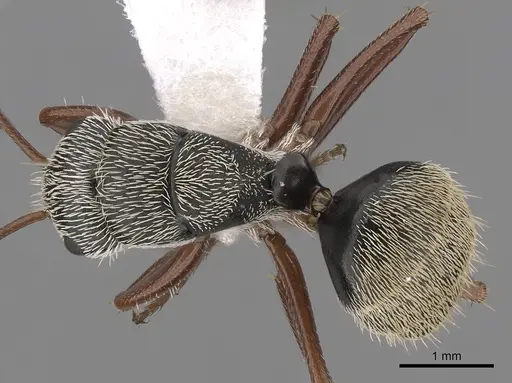
Literatura
Carregando mapa de distribuição...Carregando produtos...