
Camponotus megalonyx
- Nome científico
- Camponotus megalonyx
- Subgênero
- Myrmopalpella
- Tribo
- Camponotini
- Subfamília
- Formicinae
- Autor
- Wheeler, 1919
- Distribuição
- Encontrada em 1 países
Introdução
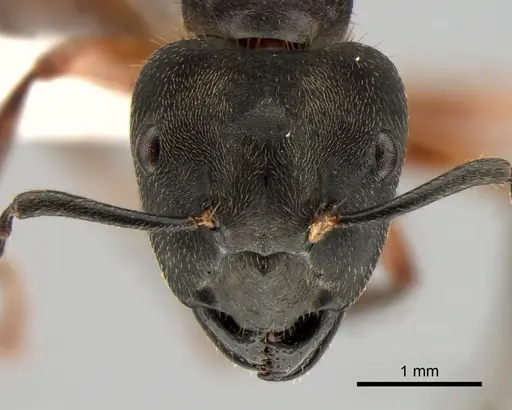
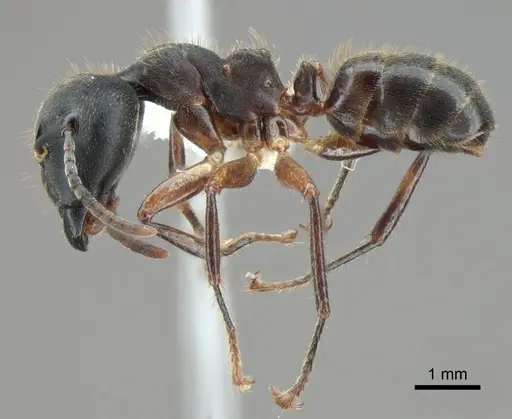
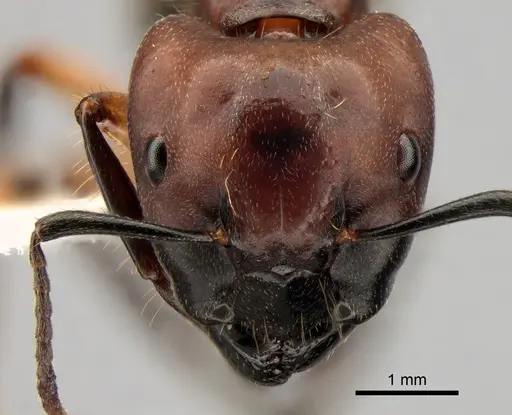
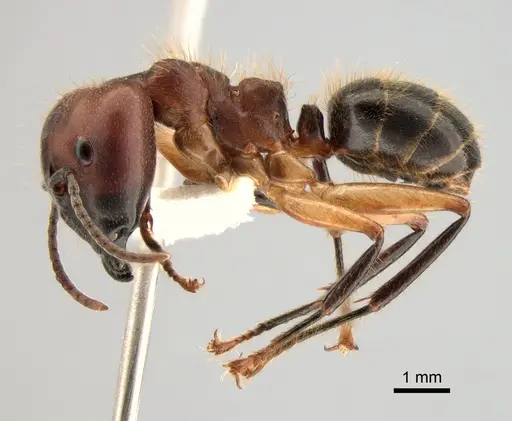
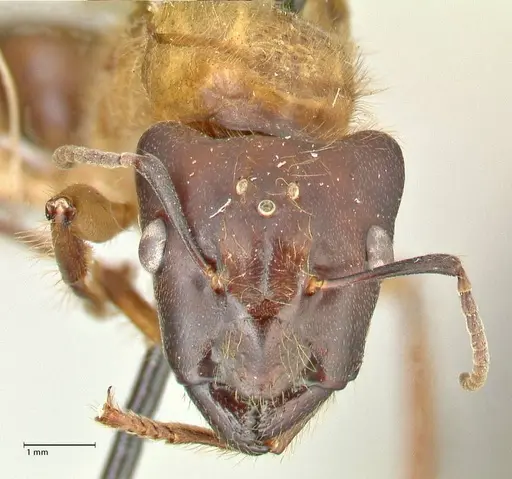
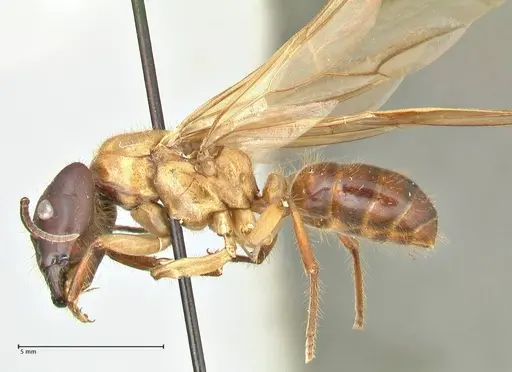
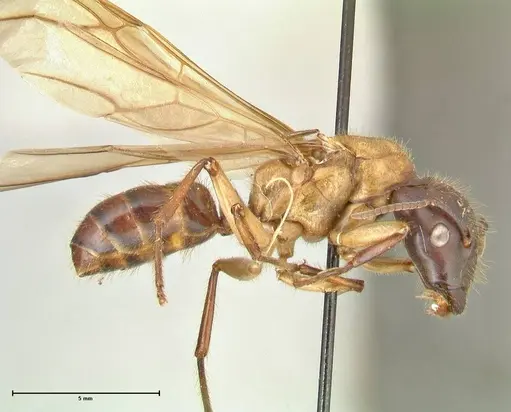
Camponotus megalonyx is a Southeast Asian carpenter ant and the sole member of the subgenus Myrmopalpella. Workers are highly polymorphic, with total body lengths ranging from 4 mm to 8.5 mm . They have a saddle-shaped propodeum and deep metanotal groove . This species nests exclusively inside the thickened midribs of rattan palm leaves (Korthalsia spp.) . Found in Borneo, Sumatra, and Malaysia in lowland forests near streams .
Quick Summary
- Difficulty: Hard
- Origin & Habitat: Tropical Southeast Asia, Borneo, Sumatra, Indonesia, and Malaysia. Nests in the thickened midribs of rattan palm leaves (Korthalsia spp.) in lowland virgin forests at 0-100m elevation, typically near streams [1][2].
- Colony Type: Unconfirmed, no specific data on queen number or social structure from research [1][2].
- Size & Growth:
- Antkeeping:
- Temperature: Keep warm and stable, roughly 24-28°C, based on tropical habitat.
- Humidity: Keep nest substrate consistently moist but not waterlogged, as they nest in humid plant material.
- Diapause: No, tropical species do not require hibernation [1].
- Nesting: Provide plant-based nesting material such as cork bark or dried stems, as they naturally nest in rattan leaves [1].
- Behavior: Workers are moderately aggressive when defending the nest but not highly territorial. They can spray formic acid as a defense mechanism, typical of Formicinae ants. Escape risk is moderate due to their size, use standard escape prevention like Fluon on container edges.
- Common Issues: nesting difficulty, they prefer plant-based material over soil nests, humidity control is critical, too dry can kill the colony, tropical warmth required year-round, room temperature may be insufficient, slow growth compared to temperate species, patience is needed, limited availability makes colonies hard to find
Nest Preferences and Housing
You need to replicate their natural nesting habit. In the wild, they nest inside thickened rattan palm midribs [1]. In captivity, provide vertical plant-based material like cork bark or dried stems. Avoid soil nests, they may reject them. Use a quiet, dark location for the nest.
Feeding and Diet
You can feed them omnivorous diet. Offer sugar sources like honey water and protein like small insects. Replace sugar sources every 2-3 days. Feed protein 2-3 times per week based on colony size.
Temperature and Humidity Requirements
You should keep them warm around 24-28°C with a gentle gradient. Use a heating cable on one side of the nest. Keep humidity high by maintaining moist substrate, but avoid waterlogging. They do not need diapause.
Colony Founding and Development
Queens are large at 15.5-16 mm [2]. Founding behavior is unconfirmed. After first workers emerge, the colony grows slowly. Major workers appear as the colony matures.
Unique Physical Characteristics
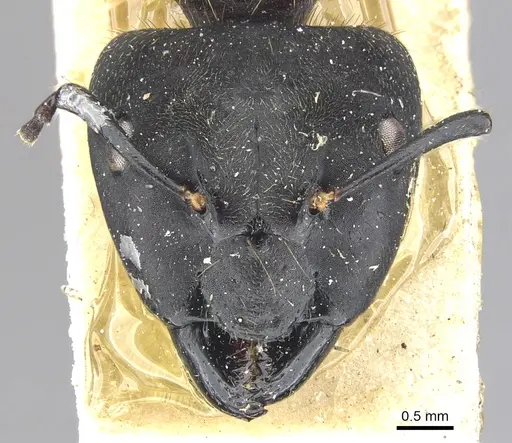
Workers are highly polymorphic, ranging from 4 mm to 8.5 mm [1]. They have a saddle-shaped propodeum and short antennae [1]. Larger workers have dense punctate body texture.
Behavior and Temperament
Workers are moderately defensive and can bite or spray formic acid. They are primarily nocturnal foragers. Major workers serve as defenders.
Frequently Asked Questions
Can I keep Camponotus megalonyx in a test tube?
Test tubes may work for founding colonies, but this species prefers plant-based nesting material [1]. For established colonies, use naturalistic setups with cork bark or plant stems.
What do Camponotus megalonyx eat?
They are omnivorous. Offer sugar water or honey and protein like small insects.
How long does it take for the first workers to emerge?
Based on typical Camponotus development, expect first workers in 6-10 weeks at 24-28°C.
Are Camponotus megalonyx good for beginners?
No, this species is challenging due to nesting requirements and tropical needs [1].
Do Camponotus megalonyx need hibernation?
No, as a tropical species, they do not require hibernation [1].
How big do colonies get?
Colony size is unknown, no data available from research.
Why won't my Camponotus megalonyx nest in a formicarium?
They naturally nest in plant stems, not soil [1]. Use plant-based nesting material.
What temperature is ideal for Camponotus megalonyx?
Keep them warm around 24-28°C, based on their tropical habitat.
Where does Camponotus megalonyx live in the wild?
They live in Borneo, Sumatra, and Malaysia, nesting in rattan palm leaves in lowland forests [1].
Report an Issue
The current care sheet is based fully on literature. See inconsistencies, or something that's incorrect? Please , it will be resolved after review from an admin. Contributing to the blogs tab also helps providing information, to make us be able to further improve the caresheets. Thank you for your support!
References

Este guia de cuidados está sob a licença CC BY-SA 4.0 .
Posts da comunidade
CASENT0882007
Ver no AntWeb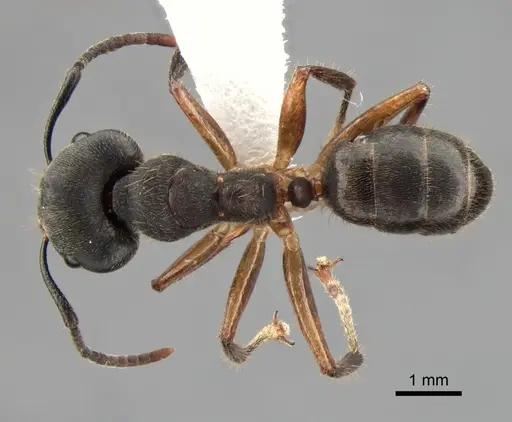
CASENT0882008
Ver no AntWeb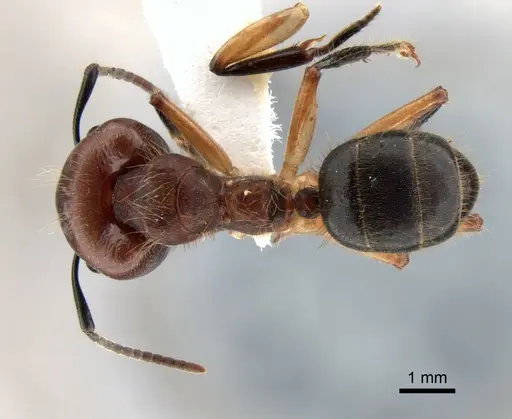
CASENT0903575
Ver no AntWeb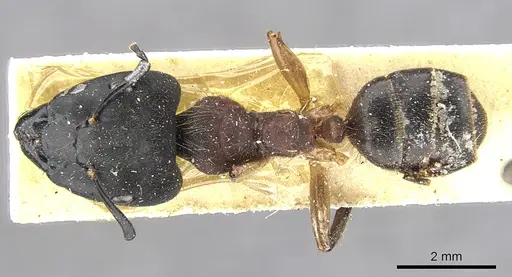
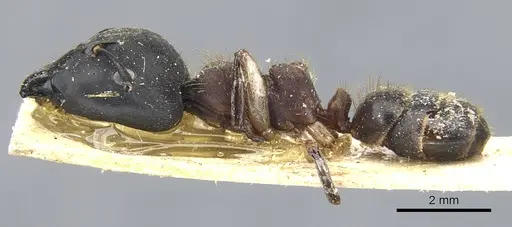
CASENT0913753
Ver no AntWeb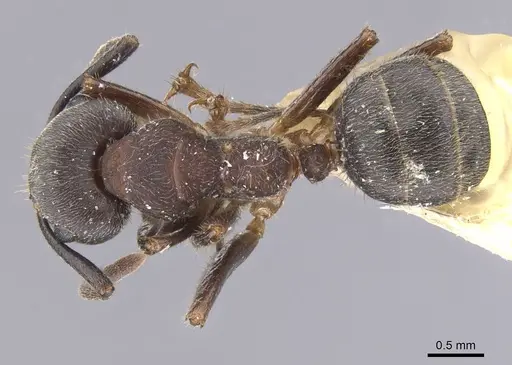
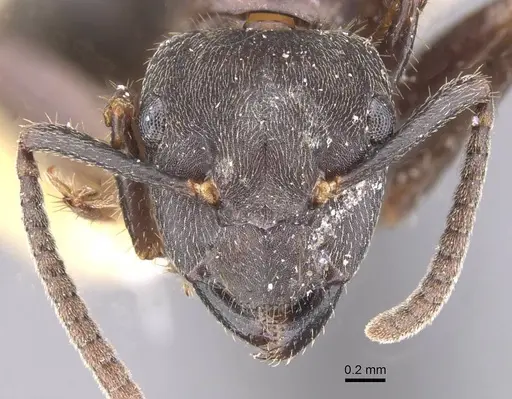
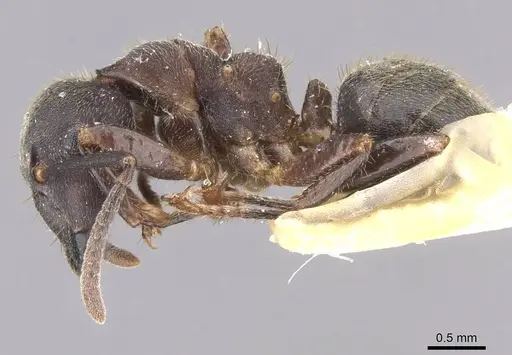
FOCOL2399
Ver no AntWeb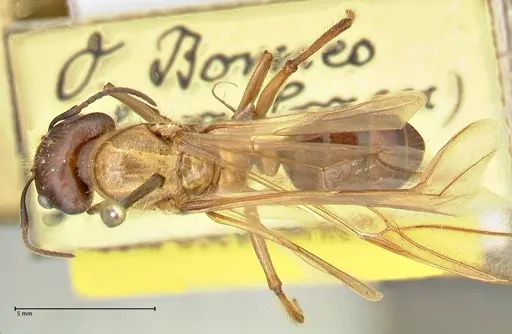
Literatura
Carregando mapa de distribuição...Carregando produtos...