
Camponotus gouldi
- Nome científico
- Camponotus gouldi
- Subgênero
- Myrmosaga
- Tribo
- Camponotini
- Subfamília
- Formicinae
- Autor
- Forel, 1886
- Distribuição
- Encontrada em 1 países
Introdução
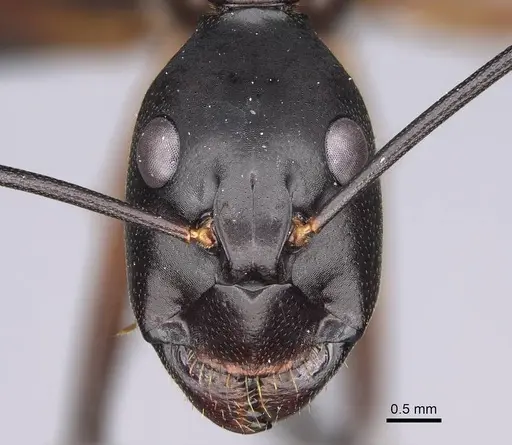
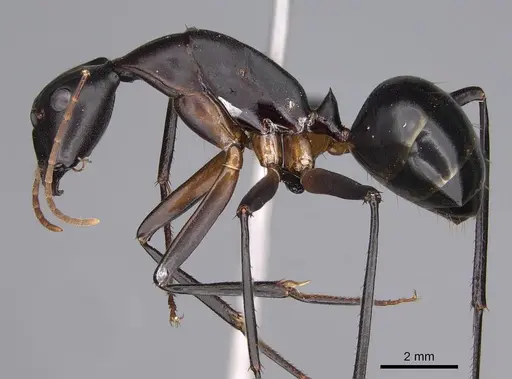
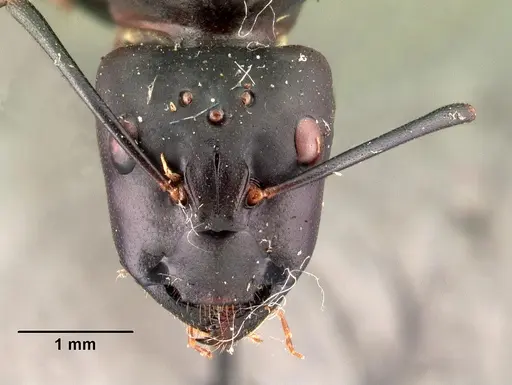
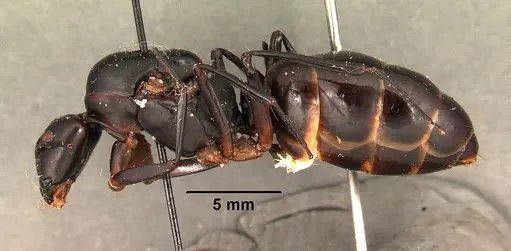
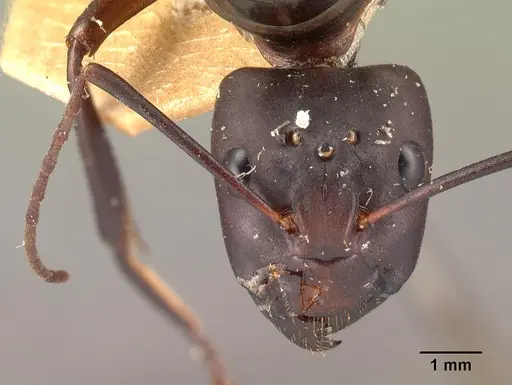
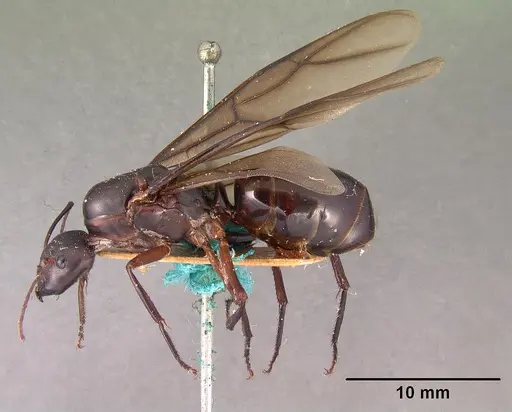
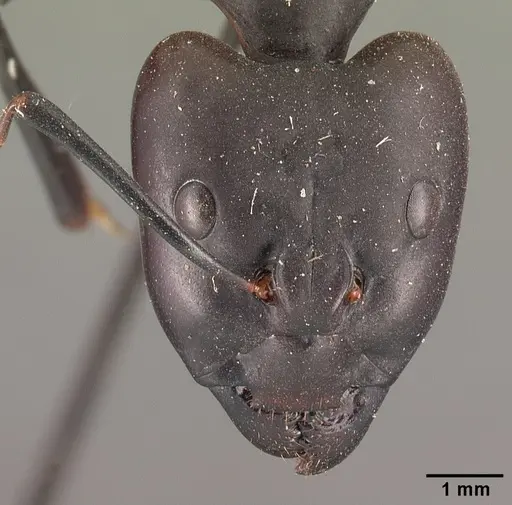
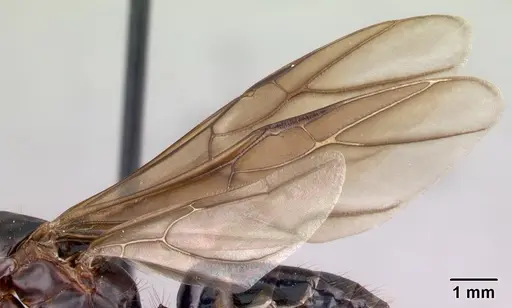
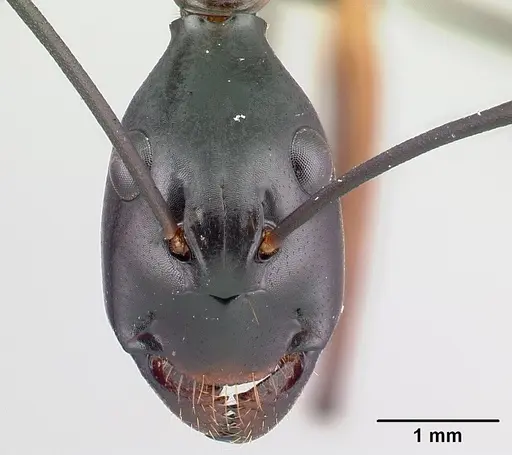
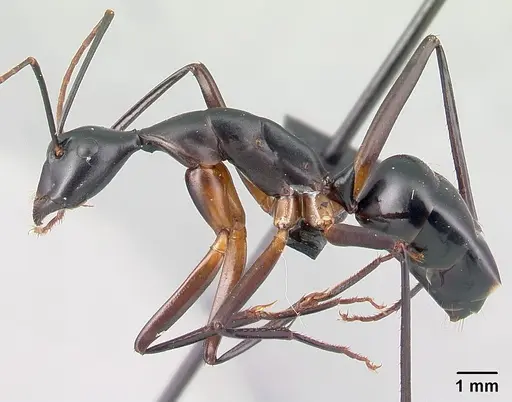
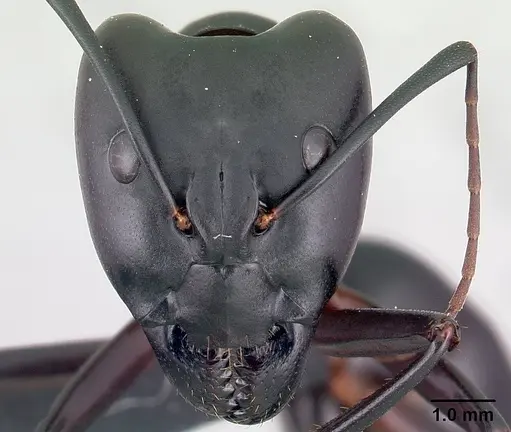
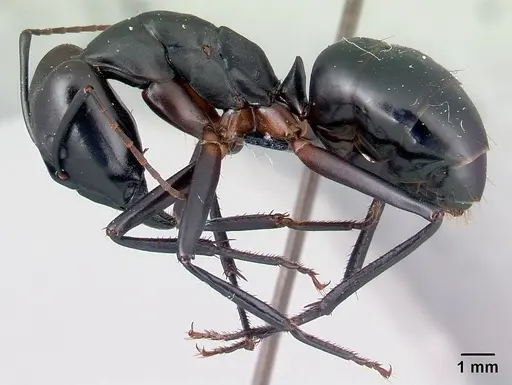
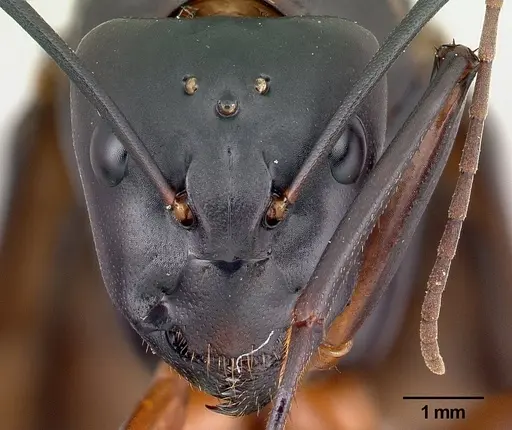
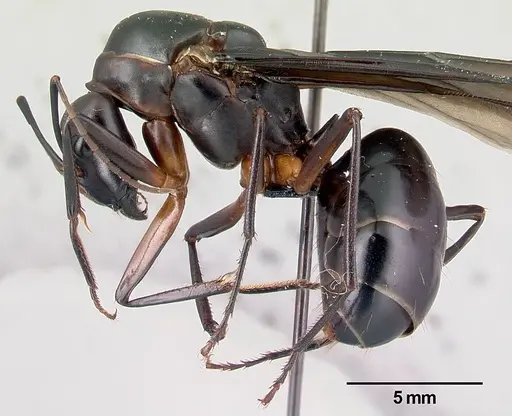
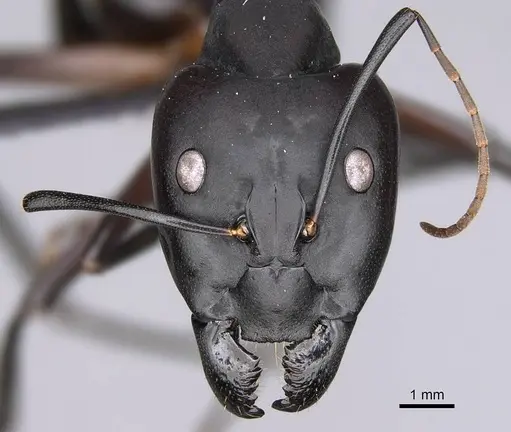
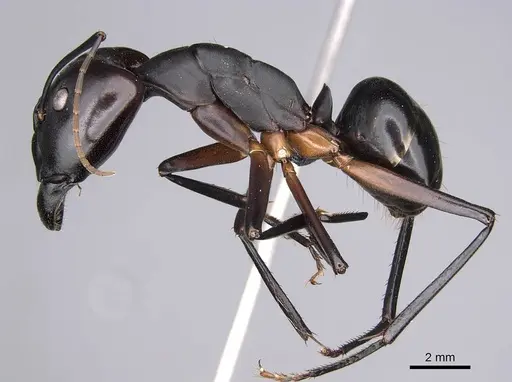
Camponotus gouldi is a medium-to-large ant species native to Madagascar. Workers are black to dark brown, with major workers having an enlarged head that lacks the prolonged neck seen in minor workers. Minor workers have a distinctive head shape - the sides parallel anterior to the eye level, then converging posteriorly into a short neck. The mesosoma has a broadly convex dorsal outline. This species is part of the subgenus Myrmosaga and shows the typical polymorphism of Camponotus ants, with distinct major and minor worker castes [AntWiki]. These ants are found across diverse habitats in Madagascar, from dry forests in the west to spiny forests in the southwest and montane rainforests in the south-central highlands. They nest primarily in rotten logs, under stones, and in the ground, occasionally in rotting tree stumps. Workers forage on the ground and occasionally on lower vegetation [AntWiki].
Quick Summary
- Difficulty: Medium
- Origin & Habitat: Madagascar, found in dry forest, spiny forest, transitional humid forest, savannah shrubland, and montane rainforest across the island [1]
- Colony Type: Colony structure is unconfirmed. Specific studies on Camponotus gouldi colony structure are lacking.
- Size & Growth:
- Queen: Size data unavailable for this species, inferred from Camponotus genus patterns (~12-15mm)
- Worker: Minor workers: approximately 5-7mm, Major workers: approximately 9-12mm with enlarged heads, inferred from Camponotus genus patterns [1]
- Colony: Colony size data unavailable for this species
- Growth: Moderate, Camponotus species typically grow steadily after founding
- Development: Development time is unconfirmed for this species. Based on typical Camponotus patterns, first workers emerge 6-10 weeks at optimal temperature. (Development time is temperature-dependent. Warmer temperatures within acceptable range accelerate development. First workers (nanitics) are typically smaller than normal workers.)
- Antkeeping:
- Temperature: Keep around 22-26°C. As a Madagascar species from tropical environments, they prefer warmth but can tolerate room temperature. A gentle gradient allowing workers to choose their preferred temperature is ideal.
- Humidity: Moderate humidity, they inhabit both dry and humid forests in the wild. Keep nest substrate lightly moist but not waterlogged. Provide a water tube for drinking water.
- Diapause: Diapause requirements are unconfirmed for this species. Madagascar has a subtropical climate with mild seasonal variation. Observe your colony for reduced activity during winter months and adjust care accordingly.
- Nesting: Provide a naturalistic setup with rotten wood pieces, soil, and stones, or use a Y-tong/plaster nest with chambers scaled to their medium-large size. They nest in rotten logs and under stones in the wild, so a naturalistic formicarium with these elements works well. They are ground-nesting ants [2][1].
- Behavior: Workers are moderately active and forage primarily on the ground. They are not particularly aggressive but will defend the nest if threatened. Major workers have larger mandibles and can deliver a more painful bite. They can spray formic acid from their acidopore as a defense mechanism. Escape risk is moderate, they are medium-sized ants but good climbers. Use standard escape prevention (Fluon on container edges).
- Common Issues: queen mortality during founding, claustral queens may fail if disturbed or if fat reserves are insufficient, mold in nests from overwatering, keep substrate moist but not saturated, slow initial growth, Camponotus founding can be slow, patience is required, escape prevention, while not tiny, they are active climbers and can escape through small gaps, winter mortality, colonies that are not allowed to slow down properly may have higher mortality
Housing and Nest Setup
Camponotus gouldi does well in naturalistic setups that mimic their natural nesting sites. In the wild, they nest in rotten logs, under stones, and in the ground [1]. They are ground-nesting ants [2]. For captivity, a Y-tong (AAC) nest with medium-to-large chambers works well, or you can create a naturalistic setup with a soil-filled container decorated with flat stones and pieces of rotting wood. The nest should have chambers large enough for the colony to move freely, with some tight spaces for the queen and brood. Since they forage on the ground, provide an outworld where workers can search for food. A water test tube should always be available for drinking water.
Feeding and Diet
Like most Camponotus species, C. gouldi is omnivorous. They accept sugar sources (honey water, sugar water) and protein foods (insects, mealworms, crickets). In the wild, they forage for honeydew and insects. Feed them a mix of protein (2-3 times per week) and constant access to sugar water or honey. Major workers will tackle larger prey items. Remove uneaten food after 24-48 hours to prevent mold. Fresh water should always be available.
Temperature and Seasonal Care
As a Madagascar species, C. gouldi prefers warm conditions. Keep the nest area at 22-26°C for optimal brood development. They can tolerate room temperature (20-22°C) but growth will be slower. A heating cable on one side of the nest can create a temperature gradient, allowing workers to choose their preferred spot. During winter (roughly December-February in the northern hemisphere), you may notice reduced activity. This is a good time to lower temperatures slightly (to around 18-20°C) and reduce feeding frequency. This winter rest period helps maintain natural colony cycles. [1]
Colony Founding
Newly mated queens will seal themselves in a chamber (claustral founding), as is typical for many Camponotus species. The queen uses stored fat reserves to survive and feed her first brood. She will not leave to forage during this time. After 4-8 weeks (depending on temperature), the first workers (nanitics) will emerge. These initial workers are typically smaller than normal workers. The colony should then be fed regularly. During founding, keep the queen in a dark, quiet location with minimal disturbance. A test tube setup works well for founding colonies.
Behavior and Temperament
Workers are moderately aggressive when defending the nest but are not particularly territorial. They forage primarily on the ground, searching for sugar sources and insect prey. Major workers have larger mandibles and can deliver a noticeable bite if handled roughly. They can also spray formic acid from their acidopore as a defense mechanism. The colony will establish clear foraging routes once established. Workers communicate through chemical signals and can recruit nestmates to food discoveries. They are not known for excessive digging or destructiveness, making them relatively easy to house once established. [1]
Frequently Asked Questions
How long does it take for Camponotus gouldi to produce first workers?
First workers typically emerge 6-10 weeks after the queen lays eggs, assuming temperatures around 24-26°C. Cooler temperatures will slow development. The first workers (nanitics) are smaller than normal workers and the colony will grow steadily from there.
What do Camponotus gouldi ants eat?
They are omnivorous. Feed them sugar water or honey for carbohydrates, and protein sources like mealworms, crickets, or other small insects. Provide protein 2-3 times per week and keep sugar water available at all times.
Do Camponotus gouldi ants need hibernation?
Diapause requirements are unconfirmed for this species. Madagascar has a subtropical climate with mild seasonal variation. Observe your colony for reduced activity during winter months and adjust care accordingly.
What size colony do Camponotus gouldi reach?
Colony size data is unavailable for this specific species. Based on typical Camponotus growth patterns, colonies may reach several hundred workers at maturity.
Are Camponotus gouldi good for beginners?
They are a medium-difficulty species. The main challenges are their slower founding phase compared to some faster-growing ants, and they need warm conditions. They are not as demanding as some tropical species but require more patience than common temperate ants.
What temperature is best for Camponotus gouldi?
Keep them at 22-26°C. They can tolerate room temperature but grow better in warmth. A temperature gradient allowing workers to choose their preferred spot is ideal.
Can I keep multiple Camponotus gouldi queens together?
Colony structure is unconfirmed for this species. Specific studies on C. gouldi colony type (monogyne vs polygyne) are lacking. Combining unrelated foundress queens is not recommended as they will likely fight. If you obtain a wild colony, it likely has only one reproductive queen.
When should I move my colony to a formicarium?
Wait until the colony has at least 20-30 workers before moving to a formicarium. Test tube setups work well for founding colonies and early growth. A naturalistic or Y-tong nest can be introduced once the colony is established and actively foraging.
Why is my Camponotus gouldi colony growing slowly?
Slow growth is normal for Camponotus species during the founding phase. Ensure temperatures are warm (22-26°C), the queen is healthy and undisturbed, and you are providing adequate food. Once workers emerge, growth typically accelerates. Patience is key with this genus.
Report an Issue
The current care sheet is based fully on literature. See inconsistencies, or something that's incorrect? Please , it will be resolved after review from an admin. Contributing to the blogs tab also helps providing information, to make us be able to further improve the caresheets. Thank you for your support!
References

Este guia de cuidados está sob a licença CC BY-SA 4.0 .
Posts da comunidade
CASENT0062874
Ver no AntWeb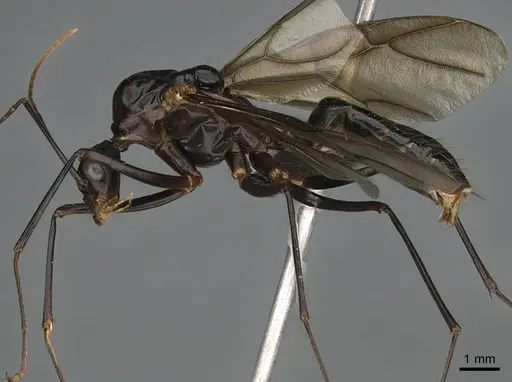
CASENT0079325
Ver no AntWeb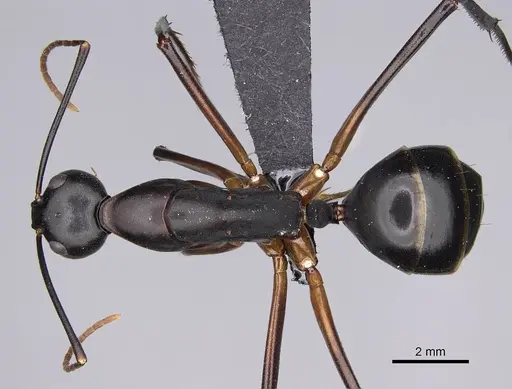
CASENT0101493
Ver no AntWeb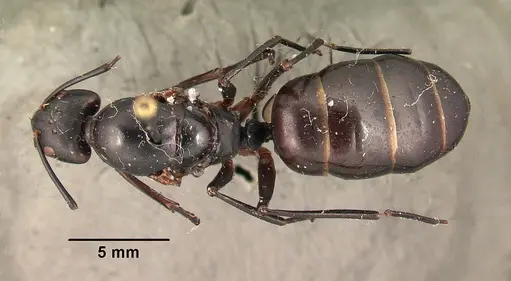
CASENT0101810
Ver no AntWeb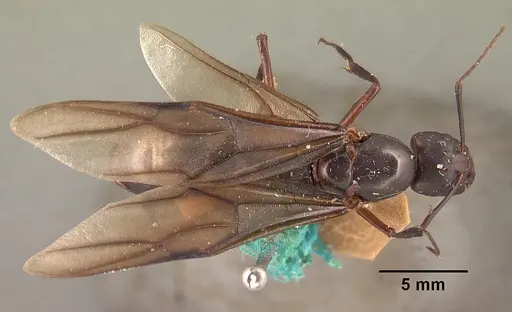
CASENT0101850
Ver no AntWeb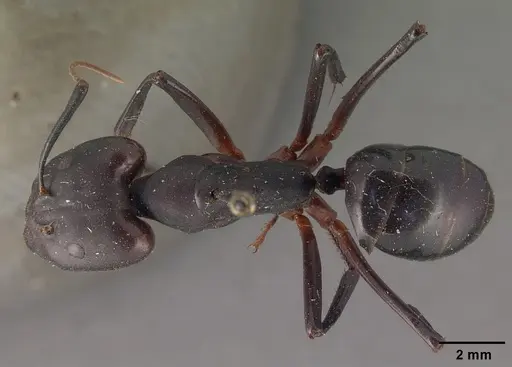
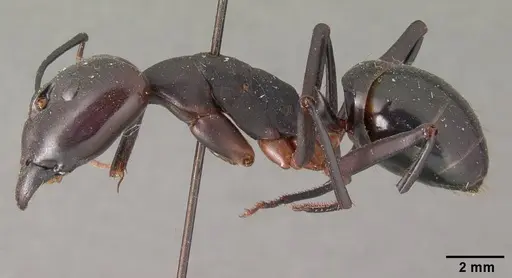
CASENT0109227
Ver no AntWeb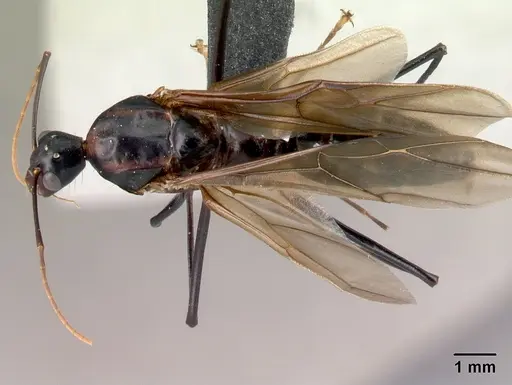
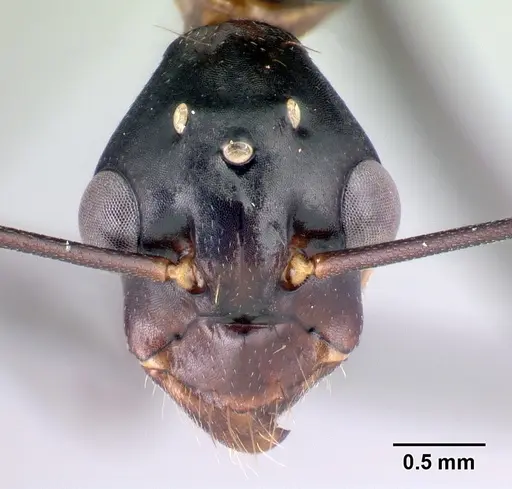
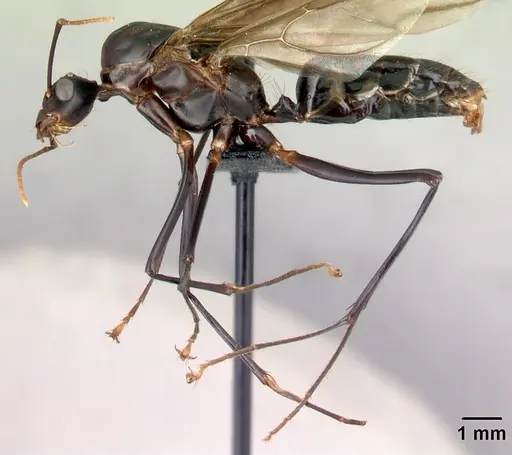
CASENT0121617
Ver no AntWeb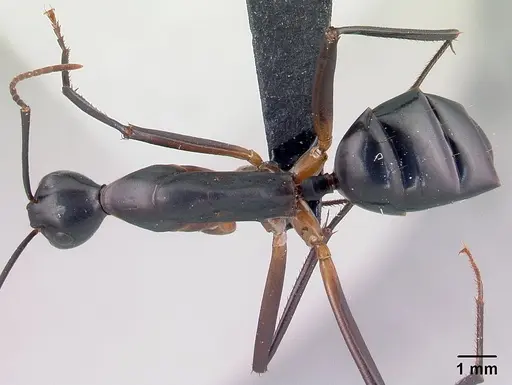
CASENT0121618
Ver no AntWeb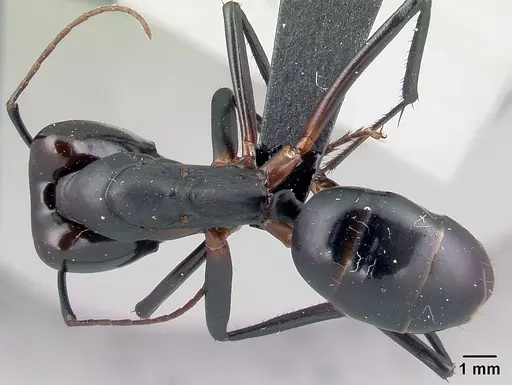
CASENT0144966
Ver no AntWeb
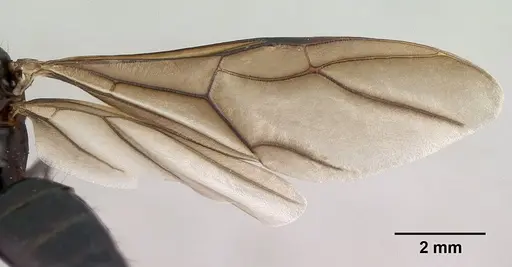
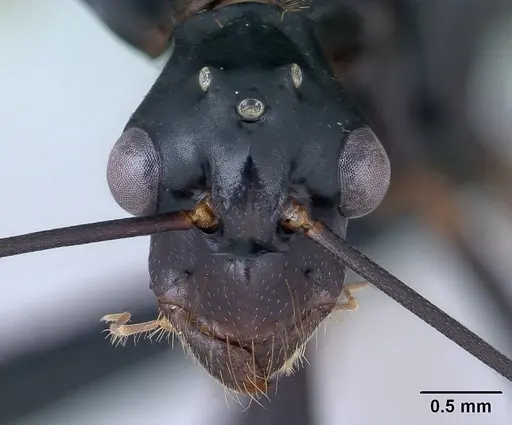
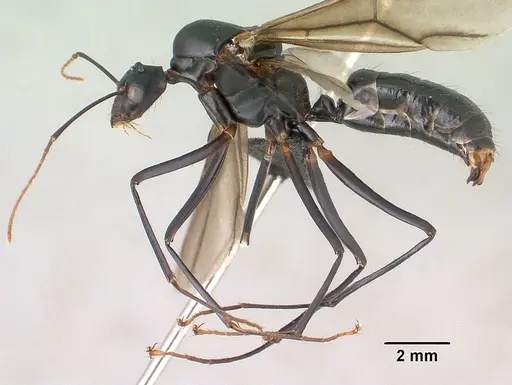
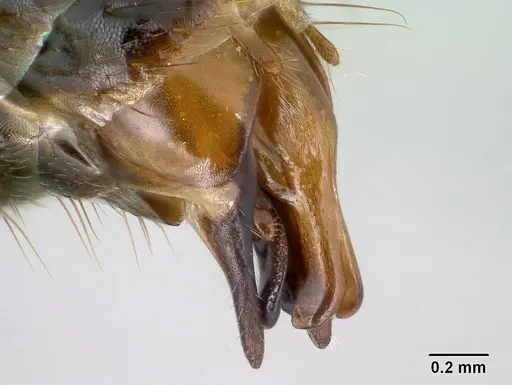
CASENT0179443
Ver no AntWeb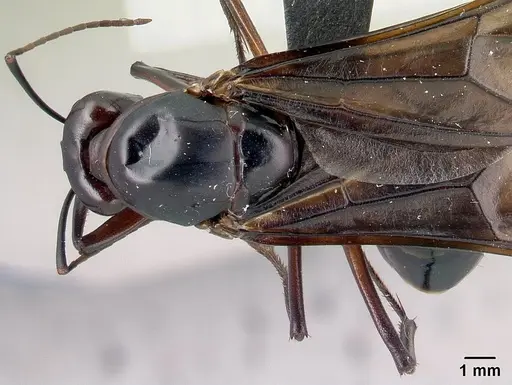
CASENT0429998
Ver no AntWeb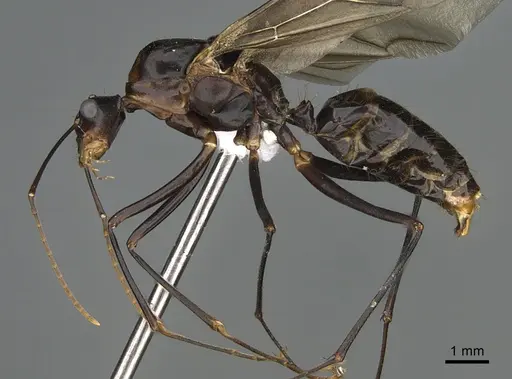
CASENT0437531
Ver no AntWeb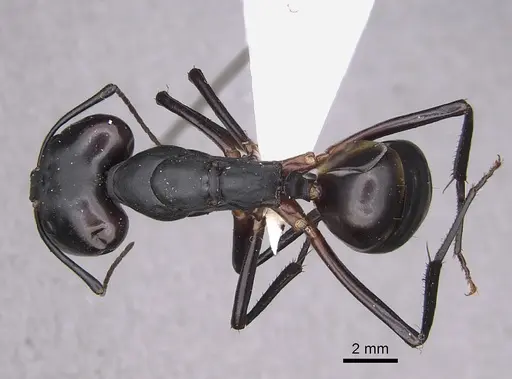
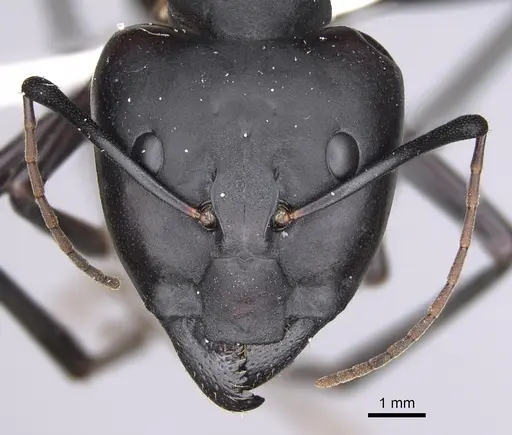
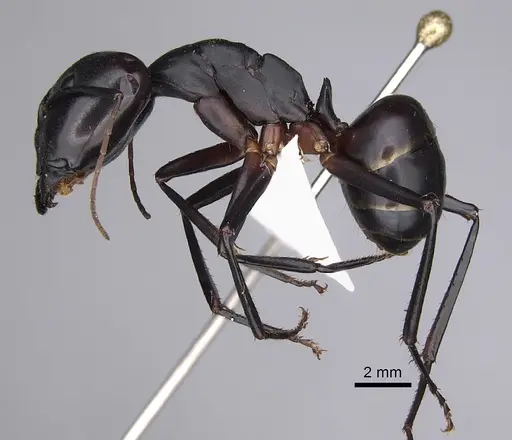
CASENT0455762
Ver no AntWeb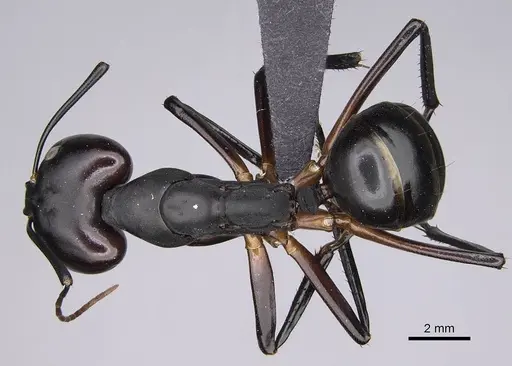
Literatura
Carregando mapa de distribuição...Carregando produtos...