
Camponotus descarpentriesi
- Nome científico
- Camponotus descarpentriesi
- Subgênero
- Mayria
- Tribo
- Camponotini
- Subfamília
- Formicinae
- Autor
- Santschi, 1926
- Distribuição
- Encontrada em 1 países
Introdução
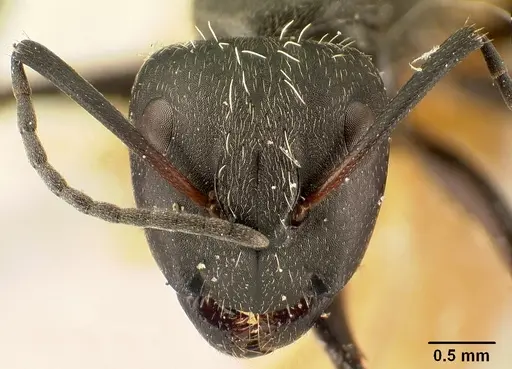
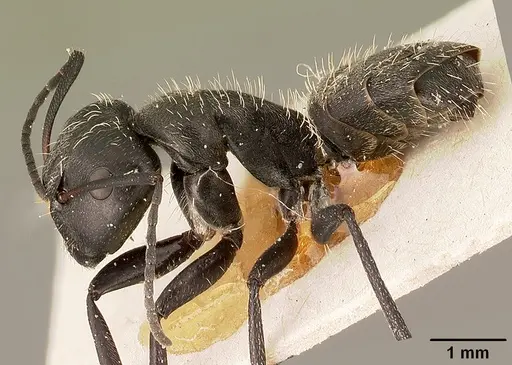
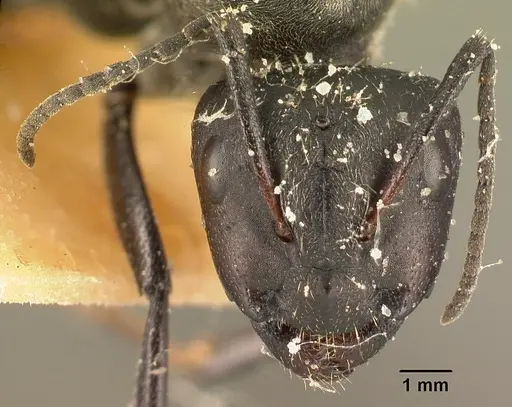
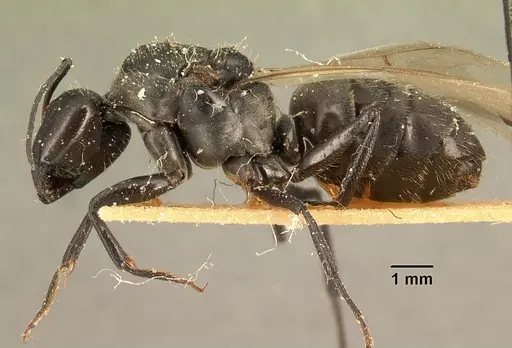
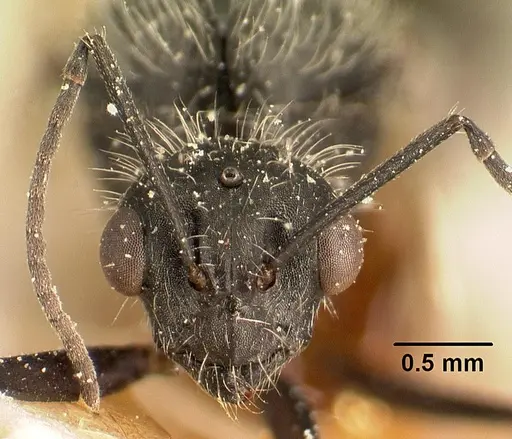
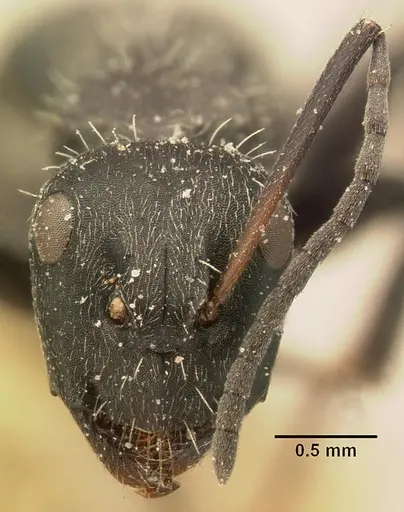
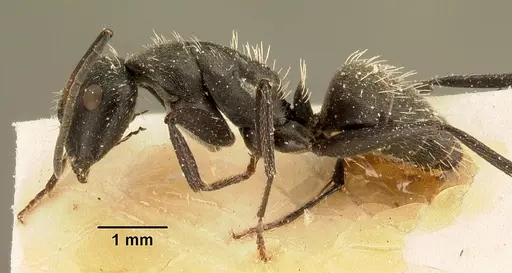
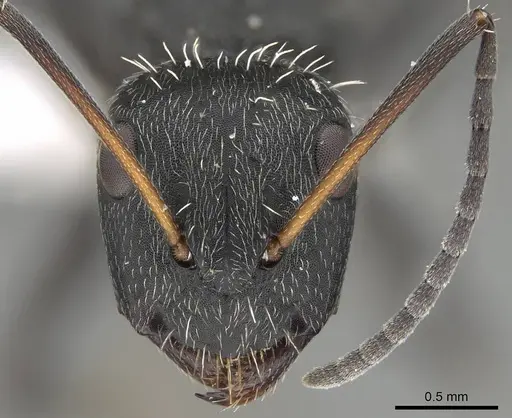
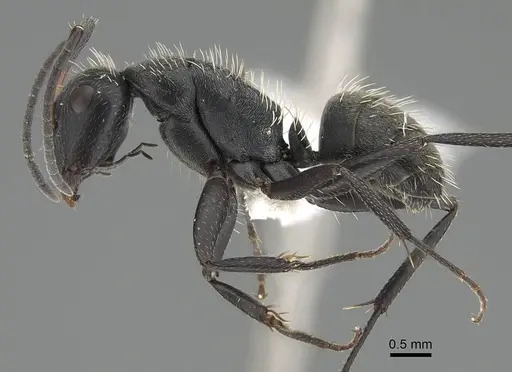
Camponotus descarpentriesi is a striking black ant endemic to Madagascar, belonging to the Camponotus madagascarensis species group. Workers are mostly black with scattered whitish erect hairs on the head and mesosoma, and a narrow transverse light strip on the abdominal segments. This species inhabits the grassland and ericoid thickets of Madagascar's central highlands, including the Ankaratra massif, Ankazomivady forest near Ambositra, and Andringitra National Park. They forage both on the ground through leaf litter and on lower vegetation. The species was reclassified from subgenus Myrmopiromis to Mayria in 2022 .
Quick Summary
- Difficulty: Medium
- Origin & Habitat: Endemic to Madagascar, found only in grassland and ericoid thickets of the central highlands at elevations around 1800m. Known from Ankaratra massif in the north, Ankazomivady forest near Ambositra, and Andringitra National Park in the south [1].
- Colony Type: Colony structure is unconfirmed. Based on typical Camponotus patterns, likely single-queen (monogyne) colonies.
- Size & Growth:
- Queen: Size data unavailable, no measurements exist for this species
- Worker: Size data unavailable, the context provides head measurements (CS) but not total body length. Based on Camponotus genus patterns, minor workers are likely 6-10mm and major workers 10-15mm
- Colony: Unknown, likely reaches several hundred workers based on typical Camponotus growth patterns
- Growth: Moderate
- Development: Estimated 6-10 weeks at optimal temperature based on typical Camponotus development (Development time is inferred from genus-level data since species-specific timing is unconfirmed)
- Antkeeping:
- Temperature: Keep at 24-28°C, this is a tropical species from Madagascar but the central highlands are cooler than coastal areas. A gentle gradient allowing workers to self-regulate is ideal.
- Humidity: Moderate humidity around 50-70%. The central highlands have seasonal rainfall patterns. Provide a moist nest chamber but allow some drying between waterings.
- Diapause: No, as a tropical species from Madagascar, they do not require hibernation. Keep temperatures stable year-round.
- Nesting: In captivity, standard Camponotus setups work well, test tubes for founding, Y-tong or plaster nests for established colonies. They prefer tight-fitting chambers. Provide a water tube for humidity.
- Behavior: Generally calm and non-aggressive for a Camponotus species. Workers are moderate foragers, searching both on the ground and on surfaces. Major workers can defend the nest. Escape risk is moderate, use standard barrier methods. They are primarily nocturnal or crepuscular foragers.
- Common Issues: tropical species may struggle if temperatures drop below 20°C for extended periods, colonies may be slow to establish, patience is needed during founding, wild-caught colonies may carry parasites or diseases that affect survival, major workers are large but colonies grow slowly initially, escape prevention is important as workers can squeeze through small gaps
Housing and Nest Setup
Camponotus descarpentriesi can be kept in standard ant-keeping setups. For founding colonies, use a test tube setup with a water reservoir and cotton plug. The queen will seal herself in a chamber and raise the first workers (nanitics) without leaving to forage. Once the colony reaches 20-30 workers, you can move them to a formicarium. Y-tong (AAC) or plaster nests work well for Camponotus, the chambers should be appropriately scaled to worker size. Provide a constant water source through a test tube attached to the outworld. These ants do not need large spaces, tight chambers help them feel secure.
Feeding and Diet
Like most Camponotus species, these ants are omnivorous. They accept sugar sources (honey, sugar water) for energy, and protein sources for colony growth. Offer small insects like fruit flies, mealworms, or crickets. Camponotus are nocturnal feeders in nature, so evening feeding often yields better results. Remove uneaten prey after 24-48 hours to prevent mold. A constant sugar water supply is recommended once workers are active.
Temperature and Seasonal Care
As a tropical species from Madagascar's central highlands, keep temperatures in the 24-28°C range. They can tolerate slightly cooler conditions (down to around 20°C) but growth will slow. Avoid temperatures below 18°C for extended periods. No hibernation or diapause is required, maintain stable temperatures year-round. A heating cable on one side of the nest can create a gradient for self-regulation. Room temperature within the range is often sufficient.
Growth and Development
Camponotus colonies grow progressively, the first workers (nanitics) are typically smaller than mature workers. After nanitics emerge, the queen resumes egg-laying and colony growth accelerates. Expect 6-10 weeks from egg to first worker at optimal temperature. Major workers appear as the colony matures. Colonies may take 1-2 years to reach significant numbers. Patience is key during the founding phase, many colonies fail before the first workers emerge.
Behavior and Temperament
This species is generally calm and less aggressive than many Camponotus. Workers forage both on the ground and on vegetation, showing flexibility in their foraging patterns. They are primarily active during cooler parts of the day. Major workers can defend the colony but they typically avoid confrontation when possible. Use standard escape prevention, while not particularly good climbers on smooth surfaces, they can squeeze through small gaps. In the wild, they forages terrestrially on the ground and through leaf litter, and arboreally on lower vegetation [1].
Frequently Asked Questions
How long does it take for Camponotus descarpentriesi to raise first workers?
Expect 6-10 weeks from egg to first worker at optimal temperature (24-28°C). This is typical for Camponotus species. The queen will remain sealed in her chamber until nanitics emerge.
Do Camponotus descarpentriesi need hibernation?
No, as a tropical species from Madagascar, they do not require hibernation. Keep temperatures stable year-round in the 24-28°C range.
What do Camponotus descarpentriesi eat?
They are omnivorous. Offer sugar water or honey for energy, and small insects like fruit flies, mealworms, or crickets for protein. Remove uneaten prey after 24-48 hours.
Is Camponotus descarpentriesi good for beginners?
This species is rated as medium difficulty. While not as challenging as some species, the slow founding phase and specific temperature needs make experience helpful. Beginners should be prepared for a longer wait before seeing significant colony growth.
How big do Camponotus descarpentriesi colonies get?
Colony size is unconfirmed for this specific species, but based on related Camponotus, expect several hundred workers at maturity over 1-2 years.
Can I keep multiple Camponotus descarpentriesi queens together?
Colony structure is unconfirmed for this species. Based on typical Camponotus patterns, they likely form single-queen colonies. Combining unrelated queens is not recommended without evidence of multi-queen tolerance.
What temperature range is best for Camponotus descarpentriesi?
Keep them at 24-28°C. They can tolerate brief periods at 20°C but growth will slow. Avoid temperatures below 18°C for extended periods.
When should I move my colony to a formicarium?
Move to a formicarium once the colony reaches 20-30 workers. Before that, a test tube setup provides proper humidity and security for the founding queen.
Why is my colony growing slowly?
Slow growth is normal for Camponotus during founding. Ensure temperatures are optimal (24-28°C), provide adequate protein, and avoid disturbing the queen. Colonies often appear stagnant before accelerating growth.
Report an Issue
The current care sheet is based fully on literature. See inconsistencies, or something that's incorrect? Please , it will be resolved after review from an admin. Contributing to the blogs tab also helps providing information, to make us be able to further improve the caresheets. Thank you for your support!
References

Este guia de cuidados está sob a licença CC BY-SA 4.0 .
Posts da comunidade
CASENT0101202
Ver no AntWeb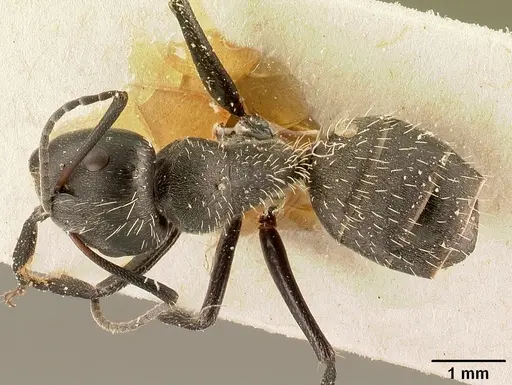
CASENT0101203
Ver no AntWeb
CASENT0101204
Ver no AntWeb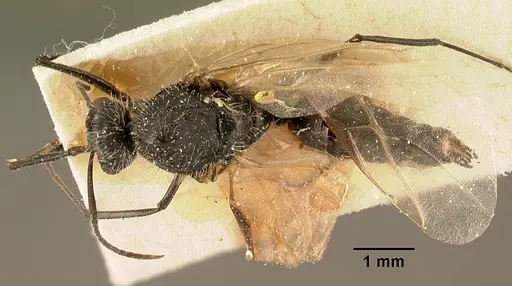
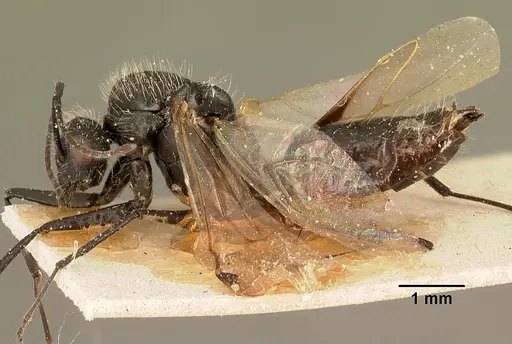
CASENT0101205
Ver no AntWeb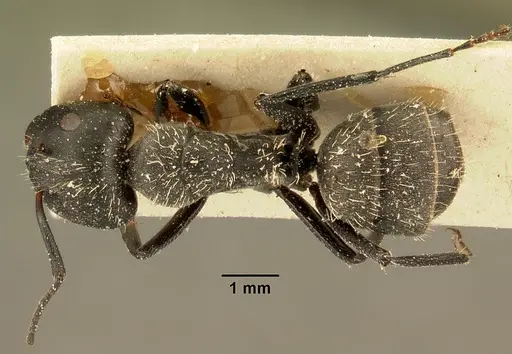
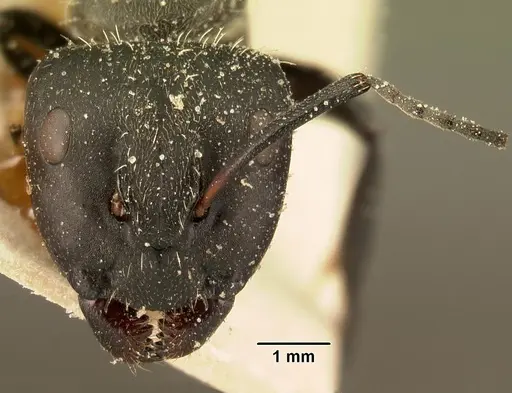
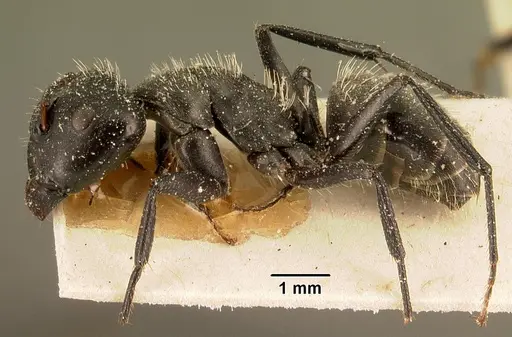
CASENT0101206
Ver no AntWeb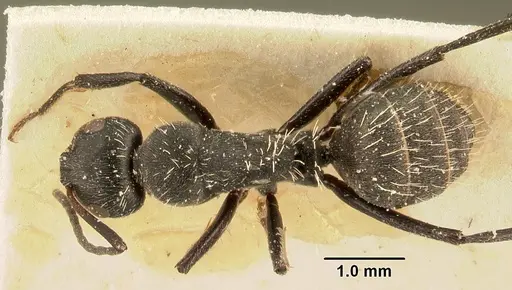
CASENT0763876
Ver no AntWeb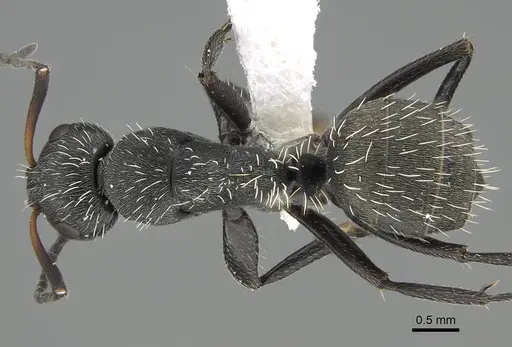
Literatura
Carregando mapa de distribuição...Carregando produtos...