
Austromorium flavigaster
- Nome científico
- Austromorium flavigaster
- Tribo
- Solenopsidini
- Subfamília
- Myrmicinae
- Autor
- Clark, 1938
- Distribuição
- Encontrada em 1 países
Introdução
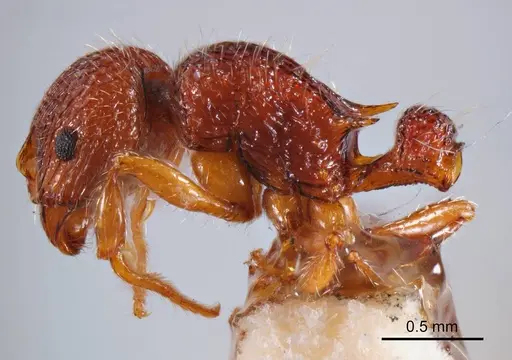
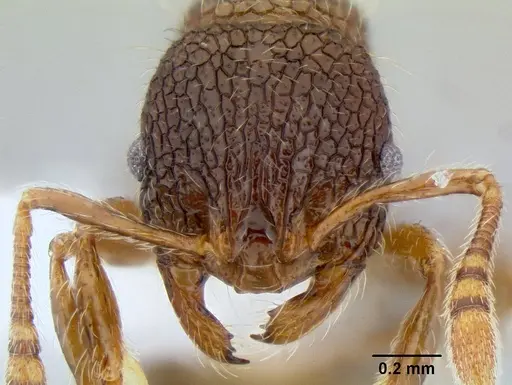
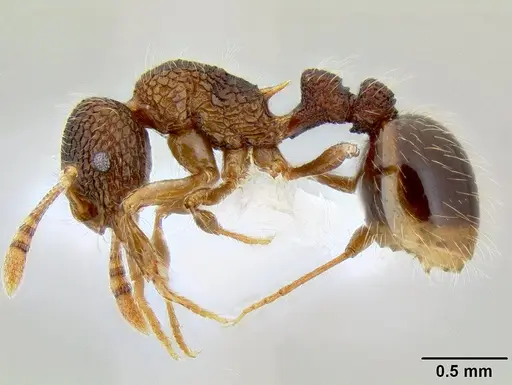
Austromorium flavigaster is a tiny Australian ant. Workers have a head width of 0.65-0.81mm, making them among the smaller ant species in Australia . They show a distinctive banded gaster with alternating light and dark brown bands, and their bodies range from yellowish-red to reddish-brown with lighter antennae and legs [AntWiki]. These ants live across semi-arid southern Australia, from south-west Western Australia through Victoria and New South Wales to the ACT, favoring dry sclerophyll woodlands and mallee scrub [AntWiki]. What makes these ants interesting is their relationship with urban areas. They frequently appear in newly developed suburbs on the urban fringe, but they cannot persist in established built-up areas over time [AntWiki]. In nature, they are ground-nesting general scavengers that typically establish colonies in soil at the base of trees . They are Australian endemics with no known introductions elsewhere .
Quick Summary
- Difficulty: Medium
- Origin & Habitat: Southern Australia (south-west WA, SA, Victoria, NSW, ACT) in dry sclerophyll woodlands and mallee [1][3][2]
- Colony Type: Colony structure unconfirmed
- Size & Growth:
- Queen: Size data unavailable
- Worker: Head width 0.65-0.81mm, full body size data unavailable [1]
- Colony: Unknown
- Growth: Unknown
- Development: Unknown (Development time unconfirmed for this species)
- Antkeeping:
- Temperature: Keep at room temperature, avoid tropical heat given temperate distribution
- Humidity: Moderate, provide well-drained nest conditions, avoid waterlogging
- Diapause: Likely required given temperate distribution
- Nesting: Soil-based nests at base of trees in nature, use naturalistic setups with sand/soil mix or test tubes with substrate [1]
- Behavior: General scavengers that forage on the ground [1][4]. Small size requires excellent escape prevention. Not aggressive.
- Common Issues: escape prevention is critical, their small size means they can squeeze through tiny gaps, over-humidity causes problems, they come from dry sclerophyll forests and damp conditions promote mold, colonies may need seasonal temperature cues, temperate Australian species often need winter cooling, tiny workers can drown in water drops, provide shallow feeding dishes with stones
Nest Preferences
In the wild, Austromorium flavigaster nests in soil, often at the base of trees in dry sclerophyll woodlands [1][3]. They are ground-nesting generalists that do not construct elaborate mounds. For captive colonies, test tubes with a layer of sand or fine gravel work well for founding colonies, while mature colonies appreciate naturalistic setups with a sand-soil mix. Y-tong (AAC) nests with narrow chambers also suit their small size. Avoid tall, open spaces, these ants prefer tight chambers and narrow passages. The nest should have some moisture but must drain well, waterlogged conditions cause problems for this species from semi-arid habitats.
Feeding and Diet
These ants are general scavengers [1]. They will accept a variety of foods including sugar water, honey, and small insects. They have been observed harvesting seeds in restoration areas, suggesting they may store or consume seeds as part of their diet [4]. Offer small prey appropriate to their size, fruit flies, tiny pieces of mealworm, or crushed insects work well. Because they are small, they cannot handle large prey items. Provide a constant sugar source and protein twice weekly. Watch that food does not mold in their nest, as they prefer drier conditions.
Temperature and Seasonal Care
Coming from temperate southern Australia, these ants experience seasonal temperature variations. Keep active colonies at room temperature (around 20-25°C). They likely require a winter rest period, though this has not been directly documented. If your colony slows down and stops brood production in cooler months, this is normal. Do not keep them at tropical temperatures year-round. A heating cable on one side of the nest can create a gradient, but ensure the nest does not dry out completely. [1]
Behavior and Temperament
Austromorium flavigaster shows typical scavenging behavior, foraging on the ground near their nest entrance. They are not known to be aggressive, which fits their small size and generalist scavenger lifestyle. However, their tiny size makes them expert escape artists. You must use excellent escape prevention, fine mesh (stainless steel 0.5mm or finer), tight-fitting lids, and barriers like Fluon or talcum powder on the outworld rim. They cannot sting humans effectively given their size, and their mandibles are too small to cause pain. [1]
Colony Founding
Founding behavior has not been documented for this species. If you have a founding queen, provide her with a test tube setup with a water reservoir and darkness. Do not disturb her frequently. First workers (nanitics) should emerge when they are ready, but development time is unconfirmed for this species. [1]
Frequently Asked Questions
Can I keep Austromorium flavigaster in a test tube?
Yes, test tubes work well for founding colonies. Use a standard test tube setup with a water reservoir blocked with cotton, and add a thin layer of sand or fine gravel to mimic their soil-nesting habits [1].
How long until Austromorium flavigaster gets first workers?
Development time is unconfirmed for this species.
How big do Austromorium flavigaster colonies get?
Maximum colony size is unknown.
Do Austromorium flavigaster need hibernation?
Likely yes. They come from temperate southern Australia where winters are cool. You should provide a winter rest period at cooler temperatures.
What do Austromorium flavigaster eat?
They are general scavengers that accept sugar water, honey, and small insects [1]. They have also been observed harvesting seeds [4]. Offer fruit flies or tiny pieces of mealworm for protein.
Are Austromorium flavigaster good for beginners?
They are moderately difficult. While they are hardy scavengers from a wide climate range, their small size requires excellent escape prevention and careful feeding.
Do Austromorium flavigaster ants sting?
They are too small to sting humans effectively. Their mandibles are also too small to cause any pain.
Why are my Austromorium flavigaster dying?
Common causes include: escapes due to their small size, over-humidity causing mold (they prefer drier conditions), lack of winter rest period, or drowning in water reservoirs.
Can I keep multiple Austromorium flavigaster queens together?
Not recommended. While their colony structure is unconfirmed, combining unrelated queens is risky and has not been documented for this species.
What is the best nest type for Austromorium flavigaster?
Naturalistic setups with sand-soil mix, or Y-tong (AAC) nests with narrow chambers work well. They need tight spaces appropriate for their small size and good drainage [1].
Report an Issue
The current care sheet is based fully on literature. See inconsistencies, or something that's incorrect? Please , it will be resolved after review from an admin. Contributing to the blogs tab also helps providing information, to make us be able to further improve the caresheets. Thank you for your support!
References

Este guia de cuidados está sob a licença CC BY-SA 4.0 .
Posts da comunidade
ANTWEB1008360
Ver no AntWeb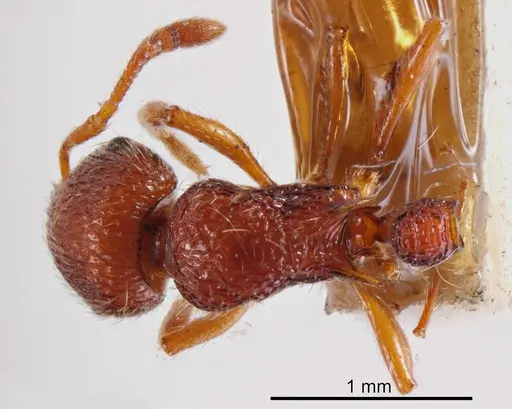
CASENT0106211
Ver no AntWeb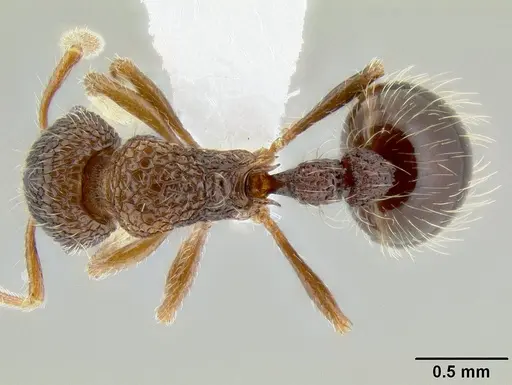
Literatura
Carregando mapa de distribuição...Carregando produtos...