
Aphaenogaster ulibeli
- Nome científico
- Aphaenogaster ulibeli
- Tribo
- Stenammini
- Subfamília
- Myrmicinae
- Autor
- Gómez & Espadaler, 2018
- Distribuição
- Encontrada em 1 países
Introdução
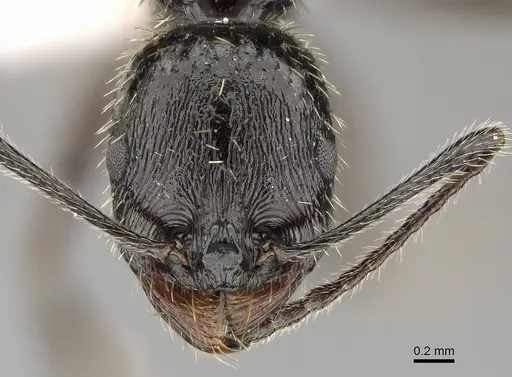
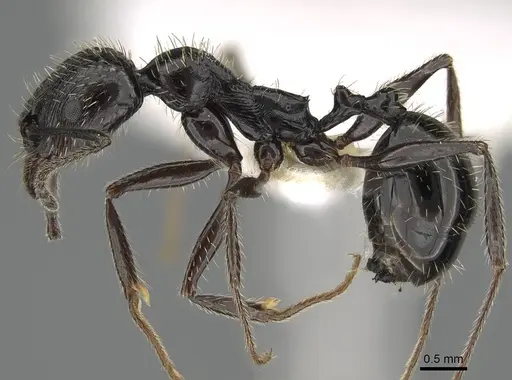
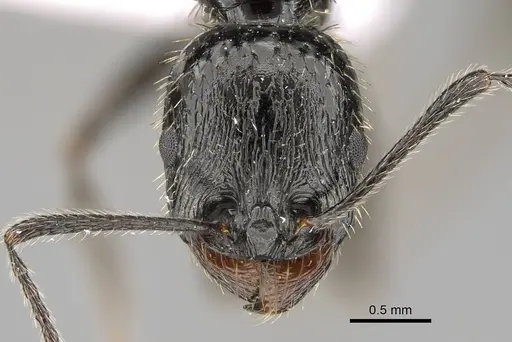
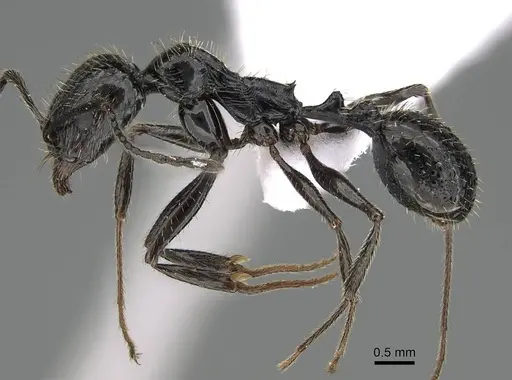
Aphaenogaster ulibeli are small, dark ants found only in the deciduous forests of Spain. Workers are blackish brown to black with yellowish brown mandibles and legs, measuring around 4-6mm in length . Queens are similar in size to workers, around 5-7mm, and notably smaller than the related Aphaenogaster gibbosa . You can recognize them by their parallel head striations and the continuous line of their mesonotum when viewed from the side . They belong to the gibbosa species group and are the only Iberian Aphaenogaster with this specific color and sculpture combination [AntWiki]. These ants live exclusively in the Western Central Massif of Spain, specifically the Northern Plateau refugium area . They nest under stones on the forest floor in mixed woodlands containing sweet chestnut and oak trees at around 1010m elevation [AntWiki]. This is an Iberian endemic species, meaning it occurs nowhere else in the world, so captive colonies carry special conservation responsibility .
Quick Summary
- Difficulty: Medium
- Origin & Habitat: Spain (Western Central Massif), deciduous Mediterranean forests with Castanea sativa and Quercus robur at around 1010m elevation [1][3]
- Colony Type: Unconfirmed, colony structure has not been documented in the research
- Size & Growth:
- Queen: ~5-7mm, inferred from genus patterns, smaller than related Aphaenogaster gibbosa [1]
- Worker: ~4-6mm, inferred from genus patterns [1]
- Colony: Unknown, no colony size data exists in the research
- Growth: Moderate
- Development: Unknown for this species, development time is unconfirmed (Alated queens and males found in early June, suggesting summer breeding cycle)
- Antkeeping:
- Temperature: Keep at room temperature (around 20-25°C) during active season. As a temperate species from central Spain, provide a cool winter period [1]
- Humidity: Moderate, these ground-nesting ants prefer moist substrate similar to the conditions under stones in forest habitats [1][2]
- Diapause: Yes, temperate species requiring winter rest. Nuptial flights occur in summer (June-July), indicating a seasonal cycle [1]
- Nesting: Ground nester that naturally nests under stones. Provide a nest with tight chambers, stone nests, plaster nests, or Y-tong (AAC) setups work well [1][2]
- Behavior: Typical Aphaenogaster ground-foraging scavenger behavior. They are defensive but not particularly aggressive. Moderate escape risk, small ants but not known as escape artists.
- Common Issues: wild-caught colonies may introduce mites or parasites from natural stone habitats., difficulty distinguishing from Aphaenogaster gibbosa without magnification and knowledge of key traits., endemic status creates conservation responsibility, lost queens cannot be replaced from the wild outside Spain., seasonal care requires proper winter diapause management or colonies may fail.
Identification: Telling ulibeli from gibbosa
The main confusion in identification is with their close relative Aphaenogaster gibbosa. Workers of ulibeli are blackish brown to black, while gibbosa are lighter brown [1]. Check the head sculpture: ulibeli has parallel striations running lengthwise, whereas gibbosa has reticulated (net-like) patterns [1]. When viewed from the side, ulibeli shows a continuous smooth line from the pronotum to mesonotum, but gibbosa has a distinctly humped mesonotum that breaks this line [1]. The petiole node is ellipsoidal and symmetrical in ulibeli, but has a distinct angle between faces in gibbosa [1]. Queens of ulibeli are also smaller than gibbosa queens and have relatively shorter wings that only reach the gaster tip [1].
Nest Preferences in Nature and Captivity
In their Spanish forest habitat, these ants nest under stones on the ground in deciduous woodlands [1][2]. They prefer the stable, humid microclimate provided by stone cover in mixed forests with chestnut and oak trees at elevations around 1010 meters [1]. For captive colonies, recreate this with flat stone nests, plaster nests, or Y-tong (aerated concrete) setups that provide tight, narrow chambers similar to the spaces under stones [1]. The nest should offer good humidity retention but with some slightly drier areas available. Avoid tall, open spaces that these ground-dwelling ants would find unnatural.
Seasonal Care and Diapause
This is a temperate Mediterranean species with clear seasonal activity patterns. Alated queens and males are found in nests in early June, and males are captured in pitfall traps in late July (27th-29th), indicating summer nuptial flights [1][2]. You will need to provide a winter rest period from approximately November to February, cooling the colony gradually to around 10-15°C. During this period, the ants will slow down or stop brood development. Resume normal temperatures in March when you would naturally find them active in the wild. Without this seasonal break, temperate ant colonies often fail to thrive long-term.
Feeding and Diet
While specific diet studies are lacking for this species, Aphaenogaster ants are generalist scavengers. They collect dead insects and seeds in nature. Offer small pieces of insects such as fruit flies, cricket legs, or mealworm segments. Provide seeds such as chia, poppy, or millet. They likely accept sugar water or honey water as well, though this is not specifically documented for this species. Feed protein twice weekly and keep a sugar source available constantly. [2]
Nuptial Flights and Founding
Nuptial flights occur during summer, specifically June and July. Alated queens and males are found in nests in early June, and males are captured in pitfall traps late in July (27th-29th) [1][2]. Founding behavior has not been directly observed for this species. If you capture a founding queen after flights in June or July, provide a small, dark, humid chamber such as a test tube setup with water reservoir and minimal disturbance until the first workers hatch.
Frequently Asked Questions
How can I tell Aphaenogaster ulibeli apart from Aphaenogaster gibbosa?
Look for the color difference, ulibeli is blackish to black while gibbosa is brown [1]. Check the head sculpture: ulibeli has parallel striations running lengthwise, while gibbosa has reticulated (net-like) patterns [1]. The mesonotum profile is continuous in ulibeli but humped in gibbosa when viewed from the side [1].
Do Aphaenogaster ulibeli need hibernation?
Yes. As a temperate Mediterranean species with summer nuptial flights in June and July, they require a winter diapause period at cool temperatures for several months [1].
Where are Aphaenogaster ulibeli found in the wild?
They are endemic to Spain, specifically the Western Central Massif in deciduous forests with chestnut and oak trees [1][3].
How big do Aphaenogaster ulibeli colonies get?
Colony size has not been documented in the research.
When do Aphaenogaster ulibeli have their nuptial flights?
Flights occur in summer. Alated queens and males are found in nests in early June, and males are captured in traps in late July (27th-29th) [1][2].
Can I keep Aphaenogaster ulibeli in a test tube?
Yes for founding queens, but ensure the tube is not too large. Once the colony grows past 20-30 workers, move them to a nest with stone-like or plaster chambers that replicate their natural under-stone habitat [1].
What do Aphaenogaster ulibeli eat?
They are generalist scavengers. Feed them small dead insects and seeds. Specific dietary preferences have not been studied, but they likely accept the standard Aphaenogaster diet of insect protein and seeds [2].
Are Aphaenogaster ulibeli good for beginners?
They are not ideal for complete beginners due to their endemic status, the need to distinguish them from similar species, and their requirement for seasonal diapause management.
Can I keep multiple Aphaenogaster ulibeli queens together?
Not recommended. While colony structure is unconfirmed for this species, combining unrelated queens is risky and has not been documented [1].
What temperature do Aphaenogaster ulibeli need?
Keep them at room temperature (around 20-25°C) during the active season, and provide a winter cooling period for diapause [1].
Report an Issue
The current care sheet is based fully on literature. See inconsistencies, or something that's incorrect? Please , it will be resolved after review from an admin. Contributing to the blogs tab also helps providing information, to make us be able to further improve the caresheets. Thank you for your support!
References

Este guia de cuidados está sob a licença CC BY-SA 4.0 .
Posts da comunidade
KG02103-1
Ver no AntWeb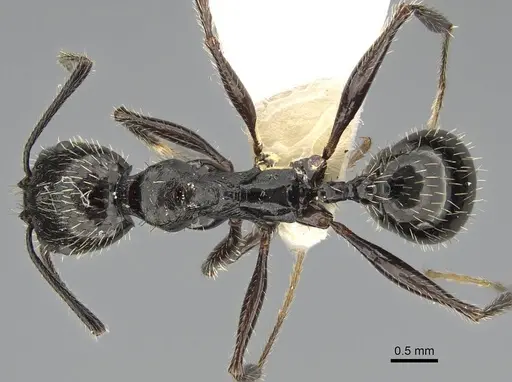
KG03235-4
Ver no AntWeb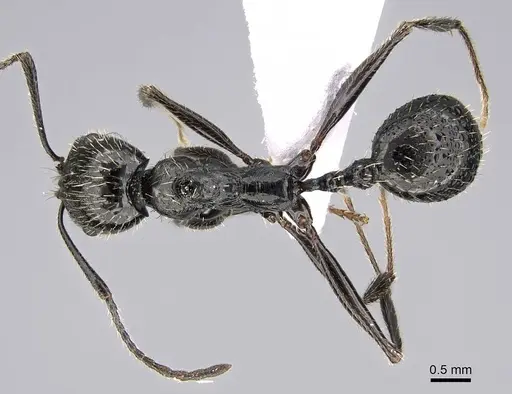
Literatura
Carregando mapa de distribuição...Carregando produtos...