
Aphaenogaster simulans
- Nome científico
- Aphaenogaster simulans
- Tribo
- Stenammini
- Subfamília
- Myrmicinae
- Autor
- Forel, 1915
- Distribuição
- Encontrada em 0 países
Introdução
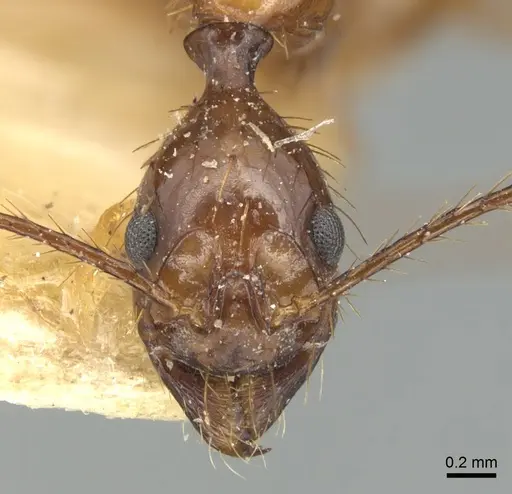
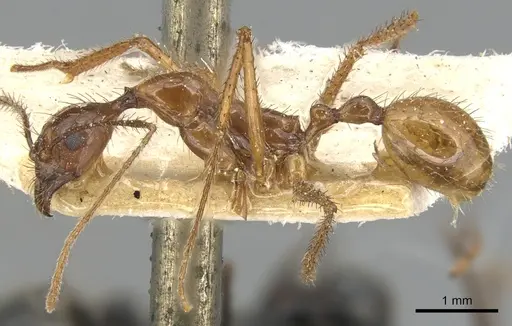
Aphaenogaster simulans is a small forest ant native to Singapore and Sumatra, Indonesia [AntWiki]. Originally described as a subspecies of Aphaenogaster feae, researchers recognized it as a distinct species in 2022 based on subtle but consistent physical differences . Workers inhabit primary and mature secondary forests, including swamp forests, where they forage in leaf litter and have been found inside Nepenthes pitcher plants . You can distinguish them from their close relatives by their short, blunt rear spines and a broadly rounded waist segment that is about as wide as it is long .
Quick Summary
- Difficulty: Medium
- Origin & Habitat: Singapore and Sumatra, Indonesia, primary and mature secondary forests including swamp forest and leaf litter [1]
- Colony Type: Unconfirmed, likely monogyne based on typical Aphaenogaster patterns
- Size & Growth:
- Queen: size data unavailable, inferred from Aphaenogaster genus (~6-8mm)
- Worker: size data unavailable, inferred from Aphaenogaster genus (~3-5mm)
- Colony: Unknown, estimated at several hundred workers based on genus patterns
- Growth: Moderate (estimated)
- Development: Unconfirmed, estimated 8-12 weeks for tropical conditions (Development speed depends on temperature, tropical species typically develop faster at 25-28°C)
- Antkeeping:
- Temperature: 24-28°C (inferred from tropical Singapore habitat), keep stable [1]
- Humidity: High, damp substrate required given leaf litter and swamp forest habitat [1]
- Diapause: Unlikely, tropical species from Singapore where temperatures remain warm year-round [1]
- Nesting: Soil, leaf litter, or rotting wood, naturalistic setups preferred [1]
- Behavior: Generally calm and slow-moving, not aggressive. Small size requires excellent escape prevention.
- Common Issues: tiny size means escapes are likely without fine mesh barriers and Fluon., desiccation kills colonies if substrate dries out, maintain damp conditions from their forest habitat., fungal outbreaks occur without adequate ventilation in humid setups.
Habitat and Distribution
Aphaenogaster simulans lives in the tropical forests of Singapore and Sumatra, Indonesia [1]. In Singapore, workers have been collected from Bukit Timah Nature Reserve, Mandai, and Nee Soon Swamp Forest [1]. They prefer primary or mature secondary forests, including swamp forests, and have also been found in abandoned parks with young secondary growth [1]. Workers forage in leaf litter and have been discovered in the contents of Nepenthes pitcher plants, suggesting they may visit these traps to feed on captured insects or nectar [1]. This association with pitcher plants is interesting natural history, but captive colonies do not require pitcher plants to thrive.
Identification and Appearance
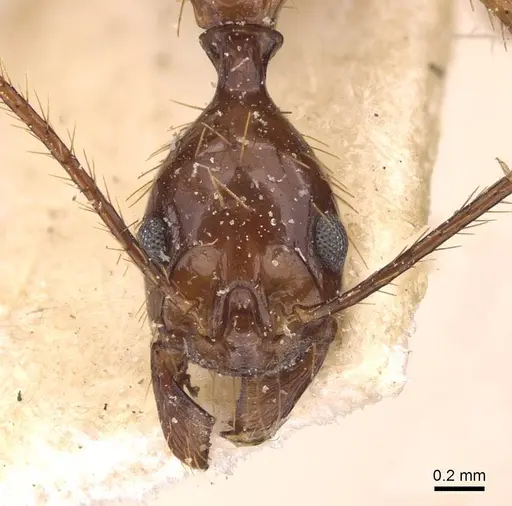
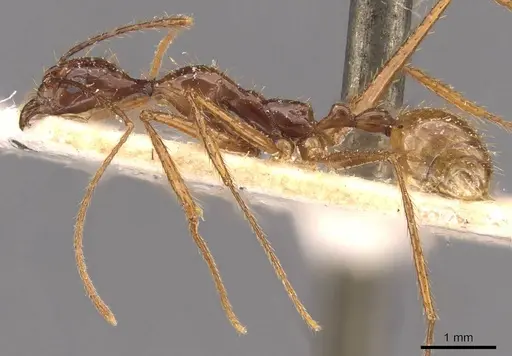
You can tell Aphaenogaster simulans apart from its close relative Aphaenogaster feae by three key features [1]. First, the small spines on the back of their thorax are very short and blunt, barely sticking out, whereas Aphaenogaster feae has longer, sharper spines [1]. Second, their waist segment is broadly rounded when viewed from above, about as wide as it is long, while Aphaenogaster feae has a more elongated, oval-shaped waist [1]. Third, when you look at the head from the front, it appears elongated with a cone-shaped area behind the eyes [1]. These differences are subtle but consistent enough that taxonomists elevated this ant from subspecies to full species status in 2022 [1].
Nest Preferences and Setup
In nature, these ants nest in soil and leaf litter, often in damp, shaded spots under rotting wood or stones [1]. For captive colonies, a naturalistic setup with a soil or plaster nest works well. You can also use a Y-tong (aerated concrete) nest with narrow chambers. Keep the nest substrate consistently moist but not waterlogged, it should feel damp to the touch, like forest soil after rain [1]. Provide some slightly drier areas within the nest so the ants can choose their preferred humidity. Because they come from tropical swamp forests, they need higher humidity than desert species, but still require good ventilation to prevent mold.
Temperature and Seasonal Care
Coming from tropical Singapore, these ants prefer warm, stable temperatures around 24-28°C [1]. Avoid letting temperatures drop below 20°C for extended periods. You can use a heating cable or mat on one side of the nest to create a gentle gradient, allowing the ants to regulate their own temperature. Place the heat source on top of the nest rather than underneath to avoid drying out the water reservoir and causing condensation issues. As a tropical species, they likely do not require a winter hibernation period, though they may slow down slightly during cooler months if kept in a room with natural seasonal variation.
Feeding and Diet
Based on typical Aphaenogaster behavior and their presence in pitcher plants, these ants are likely omnivorous. They probably accept both protein sources like small insects or pieces of mealworms, and sugar sources like honey water or sugar water. Their presence in Nepenthes pitchers suggests they may feed on dead insects or nectar in the wild [1]. Offer small amounts of protein twice weekly and keep a sugar source available constantly. Remove uneaten food within 24-48 hours to prevent mold in their humid environment.
Behavior and Temperament
Aphaenogaster simulans appears to be a calm, slow-moving species that forages individually in leaf litter [1]. They are not known for being aggressive or having a painful sting. However, their small size means they can escape through tiny gaps that larger ants cannot. You must use excellent escape prevention such as Fluon (a slippery barrier) on the upper walls of their outworld, fine mesh ventilation holes, and tight-fitting lids. They are unlikely to climb smooth glass or plastic aggressively, but their small workers can squeeze through the smallest cracks.
Frequently Asked Questions
Can I keep Aphaenogaster simulans in a test tube?
Yes, you can start a founding colony in a standard test tube setup with a water reservoir. Based on typical Aphaenogaster patterns, the queen likely seals herself in (claustral founding) and raises her first workers without needing food during the founding stage, though this is unconfirmed for this specific species.
How long until Aphaenogaster simulans gets first workers?
The exact timeline is unknown. Based on related tropical Aphaenogaster species, expect roughly 8-12 weeks from egg to first worker at 25-28°C, though this is an estimate.
Do Aphaenogaster simulans need hibernation?
Probably not. They come from tropical Singapore where temperatures remain warm year-round [1]. They likely remain active throughout the year, though they may slow down slightly if temperatures drop.
Can I keep multiple Aphaenogaster simulans queens together?
Not recommended. While the specific colony structure of this species is unconfirmed, most Aphaenogaster species are monogyne (single-queen). Combining unrelated queens will likely result in fighting and death.
What is the relationship between Aphaenogaster simulans and pitcher plants?
Workers have been found in the contents of Nepenthes pitcher plants in swamp forests [1]. They may visit the pitchers to feed on captured insects or nectar, or they may accidentally fall in while foraging. Captive colonies do not require pitcher plants.
How big do Aphaenogaster simulans colonies get?
The maximum colony size is unknown. Based on related Aphaenogaster species, they likely reach several hundred workers over a few years, but this is an estimate.
What do Aphaenogaster simulans eat?
They likely accept a mix of sugars (honey water, sugar water) and proteins (small insects, pieces of mealworms or crickets). Their presence in pitcher plants suggests they feed on dead insects in the wild [1].
Are Aphaenogaster simulans good for beginners?
They are likely suitable for intermediate keepers rather than absolute beginners. While they are not aggressive, their small size requires excellent escape prevention, and their tropical humidity needs require careful moisture management to prevent mold.
Report an Issue
The current care sheet is based fully on literature. See inconsistencies, or something that's incorrect? Please , it will be resolved after review from an admin. Contributing to the blogs tab also helps providing information, to make us be able to further improve the caresheets. Thank you for your support!
References

Este guia de cuidados está sob a licença CC BY-SA 4.0 .
Posts da comunidade
CASENT0904192
Ver no AntWeb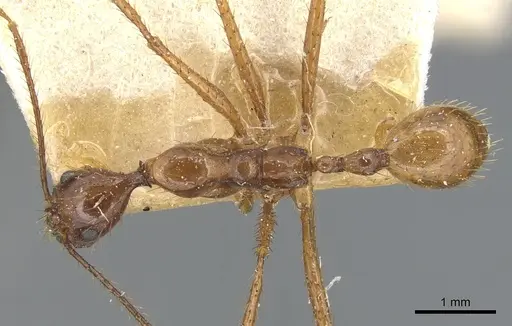
CASENT0907706
Ver no AntWeb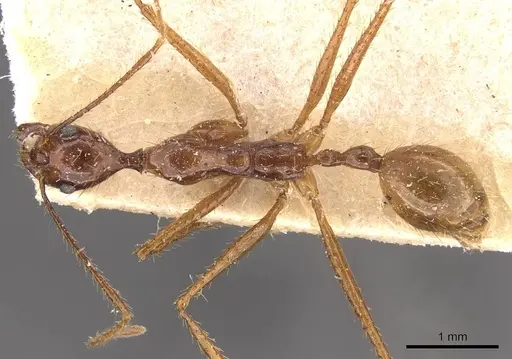
Literatura
Carregando mapa de distribuição...Carregando produtos...