
Aphaenogaster rhaphidiiceps
- Nome científico
- Aphaenogaster rhaphidiiceps
- Tribo
- Stenammini
- Subfamília
- Myrmicinae
- Autor
- Mayr, 1877
- Distribuição
- Encontrada em 0 países
Introdução
Aphaenogaster rhaphidiiceps is a slender ant native to the mountains and steppes of Central Asia. They are found across Kazakhstan, Uzbekistan, Turkmenistan, Afghanistan, and Iran, inhabiting extratropical regions at roughly 37°N latitude . In the wild, they nest in soil or under flat stones in continental climates with hot summers and cold winters. They share the typical Aphaenogaster build: elongated legs, a narrow waist, and a somewhat hairy appearance.
Quick Summary
- Difficulty: Medium
- Origin & Habitat: Central Asia (Kazakhstan, Uzbekistan, Turkmenistan, Afghanistan, Iran), extratropical continental steppes and mountain valleys [1][2]
- Colony Type: Unconfirmed, likely single-queen based on typical Aphaenogaster patterns
- Size & Growth:
- Queen: ~6-8 mm, inferred from Aphaenogaster genus patterns
- Worker: ~3-5 mm, inferred from Aphaenogaster genus patterns
- Colony: Likely small to medium, up to several hundred workers based on related species
- Growth: Moderate
- Development: Approximately 8-12 weeks at 25°C based on temperate Myrmicinae patterns (Development time is unconfirmed for this species)
- Antkeeping:
- Temperature: Keep at 20-25°C during active season, provide winter rest at 10-15°C [1]
- Humidity: Moderate humidity with well-drained substrate, avoid waterlogging
- Diapause: Yes, required. As an extratropical species from Central Asia, they require 3-4 months of winter rest at 10-15°C [1]
- Nesting: Naturalistic setups with soil and stones, or Y-tong nests with moderate humidity
- Behavior: Active, fast-moving foragers typical of the genus. Alert and quick to escape. Escape prevention should be thorough due to their small size.
- Common Issues: lack of species-specific care data requires reliance on genus-level inferences., strict diapause timing is required for long-term colony health., fast movement and small size create escape risks without proper barriers., risk of desiccation if kept too dry, always provide water access.
Natural History and Distribution
Aphaenogaster rhaphidiiceps inhabits the mountainous and steppe regions of Central Asia, specifically recorded from Kazakhstan, Uzbekistan, Turkmenistan, Afghanistan, and Iran [1][2]. The type specimen was collected in the Zarafshan Valley of Uzbekistan by A.P. Fedchenko in 1869 [2]. Their distribution centers around 36.79°N latitude, placing them firmly in extratropical zones with continental climates [1]. This means they experience significant seasonal shifts: hot, dry summers and cold winters. In these arid to semi-arid environments, they nest under flat stones or in soil crevices where they can access moisture while avoiding temperature extremes. Keepers should replicate these seasonal cues rather than keeping them at constant tropical temperatures year-round.
Nest Preferences
In nature, Aphaenogaster rhaphidiiceps likely nests under flat stones or in shallow soil chambers, typical for the genus in arid regions. For captive colonies, a naturalistic setup with a soil-sand mixture and flat stones works well, allowing the ants to excavate their own chambers. Alternatively, a Y-tong (aerated concrete) nest with moderate humidity provides good visibility while maintaining damp-but-not-wet conditions. The nest should offer a humidity gradient: one side slightly moist, the other drier, so workers can regulate their environment. Avoid overly wet conditions that promote mold, as their Central Asian origin suggests adaptation to well-drained substrates.
Temperature and Seasonal Care
As an extratropical species, Aphaenogaster rhaphidiiceps requires distinct seasonal cycling. During the active season (spring through autumn), maintain the nest at 20-25°C with a gentle heat gradient. When winter approaches, gradually reduce temperature over several weeks to 10-15°C for a diapause period of 3-4 months. This cooling period is essential for long-term colony health and likely triggers brood development cues for the following spring. Do not let them freeze, but provide the rest period they would experience in their native Kazakhstan and Uzbekistan. After diapause, slowly warm them back to active temperatures and increase feeding [1].
Feeding and Diet
Aphaenogaster species are generalist scavengers and important seed dispersers in their ecosystems. Aphaenogaster rhaphidiiceps likely accepts a varied diet of small insects, sugar water or honey, and seeds. Offer small prey such as fruit flies, pinhead crickets, or pre-killed mealworms. Seeds like chia, millet, or dandelion seeds are often appreciated and can be stored in the nest as 'ant bread.' Provide sugar water in a test tube or via soaked cotton to prevent dehydration, especially important given their arid habitat origin. Feed protein 2-3 times weekly during the active season, reducing to monthly during diapause.
Colony Founding
The founding behavior of Aphaenogaster rhaphidiiceps is unconfirmed. Based on patterns seen across the Aphaenogaster genus, queens may be semi-claustral, meaning the queen may need to leave the nest to forage during the founding stage. If this holds true, founding queens should be provided with a small outworld or regular feeding even before the first workers hatch. However, without direct observation, keepers should be prepared for either claustral or semi-claustral founding. Set up new queens in test tubes with water reservoirs, but offer small amounts of sugar water and tiny insect pieces weekly to be safe.
Frequently Asked Questions
Do Aphaenogaster rhaphidiiceps need hibernation?
Yes, they require a winter rest period. As an extratropical species from Central Asia with cold winters, they need 3-4 months of diapause at 10-15°C to remain healthy long-term [1].
Can I keep Aphaenogaster rhaphidiiceps in a test tube?
Yes, test tubes work well for founding colonies and small colonies. Provide a water reservoir and cotton plug. If the species proves to be semi-claustral (unconfirmed), you will need to offer food to the queen even before workers arrive.
What do Aphaenogaster rhaphidiiceps eat?
They are generalist scavengers. Offer small insects like fruit flies or cricket pieces, sugar water or honey, and various seeds. Seeds are often stored in the nest and are an important part of the diet for many Aphaenogaster species.
How long until Aphaenogaster rhaphidiiceps get their first workers?
The exact timeline is unknown. Based on related temperate Myrmicinae ants, expect roughly 8-12 weeks from egg to worker at 25°C, though this may vary with temperature.
Are Aphaenogaster rhaphidiiceps good for beginners?
They are medium difficulty. While Aphaenogaster species are generally hardy, the lack of specific care data for this Central Asian species means beginners must be comfortable making inferences from general genus patterns and managing required diapause.
Do Aphaenogaster rhaphidiiceps sting?
Like most Aphaenogaster, they possess a stinger but it is tiny and ineffective against human skin. They are not considered dangerous to humans.
How big do Aphaenogaster rhaphidiiceps colonies get?
The maximum colony size is unconfirmed. Based on typical Aphaenogaster patterns, they likely remain small to medium, possibly reaching a few hundred workers rather than thousands.
Can I keep multiple Aphaenogaster rhaphidiiceps queens together?
Not recommended. Most Aphaenogaster species are monogyne (single queen), and combining unrelated queens typically leads to fighting. Only attempt if you have confirmed documentation of polygyny for this specific species.
Report an Issue
The current care sheet is based fully on literature. See inconsistencies, or something that's incorrect? Please , it will be resolved after review from an admin. Contributing to the blogs tab also helps providing information, to make us be able to further improve the caresheets. Thank you for your support!
References

Este guia de cuidados está sob a licença CC BY-SA 4.0 .
Posts da comunidade
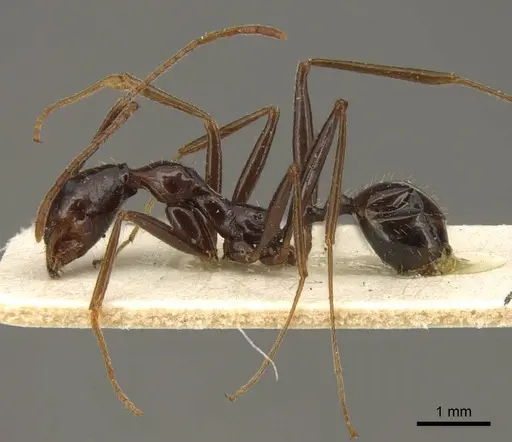
CASENT0916079
Ver no AntWeb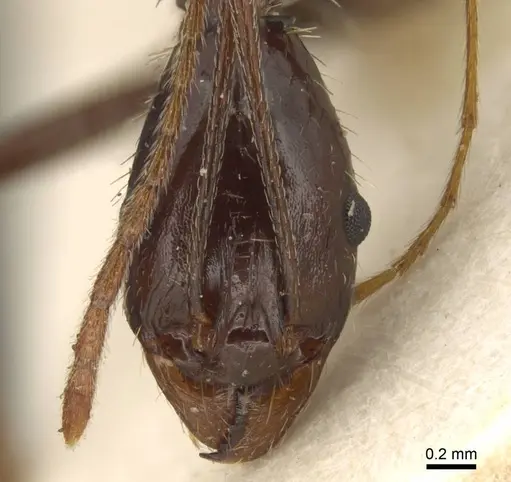
Literatura
Carregando mapa de distribuição...Carregando produtos...