
Anochetus ruginotus
- Nome científico
- Anochetus ruginotus
- Tribo
- Ponerini
- Subfamília
- Ponerinae
- Autor
- Stitz, 1925
- Distribuição
- Encontrada em 0 países
Introdução
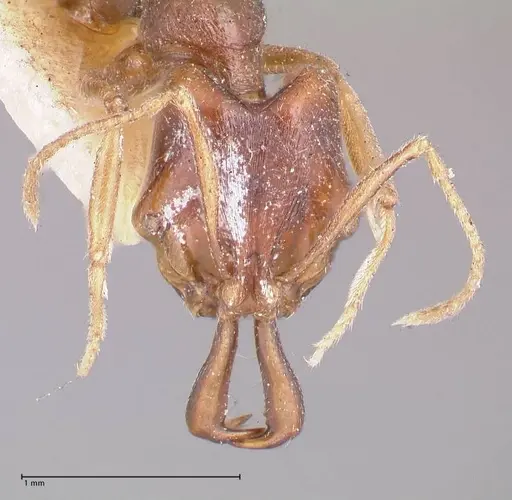
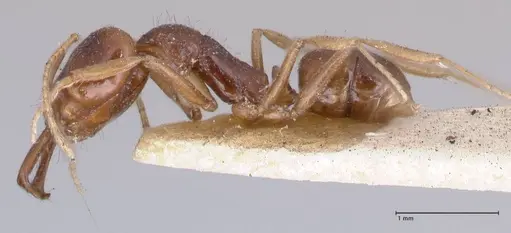
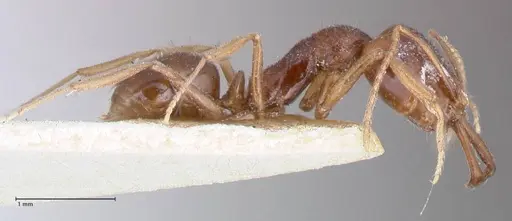
Anochetus ruginotus is a small trap-jaw ant from the Philippines. Workers measure 4.3-4.6 mm in total length and have a distinctive deep notch at the back of the head, stout short mandibles with a strongly developed middle tooth, and lengthwise grooves on the pronotum . The first abdominal segment has sparse punctures, and the whole upper body carries dense short hairs . They live on the Philippine islands of Luzon and Mindanao . These ants were originally described in 1925,then mistakenly treated as the same species as Anochetus graeffei for decades . In 2012,researchers revived them as a valid separate species after noticing consistent differences in head shape, body sculpture, and proportions . While A. graeffei has a squared head and broad middle body section, A. ruginotus shows the slender build with a deeply notched head vertex that is typical of most Anochetus trap-jaw ants .
Quick Summary
- Difficulty: Expert
- Origin & Habitat: Philippines (Luzon and Mindanao), tropical forest habitats [1][2]
- Colony Type: Unconfirmed, likely single-queen based on typical Anochetus patterns
- Size & Growth:
- Queen: Unknown, inferred from Anochetus genus (~5-7 mm)
- Worker: 4.3-4.6 mm [1]
- Colony: Unknown, inferred from related Anochetus species (likely under 500 workers)
- Growth: Unknown, inferred as slow to moderate
- Development: Unknown, inferred from tropical Anochetus patterns (~8-12 weeks at 25-28°C) (Timeline unconfirmed, development speed depends on temperature)
- Antkeeping:
- Temperature: Warm and stable, roughly 24-28°C, inferred from tropical origin
- Humidity: High humidity required, nest material should stay moist but not waterlogged
- Diapause: No, tropical species do not hibernate [2]
- Nesting: Small tight chambers, naturalistic setups with soil or rotting wood, or small Y-tong nests with narrow passages
- Behavior: Trap-jaw predators that snap their mandibles shut at high speed to capture small prey. Likely forage individually rather than in trails. As Ponerinae ants, they possess a functional stinger and will use it if threatened. Small size creates high escape risk.
- Common Issues: extremely limited captive care data means keeping them is experimental and success is uncertain., small size (under 5mm) allows escape through tiny gaps that larger ants cannot fit through., tropical origin means they suffer or die if temperatures drop below roughly 20°C for extended periods., likely require small live prey, may refuse dead insects or sugar sources entirely., slow growth rate tests patience and increases risk of overfeeding or excessive disturbance.
Identification and Appearance
You can recognize Anochetus ruginotus by several distinct features. Workers have a deep notch at the back of the head (vertex), which contrasts with the squared head of the similar-looking A. graeffei [1]. Their mandibles are stout and short with a well-developed middle tooth, and the shaft has two edges, the top one smooth and the bottom one finely saw-toothed [1]. The pronotum shows clear lengthwise grooves, while the propodeum has irregular wrinkling [1]. The petiole node is narrow with a rounded top when viewed from the side [1]. These details help separate them from other Philippine trap-jaw ants.
Nest Preferences
Wild nesting habits for this species remain unstudied. Based on patterns from other Anochetus species in tropical Asia, they likely nest in soil, under flat stones, in rotting wood, or in leaf litter on the forest floor. In captivity, provide small nest spaces with tight chambers that match their tiny size. A naturalistic setup with a soil and sand mix, flat stones, or small pieces of rotting wood works well. Alternatively, use a small Y-tong or plaster nest with narrow passages and chambers roughly 8-10 mm in diameter. Avoid tall open spaces where they cannot touch the walls. [2]
Feeding and Diet
Like all trap-jaw ants, Anochetus ruginotus are predators that use their spring-loaded mandibles to capture prey. They likely hunt small soft-bodied arthropods such as springtails, fruit flies, and tiny cricket nymphs. Offer live prey that is small enough for them to handle safely. They may not accept dead insects or sugar water, as many Anochetus species are specialized hunters that respond to live movement. Feed small amounts frequently rather than large amounts rarely to prevent stress and mold issues.
Temperature and Care
Coming from the tropical Philippines, these ants need warmth year-round. Keep them at roughly 24-28°C with a gentle gradient across the nest. Place a heating cable or mat on one side of the nest to create a warm zone, but position it on top rather than underneath to avoid drying out the nest material. Do not hibernate them, they remain active throughout the year. If temperatures drop below 20°C for extended periods, the colony may slow down or fail. Monitor the warm end with a thermometer and adjust based on activity levels.
Behavior and Temperament
Anochetus ruginotus shows typical trap-jaw behavior, they can snap their mandibles shut at high speed to stun or kill prey. They are likely solitary foragers that hunt individually rather than recruiting nestmates to food sources. As members of the Ponerinae subfamily, they possess a functional stinger and will use it if threatened. Their small size makes them excellent escape artists, they can squeeze through gaps in poorly sealed lids or around tubing connections. Use fine mesh screens and barrier products like Fluon on all openings.
Colony Founding
Founding behavior remains unconfirmed for this species. Based on typical patterns in the genus Anochetus, queens are likely semi-claustral, meaning the queen must leave the nest to forage for food during the founding stage rather than living entirely on stored body fat. If this holds true, you will need to offer small live prey to a founding queen regularly. Start with a test tube setup but provide a small outworld or feeding area where the queen can hunt for food. Watch for the first workers (nanitics) which may be smaller than subsequent generations.
Frequently Asked Questions
Can I keep Anochetus ruginotus in a test tube?
Yes, test tubes work well for founding colonies. Use a standard water reservoir setup with a cotton plug. If the species proves to be semi-claustral as suspected, you will need to provide a small feeding area or outworld where the queen can hunt for food, rather than keeping her sealed in completely.
How long until Anochetus ruginotus gets their first workers?
The egg-to-worker timeline is unconfirmed for this species. Based on related tropical trap-jaw ants, expect roughly 8-12 weeks at 25-28°C, though this could vary significantly. First workers (nanitics) are often smaller and develop faster than later workers.
Can I keep multiple Anochetus ruginotus queens together?
Not recommended. While the exact colony structure is unconfirmed, most Anochetus species are monogyne (single-queen). Combining multiple queens will likely result in fighting and death. Even if pleometrosis (cooperative founding) occurs in this species, it has not been documented.
Are Anochetus ruginotus good for beginners?
No. They are rare in captivity, lack established care guidelines, and require specific conditions including live prey and consistent tropical warmth. Beginners should start with easier species like Lasius niger or Tetramorium immigrans before attempting rare trap-jaw ants.
Do Anochetus ruginotus need hibernation?
No. They come from the tropical Philippines where temperatures remain warm year-round. They do not require a winter rest period (diapause) and should be kept at normal room temperature or warmer throughout the year.
What do Anochetus ruginotus eat?
They are predators that likely feed on small live arthropods. Offer springtails, fruit flies, or tiny cricket nymphs. They use their trap-jaw mandibles to capture prey. They may not accept dead insects or sugar sources, so focus on small live foods.
Why are my Anochetus ruginotus dying?
Common causes include temperatures that are too cool (below 20°C), lack of appropriate live prey, or escape-related stress. Check that your enclosure has no gaps, that humidity remains high but not waterlogged, and that you are offering food small enough for them to handle.
How big do Anochetus ruginotus colonies get?
Maximum colony size is unknown. Based on related Anochetus species, they likely remain small to moderate, probably under 500 workers. They are not supercolonial and grow slowly compared to common pet ant species.
Do Anochetus ruginotus have trap-jaws?
Yes. They possess the characteristic spring-loaded mandibles that snap shut when triggered, allowing them to capture fast-moving prey. This is a defining feature of the genus Anochetus.
Report an Issue
The current care sheet is based fully on literature. See inconsistencies, or something that's incorrect? Please , it will be resolved after review from an admin. Contributing to the blogs tab also helps providing information, to make us be able to further improve the caresheets. Thank you for your support!
References

Este guia de cuidados está sob a licença CC BY-SA 4.0 .
Posts da comunidade
FOCOL1043
Ver no AntWeb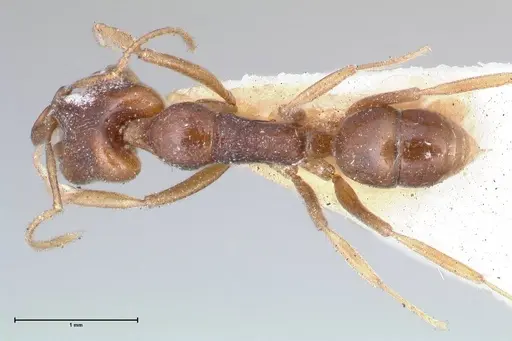
Literatura
Carregando mapa de distribuição...Carregando produtos...