
Amblyopone clarki
- Nome científico
- Amblyopone clarki
- Tribo
- Amblyoponini
- Subfamília
- Amblyoponinae
- Autor
- Wheeler, 1927
- Distribuição
- Encontrada em 1 países
Introdução
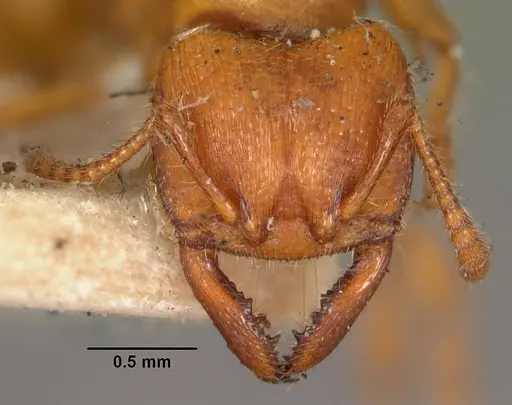
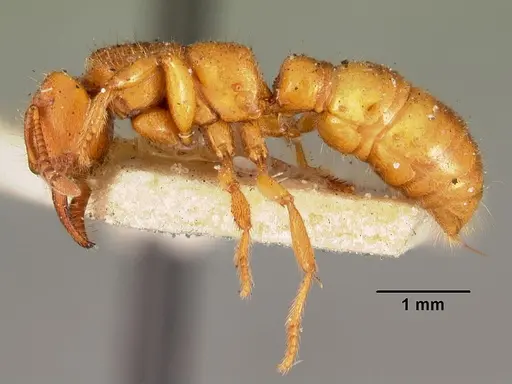
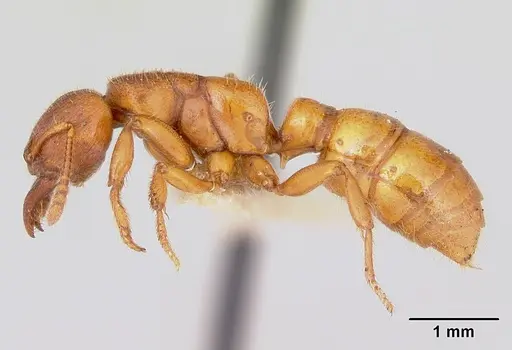
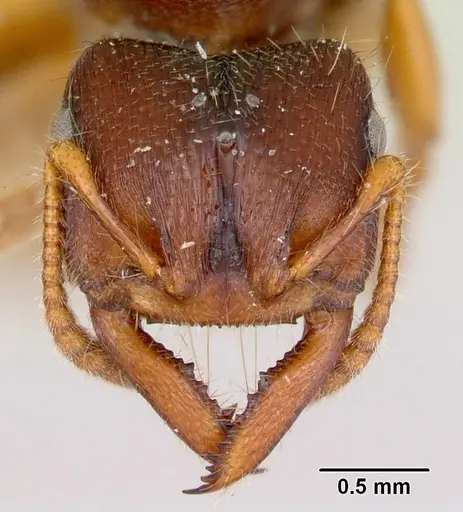
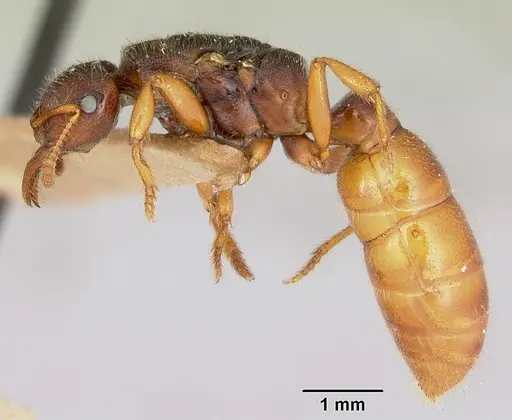
Amblyopone clarki is a primitive ant found in the sandy coastal plains of Western Australia, particularly in tuart and Banksia woodlands north and south of Perth . Their nests are distinctive - they build small sand turrets about 5 cm high at the entrance, with a single worker often standing guard at the top . These ants belong to the subfamily Amblyoponinae, a group of ancient predators that hunt live prey rather than scavenging. They retain many ancestral ant traits and require specialized care that differs from common ant species.
Quick Summary
- Difficulty: Expert
- Origin & Habitat: Western Australia, sandy coastal plains in tuart and Banksia woodlands [1][2]
- Colony Type: Colony structure unconfirmed, likely small colonies with single queen based on genus patterns
- Size & Growth:
- Queen: Size data unavailable, inferred from Amblyopone genus (~5-7 mm)
- Worker: Size data unavailable, inferred from Amblyopone genus (~3-5 mm)
- Colony: Likely under 100 workers, inferred from genus patterns
- Growth: Slow
- Development: Timeline unconfirmed, likely slower than typical ants due to primitive predatory lifestyle (Development is likely slower than typical ants due to their primitive nature and specialized predatory lifestyle.)
- Antkeeping:
- Temperature: Keep at 20-25°C with a gentle gradient. They come from a Mediterranean climate with warm dry summers and mild wet winters.
- Humidity: Moderate humidity with damp but not waterlogged sandy substrate. The sand should hold shape when squeezed but not drip water.
- Diapause: Possible, they may slow down during winter months (June-August in their native range). Cool to 15-18°C for 2-3 months if activity decreases.
- Nesting: Deep sand or sandy soil at least 10 cm deep to allow natural turret construction. Avoid standard test tubes or acrylic nests [1].
- Behavior: Defensive with unique sentry behavior, one worker often stands guard at the nest entrance [1]. They are specialized predators that hunt soil arthropods rather than scavenging. They can sting but are not aggressive swarmers. Their small size means excellent escape prevention is essential.
- Common Issues: specialized predatory diet makes them difficult to feed, they may refuse sugar water and require live prey like small centipedes or springtails., sandy nests can dry out quickly or collapse if too wet, requiring careful moisture management., small colony size means slow growth and low tolerance for disturbance or overfeeding., founding behavior is unconfirmed, do not assume semi-claustral or claustral without evidence.
Nest Preferences and the Sand Turret
In nature, Amblyopone clarki builds conspicuous sand turrets about 5 cm high at their nest entrances [1]. Researchers often find a single worker standing guard at the apex of these turrets, acting as a sentry [1]. This unique behavior suggests they need specific captive conditions. Provide a container with at least 10 cm of deep sand or a sandy soil mix that holds tunnels when damp but drains well. They need space to excavate and potentially build their characteristic turrets. Use a tight-fitting lid with fine mesh ventilation, these ants can climb and will escape through gaps. Avoid standard test tubes or acrylic block nests, as they cannot create their natural nesting structures in these setups.
Feeding and Diet
As members of the primitive subfamily Amblyoponinae, these ants are specialized predators, not generalist scavengers. In the wild they likely hunt soil arthropods such as small centipedes, beetle larvae, and other soft-bodied invertebrates. In captivity, offer small live prey like springtails, tiny soil centipedes, or freshly killed insects. Many Amblyopone species do not recognize sugar water or honey as food, lacking the behavioral adaptations of more advanced ants. Feed small amounts frequently rather than large masses that could rot in the humid nest environment. Remove uneaten prey within 24 hours to prevent mold. [2]
Temperature and Seasonal Care
These ants come from the Mediterranean climate of coastal Western Australia, where summers are hot and dry and winters are mild and wet. Keep them at 20-25°C during the active season. If your colony shows decreased activity during what would be their natural winter (roughly June to August in Australia), you can provide a cooling period. Lower temperatures to 15-18°C for 2-3 months and reduce feeding frequency. This seasonal change may help trigger brood development cycles, though this is unconfirmed for this specific species. Always provide a heat gradient so the ants can choose their preferred temperature. [1]
Behavior and Temperament
The most distinctive behavior of Amblyopone clarki is the sentry worker standing guard at the sand turret entrance [1]. This suggests they are territorial and aware of their surroundings, unlike many shy soil-dwelling ants. They are slow-moving but determined predators that actively hunt rather than relying on trail-based foraging. Like other Amblyopone, they possess stingers and can sting if threatened, though their small size means the sting is mild to humans. They do not swarm or bite aggressively, but will defend their nest if disturbed. Keep handling to a minimum as they are sensitive to vibrations and light.
Frequently Asked Questions
Can I keep Amblyopone clarki in a test tube?
No, test tubes are unsuitable for this species. They need deep sand or soil to build their characteristic sand turrets and excavate proper nest chambers [1].
What do Amblyopone clarki eat?
They are specialized predators requiring live or freshly killed small arthropods like springtails, tiny centipedes, or insect larvae. They may not accept sugar water or honey.
Do Amblyopone clarki ants sting?
Yes, like other Amblyopone they have stingers and can sting if threatened, though the effect is mild due to their small size.
How long until Amblyopone clarki gets first workers?
The exact timeline is unconfirmed for this species. Based on related primitive ants in the subfamily Amblyoponinae, development is likely slow, possibly 10-14 weeks at 25°C, but this is an estimate only.
Can I keep multiple Amblyopone clarki queens together?
No, do not combine queens. They are likely monogyne (single queen) and will fight if placed together.
Do Amblyopone clarki need hibernation?
Possibly. They come from a Mediterranean climate with mild winters. You can try cooling them to 15-18°C for 2-3 months during winter, but this is unconfirmed for this species.
Why are my Amblyopone clarki dying?
Common causes include incorrect diet (they need live prey, not just sugar water), overly wet or dry substrate in sandy nests, or disturbance during the founding stage. They are sensitive ants with little tolerance for mistakes.
Are Amblyopone clarki good for beginners?
No, they are expert-level ants due to specialized diet requirements, small colonies, specific nesting needs including sand turret construction, and unconfirmed founding behavior.
How big do Amblyopone clarki colonies get?
Likely under 100 workers based on related Amblyopone species. They remain small even when mature.
Is Amblyopone clarki semi-claustral?
Founding behavior is unconfirmed for this species. Do not assume semi-claustral or claustral without specific evidence.
Report an Issue
The current care sheet is based fully on literature. See inconsistencies, or something that's incorrect? Please , it will be resolved after review from an admin. Contributing to the blogs tab also helps providing information, to make us be able to further improve the caresheets. Thank you for your support!
References

Este guia de cuidados está sob a licença CC BY-SA 4.0 .
Posts da comunidade
CASENT0102194
Ver no AntWeb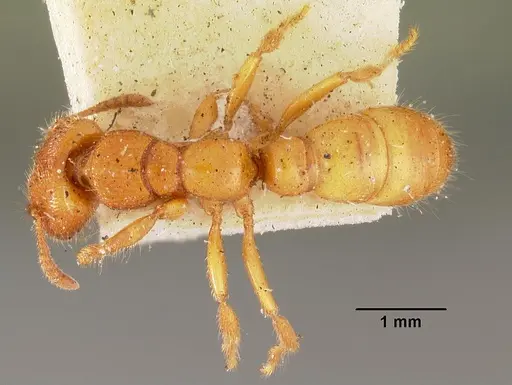
CASENT0172189
Ver no AntWeb
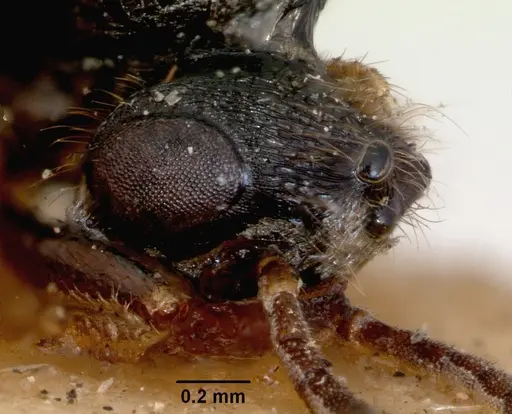
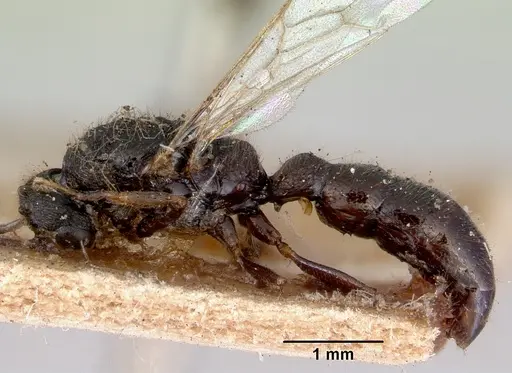
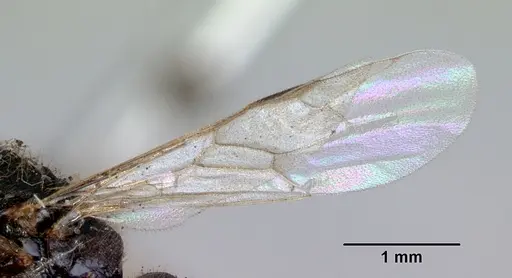
CASENT0172190
Ver no AntWeb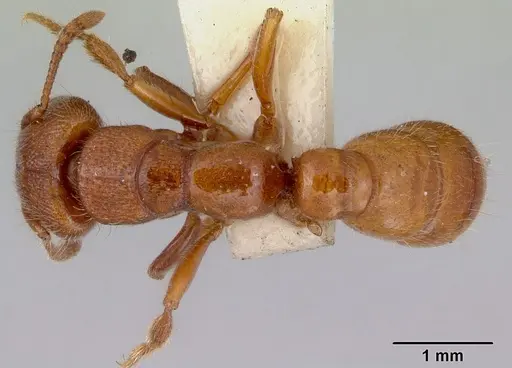
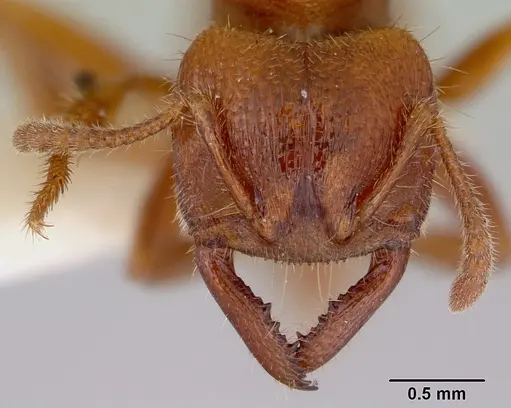
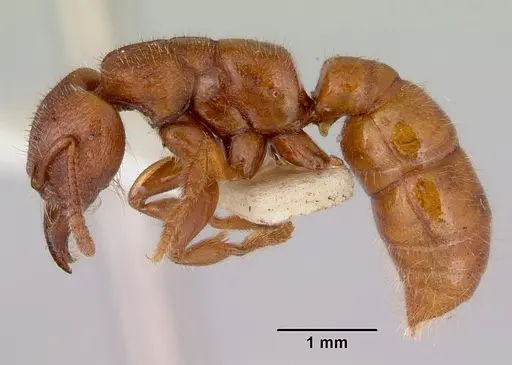
CASENT0172816
Ver no AntWeb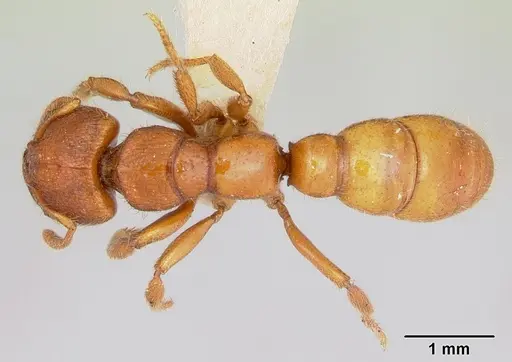
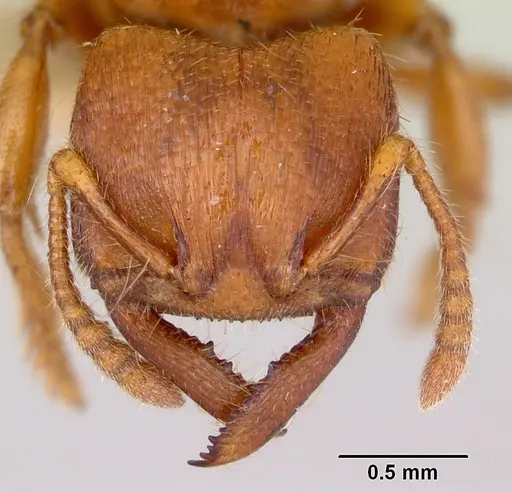
CASENT0172817
Ver no AntWeb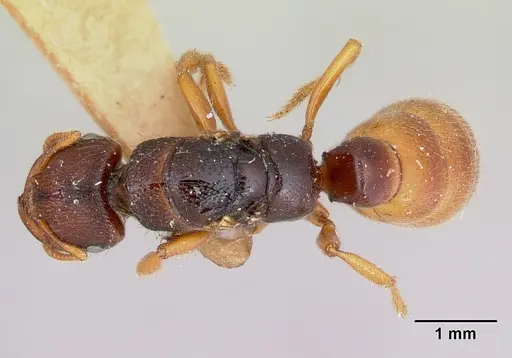
Literatura
Carregando mapa de distribuição...Carregando produtos...