
Aenictus yangi
- Nome científico
- Aenictus yangi
- Subfamília
- Dorylinae
- Autor
- Liu <i>et al.</i>, 2015
- Distribuição
- Encontrada em 1 países
Introdução
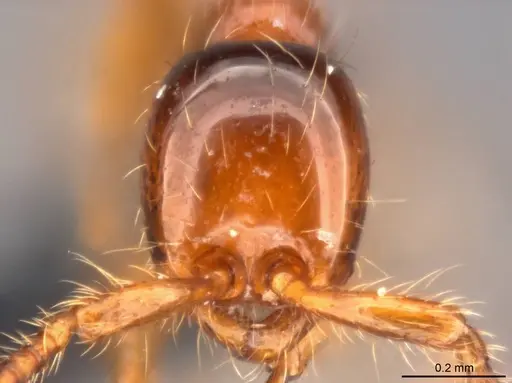
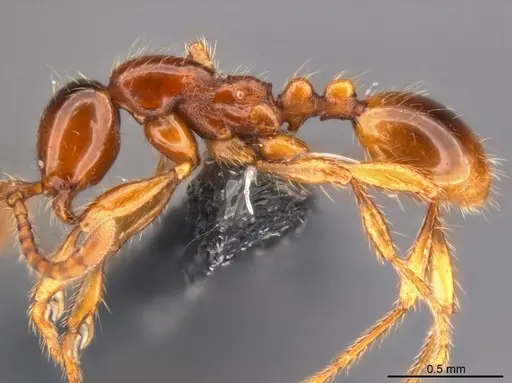
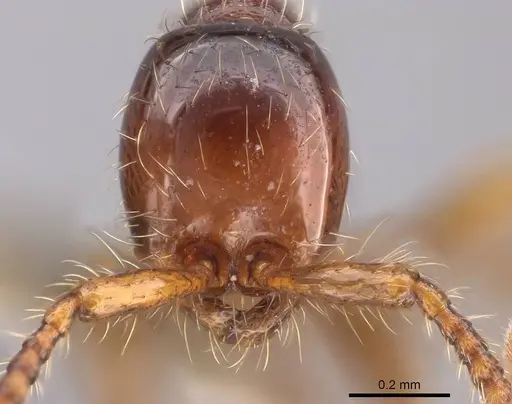
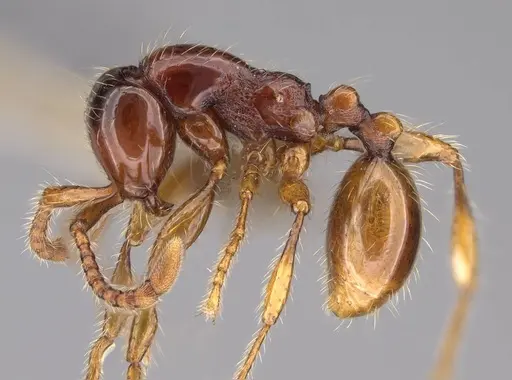
Aenictus yangi is a tiny army ant from southern China, known only from 16 worker specimens collected in tropical rainforest leaf litter. Workers measure just 2.2-2.6 mm total length and have reddish-brown bodies with contrasting yellowish legs, antennae, and mandibles . They belong to the Aenictus ceylonicus species group and were described in 2015 from Xishuangbanna, Yunnan . Researchers suspect they live primarily underground in the soil layer of tropical rainforests, making them rarely encountered on the surface . This is one of the rarest ants in the world - only 16 workers have ever been collected, all from a single location in Man Sai village. No queen, male, or colony structure has ever been observed. As an army ant in the subfamily Dorylinae, they likely share predatory habits typical of their genus, though no direct behavioral observations exist for this specific species . The species has never been maintained in captivity and likely cannot be kept with current knowledge.
Quick Summary
- Difficulty: Expert
- Origin & Habitat: Tropical lowland rainforest in Xishuangbanna, southern Yunnan, China, at elevations around 550-680 m [1]. Collected from leaf litter in young rainforest [1].
- Colony Type: Unknown, only the worker caste has ever been found [1]. No data exists on colony structure, queen number, or reproductive biology.
- Size & Growth:
- Queen: Unknown, no queens have ever been described [1].
- Worker: 2.21-2.60 mm total length [1].
- Colony: Unknown, no colony has ever been observed [1].
- Growth: Unknown, no developmental data exists for this species [1].
- Development: Unknown, no developmental data exists for this species. (No reproductive individuals have been observed, so development timelines are completely undocumented.)
- Antkeeping:
- Temperature: Inferred to need warm conditions (roughly 24-28°C) based on tropical lowland rainforest origin, no specific data exists [1].
- Humidity: Inferred to need high humidity based on tropical rainforest habitat, keep substrate damp but not waterlogged [1].
- Diapause: No, tropical species from lowland rainforest do not require winter rest [1].
- Nesting: Inferred to be subterranean (underground) based on collection method and authors' suspicions about their hypogaeic lifestyle [1]. Deep soil substrates would likely be needed.
- Behavior: Presumed to be nomadic army ants with predatory behavior typical of the genus, though no direct observations exist [2]. Workers are extremely small at under 3 mm, so escape prevention would need to be exceptional if keeping were attempted [1].
- Common Issues: no queens are known to science, making colony founding impossible with current knowledge., army ant biology typically requires massive foraging ranges and specialized diets that are nearly impossible to provide in captivity., suspected subterranean lifestyle means they likely need extensive soil substrates rather than standard formicarium setups., only 16 specimens have ever been collected, indicating extreme rarity or cryptic habits that make them unsuitable for captive keeping., tiny worker size (2.2-2.6 mm) means standard barriers and enclosures may not contain them.
What We Know From 16 Specimens
Aenictus yangi is one of the most poorly known ants in the world. Only 16 workers have ever been collected, one holotype and 14 paratypes from a single location in Man Sai village, Xishuangbanna, plus one additional collection [1]. All specimens came from leaf litter extraction in young tropical rainforest at 680 m elevation [1].
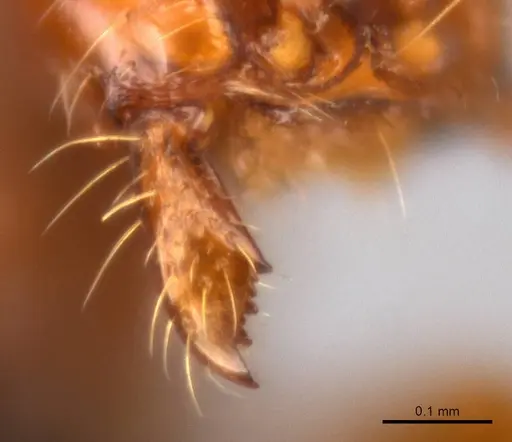
The workers are distinctive within their species group: they have seven teeth on their mandibles, relatively long antennae, and a weakly impressed groove between the middle and rear body sections [1]. Their bodies are reddish-brown while their legs and antennae are yellowish [1].
The authors who described the species suspected these ants live mainly underground (hypogaeic), which explains why they are so rarely encountered despite being collected via leaf litter sampling [1]. This subterranean habit would make them difficult to find and observe in the wild.
Why This Species Is Not Suitable for Captive Keeping
You cannot currently keep Aenictus yangi. No queen has ever been found, so there is no way to start a colony [1]. Even if queens were discovered, army ants in the genus Aenictus present extreme challenges for captive care.
Army ants are nomadic, they do not stay in one nest permanently but move frequently. They require massive foraging spaces to raid prey, and they typically feed on other ant species and small arthropods in large quantities. Their colonies may contain thousands of workers, far exceeding typical home formicarium capacities [2].
Additionally, the complete lack of biological data for this specific species means we do not know their colony structure, founding behavior, dietary preferences, or temperature requirements. Any attempt to keep them would be pure experimentation without basic care guidelines.
Hypothetical Care Based on Habitat and Genus
If future research makes Aenictus yangi available to keepers, care would likely need to mimic their tropical rainforest origins and army ant biology.
Temperature would likely need to stay warm year-round, roughly 24-28°C, given their lowland tropical origin [1]. Humidity should remain high, with damp substrate mimicking rainforest floor conditions [1].
Housing would need to accommodate their suspected subterranean nature, deep soil substrates rather than standard acrylic nests [1]. Space requirements would likely be extensive given their army ant lifestyle, potentially requiring large naturalistic setups with soil layers.
Diet would likely consist primarily of other small ants and tiny soil arthropods, as is typical for Aenictus species. However, without observation of living colonies, these requirements remain speculation based on genus patterns.
Frequently Asked Questions
Can I keep Aenictus yangi in a test tube setup?
No. This species is not available in the antkeeping trade and has never been kept in captivity. Only 16 workers have ever been collected by scientists, and no queens are known [1].
Where can I buy Aenictus yangi?
You cannot buy this species. It is known only from scientific collections in Yunnan, China, and has never been cultured or sold in the antkeeping hobby [1].
How big are Aenictus yangi workers?
Workers are very small, measuring 2.21-2.60 mm in total length [1].
Do Aenictus yangi ants have a queen?
Unknown. Only worker ants have ever been found. No queens, males, or reproductive individuals have been described for this species [1].
What do Aenictus yangi eat?
Unknown for this specific species. Related Aenictus army ants are specialized predators that raid other ant nests and hunt small soil arthropods [2].
How long until Aenictus yangi gets first workers?
Unknown. Development time has never been documented because no one has successfully raised this species from a queen [1].
What temperature do Aenictus yangi need?
Exact requirements are unknown. Based on their tropical rainforest habitat in Yunnan, they likely need warm conditions around 24-28°C [1].
Do Aenictus yangi need hibernation?
No. They come from tropical lowland rainforest where temperatures remain warm year-round, so they do not require a winter rest period [1].
Are Aenictus yangi dangerous?
They are tiny ants (under 3 mm) and unlikely to pose any danger to humans, though army ants can be aggressive toward prey insects [1][2].
Why are Aenictus yangi so rare?
They are likely rare in collections because they live underground (hypogaeic lifestyle) rather than on the surface, making them difficult to encounter [1].
Report an Issue
The current care sheet is based fully on literature. See inconsistencies, or something that's incorrect? Please , it will be resolved after review from an admin. Contributing to the blogs tab also helps providing information, to make us be able to further improve the caresheets. Thank you for your support!
References

Este guia de cuidados está sob a licença CC BY-SA 4.0 .
Posts da comunidade
CASENT0735503
Ver no AntWeb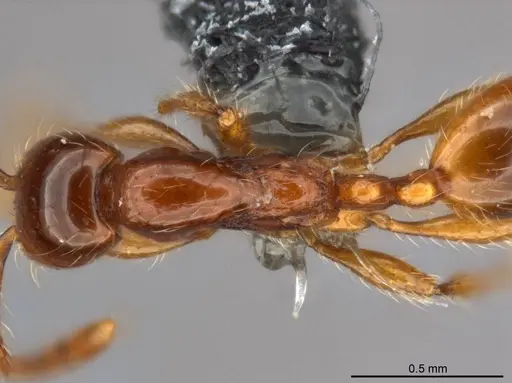
CASENT0735508
Ver no AntWeb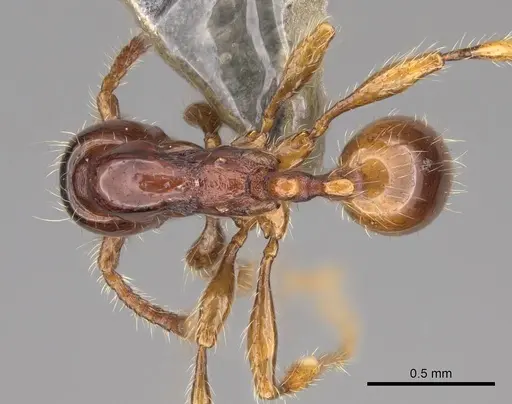
Literatura
Carregando mapa de distribuição...Carregando produtos...