
Aenictus siamensis
- Nome científico
- Aenictus siamensis
- Subfamília
- Dorylinae
- Autor
- Jaitrong & Yamane, 2011
- Distribuição
- Encontrada em 0 países
Introdução
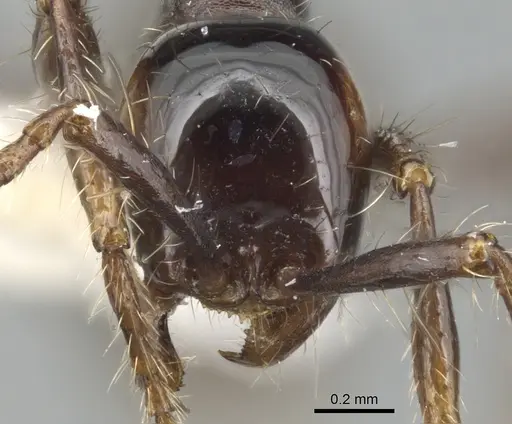
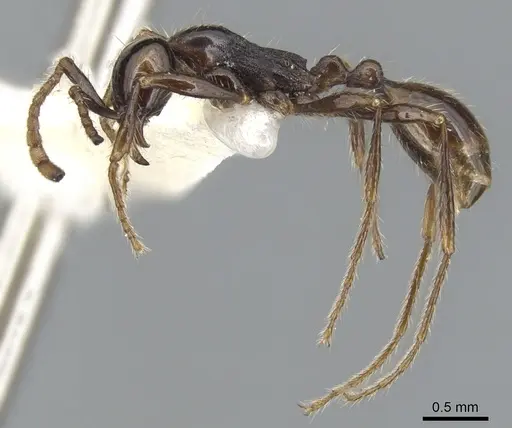
Aenictus siamensis is a small army ant species endemic to Thailand, measuring 3.75-3.90 mm in total length . Workers are dark reddish-brown with smooth, shiny heads and relatively long antennae that reach the posterolateral corner of the head . This species belongs to the Aenictus laeviceps group and inhabits highland seasonal forests at elevations of 700-900 meters, including hill evergreen forest, dry evergreen forest, and surrounding open areas . Scientists have only collected workers from this species; queens remain undescribed .
Quick Summary
- Difficulty: Expert
- Origin & Habitat: Highland seasonal forests in Thailand at 700-900 meters elevation, specifically hill evergreen forest and dry evergreen forest, as well as open areas [1].
- Colony Type: Unknown, only the worker caste has been documented [2].
- Size & Growth:
- Antkeeping:
- Temperature: Keep around 22-24°C. Their highland habitat at 700-900 meters elevation suggests they prefer cooler tropical conditions rather than lowland heat [1].
- Humidity: High humidity required, their hill evergreen forest home indicates damp conditions. Keep substrate moist but not waterlogged [1].
- Diapause: Probably not required, they live in tropical Thailand, though their seasonal forest habitat suggests they may slow down during the dry season [1].
- Nesting: No fixed nest in nature. They form temporary bivouacs using their own bodies and roam constantly in search of prey [2]. Standard formicaria are completely unsuitable.
- Behavior: Nomadic and highly aggressive. They are specialist predators that hunt other ants and social insects. Their small size creates serious escape risks, they can slip through the smallest gaps [1].
- Common Issues: impossible to feed adequately, army ants require massive amounts of live prey daily., require enormous enclosures, standard test tubes and formicaria are completely unsuitable., no queens available, only workers have been described by scientists., tiny size means they escape through the smallest gaps.
Why Standard Antkeeping Fails
Aenictus siamensis belongs to the subfamily Dorylinae, the Old World army ants. These ants function completely differently from typical ants that live in permanent nests. They have no permanent nest. Instead, they form temporary living structures called bivouacs using their own bodies. The colony roams constantly through the forest in search of prey, carrying their brood and food with them. This nomadic lifestyle makes them impossible to house in standard test tubes or acrylic nests. Scientists have never found queens of this species, only workers have been collected [2]. Without a queen, you cannot establish a colony through normal founding methods.
Housing Requirements
Do not attempt to keep these ants in test tubes or small formicaria. Army ants require massive naturalistic enclosures, essentially room-sized setups or very large terrariums, to accommodate their nomadic behavior and bivouac formation. They need substrate for bivouac construction and extensive foraging space. Standard antkeeping equipment is completely unsuitable and will result in the death of the colony. [2]
Feeding Challenges
These are specialist predators that hunt other ants and social insects. They require large quantities of live prey daily to sustain the colony. Feeding them fruit flies or sugar water will not work. They need access to other ant colonies or termite colonies to raid. This dietary requirement makes them effectively impossible to maintain in captivity for any antkeeper without extensive resources and a constant supply of prey colonies. [2]
Temperature and Humidity
Keep these ants around 22-24°C. They come from highland forests at 700-900 meters elevation in Thailand, which suggests they prefer cooler conditions than lowland tropical ants [1]. Maintain high humidity levels consistent with their hill evergreen forest habitat, keep the substrate damp but not waterlogged [1]. Provide good ventilation while maintaining humidity to prevent mold growth.
Frequently Asked Questions
Can I keep Aenictus siamensis in a test tube?
No. These are army ants that require massive enclosures with space to form bivouacs and hunt [2].
How do I found a colony of Aenictus siamensis?
You cannot. Only workers have been described by scientists, queens remain unknown [2].
What do Aenictus siamensis eat?
They are specialist predators of other ants and social insects. They require large amounts of live prey daily, making them impossible to feed in standard captivity.
Are Aenictus siamensis good for beginners?
No. They are expert-level at best and effectively impossible to maintain in standard antkeeping setups due to their nomadic lifestyle and dietary needs.
How big do Aenictus siamensis colonies get?
Unknown for this specific species.
What temperature do Aenictus siamensis need?
Keep them around 22-24°C. They come from highland forests at 700-900 meters elevation, suggesting they prefer cooler conditions than lowland tropical ants [1].
Do Aenictus siamensis need hibernation?
Probably not. They live in tropical Thailand, though their seasonal forest habitat suggests they may slow down during the dry season [1].
Report an Issue
The current care sheet is based fully on literature. See inconsistencies, or something that's incorrect? Please , it will be resolved after review from an admin. Contributing to the blogs tab also helps providing information, to make us be able to further improve the caresheets. Thank you for your support!
References

Este guia de cuidados está sob a licença CC BY-SA 4.0 .
Posts da comunidade
CASENT0903685
Ver no AntWeb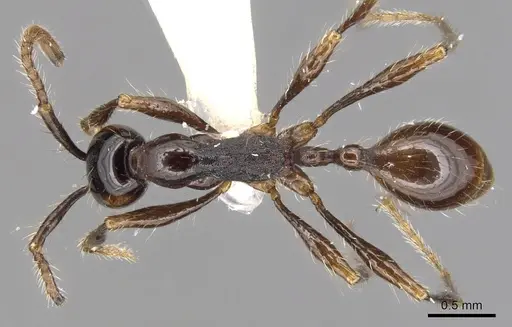
Literatura
Carregando mapa de distribuição...Carregando produtos...