
Aenictus reyesi
- Nome científico
- Aenictus reyesi
- Subfamília
- Dorylinae
- Autor
- Chapman, 1963
- Distribuição
- Encontrada em 1 países
Introdução
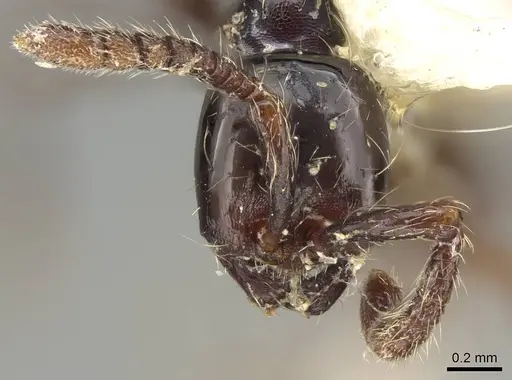
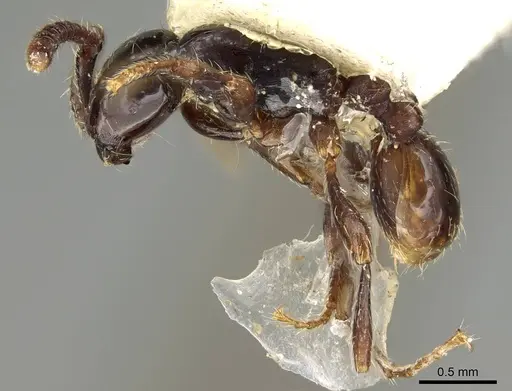
Aenictus reyesi is a tiny army ant from the Philippines. Workers are dark reddish brown, almost blackish, with medium reddish brown legs and antennae . They are relatively small army ants within the pachycerus species group. The species lives on Negros Island in the Philippines and was first collected from the Horns of Negros mountains at 450 meters elevation . Only workers have ever been found - no queens, males, or nests have been discovered . This makes their actual behavior, colony size, and biology unknown. While we know they belong to the army ant genus Aenictus, their biology remains entirely unstudied .
Quick Summary
- Difficulty: Expert
- Origin & Habitat: Negros Island, Philippines, collected from montane tropical forest at 450m elevation [1].
- Colony Type: Unknown, only the worker caste has ever been discovered [2].
- Size & Growth:
- Queen: Unknown, queens have never been found [2].
- Worker: ~2-5mm, inferred from Aenictus genus
- Colony: Unknown, related Aenictus species may have thousands of workers but this is unconfirmed [2].
- Growth: Unknown.
- Development: Unknown, no queens have been found, so development has never been observed [2]. (Development data requires finding a queen and observing colony founding, which has not happened for this species.)
- Antkeeping:
- Temperature: Unconfirmed, based on tropical Philippine origin, likely requires warm stable temperatures around 25-28°C.
- Humidity: Unconfirmed, tropical forest habitat suggests high humidity needs.
- Diapause: No, tropical species likely remain active year-round [1].
- Nesting: Unknown, army ants are typically nomadic and do not build permanent nests [2].
- Behavior: Unknown. As army ants, they may show nomadic behavior and group raiding, but this has not been confirmed for this species [2]. Workers are extremely small and can escape easily.
- Common Issues: only workers are known, without a queen, collected workers will die off and cannot form a breeding colony., extremely small size means they can escape through the tiniest gaps in any standard setup., army ant biology likely requires massive foraging space and constant prey supplies that home setups cannot provide., tropical origin means they require warm temperatures year-round and will not survive cooling.
Appearance and Identification
Workers of Aenictus reyesi are small, dark reddish brown army ants with 10-segmented antennae [1]. They are among the smaller members of the pachycerus species group.
The head is mostly smooth and shiny except for the circular areas around the antennae bases, which have a fine net-like texture [1]. The middle body section has a flat to slightly rounded top with lengthwise ridges or grooves, while the sides are textured and dull [1][3]. The waist segments are cube-shaped [3]. The longest hairs on the thorax are only about 0.15 millimeters long [1][4].
Distribution and Habitat
This species is known only from Negros Island in the Philippines [1][4]. The original specimens were collected at the Horns of Negros mountains near Dumaguete city, at an elevation of 450 meters [1].
The habitat is tropical forest, though specific details about nesting sites or microhabitats are unknown. The collection location suggests they live in mid-elevation montane forests.
Biology and Natural History
Nothing is known about the biology of this species [2]. It belongs to the Aenictus pachycerus species group, which includes several other Asian army ant species [5][4].
Army ants in the genus Aenictus are typically nomadic, forming large colonies with thousands of workers that move frequently and prey on other ants and small arthropods. However, these traits are inferred from related species and have not been confirmed for A. reyesi specifically [2]. No nests, queens, or males have ever been found, so their reproductive behavior and colony structure remain unknown.
Why This Species Cannot Be Kept in Captivity
Aenictus reyesi is currently impossible to maintain in captivity. Only workers have ever been collected, and no queens are known [2]. Without a queen, workers cannot reproduce, and any collected specimens will eventually die of old age without replacing themselves.
Additionally, army ants require specialized care that standard ant farms cannot provide. They typically need massive foraging areas, constant supplies of live prey, and accommodation for nomadic behavior. Their extremely small size also makes escape prevention nearly impossible with standard equipment.
Distinguishing from Similar Species
Aenictus reyesi can be distinguished from other Philippine army ants by its larger size within the pachycerus group [4][3]. It has a straight dorsal outline on the propodeum and well-developed parafrontal ridges [4][3]. The combination of a mostly smooth, shiny head with densely sculptured mandibles also helps identify this species [6].
Frequently Asked Questions
Can I keep Aenictus reyesi in a test tube?
No. This species is not suitable for test tube setups or standard formicaria. Only workers are known, so you cannot start a breeding colony, and army ants require specialized care including massive foraging space that test tubes cannot provide.
How long does Aenictus reyesi take to develop from egg to worker?
Unknown. No queens have ever been found for this species, so egg laying, brood development, and founding behavior have never been observed [2].
What do Aenictus reyesi eat?
Unknown specifically. Based on typical Aenictus behavior, they likely prey on other ants and small arthropods, but this has not been confirmed for this species [2].
Do Aenictus reyesi need hibernation?
No. They come from the tropical Philippines and likely remain active year-round without a winter rest period [1].
Are Aenictus reyesi dangerous?
They are very small and unlikely to cause significant harm to humans. Like all army ants, they can bite, but their small size means they cannot penetrate human skin effectively [2].
Can I keep multiple Aenictus reyesi queens together?
Unknown. Queens have never been found for this species, so colony structure and queen tolerance are unconfirmed [2].
Why are my Aenictus reyesi workers dying?
Workers collected from the wild will die naturally without a queen to replace them. Army ant workers also require constant food supplies, high humidity, and warm temperatures that are difficult to maintain. They are not suited to captive keeping [2].
Where can I buy Aenictus reyesi?
You cannot obtain this species through the ant keeping trade. They are not sold because they cannot be bred in captivity and only worker specimens exist in scientific collections.
Report an Issue
The current care sheet is based fully on literature. See inconsistencies, or something that's incorrect? Please , it will be resolved after review from an admin. Contributing to the blogs tab also helps providing information, to make us be able to further improve the caresheets. Thank you for your support!
References

Este guia de cuidados está sob a licença CC BY-SA 4.0 .
Posts da comunidade
CASENT0217385
Ver no AntWeb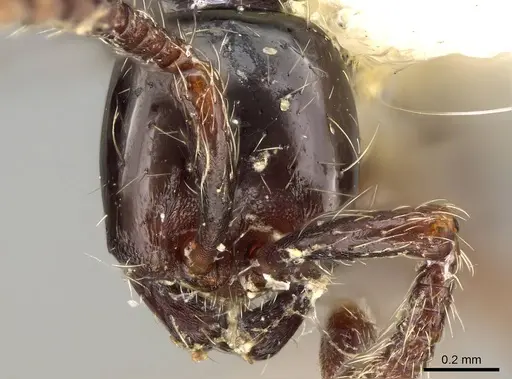
Literatura
Carregando mapa de distribuição...Carregando produtos...