
Aenictus montivagus
- Nome científico
- Aenictus montivagus
- Subfamília
- Dorylinae
- Autor
- Jaitrong & Yamane, 2011
- Distribuição
- Encontrada em 0 países
Introdução
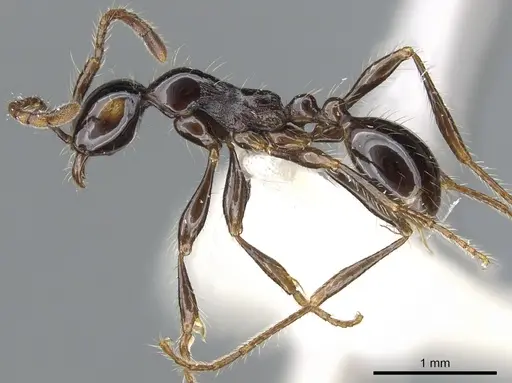
Aenictus montivagus are small army ants found in the mountains of Borneo. Workers measure 3.70-4.00 mm in total length and are dark reddish-brown with distinctive sculpturing on their thorax . They inhabit highland forests at elevations between 1000 and 1600 meters in Sabah, Malaysia . Unlike many army ants that forage at night, these ants are active during daytime . Only the worker caste has ever been described by scientists. No queens, males, or brood have been found, which means we know almost nothing about how their colonies start or grow . This makes them virtually impossible to keep in captivity.
Quick Summary
- Difficulty: Expert
- Origin & Habitat: Highland forests of Borneo (Sabah, Malaysia) at 1000-1600m elevation [1].
- Colony Type: Unknown, only the worker caste has been described [1].
- Size & Growth:
- Antkeeping:
- Temperature: Likely 20-24°C based on highland habitat. Start at 22°C and observe activity levels.
- Humidity: High humidity around 70-80% inferred from forest habitat. Keep nest material moist but not waterlogged.
- Diapause: Unknown, as a tropical highland species, they likely slow down in cooler months but do not require true hibernation.
- Nesting: Army ants form temporary bivouacs rather than permanent nests. Standard formicaria are unsuitable.
- Behavior: Nomadic army ants active during daytime. They likely prey on other ants and termites like related species. Workers are small and fast-moving.
- Common Issues: no queens known means you cannot start a colony from a founding queen., army ants require massive foraging areas and specialized diets of live ant colonies that are difficult to maintain., highland temperature requirements differ from typical lowland tropical ants and require careful monitoring., small worker size creates significant escape risks even through tiny gaps.
Why Aenictus montivagus Cannot Currently Be Kept
You cannot keep Aenictus montivagus in captivity because no queens have ever been found. Scientists have only collected workers [1]. Without a queen, you cannot start a colony. Even if you found a colony fragment in the wild, army ants present unique challenges that make them unsuitable for standard ant keeping.
Army ants like Aenictus are nomadic. They do not build permanent nests. Instead, they form living structures called bivouacs using their own bodies. They move frequently and require enormous foraging territories. A typical colony may need hundreds of square meters to hunt. This is impossible to provide in a home setup.
Natural History and Habitat
Aenictus montivagus lives in the highlands of Mount Kinabalu in Sabah, Borneo. They inhabit montane forests between 1000 and 1600 meters above sea level [1]. This elevation suggests they prefer cooler conditions than lowland tropical ants.
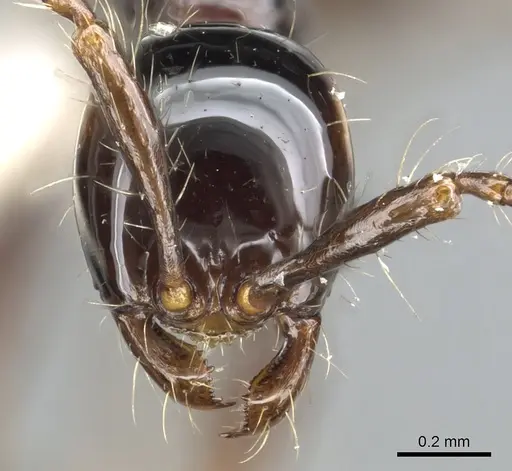
Workers are small at just under 4 mm total length. They are dark reddish-brown with fine lines sculptured into the sides of their thorax [1]. Most army ants forage at night, but researchers encountered these colonies during the daytime [1]. This unusual activity pattern might reflect the cooler highland temperatures or different prey availability.
Army Ant Biology and Keeping Challenges
Aenictus belongs to the army ant subfamily Dorylinae. These are true army ants with complex social structures and high metabolic demands. Colonies require massive amounts of food daily, primarily the brood of other ants and termites.
In captivity, you would need to provide live ant colonies or termites regularly. This is difficult to sustain and raises ethical concerns. Army ants also have high worker turnover rates. Without the constant input of new workers from a functioning colony, a wild-caught fragment would quickly die off. The small worker size means they can escape through the tiniest gaps in any standard enclosure. [1]
Theoretical Care Guidelines
If you somehow obtained a colony fragment, you would need a very large naturalistic setup with deep substrate and extensive foraging areas. Based on their highland habitat, maintain temperatures around 20-24°C with high humidity above 70%.
You would need to feed live prey daily, likely small ant colonies or termites. The enclosure would need excellent escape prevention using fine mesh and barriers, as these are tiny ants. However, these guidelines are theoretical. No one has successfully kept this species in captivity, and without queens, the colony would eventually die out. [1]
Frequently Asked Questions
Can I keep Aenictus montivagus in captivity?
No. Only workers have been described, so there is no way to acquire a founding queen. Even with a wild colony fragment, army ants require specialized care that is not feasible for hobbyists.
Where can I buy Aenictus montivagus?
You cannot buy this species. They are not available in the ant trade and are restricted to highland forests in Borneo.
How long until Aenictus montivagus get their first workers?
Unknown. Founding behavior has never been observed because no queens have been found.
What do Aenictus montivagus eat?
Likely other ants and termites based on typical Aenictus behavior, though specific prey preferences are unconfirmed for this species.
Do Aenictus montivagus need hibernation?
Unknown. As a tropical highland species, they likely slow down in cooler months but do not require true hibernation like temperate ants.
How big do Aenictus montivagus colonies get?
Unknown. Army ant colonies typically number in the thousands, but specific data for this species does not exist.
Why are only workers known for Aenictus montivagus?
Army ant queens are rare and cryptic. They may stay deep in the nest or have never been collected by researchers. Scientists have only found worker ants during surveys [1].
Report an Issue
The current care sheet is based fully on literature. See inconsistencies, or something that's incorrect? Please , it will be resolved after review from an admin. Contributing to the blogs tab also helps providing information, to make us be able to further improve the caresheets. Thank you for your support!
References

Este guia de cuidados está sob a licença CC BY-SA 4.0 .
Posts da comunidade
CASENT0903689
Ver no AntWeb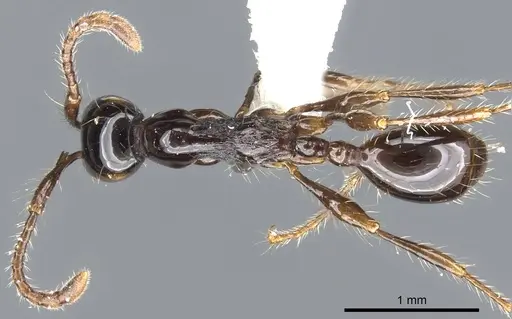
Literatura
Carregando mapa de distribuição...Carregando produtos...