
Aenictus ambiguus
- Nome científico
- Aenictus ambiguus
- Subfamília
- Dorylinae
- Autor
- Shuckard, 1840
- Distribuição
- Encontrada em 0 países
Introdução
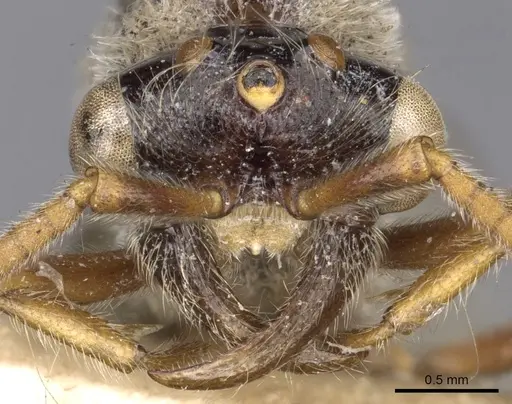
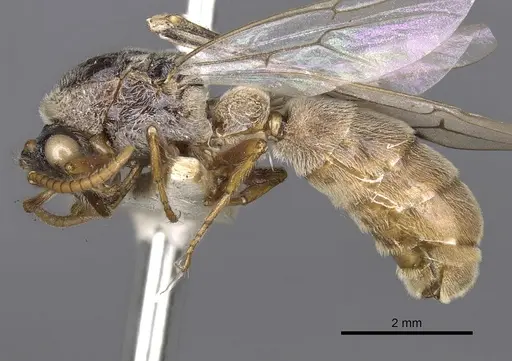
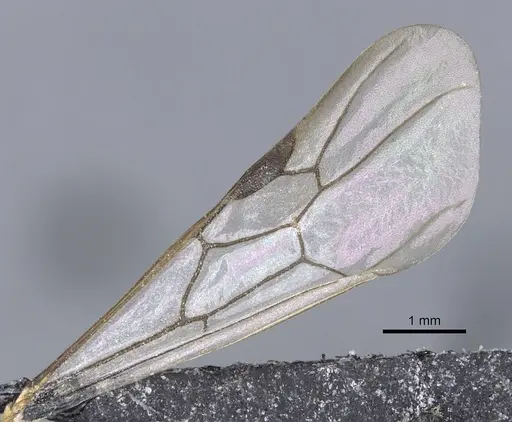
Aenictus ambiguus is one of the most mysterious ants in the entire Formicidae family. It is known only from male specimens collected in India and Nepal, making it the only species in its genus that has never been associated with worker ants . The males are distinctive: reddish-testaceous in color with a black head, covered in dense pale yellow hairs . As the type species of the genus Aenictus (meaning it was the first species described and defines what the genus looks like), this ant holds special taxonomic importance . However, since no keeper has ever successfully identified or maintained a colony of this species, it cannot be kept in captivity. The closely related Aenictus pachycerus is likely what the workers belong to, but this association remains unconfirmed .
Quick Summary
- Difficulty: Expert
- Origin & Habitat: India and Nepal (Indomalaya region), found at approximately 1000 meters elevation in Himalayan areas [3][4]
- Colony Type: Unknown, only males have been collected, worker caste has never been described or associated [2]
- Size & Growth:
- Antkeeping:
- Temperature: No biological data exists for this species. Related Aenictus species prefer warm tropical conditions (24-30°C) but this is genus-level inference only and cannot be confirmed for A. ambiguus [2].
- Humidity: No biological data exists [2].
- Diapause: No biological data exists [2].
- Nesting: No biological data exists. Army ants in the genus Aenictus typically have nomadic colonies and form bivouacs, but this cannot be confirmed for this species [2].
- Behavior: No behavioral observations exist for this species. Based on genus patterns, it is likely predatory and nomadic, but this is unconfirmed [2].
- Common Issues: This species cannot be kept, workers have never been described or associated with males., No one has ever collected a colony of this species in the wild., Identification is impossible without workers to examine., Related species may be confused, A. pachycerus workers are likely what this species workers look like, but this remains unconfirmed.
Why This Species Cannot Be Kept
Aenictus ambiguus represents a unique challenge in ant keeping: it is one of the few ant species that has never been observed in its worker form [1][2]. The species was described in 1840 by William Shuckard based solely on male specimens collected in India. Despite over 180 years of myrmecological research, no one has ever collected worker ants that can be definitively associated with this species [2]. This means there are no workers to catch, no colonies to establish, and no way to verify you have this species rather than a close relative. The male specimens show it belongs to the pachycerus species group, and researchers believe the workers likely resemble Aenictus pachycerus, but this association remains unconfirmed [2]. Until a researcher successfully collects and describes the worker caste, this species will remain a scientific name without a living colony.
Taxonomic Importance
As the type species of the genus Aenictus, Aenictus ambiguus holds special significance in ant taxonomy [1]. When the genus was first established, this species was used to define its characteristics. All other Aenictus species are compared against A. ambiguus to determine if they belong in the genus [1][2]. Wilson (1964) made extensive efforts to locate the type specimen, eventually identifying one in the Oxford University Museum [2]. The species is placed in the pachycerus group based on morphological features of the male, which helps narrow down what the unknown workers might look like [2]. For ant taxonomists, this species is important, for antkeepers, it remains out of reach.
Related Species That Can Be Kept
If you are interested in army ants similar to A. ambiguus, several related Aenictus species are available in the antkeeping hobby. Aenictus ceylonicus and Aenictus inflatus are commonly kept species that exhibit typical army ant behavior: they raid in columns, are strictly predatory, and form nomadic colonies. These species have fully described workers and established care protocols [2]. While A. ambiguus itself cannot be kept, studying its close relatives provides insight into what its biology might be like if workers are ever discovered. The genus Aenictus contains over 180 species across tropical Asia, Africa, and Australasia, with many having well-documented biology [2].
Frequently Asked Questions
Can I keep Aenictus ambiguus ants?
No. This species cannot be kept because the worker caste has never been described or collected. Only male specimens exist in museum collections, and no one has ever established a living colony of this species [1][2].
What do Aenictus ambiguus workers look like?
We don't know. The worker caste has never been described or associated with the known males. Researchers believe workers likely resemble Aenictus pachycerus based on the male's morphology, but this remains unconfirmed [1][2].
Where does Aenictus ambiguus live?
The species is known from India and Nepal in the Indomalaya region, at elevations around 1000 meters. Specimens have been recorded from Sikkim, Himachal Pradesh, Karnataka, Kerala, Maharashtra, and other Indian states [3][4].
Why are only males known for this species?
This is simply a gap in scientific knowledge. Male ants are often collected more easily because they fly to lights, while workers must be found at their nest. For A. ambiguus, no researcher has ever located a worker nest or associated workers with these males despite 180 years of searching [2].
Are there similar ants I can keep instead?
Yes. Several Aenictus species are available in the hobby, including Aenictus ceylonicus and Aenictus inflatus. These are true army ants that raid in columns and are strictly predatory. They provide the army ant experience even though A. ambiguus itself cannot be kept [2].
What is the type species of Aenictus?
Aenictus ambiguus is the type species of the genus Aenictus, meaning it was the first species described when the genus was established and serves as the reference point for the entire genus [1].
Will workers ever be discovered?
Possibly. Future field work in India and Nepal may eventually locate worker nests and confirm the association. However, this requires dedicated research and luck, the workers could be indistinguishable from related species without genetic analysis [2].
Is this an endangered species?
We don't know. Without knowing what the workers look like or where they live, population status cannot be assessed. It may be common or rare, the data simply doesn't exist [2].
Report an Issue
The current care sheet is based fully on literature. See inconsistencies, or something that's incorrect? Please , it will be resolved after review from an admin. Contributing to the blogs tab also helps providing information, to make us be able to further improve the caresheets. Thank you for your support!
References

Este guia de cuidados está sob a licença CC BY-SA 4.0 .
Posts da comunidade
CASENT0901947
Ver no AntWeb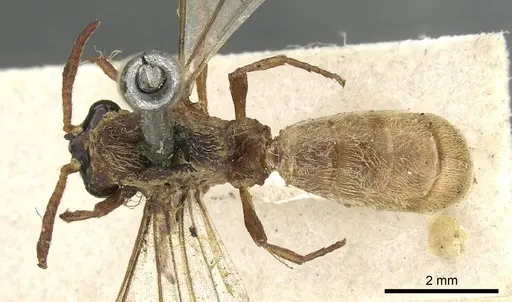
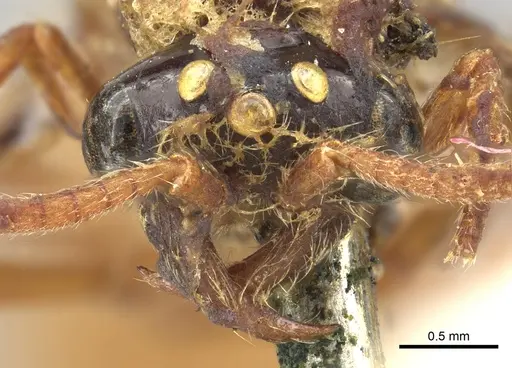
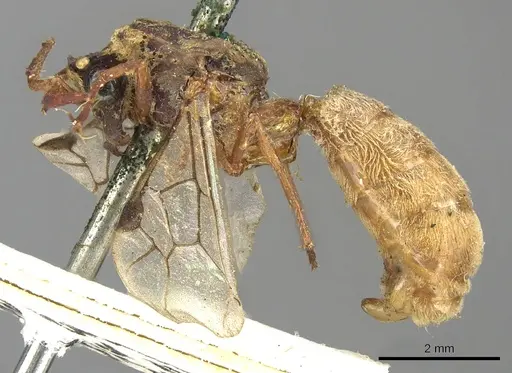
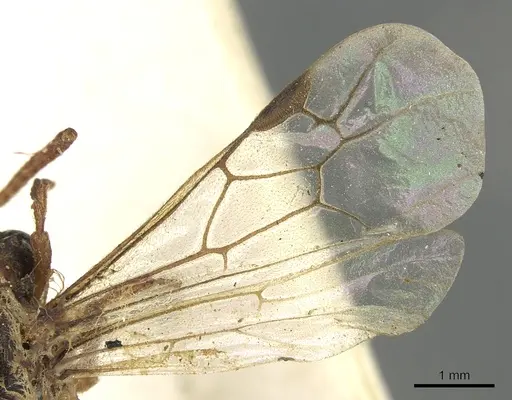
CASENT0901981
Ver no AntWeb
Literatura
Carregando mapa de distribuição...Carregando produtos...