
Acropyga bakwele
- Nome científico
- Acropyga bakwele
- Tribo
- Plagiolepidini
- Subfamília
- Formicinae
- Autor
- LaPolla & Fisher, 2005
- Distribuição
- Encontrada em 0 países
Introdução
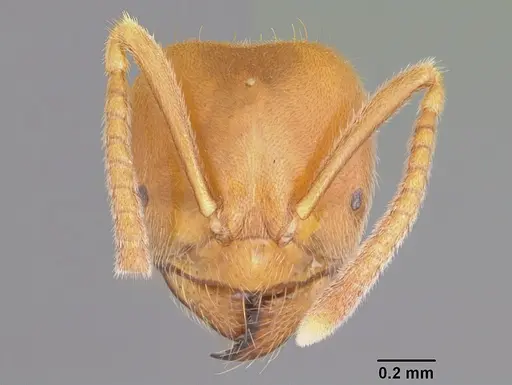
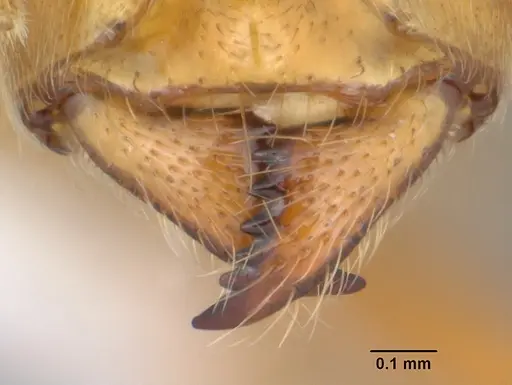
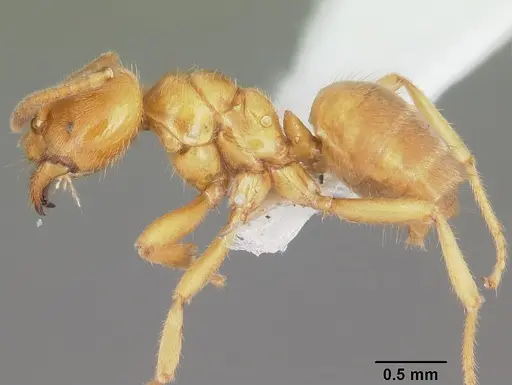
Acropyga bakwele is an extremely rare rainforest ant from Gabon, West Africa. Workers measure 3.24mm in total length, making it the largest Acropyga species known from Africa and one of the largest in the world . They have a distinctive reddish-yellow coloration with a thick covering of appressed hairs. The most unusual feature is the presence of a median ocellus (a simple eye) on workers - a trait virtually unknown in Acropyga workers and unique among all described species in the genus . Their mandibles have six distinct teeth with the apical tooth about twice as long as the others . This species is only known from a single specimen collected in 1998 from leaf litter in a lowland rainforest near marshland dominated by Raphia palms .
Quick Summary
- Difficulty: Expert
- Origin & Habitat: Only known from Gabon, West Africa. The single collection was from leaf litter in moist, sandy soil rainforest at 600m elevation, adjacent to marshland dominated by Raphia palms [1][2].
- Colony Type: Unknown. Only the worker caste has been described. Queen and male are unknown to science [1]. Colony structure (single-queen or multi-queen) has not been documented.
- Size & Growth:
- Queen: Unknown, queen has not been described [1]
- Worker: 3.24mm total length (holotype worker) [1]
- Colony: Unknown, only single worker known
- Growth: Unknown
- Development: Unknown, no development data exists for this species (This is one of the most poorly documented ant species in existence. No brood development or colony growth data is available.)
- Antkeeping:
- Temperature: Likely 24-28°C based on typical tropical rainforest conditions. Start in the mid-20s and observe colony activity.
- Humidity: High humidity required, collected from moist rainforest leaf litter near marshland. Keep substrate consistently damp but not waterlogged [1][2].
- Diapause: Unknown, no seasonal data available. As a tropical species from Gabon, it likely does not require diapause, but this is unconfirmed.
- Nesting: Acropyga are typically ground-nesting ants. A naturalistic setup with moist substrate or a Y-tong/plaster nest would be appropriate. They were collected from leaf litter, suggesting they prefer humid, enclosed spaces [1].
- Behavior: Behavior is unstudied for this species. Based on Acropyga genus patterns, they are likely non-aggressive and slow-moving. They are often associated with mealybugs and scale insects for honeydew. At 3.24mm, standard escape barriers should be sufficient.
- Common Issues: extremely limited availability, only known from a single museum specimen, queen and male unknown, cannot establish breeding colonies, no captive husbandry information exists, all care is experimental, habitat requirements poorly understood, may have specialized needs, wild-caught colonies may have parasites or diseases with no documented treatment
Availability and Acquisition
Acropyga bakwele is one of the rarest ants in the antkeeping hobby. It is only known from a single worker specimen collected in Gabon in 1998 [1]. There are no documented captive colonies, and no described queens or males exist in scientific literature. You will not find this species for sale from any commercial ant farm. If available at all, it would only be from very rare field collections directly from Gabon, which would be ethically and legally questionable. For these reasons, this caresheet exists primarily as documentation rather than practical guidance for keeping this species.
Why This Species is Documented Here
This caresheet exists because Acropyga bakwele represents an interesting case study in ant taxonomy and biodiversity. Its unique features include being the largest African Acropyga, having a median ocellus (a simple eye) on workers, a trait virtually unknown in this genus, and having unusually large eyes for an Acropyga species (approximately 10 facets) [1]. The species was named to honor the Bakwele pygmies who assisted the researcher during fieldwork [1]. While you likely will never keep this species, understanding its existence highlights how little we know about tropical ant biodiversity, even a species as distinctive as this remains known from only a single worker after decades of research.
If You Somehow Obtain This Species
Since no documented care exists, any advice would be purely speculative. However, based on the collection data and typical Acropyga genus requirements, you would likely need to replicate humid tropical rainforest conditions. Keep the nest area at 24-28°C with high humidity. Use a naturalistic setup with moist substrate or a plaster/Y-tong nest. Feed sugar water or honey occasionally, and offer small live prey like fruit flies. Monitor closely and document any observations, you would be contributing to the first scientific knowledge of this species in captivity. However, given the extreme rarity and lack of documented queens, establishing a breeding colony would be essentially impossible.
Related Species That Are Keepable
If you are interested in the Acropyga genus, several other species are more commonly available and better documented. Acropyga species are generally small, ground-nesting ants known for tending mealybugs for honeydew. They are typically docile and slow-moving. Look for more common Acropyga species from Southeast Asia or other regions where collection and trade are documented. These related species would provide similar keeping experience to what A. bakwele would offer, assuming it could be kept. General Acropyga care involves humid conditions, sugar sources, and small protein prey.
Frequently Asked Questions
Can I buy Acropyga bakwele ants?
No. This species is only known from a single worker specimen in a museum. It has never been documented in the antkeeping trade and no captive colonies exist. You cannot purchase this ant anywhere.
Where does Acropyga bakwele live?
Only from Gabon, West Africa. The single known specimen was collected from leaf litter in a rainforest at 600m elevation, near marshland dominated by Raphia palms [1][2].
How big is Acropyga bakwele?
Workers are 3.24mm in total length, making this the largest Acropyga species known from Africa and one of the largest in the world [1].
What makes Acropyga bakwele unique?
This species has several unique features: workers possess a median ocellus (a simple eye) which is virtually unknown in Acropyga workers, they have unusually large eyes for the genus (approximately 10 facets), and their mandibular apical tooth is about twice as long as the other teeth [1].
Has anyone kept Acropyga bakwele in captivity?
No documented captive colonies exist. Only a single worker has ever been collected and described scientifically. No queens or males have been found, making captive breeding impossible.
What do Acropyga bakwele eat?
Unknown for this specific species. However, Acropyga genus members typically tend mealybugs and scale insects for honeydew and also consume small insects. In captivity, you would likely need to offer sugar water or honey and small live prey.
Do Acropyga bakwele queens exist?
No. The queen and male of this species are unknown to science. Only the worker caste has been described [1].
Is Acropyga bakwele endangered?
We do not know. The species is known only from a single collection event in 1998. Its conservation status has not been assessed. However, its known range in Gabon faces habitat loss from deforestation.
What temperature do Acropyga bakwele need?
Not documented for this species. Based on typical tropical rainforest conditions in Gabon, they would likely need warm conditions around 24-28°C. No captive observations exist to confirm this.
Why is Acropyga bakwele so rare?
This species was collected only once in 1998 during a major biodiversity survey in Gabon. It may be genuinely rare, or it may be difficult to find due to its small size and ground-nesting habits. Many tropical ant species remain undiscovered because they are cryptic and hard to collect.
Can I keep multiple queens together?
We do not know the colony structure. Queens have never been documented for this species, so combining unrelated queens has not been studied and cannot be recommended.
Does Acropyga bakwele need hibernation?
Unknown. As a tropical species from Gabon, it likely does not require a diapause period, but this has not been studied.
Report an Issue
The current care sheet is based fully on literature. See inconsistencies, or something that's incorrect? Please , it will be resolved after review from an admin. Contributing to the blogs tab also helps providing information, to make us be able to further improve the caresheets. Thank you for your support!
References

Este guia de cuidados está sob a licença CC BY-SA 4.0 .
Posts da comunidade
CASENT0104123
Ver no AntWeb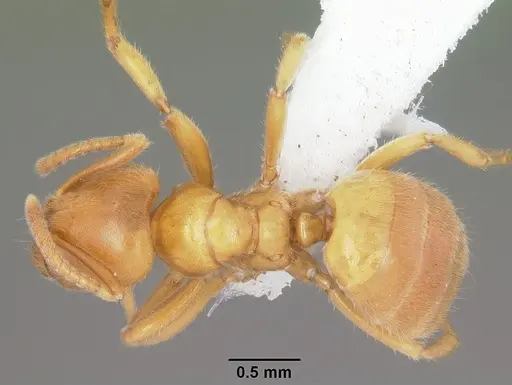
Literatura
Carregando mapa de distribuição...Carregando produtos...