
Acanthostichus sanchezorum
- Nome científico
- Acanthostichus sanchezorum
- Subfamília
- Dorylinae
- Autor
- MacKay, 1985
- Distribuição
- Encontrada em 1 países
Introdução
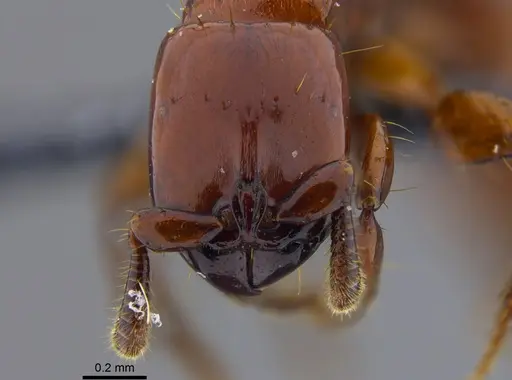
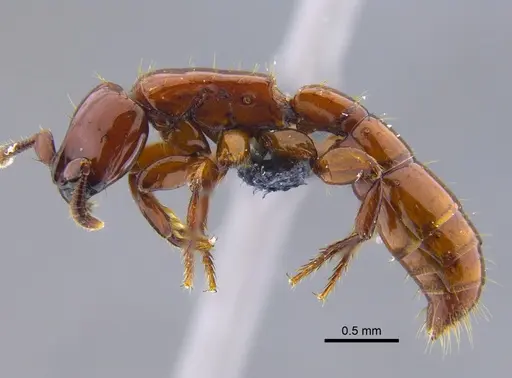
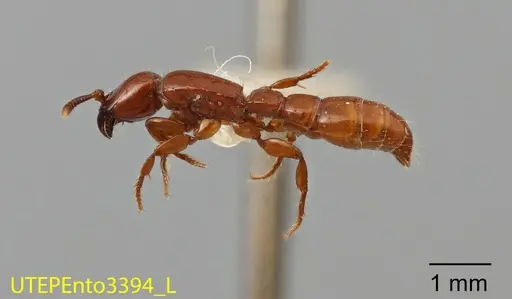
A small, dark ant belonging to the Dorylinae subfamily (army ants). Workers are darker than related species and measure larger than similar Acanthostichus species. The species is distinguished by having the spiracle placed high on the propodeum, a smooth petiole dorsum, and an angulate scape near the apex. This ant is known only from the worker caste, with queens and males undescribed. It was described from specimens collected in Meta department, Colombia, specifically Villavicencio, where it nests in subterranean tunnels about 15cm below the soil surface . The genus Acanthostichus contains cryptic, ground-nesting ants that are rarely encountered by collectors.
Quick Summary
- Difficulty: Expert
- Origin & Habitat: Tropical Colombia (Meta department, Villavicencio). Found nesting in subterranean tunnels approximately 15cm below the soil surface [3].
- Colony Type: Unknown, only worker caste has been described. Queens and colony structure have not been documented in scientific literature.
- Size & Growth:
- Queen: Unknown, queen caste has not been described
- Worker: Size data unavailable, workers are noted as larger than related species A. femoralis but exact measurements are not specified in available literature [3]
- Colony: Unknown, colony size has not been documented
- Growth: Unknown
- Development: Unknown, no development data available for this species (Development timeline unconfirmed.)
- Antkeeping:
- Temperature: Keep warm, roughly 24-28°C. This species comes from tropical Colombia where temperatures are consistently warm year-round. A heating cable on one side of the nest creates a suitable gradient.
- Humidity: Require high humidity, think damp, tropical soil. Keep the nest substrate consistently moist but not waterlogged. The subterranean nesting depth of 15cm suggests they prefer stable, humid conditions underground.
- Diapause: Unknown, no data on overwintering requirements. As a tropical species from Colombia, they likely do not require a diapause period, but this is unconfirmed.
- Nesting: This is a subterranean nesting species found at 15cm depth. In captivity, a deep naturalistic setup with compact soil or a plaster nest with narrow chambers works well. They prefer dark, enclosed spaces and are rarely seen on the surface.
- Behavior: Behavior is poorly documented. As a Dorylinae member, they are likely predatory on other small invertebrates. Their subterranean lifestyle means they are cryptic and rarely visible. Escape risk is moderate given their small size, use standard barrier methods. They are not known to be aggressive toward keepers.
- Common Issues: very limited biological data makes captive care speculative, queen and colony structure unknown, you may not be able to establish a reproducing colony, subterranean lifestyle means they are rarely visible, which can be disappointing for keepers, wild-caught colonies may be difficult to establish in captivity, no confirmed diet information, experimental feeding required
Nest Preferences and Housing
Acanthostichus sanchezorum is a subterranean nesting species found approximately 15cm below the soil surface in its natural habitat. This means they prefer dark, enclosed spaces with stable humidity. In captivity, a naturalistic setup with deep, compact substrate works well. The substrate should be kept consistently moist but never waterlogged. You can use a mixture of soil and sand or a plaster nest with narrow chambers. Because they nest deep underground, they do well in darker setups where light is minimized. Avoid bright lighting and keep the nest area covered to reduce stress. A small outworld for foraging allows you to observe them when they emerge to hunt for prey. [3]
Feeding and Diet
As a member of the Dorylinae subfamily, this species is likely predatory on small invertebrates. However, no specific diet information exists for Acanthostichus sanchezorum. Based on related species in the genus, they probably hunt small soil arthropods like springtails, mites, and tiny insects. In captivity, you should start by offering small live prey such as fruit fly adults, pinhead crickets, and other tiny arthropods. Observe whether they accept these foods. Sugar sources are unlikely to be important since Dorylinae ants are typically predatory. Feed every 2-3 days and remove uneaten prey after 24 hours. Since this species is rarely kept, experimental feeding trials may be necessary to determine their preferences.
Temperature and Care
This species comes from tropical Colombia, where temperatures remain warm year-round. Keep the nest area at roughly 24-28°C. A heating cable placed on one side of the nest can create a temperature gradient, allowing the ants to regulate their own exposure to warmth. Avoid temperatures below 22°C as this species is adapted to consistently tropical conditions. Temperature stability is important, avoid drafts and sudden temperature changes. Since they nest 15cm deep in the wild, they are adapted to relatively stable underground temperatures, so aim for consistency in your setup. [3]
Understanding the Challenges
Acanthostichus sanchezorum is one of the least-documented ant species in the hobby. Only the worker caste has been scientifically described, queens, males, and colony structure remain unknown. This creates significant challenges for antkeepers. You may not be able to establish a reproducing colony unless you find a mated queen, which has never been described. Wild-caught colonies are extremely difficult to locate given their subterranean nesting habits at 15cm depth. This species is best kept by experienced antkeepers who understand that much of the care will be speculative and may require experimentation. The cryptic nature of these ants means you will see them rarely, which can be rewarding for patient keepers but disappointing for those wanting active, visible colonies. [3]
Frequently Asked Questions
How do I keep Acanthostichus sanchezorum ants?
This is an expert-level species due to limited biological data. Provide a deep, naturalistic setup with moist substrate (about 15cm deep), keep temperatures at 24-28°C, and offer small live prey. Expect to experiment with care since no established husbandry guidelines exist for this species.
What do Acanthostichus sanchezorum ants eat?
Diet is unconfirmed, but as a Dorylinae ant, they are likely predatory. Offer small live invertebrates like fruit flies, springtails, and tiny crickets. Remove uneaten prey after 24 hours. Sugar sources are probably not important for this species.
How big do Acanthostichus sanchezorum colonies get?
Unknown, colony size has not been documented in scientific literature. Only worker specimens have been described.
Do Acanthostichus sanchezorum queens have wings?
Unknown, the queen caste has never been described. We have no information about queen morphology or whether they are fully winged, ergatoid (wingless), or have some other form.
Where is Acanthostichus sanchezorum found?
This species is known only from the Meta department in Colombia, specifically around Villavicencio. They nest in subterranean tunnels about 15cm below the soil surface.
Can beginners keep Acanthostichus sanchezorum?
No, this species is not recommended for beginners. There is virtually no biological data available, the queen has never been described, and established captive care guidelines do not exist. This species is best suited for expert antkeepers who can experiment with care protocols.
How deep should I make the nest for Acanthostichus sanchezorum?
In the wild, they nest about 15cm below the surface. In captivity, aim for a nest chamber depth of at least 10-15cm or use a setup that provides equivalent darkness and soil pressure. They prefer tight, enclosed spaces.
Why can't I find any information about this ant?
Acanthostichus sanchezorum is one of the rarest and least-studied ant species in the hobby. Only the worker caste has ever been described scientifically, and nothing is known about their queens, reproduction, or colony structure. This makes them a research species rather than a typical pet ant.
Will Acanthostichus sanchezorum form colonies in captivity?
Possibly, but likely only if you can obtain a wild-caught colony. Since the queen has never been described and founding behavior is unknown, you may not be able to establish a reproducing colony. Wild-caught colonies are also extremely difficult to obtain given their deep subterranean nesting.
Report an Issue
The current care sheet is based fully on literature. See inconsistencies, or something that's incorrect? Please , it will be resolved after review from an admin. Contributing to the blogs tab also helps providing information, to make us be able to further improve the caresheets. Thank you for your support!
References

Este guia de cuidados está sob a licença CC BY-SA 4.0 .
Posts da comunidade
CBUMAGENT41916
Ver no AntWeb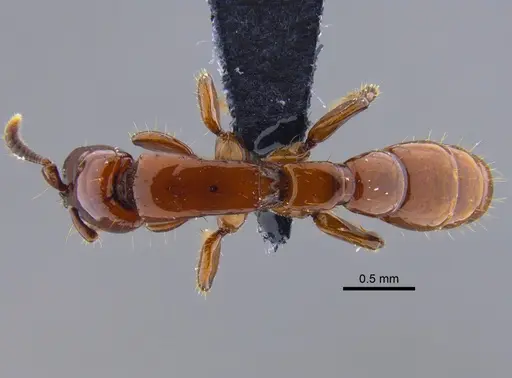
UTEPENTO3394
Ver no AntWeb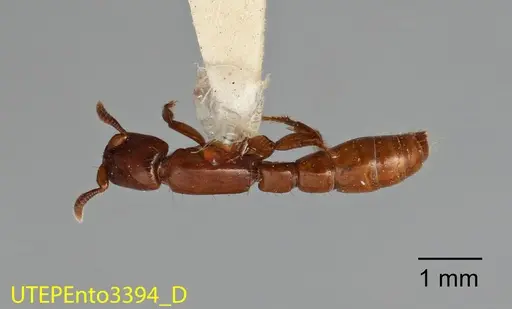
Literatura
Carregando mapa de distribuição...Carregando produtos...