
Acanthoponera goeldii
- Nome científico
- Acanthoponera goeldii
- Tribo
- Heteroponerini
- Subfamília
- Ectatomminae
- Autor
- Forel, 1912
- Distribuição
- Encontrada em 1 países
Introdução
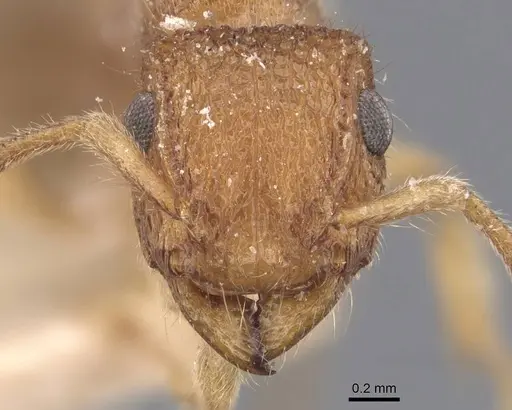
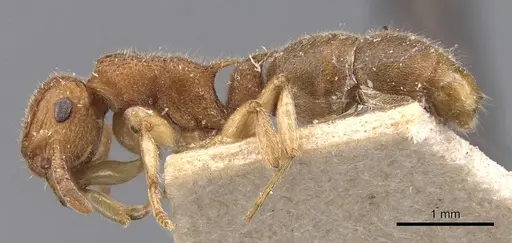
Acanthoponera goeldii is a medium-sized ant species native to the Neotropical region. Workers measure approximately 5 to 5.3 millimeters in total length and range from yellow to light brown in color . Their bodies are covered in short, erect hairs that stand upright from the surface. You can identify them by the short, curved spines on the propodeum (back of the thorax), a translucent section on the front half of the subpetiolar process underneath the waist, and a strong constriction between the first and second abdominal segments . This species inhabits the Atlantic Forest of Brazil, from Santa Catarina north to Espírito Santo and into southern Minas Gerais, with additional records in northern Argentina and Mexico . They are rarely encountered and remain poorly studied. Researchers have collected them using sardine baits in olive oil, indicating they scavenge or hunt for protein-rich animal matter . Beyond their diet and distribution, almost nothing is known about their nesting habits, colony structure, or reproductive behavior.
Quick Summary
- Difficulty: Expert
- Origin & Habitat: Atlantic Forest of Brazil (Santa Catarina to Espírito Santo, including southern Minas Gerais), with records in northern Argentina and Mexico [1][2].
- Colony Type: Unknown, no studies have confirmed whether colonies have single or multiple queens.
- Size & Growth:
- Antkeeping:
- Temperature: Likely needs warm conditions around 24-28°C based on their tropical Atlantic Forest habitat. Start at 25°C and monitor colony activity.
- Humidity: Likely requires high humidity matching their humid forest origins. Keep nest substrate damp but not waterlogged.
- Diapause: Unlikely, as a tropical species from the Atlantic Forest, they probably do not require winter diapause, but this remains unconfirmed.
- Nesting: Nesting preferences are unknown in the wild. A naturalistic setup with soil and leaf litter is recommended based on general Ectatomminae patterns.
- Behavior: Temperament is unknown. Workers are medium-sized at around 5mm, so standard escape prevention measures should suffice.
- Common Issues: no established captive care protocols exist, you will be pioneering their care., founding type is unconfirmed, you may need to prepare for either claustral or semi-claustral scenarios., wild-caught specimens may carry soil-borne pathogens or mites., tropical humidity requirements may be difficult to maintain without proper setup.
Identification and Appearance
Workers of Acanthoponera goeldii measure between 5.01 and 5.33 millimeters in total length [1]. Their color ranges from yellow to light brown, making them relatively light-colored compared to many forest-dwelling ants. Short, erect hairs cover the body surface [1].
Key identifying features include the propodeal spines, short, curved spines on the back of the thorax that point downward [1]. Underneath the waist (petiole), the subpetiolar process has a translucent or see-through front half [1]. The abdomen displays a strong constriction between the first and second segments, creating a pinched appearance [1].
Natural History and Distribution
This species lives in the Atlantic Forest of Brazil, specifically from Santa Catarina north to Espírito Santo, including southern Minas Gerais [1]. Records also exist from northern Argentina in the Misiones province [1]. Mexican records appear in checklists but lack specific locality details [2][5].
The Atlantic Forest is a humid tropical to subtropical ecosystem. This habitat suggests Acanthoponera goeldii prefers warm, moist conditions with relatively stable temperatures year-round. Specific microhabitat preferences, whether they nest in soil, leaf litter, or rotting wood, remain unconfirmed.
Feeding and Diet
Field researchers have collected Acanthoponera goeldii using sardine baits in olive oil placed in Atlantic Forest habitats [3][4]. This attraction to protein and fat-rich bait suggests they are predators or scavengers that actively seek animal matter.
In captivity, offer protein sources such as mealworms, crickets, or raw chicken pieces. The strong attraction to sardine in olive oil indicates they value fats, so occasionally offering oily seeds or fatty insect parts may be beneficial. Provide sugar sources like honey or sugar water to test acceptance, though protein likely makes up the majority of their diet.
Captive Care Challenges
Keeping Acanthoponera goeldii presents significant challenges due to the complete absence of documented captive care protocols. You will essentially be pioneering their husbandry.
Temperature should likely be kept warm, around 24-28°C, based on their tropical Atlantic Forest origins. Use a heating cable on one side of the nest to create a gradient, allowing the ants to self-regulate. Humidity should remain high, think damp forest floor conditions, but ensure adequate ventilation to prevent mold growth.
The founding type remains unconfirmed. Prepare for either scenario by having a small outworld attached for potential foraging, but also provide a sealed chamber option. If you obtain a queen, observe carefully to determine whether she remains sealed in or attempts to forage.
Why This Species Remains Poorly Understood
Despite being described over a century ago, Acanthoponera goeldii remains a mystery to science. Most available information comes from taxonomic descriptions of worker specimens [1] and incidental collection records from baiting studies [3][4]. No studies have documented colony structure, nesting biology, reproductive behavior, or development timeline.
Many basic questions lack answers, how big do colonies get, do they have one queen or many, how long does development take. For antkeepers, this means accepting high risk of failure and the need for careful observation and documentation of your own colony's behavior.
Frequently Asked Questions
What do Acanthoponera goeldii eat?
In the wild, they are attracted to sardine baits in olive oil, indicating a preference for protein and fat-rich foods [3][4]. In captivity, offer mealworms, crickets, or raw chicken pieces, along with honey or sugar water to test acceptance.
How big are Acanthoponera goeldii workers?
Workers measure 5.01 to 5.33 millimeters in total length [1]. This makes them medium-sized ants, large enough to handle easily but small enough to fit through gaps if escape prevention is inadequate.
Where do Acanthoponera goeldii live in the wild?
They inhabit the Atlantic Forest of Brazil from Santa Catarina to Espírito Santo, with additional records from northern Argentina and Mexico [1][2].
Do Acanthoponera goeldii need hibernation?
This is unconfirmed. As a tropical species from the Atlantic Forest, they likely do not require winter diapause and remain active year-round at stable warm temperatures.
How long until Acanthoponera goeldii get their first workers?
The egg-to-worker timeline is completely unknown for this species. No development studies exist.
Can I keep multiple Acanthoponera goeldii queens together?
This is not recommended. Whether this species accepts multiple queens is unknown, and combining unrelated queens risks fighting and colony failure.
Are Acanthoponera goeldii good for beginners?
No. The complete lack of captive care data, unknown founding type, and unknown colony requirements make this an expert-only species. Beginners should choose a well-documented species like Lasius niger or Camponotus instead.
Do Acanthoponera goeldii sting?
This has not been documented for this specific species. Members of the subfamily Ectatomminae typically possess functional stings, but whether Acanthoponera goeldii can sting humans is unknown.
What is the colony size of Acanthoponera goeldii?
Maximum colony size is unknown. No studies have documented how many workers these colonies contain in the wild or captivity.
How do I identify Acanthoponera goeldii?
Look for workers approximately 5mm long that are yellow to light brown with short, curved spines on the back of the thorax and a translucent projection under the waist [1].
Report an Issue
The current care sheet is based fully on literature. See inconsistencies, or something that's incorrect? Please , it will be resolved after review from an admin. Contributing to the blogs tab also helps providing information, to make us be able to further improve the caresheets. Thank you for your support!
References

Este guia de cuidados está sob a licença CC BY-SA 4.0 .
Posts da comunidade
CASENT0907133
Ver no AntWeb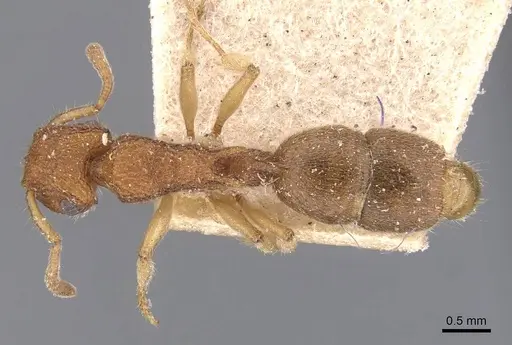
Literatura
Carregando mapa de distribuição...Carregando produtos...