
Acanthomyrmex laevis
- Nome científico
- Acanthomyrmex laevis
- Tribo
- Crematogastrini
- Subfamília
- Myrmicinae
- Autor
- Moffett, 1986
- Distribuição
- Encontrada em 0 países
Introdução
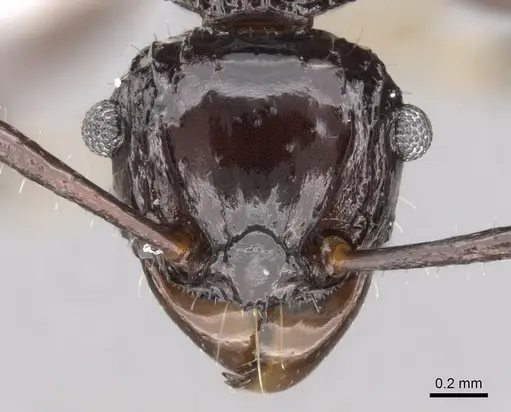
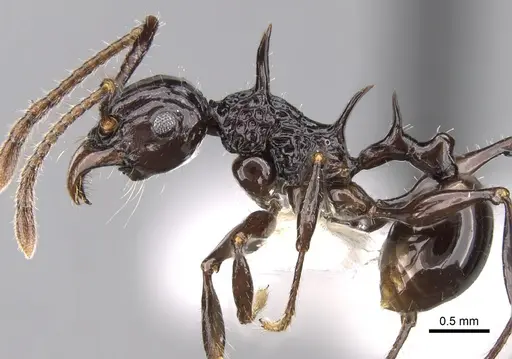
Acanthomyrmex laevis is a small forest-dwelling ant from Peninsular Malaysia, specifically recorded in Perak . These ants belong to the Myrmicinae subfamily and Crematogastrini tribe. They live in small colonies on the forest floor, typically with fewer than 100 workers . This genus is known for collecting and storing tiny seeds in their nests . They nest in cavities within dead twigs, rotting wood, under stones, or in leaf litter on the forest floor . Their small size and specific habitat requirements make them a challenging species for captivity.
Quick Summary
- Difficulty: Hard
- Origin & Habitat: Peninsular Malaysia (Perak) [1], forest floor habitats including dead twigs, rotten wood, stone crevices, and leaf litter [2].
- Colony Type: Unknown, likely single-queen based on small colony sizes.
- Size & Growth:
- Queen: Size data unavailable for this species.
- Worker: Size data unavailable for this species.
- Colony: Up to 100 workers [2].
- Growth: Slow
- Development: Unknown for this species. (No development data available.)
- Antkeeping:
- Temperature: Warm tropical conditions, roughly 24-28°C based on Malaysian habitat [1][2].
- Humidity: High humidity, damp forest floor conditions. Keep nest material consistently moist but not waterlogged [2].
- Diapause: No, tropical species that remains active year-round.
- Nesting: Small cavities in dead wood, twigs, or under stones. Use tight chambers scaled to their small size [2].
- Behavior: Likely slow-moving with high escape risk due to tiny size. Use excellent barriers like Fluon. Not known for aggression. Defense mechanism involves smearing venom rather than piercing (typical for Myrmicinae).
- Common Issues: workers are tiny and escape through the smallest gaps in mesh or lids., colonies are small and easily overfed, leading to mold outbreaks., nests dry out quickly without consistent moisture maintenance., wild-caught colonies may carry mites or parasites harmful in captivity.
Nest Preferences
In nature, Acanthomyrmex laevis and their relatives nest in small cavities within dead twigs, rotting wood, or under stones on the forest floor [2]. They prefer enclosed spaces with limited entrances. For captive colonies, recreate these conditions using small naturalistic setups with twigs, leaf litter, and small stones, or use a mini-hearth with tight chambers. Keep the nest material damp but not waterlogged.
Feeding and Diet
Related species collect tiny seeds and store them in their nests [2]. Offer small seeds like chia, poppy, or crushed millet. They also need protein sources such as springtails, fruit flies, or tiny insect pieces. Provide sugar water or honey water in small drops. Watch to ensure they actually accept seeds, as this behavior is documented in congeneric species but unconfirmed specifically for Acanthomyrmex laevis.
Temperature and Care
Coming from tropical Malaysia, these ants need warm, stable temperatures around 24-28°C [1]. Use a heating cable on one side of the nest to create a gentle gradient. They do not need hibernation. Keep them away from cold drafts and sudden temperature drops.
Behavior and Temperament
These are small, likely slow-moving ants. Their tiny size makes them excellent escape artists. Use excellent barriers like Fluon or baby powder barriers on all outworld surfaces. They are not known for aggression. As Myrmicinae, they have a modified stinger used to smear venom onto enemies rather than pierce flesh.
Colony Founding
Founding behavior for Acanthomyrmex laevis is unconfirmed. Related Acanthomyrmex species likely found colonies with a single queen, but this has not been directly observed. Start new queens in small test tubes with minimal water to prevent drowning.
Frequently Asked Questions
Can I keep Acanthomyrmex laevis in a test tube?
Yes, but use very small water reservoirs to prevent drowning given their tiny size. Keep the tube in a warm, stable location around 25-28°C.
How long until first workers for Acanthomyrmex laevis?
Unknown, no development data is available for this species.
Can I keep multiple Acanthomyrmex laevis queens together?
Not recommended. Combining multiple queens is unconfirmed for this species and likely risky given their small colony size in nature.
Do Acanthomyrmex laevis need hibernation?
No. They come from tropical Malaysia and remain active year-round at warm temperatures.
What do Acanthomyrmex laevis eat?
Likely tiny seeds and small insects based on patterns in related Acanthomyrmex species. Offer small seeds, springtails, and sugar water.
Are Acanthomyrmex laevis good for beginners?
No. Their small size, high escape risk, specific nesting needs, and limited available care data make them suitable for experienced keepers only.
Why are my Acanthomyrmex laevis workers escaping?
They are extremely small and squeeze through gaps that larger ants cannot. Use Fluon or baby powder barriers on all surfaces and ensure mesh is fine enough.
Do Acanthomyrmex laevis sting?
Unknown. As Myrmicinae, they have a smear-type venom delivery system rather than a piercing stinger.
Report an Issue
The current care sheet is based fully on literature. See inconsistencies, or something that's incorrect? Please , it will be resolved after review from an admin. Contributing to the blogs tab also helps providing information, to make us be able to further improve the caresheets. Thank you for your support!
References

Este guia de cuidados está sob a licença CC BY-SA 4.0 .
Posts da comunidade
CASENT0281792
Ver no AntWeb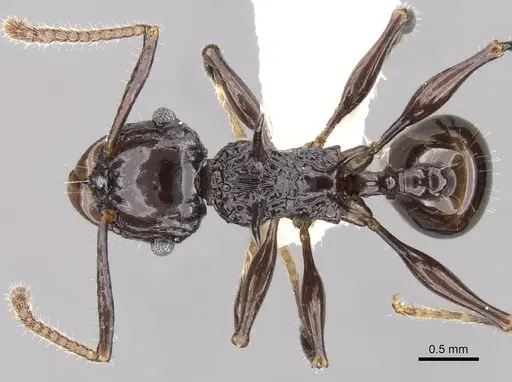
Literatura
Carregando mapa de distribuição...Carregando produtos...