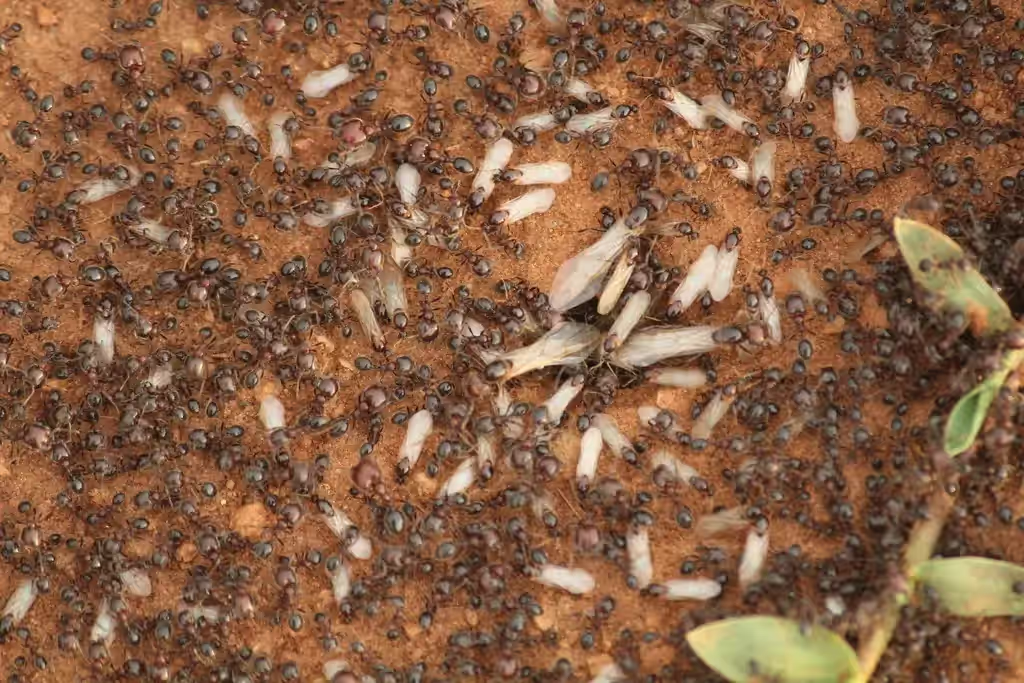


Guide to Finding and Catching Ant Queens for a New Colony
Starting an ant colony from a queen you found yourself is one of the most rewarding parts of antkeeping. Instead of buying a starter colony, you get to observe the full journey from a single queen to her first workers and, eventually, a growing colony.
But finding queen ants is not just about walking outside and hoping for luck. You need to know when queens fly, where to look, how to identify them, and how to collect them safely.
This beginner guide explains how to find queen ants during nuptial flight season, how to tell queens apart from workers and males, what tools to bring, and what to do after you catch one.
Before You Start: Check Local Laws
Before collecting queen ants, always check your local rules. Antkeeping laws vary by country, state, province, and region.
In some places, collecting local queens is allowed. In others, collecting on public land, protected land, nature reserves, or private property may be restricted or illegal. Transporting ants across regions can also be regulated.
Responsible queen collecting means:
- Only collect where it is legal.
- Ask permission on private property.
- Do not collect from protected nature areas.
- Do not dig up wild colonies.
- Do not collect more queens than you can care for.
- Do not release captive ants into the wild.
- Avoid collecting invasive or restricted species.
- Keep local species whenever possible.
Collecting queens responsibly protects both the hobby and the environment.
What Is a Nuptial Flight?
The best time to find queen ants is during a nuptial flight.
A nuptial flight is when winged reproductive ants leave mature colonies to mate. These flying ants are called alates. There are two main types:
- Male ants, whose only role is to mate
- Young queen ants, which may start new colonies after mating
After mating, a queen usually lands, removes her wings, and searches for a safe place to begin founding a colony. This is when antkeepers have the best chance of finding her.
A queen that has removed her wings is called a dealate queen. A dealate queen is often more likely to be mated than a queen that still has wings, but wing loss does not guarantee fertility.
When Is Ant Queen Season?
Ant queen season depends on your location, climate, and species. There is no single month that works everywhere.
In many temperate regions, queen flights happen from spring through autumn. Some species fly in early spring, others in summer, and others later in the year.
Common flight triggers include:
- Warm weather
- Recent rain
- High humidity
- Calm or low-wind conditions
- Warm evenings or mornings
- Seasonal temperature changes
- Pressure changes after storms
A common beginner pattern is to search after rain on a warm day, especially when the sun comes out and the air feels humid.
However, different species fly at different times. Some fly during the day, some at dusk, and some at night.
Use AntScout Care Sheets and Flight Predictions
If you want to improve your chances, do not rely on guesswork alone.
AntScout care sheets can help you check when specific ant species are known to fly, including the months and sometimes the hours or time of day when flights are most likely. This can save you a lot of time because you can plan your search around the species in your area.
You can also use the flight prediction feature in the AntScout app to estimate when nuptial flights may happen near you. Flight predictions are not a guarantee, but they can help you decide when conditions look promising.
For the best results, combine:
- AntScout species care sheets
- Local weather conditions
- Recent rainfall
- Temperature and humidity
- Reports from other antkeepers
- Your own observations outside
The more you learn about local species and their flight timing, the easier queen hunting becomes.
Where to Find Queen Ants
After a nuptial flight, queens often land in open areas and start searching for a nesting spot.
Good places to look include:
- Sidewalks
- Garden paths
- Driveways
- Parking lots
- Parks
- Trails
- Around lawns
- Near forest edges
- Along walls and fences
- Around streetlights
- Near outdoor lights at night
Open surfaces are especially useful because queens are easier to spot there. A queen walking across a sidewalk is much easier to see than one moving through grass.
After evening or night flights, check around lights. Some flying ants are attracted to artificial light and may land nearby.
Avoid damaging habitats while searching. You do not need to dig into nests or disturb wild colonies to find newly mated queens.
Best Weather for Finding Queen Ants
Weather is one of the biggest clues for finding queen ants.
Good conditions often include:
- Warm temperatures
- High humidity
- Rain earlier in the day or previous day
- Calm wind
- Cloudy or partly sunny skies
- Warm evenings
- Stable weather after a storm
Poor conditions often include:
- Cold weather
- Strong wind
- Very dry air
- Heavy ongoing rain
- Extreme heat
- Sudden temperature drops
Many species fly shortly after rain because the soil is softer and easier for queens to dig into. Moist soil also helps new queens avoid drying out.
Still, every species is different. That is why species-specific flight information is so useful.
What to Bring When Queen Hunting
You do not need much equipment to find queen ants, but a few simple tools make the process easier.
Useful items include:
- Clean test tubes
- Cotton balls
- Small collection containers
- A soft paintbrush
- A small spoon or card
- A flashlight or headlamp
- A notebook or phone for notes
- A magnifying glass or macro lens
- Labels for date and location
- A small bag or box to keep containers upright
Prepared test tubes are ideal. A standard queen setup includes water held behind a cotton plug, leaving a dry chamber for the queen.
If you are only going for a short walk, small clean containers can work temporarily. Move the queen into a proper test tube setup when you get home.
How to Identify a Queen Ant
Queen ants look different from worker ants and male ants. Once you know what to look for, they become much easier to spot.
Queen ants usually have:
- A larger body than workers of the same species
- A large, muscular thorax
- A larger gaster, or abdomen
- Wings or visible wing scars
- A more robust body shape
- Slower, more deliberate movement than males
The thorax is one of the best clues. Queens need strong flight muscles for their nuptial flight, so the middle part of the body is usually much larger than a worker’s thorax.
After mating, many queens remove their wings. Look for small bumps or scars on the thorax where the wings used to be.
Queen Ant vs Male Ant
Beginners sometimes mistake male ants for queens because both can have wings.
Male ants are not useful for starting a colony. They cannot lay fertilized eggs or found colonies.
Male ants often have:
- Smaller or slimmer bodies
- Smaller heads
- Long wings compared with body size
- A wasp-like shape
- Less robust thorax structure
- Shorter lifespan after flight
- More fragile appearance
Queen ants usually look stronger, heavier, and more solid. If the ant has a large thorax and gaster, it is more likely to be a queen.
Winged Queen or Wingless Queen: Which Should You Collect?
A wingless queen is usually the better choice. A queen that has removed her wings after a flight is more likely to have mated and started searching for a founding site.
However, there are exceptions:
- Some mated queens keep their wings for a while.
- Some unmated queens may remove their wings.
- Some species behave differently.
- Wing loss does not guarantee fertility.
If you find a healthy queen walking alone after a flight, especially without wings, she is usually worth collecting.
Avoid collecting queens directly from a nest entrance before they have flown. Winged queens still inside or near their home colony may not have mated yet.
How to Safely Catch a Queen Ant
Queen ants are fragile. Do not pinch, squeeze, or grab them with your fingers.
To collect a queen safely:
- Place a test tube or container in front of her.
- Gently guide her inside using a soft brush, leaf, card, or your hand.
- Let her walk in on her own if possible.
- Close the container carefully.
- Keep the container shaded and out of direct sunlight.
- Label the container with the date and location.
Do not shake the container. Do not leave collected queens in a hot car or direct sun. Small containers can overheat very quickly.
If you collect more than one queen, keep them separate unless you know the species can found colonies together. Many queens will fight or kill each other if housed together incorrectly.
How Many Queens Should You Collect?
Only collect what you can responsibly care for.
For most beginners, one to three queens is enough. Collecting too many queens often leads to poor care, confusion, or unnecessary deaths.
A good rule is:
Collect fewer queens and care for them properly.
If you want to keep multiple queens, make sure you have enough test tubes, space, and time to monitor each one.
Do not release captive queens later if you change your mind. Once an ant has been kept in captivity, releasing it can spread disease or introduce problems to the local environment.
What to Do After Catching a Queen Ant
Once you get home, move the queen into a proper founding setup.
For most beginner species, this means a test tube setup:
- Fill the test tube about one third to one half with clean water.
- Push in a cotton ball until it touches the water and forms a secure barrier.
- Leave a dry chamber for the queen.
- Place the queen inside.
- Close the open end with another cotton ball.
- Cover the tube to keep it dark.
- Store it in a quiet place away from vibration and direct sunlight.
Do not feed immediately unless the species requires it. Many common beginner queens are fully claustral, meaning they can raise their first workers without food. Semi-claustral queens, however, need food during founding.
This is why identifying the species is important.
Should You Feed a Newly Caught Queen?
It depends on the species.
Fully Claustral Queens
Fully claustral queens usually do not need food before their first workers arrive. They use stored energy from their flight muscles to raise the first brood.
For these queens, the best care is usually:
- Darkness
- Stable humidity
- Minimal disturbance
- No unnecessary feeding
- A clean test tube setup
Semi-Claustral Queens
Semi-claustral queens need to forage before their first workers arrive. These queens should be given a small foraging area and tiny amounts of sugar and protein.
If you keep a semi-claustral queen sealed in a test tube without food, she may fail to raise her brood.
Always check the care needs of your species. AntScout care sheets can help you learn whether a species is fully claustral, semi-claustral, or requires more specialized founding care.
How Often Should You Check a New Queen?
New queens need peace and stability. Checking too often can stress them and may cause them to eat their eggs.
A good beginner routine is:
- Keep the queen in darkness.
- Check briefly once per week.
- Avoid opening the test tube.
- Do not shake or move the setup.
- Do not expose her to bright light for long.
- Record when eggs, larvae, pupae, and workers appear.
It is exciting to check every day, but patience gives the queen the best chance of success.
How Long Until the First Workers Arrive?
The time from queen capture to first workers depends on species, temperature, season, and queen condition.
For many species, the process can take several weeks to a few months.
A typical development path is:
- Queen settles into the test tube
- Queen lays eggs
- Eggs hatch into larvae
- Larvae grow and pupate
- First workers emerge
The first workers are called nanitics. They are often smaller than later workers because they were raised using the queen’s limited founding resources.
If nothing happens right away, do not panic. Some queens need time to settle, and some species are naturally slow.
Common Mistakes When Catching Queen Ants
Collecting Workers Instead of Queens
Workers cannot start a new colony. Look for a large thorax, larger body, wings, or wing scars.
Collecting Male Ants
Males cannot found colonies. They are usually slimmer and more fragile than queens.
Collecting Winged Queens Before They Mate
Queens still near the nest entrance may not have mated yet. A queen walking alone after a flight is usually a better candidate.
Keeping Multiple Queens Together Without Research
Some species can start colonies with multiple queens, but many cannot. Keeping queens together incorrectly can lead to fighting or death.
Checking Too Often
Too much disturbance can cause stress and brood loss.
Feeding When It Is Not Needed
Feeding a fully claustral queen before workers arrive can create mold and disturbance.
Not Feeding When It Is Needed
Semi-claustral queens need food during founding. Species identification matters.
Leaving Queens in Hot Containers
Small containers heat up quickly. Keep collected queens shaded, cool, and stable.
Releasing Captive Queens
Do not release captive ants back into the wild. This can spread disease or harm local ecosystems.
Quick Queen Hunting Checklist
Before you go out, check:
- Is it legal to collect queens in this area?
- Is it queen flight season for local species?
- Did it recently rain?
- Is the weather warm and humid?
- Is there little wind?
- Do AntScout care sheets show this species flying this month or time of day?
- Does the AntScout flight prediction feature suggest good conditions?
- Do you have clean test tubes or containers?
- Do you have cotton, labels, and a flashlight if needed?
- Do you know how to identify queens?
After catching a queen, check:
- Is she safely housed?
- Is she in a test tube setup?
- Is the setup dark and quiet?
- Have you identified the species?
- Does she need feeding or not?
- Did you label the date and location?
- Are you avoiding unnecessary disturbance?
Final Thoughts: Finding Your First Queen Ant
Finding your first queen ant takes patience, timing, and a bit of luck. The best time to search is usually during nuptial flight season, especially after warm rain or during humid weather.
Look on sidewalks, paths, driveways, parks, and near lights. Learn how to identify queen ants by their large thorax, larger body, wings, or wing scars. Collect gently, house the queen properly, and avoid disturbing her too often.
For better timing, use AntScout care sheets to check which months and hours specific species are likely to fly. You can also use the flight prediction feature in the AntScout app to estimate when local conditions may be good for nuptial flights.
Start legally, collect responsibly, and care for your queen patiently. With the right setup and timing, that single queen may become the beginning of your first ant colony.
Deixar um comentário