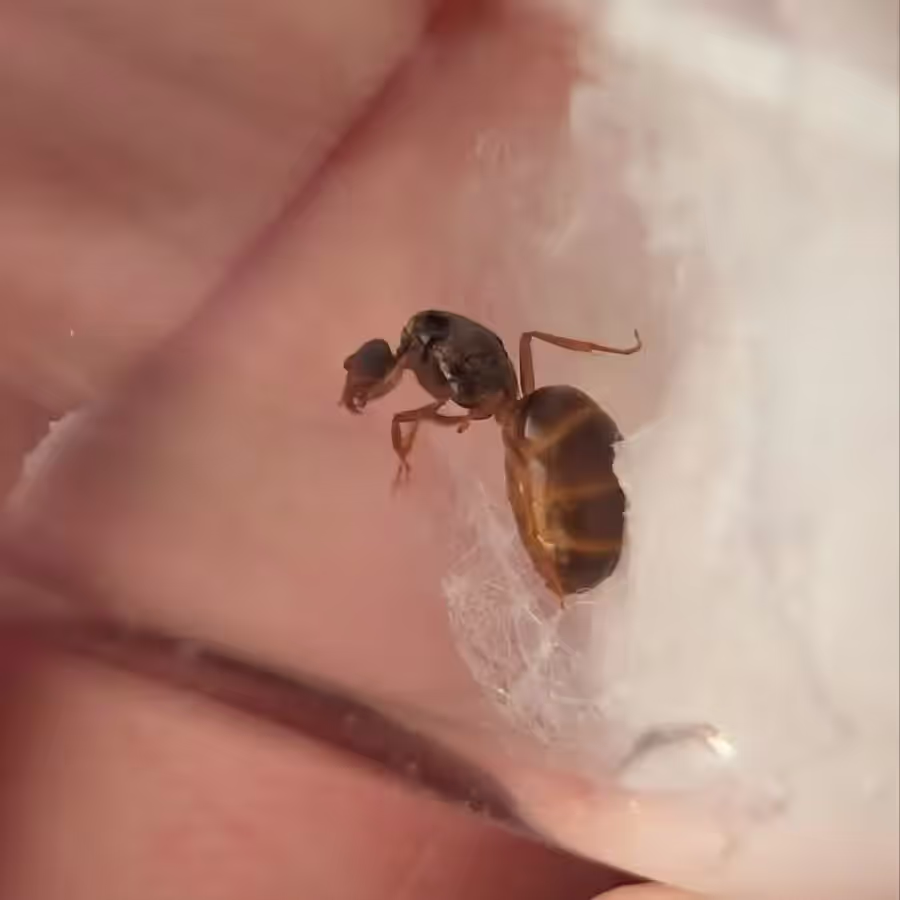


Best Ant Species for Beginners by Continent: Top Starter Ants for New Antkeepers
Choosing your first ant species is one of the most important decisions in antkeeping. Some ants are calm, hardy, and easy to care for. Others are fast, aggressive, escape-prone, invasive, or difficult to feed.
The best beginner ant is not the same everywhere. A great starter species in Europe may be illegal, invasive, or unsuitable in North America. A common beginner ant in tropical Asia may not be appropriate for a keeper in a colder climate.
That is why this guide is organized by continent. Instead of giving one global top 10 list, we will look at beginner-friendly ants by region.
Before choosing any ant species, remember this rule:
The best beginner ant is usually a legal, local species that matches your climate and experience level.
Never import, transport, buy, sell, or release ants unless you are sure it is legal where you live.
What Makes an Ant Species Good for Beginners?
A good beginner ant species should be:
- Hardy and forgiving of small mistakes
- Easy to feed
- Easy to contain
- Not too aggressive
- Not dangerously defensive
- Well documented in antkeeping
- Legal to keep in your area
- Suitable for a simple test tube or beginner formicarium
- Not invasive or harmful to the local environment
For your first colony, avoid species that are extremely tiny, very fast-growing, highly aggressive, strong stingers, specialist feeders, or known household pests.
A beginner-friendly ant should help you learn the basics without constantly worrying about escapes, stings, or complicated care.
Legal and Ethical Antkeeping
Antkeeping laws vary by country, state, province, and region. In some places, collecting local queens is allowed. In others, buying, selling, importing, or transporting ants may require permits or may be prohibited.
Responsible antkeeping means:
- Keep only legal species.
- Prefer native or locally collected species where allowed.
- Never release captive ants into the wild.
- Avoid invasive species.
- Do not move ants across regions without checking local laws.
- Buy only from responsible sellers.
- Research your species before keeping it.
Releasing captive ants can spread parasites, diseases, or non-native species. Even if a species seems harmless in captivity, it can become a serious problem if released in the wrong environment.
This guide is for educational purposes and should not be treated as legal advice. Always check your local rules first.
Best Beginner Ant Species in Europe
Europe has some of the best-documented beginner ant species in the hobby. Many European ants are hardy, seasonal, and suitable for simple test tube founding setups.
Most temperate European species need diapause, which is a winter rest period. Beginners should research this before choosing a species.
1. Lasius niger - Black Garden Ant
Best for: Absolute beginners
Difficulty: Very easy
Colony growth: Moderate
Temperament: Generally calm
Size: Small workers, medium-sized queen
Lasius niger is one of the most popular beginner ants in Europe. It is hardy, common, easy to care for, and forgiving of small beginner mistakes.
The queen is fully claustral, meaning she usually does not need food before her first workers arrive. A simple test tube setup is enough for the founding stage.
Why beginners like Lasius niger:
- Very hardy
- Easy founding stage
- Active foragers
- Well documented
- Good for learning basic antkeeping
Things to keep in mind:
- Workers are small, so escape prevention matters.
- Colonies need diapause.
- Growth starts slowly but becomes stronger over time.
For many European keepers, Lasius niger is one of the best first ant species.
2. Messor barbarus - European Harvester Ant
Best for: Beginners who want seed-harvesting behavior
Difficulty: Easy to moderate
Colony growth: Moderate to fast once established
Temperament: Usually manageable
Size: Medium workers with larger majors
Messor barbarus is popular in European antkeeping because of its seed-harvesting behavior. Instead of relying only on sugar water, these ants collect and store seeds, which they process into “ant bread.”
Why beginners like Messor barbarus:
- Fascinating seed-harvesting behavior
- Impressive majors
- Active colonies
- Well documented in the hobby
- Good long-term display species
Things to keep in mind:
- They need both dry and humid areas.
- Stored seeds can mold if conditions are too wet.
- They still need protein, especially as the colony grows.
- Larger colonies need secure housing.
Messor barbarus is a great starter species for European keepers who want something more unusual than a basic garden ant.
3. Camponotus ligniperda - Carpenter Ant
Best for: Patient beginners who want large ants
Difficulty: Easy to moderate
Colony growth: Slow
Temperament: Usually calm
Size: Large workers and queens
Camponotus ligniperda is one of Europe’s impressive carpenter ants. These ants are large, beautiful, and easy to observe, making them appealing to beginners.
They grow slowly, which can be helpful for new keepers because the colony will not outgrow its setup quickly.
Why beginners like Camponotus ligniperda:
- Large and easy to observe
- Calm when undisturbed
- Slow, manageable growth
- Impressive workers
- Good for learning long-term colony care
Things to keep in mind:
- They require patience.
- Colonies need diapause.
- Larger colonies eventually need more space.
- They may be slower to produce workers than smaller species.
This species is ideal for beginners who want large ants and do not mind waiting.
4. Formica fusca Group - Serviformica Ants
Best for: Beginners who want active ants
Difficulty: Easy to moderate
Colony growth: Moderate
Temperament: Fast and alert
Size: Medium workers
The Formica fusca group includes active, medium-sized ants that can be rewarding for beginners. They are more energetic than Lasius and easier to see because of their larger size.
Why beginners like Formica fusca group ants:
- Active foragers
- Medium-sized workers
- Interesting behavior
- Good feeding response
- Suitable for simple setups when young
Things to keep in mind:
- They can be quick.
- They may be more easily stressed than slower ants.
- Some can spray formic acid when disturbed.
- Identification can be tricky.
These ants are a good option for careful beginners who want a more active colony.
5. Lasius flavus - Yellow Meadow Ant
Best for: Patient beginners interested in subterranean ants
Difficulty: Easy
Colony growth: Slow to moderate
Temperament: Calm
Size: Small workers
Lasius flavus is a calm and hardy species, but it behaves differently from many display ants. In nature, it spends much of its time underground and is less active above ground than Lasius niger.
Why beginners like Lasius flavus:
- Hardy
- Calm
- Fully claustral founding
- Interesting underground lifestyle
- Good for naturalistic setups
Things to keep in mind:
- They are less visible than many other ants.
- Foraging activity may be limited.
- They need diapause.
- They may not be exciting for keepers who want constant activity.
Lasius flavus is a good beginner species for patient keepers, but not the best choice if you want a very active display colony.
Best Beginner Ant Species in North America
North America has many excellent beginner ants, especially local Lasius, Camponotus, Tetramorium, Formica, and Temnothorax species.
Because laws can vary between countries, states, and provinces, North American keepers should be especially careful about buying, selling, and transporting ants.
1. Lasius neoniger - North American Field Ant
Best for: Absolute beginners in North America
Difficulty: Very easy
Colony growth: Moderate
Temperament: Generally calm
Size: Small workers, medium-sized queen
Lasius neoniger is one of the best beginner ants for North American keepers. It is hardy, common, and forgiving.
The queen is fully claustral, so she can usually raise her first workers in a test tube setup without feeding.
Why beginners like Lasius neoniger:
- Hardy and beginner-friendly
- Easy founding stage
- Active enough to observe
- Good for learning basic care
- Usually manageable in simple setups
Things to keep in mind:
- Workers are small and can escape through tiny gaps.
- Colonies need seasonal cooling in temperate areas.
- Species identification can be difficult.
For many North American beginners, Lasius neoniger is one of the safest first choices.
2. Camponotus pennsylvanicus - Eastern Black Carpenter Ant
Best for: Beginners who want large ants
Difficulty: Easy
Colony growth: Slow
Temperament: Usually calm
Size: Large workers and queens
Camponotus pennsylvanicus is a popular beginner species because it is large, impressive, and easy to observe.
These ants grow slowly, which gives beginners time to learn. Their size also makes them easier to watch than tiny species.
Why beginners like Camponotus pennsylvanicus:
- Large and visible
- Usually calm
- Fully claustral founding
- Slow, manageable growth
- Impressive mature colonies
Things to keep in mind:
- Slow growth requires patience.
- Colonies need diapause.
- They need regular sugar and protein once workers arrive.
- Larger colonies eventually need more space.
This is one of the best North American beginner species for patient keepers.
3. Tetramorium immigrans - Pavement Ant
Best for: Beginners who want active ants
Difficulty: Easy
Colony growth: Moderate to fast
Temperament: Active and bold
Size: Small workers
Tetramorium immigrans, often called the pavement ant, is hardy, active, and adaptable. It is a good beginner species for keepers who want a colony with more movement and feeding activity.
Why beginners like Tetramorium immigrans:
- Hardy
- Active foragers
- Accepts many foods
- Grows faster than Camponotus
- Fun to observe
Things to keep in mind:
- Workers are small.
- Colonies need good escape prevention.
- They become very active as they grow.
- Check local rules before buying or transporting them.
Tetramorium immigrans is a strong option for beginners who want an energetic colony.
4. Formica subsericea - Silky Field Ant
Best for: Beginners ready for a more active species
Difficulty: Easy to moderate
Colony growth: Moderate
Temperament: Active and alert
Size: Medium workers
Formica subsericea is an active North American species that can be rewarding for careful beginners. These ants forage actively and respond well to food.
Why beginners like Formica subsericea:
- Active workers
- Medium-sized and easy to observe
- Interesting foraging behavior
- Good feeding response
- Suitable for simple young-colony setups
Things to keep in mind:
- They move quickly.
- They may spray formic acid when disturbed.
- They need secure containment.
- They can be more stress-sensitive than Lasius or Camponotus.
This species is good for beginners who want activity and are prepared to be careful with containment.
5. Temnothorax Species - Acorn Ants
Best for: Beginners with limited space
Difficulty: Easy
Colony growth: Small and slow
Temperament: Generally calm
Size: Very small workers
Temnothorax ants, often called acorn ants, naturally live in small cavities such as acorns, twigs, and hollow stems. Their colonies stay small, making them ideal for keepers with limited space.
Why beginners like Temnothorax:
- Small colony size
- Low space requirements
- Calm behavior
- Interesting nesting habits
- Good for close observation
Things to keep in mind:
- Workers are tiny.
- Escape prevention must be excellent.
- They may be less active than larger species.
- Feeding portions must be very small.
Temnothorax is a great beginner choice for patient keepers who enjoy small, detailed colonies.
Best Beginner Ant Species in Asia
Asia is extremely diverse, with tropical, subtropical, desert, mountain, and temperate ant species. Beginner recommendations vary heavily by country and climate.
Because Asia has many region-specific species, the safest approach is to choose a legal local species and research its exact care needs.
1. Camponotus japonicus - Japanese Carpenter Ant
Best for: East Asian beginners who want large ants
Difficulty: Easy
Colony growth: Slow to moderate
Temperament: Usually calm
Size: Large workers and queens
Camponotus japonicus is a well-known carpenter ant in parts of East Asia. Like many Camponotus species, it is large, easy to observe, and suitable for patient beginners.
Why beginners like Camponotus japonicus:
- Large workers
- Easy to observe
- Generally calm
- Good for learning colony development
- Suitable for test tube founding
Things to keep in mind:
- Growth can be slow.
- Temperate populations may need diapause.
- Larger colonies need more space.
- Species care depends on local climate.
This species is a strong option where it is native and legal to keep.
2. Camponotus nicobarensis - Tropical Carpenter Ant
Best for: Keepers in appropriate tropical or subtropical regions
Difficulty: Easy to moderate
Colony growth: Fast
Temperament: Active
Size: Medium to large workers
Camponotus nicobarensis is popular in the antkeeping hobby because it is attractive, active, and faster-growing than many temperate Camponotus species.
Why beginners like Camponotus nicobarensis:
- Attractive coloration
- Active workers
- Faster growth than many carpenter ants
- No cold diapause in many cases
- Good feeding response
Things to keep in mind:
- It may not be legal or appropriate outside its native range.
- Colonies can grow quickly.
- They need secure housing as they expand.
- Warm, stable conditions are important.
This species can be beginner-friendly in the right region, but it should not be treated as a universal beginner ant.
3. Lasius japonicus - Temperate Asian Lasius
Best for: Beginners in temperate parts of East Asia
Difficulty: Easy
Colony growth: Moderate
Temperament: Generally calm
Size: Small workers
Lasius japonicus is similar in beginner appeal to other Lasius species. It is small, hardy, and suitable for simple founding setups.
Why beginners like Lasius japonicus:
- Hardy
- Fully claustral founding
- Easy to feed after workers arrive
- Good for learning basic antkeeping
- Manageable colony growth
Things to keep in mind:
- Workers are small.
- Escape prevention matters.
- Temperate populations may need diapause.
- Identification should be confirmed where possible.
For beginners in temperate Asian regions, local Lasius species can be excellent starter ants.
4. Messor Species - Asian Harvester Ants
Best for: Beginners in areas where local Messor species are native
Difficulty: Easy to moderate
Colony growth: Moderate
Temperament: Usually manageable
Size: Medium workers, sometimes with larger majors
Some parts of Asia have native Messor species that can be rewarding for beginners. These ants are interesting because they collect and process seeds.
Why beginners like Messor species:
- Seed-harvesting behavior
- Interesting food storage
- Strong workers
- Good display colonies
- Often well suited to dry setups with humid nesting areas
Things to keep in mind:
- They need dry seed storage.
- Too much moisture can cause mold.
- They still need protein.
- Species-level care varies.
A local Messor species can be a great beginner choice where it is legal and native.
5. Pheidole noda - Big-Headed Ant
Best for: Careful beginners who want active polymorphic ants
Difficulty: Moderate beginner
Colony growth: Moderate to fast
Temperament: Active
Size: Small workers with larger majors
Pheidole noda is known for having minor workers and larger-headed major workers. This makes it fascinating to observe.
Why beginners like Pheidole noda:
- Interesting major and minor worker castes
- Active foraging
- Strong feeding response
- Fascinating colony development
- Good for learning about polymorphism
Things to keep in mind:
- Workers are small.
- Colonies can grow quickly.
- Escape prevention is very important.
- They need regular protein as the colony grows.
Pheidole species are exciting, but they are better for careful beginners rather than someone who wants the easiest possible first ant.
Best Beginner Ant Species in Africa
Africa has a huge range of ant species, from Mediterranean species in the north to tropical and savanna species farther south. Because the continent is so diverse, beginner species vary heavily by country and climate.
Many African ants are not well documented in beginner care guides, so local research is especially important.
1. Messor barbarus - North African Harvester Ant
Best for: North African and Mediterranean-region beginners
Difficulty: Easy to moderate
Colony growth: Moderate to fast
Temperament: Usually manageable
Size: Medium workers with larger majors
Messor barbarus occurs around parts of the Mediterranean region and is popular in antkeeping because of its seed-harvesting behavior.
Why beginners like Messor barbarus:
- Interesting seed collection
- Impressive majors
- Active colonies
- Well documented
- Good long-term display species
Things to keep in mind:
- Needs dry seed storage.
- Needs access to humidity.
- Seeds can mold if conditions are too wet.
- Larger colonies need secure setups.
Where native and legal, Messor barbarus can be one of the best beginner ants in North Africa.
2. Camponotus maculatus - Carpenter Ant
Best for: Beginners who want large African ants
Difficulty: Easy to moderate
Colony growth: Moderate
Temperament: Usually manageable
Size: Large workers and queens
Camponotus maculatus is a large and impressive carpenter ant found in parts of Africa and other regions. It can be suitable for beginners who want a bigger species and are willing to research care carefully.
Why beginners like Camponotus maculatus:
- Large and easy to observe
- Attractive workers
- Good feeding response
- Interesting colony development
- Manageable when young
Things to keep in mind:
- Care can vary by locality.
- Colonies need secure housing.
- Warm, stable conditions are often important.
- Larger colonies require more space.
This can be a rewarding species where legal and locally appropriate.
3. Local Camponotus Species - Carpenter Ants
Best for: Beginners across many parts of Africa
Difficulty: Easy to moderate
Colony growth: Slow to moderate
Temperament: Usually calm to moderately active
Size: Medium to large
Because Africa has many Camponotus species, a local carpenter ant is often one of the best beginner choices.
Why beginners like local Camponotus species:
- Larger workers are easier to observe.
- Many species are hardy.
- Colonies are manageable when young.
- Founding is often straightforward.
- They are good for learning long-term care.
Things to keep in mind:
- Exact care depends on the species.
- Some species grow faster than others.
- Temperature and humidity needs vary.
- Identification is important.
If you are in Africa and unsure where to start, researching local Camponotus species is a good first step.
4. Tetramorium Species - Small Active Ants
Best for: Beginners who want active colonies
Difficulty: Easy to moderate
Colony growth: Moderate to fast
Temperament: Active
Size: Small workers
Many Tetramorium species are hardy and adaptable. They can be good beginner ants where native and legal.
Why beginners like Tetramorium species:
- Hardy
- Active foragers
- Accept many foods
- Good colony activity
- Usually manageable in simple setups when young
Things to keep in mind:
- Workers are small.
- Escape prevention is important.
- Some species can grow quickly.
- Identification may be difficult.
A local Tetramorium species can be a good starter ant for careful beginners.
5. Pheidole Species - Big-Headed Ants
Best for: Careful beginners interested in polymorphism
Difficulty: Moderate beginner
Colony growth: Moderate to fast
Temperament: Active
Size: Small workers with larger majors
Africa has many Pheidole species. These ants are interesting because colonies often have small minor workers and larger major workers.
Why beginners like Pheidole species:
- Major workers are fascinating
- Active foraging
- Strong feeding response
- Interesting colony structure
- Good for observation
Things to keep in mind:
- Workers can be very small.
- Colonies may grow quickly.
- Escape prevention must be strong.
- Some species may be invasive or unsuitable.
Pheidole can be rewarding, but they are better for careful beginners than for someone who wants the easiest first colony.
Best Beginner Ant Species in South America
South America has many fascinating ants, but not all are beginner-friendly. Some famous groups, such as leafcutter ants and army ants, are difficult and should not be chosen as first colonies.
For most South American beginners, local Camponotus, Pheidole, Dorymyrmex, and some other hardy native species are better starting points.
1. Local Camponotus Species - Carpenter Ants
Best for: Beginners who want larger ants
Difficulty: Easy to moderate
Colony growth: Slow to moderate
Temperament: Usually manageable
Size: Medium to large
South America has many Camponotus species. Local carpenter ants are often among the best beginner choices because they are larger, easier to observe, and usually manageable when young.
Why beginners like local Camponotus species:
- Large workers
- Easier to observe than tiny ants
- Manageable young colonies
- Good feeding response
- Interesting long-term development
Things to keep in mind:
- Species care varies widely.
- Some are faster or more defensive than others.
- Warm, stable conditions may be needed.
- Larger colonies need secure housing.
For South American beginners, a local Camponotus species is often a better choice than an exotic imported ant.
2. Camponotus rufipes - Carpenter Ant
Best for: Beginners in regions where it is native and legal
Difficulty: Easy to moderate
Colony growth: Moderate
Temperament: Active
Size: Medium to large
Camponotus rufipes is a well-known South American carpenter ant. It is attractive, active, and easier to observe than very small species.
Why beginners like Camponotus rufipes:
- Visible workers
- Interesting behavior
- Good feeding response
- Attractive appearance
- Manageable when young
Things to keep in mind:
- Colonies can become active and need space.
- Local care conditions matter.
- They need secure containment.
- They may be more active than some other carpenter ants.
This species can be a good option where it is native, legal, and properly researched.
3. Pheidole Species - Big-Headed Ants
Best for: Careful beginners who want active ants
Difficulty: Moderate beginner
Colony growth: Moderate to fast
Temperament: Active
Size: Small workers with larger majors
South America has many Pheidole species. Their major and minor worker castes make them fascinating to keep.
Why beginners like Pheidole species:
- Major workers are interesting
- Active foraging
- Good feeding response
- Fast colony development
- Fun to observe
Things to keep in mind:
- Workers are often small.
- Escape prevention is essential.
- Some species grow quickly.
- Exact care varies by species.
Pheidole can be a good beginner choice for someone prepared to manage small, active ants.
4. Dorymyrmex Species - Pyramid Ants
Best for: Beginners interested in active, heat-loving ants
Difficulty: Moderate beginner
Colony growth: Moderate
Temperament: Active and fast
Size: Small to medium
Dorymyrmex species, sometimes called pyramid ants, are active ants found in parts of the Americas. They can be interesting for keepers who want a more energetic colony.
Why beginners like Dorymyrmex species:
- Active foragers
- Interesting movement and behavior
- Good feeding response
- Often hardy in warm conditions
- Fun to observe
Things to keep in mind:
- They can be fast.
- They need secure containment.
- They may not be as beginner-proof as Camponotus.
- Species-level care should be researched.
These ants are better for careful beginners rather than absolute first-time keepers.
5. Brachymyrmex Species - Small Ants
Best for: Patient beginners with good escape prevention
Difficulty: Moderate beginner
Colony growth: Moderate
Temperament: Usually calm but tiny
Size: Very small workers
Brachymyrmex ants are tiny and can be interesting to observe, but they require excellent containment because of their small size.
Why beginners like Brachymyrmex species:
- Small colonies can fit in compact setups
- Interesting behavior
- Usually not aggressive
- Good for close observation
- Can be rewarding for careful keepers
Things to keep in mind:
- Workers are very small.
- Escape prevention must be excellent.
- Feeding portions must be tiny.
- They may not be ideal for young children or careless handling.
These ants can be suitable for careful beginners but are not the easiest option.
Best Beginner Ant Species in Oceania
Oceania includes Australia, New Zealand, and many Pacific islands. Antkeeping rules and available species vary widely. Australia has many unique ants, but some are fast, defensive, or capable of painful stings, so beginners should choose carefully.
In New Zealand and many island regions, biosecurity rules can be especially strict. Always check local laws before keeping ants.
1. Camponotus consobrinus - Banded Sugar Ant
Best for: Australian beginners who want large ants
Difficulty: Easy to moderate
Colony growth: Moderate
Temperament: Usually manageable
Size: Large workers and queens
Camponotus consobrinus, the banded sugar ant, is one of Australia’s most recognizable carpenter ants. It is large, attractive, and easier to observe than tiny species.
Why beginners like Camponotus consobrinus:
- Large and visible workers
- Attractive coloration
- Interesting behavior
- Good feeding response
- Manageable young colonies
Things to keep in mind:
- Colonies need secure housing.
- They can become active as they grow.
- Local temperature conditions matter.
- Larger colonies need more space.
For Australian keepers, this can be a rewarding beginner species when kept legally and responsibly.
2. Local Camponotus Species - Carpenter Ants
Best for: Beginners across Australia and nearby regions
Difficulty: Easy to moderate
Colony growth: Slow to moderate
Temperament: Usually manageable
Size: Medium to large
Many local Camponotus species are good beginner candidates because they are larger, easier to observe, and generally more manageable than very fast or highly defensive ants.
Why beginners like local Camponotus species:
- Large workers
- Easier observation
- Good feeding response
- Manageable founding stage
- Good long-term colonies
Things to keep in mind:
- Species care varies.
- Some need warmer conditions.
- Larger colonies need secure setups.
- Identification is important.
A local Camponotus species is often the safest place to start in Oceania.
3. Iridomyrmex Species - Meat Ant Relatives
Best for: Beginners who want very active ants
Difficulty: Moderate
Colony growth: Moderate to fast
Temperament: Fast and active
Size: Small to medium
Iridomyrmex ants are common and active in Australia. They can be fascinating to watch, but they are often fast-moving and more intense than slow beginner species.
Why beginners like Iridomyrmex species:
- Very active colonies
- Strong feeding response
- Interesting foraging behavior
- Hardy in suitable conditions
- Good display potential
Things to keep in mind:
- They can be fast and harder to manage.
- Colonies may grow quickly.
- They need secure containment.
- Some species may be too intense for absolute beginners.
These ants are better for careful beginners who already understand basic containment.
4. Polyrhachis Species - Spiny Ants
Best for: Beginners ready for slightly specialized care
Difficulty: Moderate
Colony growth: Slow to moderate
Temperament: Usually manageable, species-dependent
Size: Medium workers
Polyrhachis ants are beautiful and unusual, often known for their spines and interesting nesting habits. Some species are suitable for careful beginners, but they are not always as simple as Camponotus.
Why beginners like Polyrhachis species:
- Unique appearance
- Interesting nesting behavior
- Good display colonies
- Medium-sized workers
- Fascinating to observe
Things to keep in mind:
- Care varies strongly by species.
- Some require more specialized nesting conditions.
- They may be slower to grow.
- Research is important before choosing them.
Polyrhachis can be rewarding, but it is best for beginners who are willing to do extra research.
5. Rhytidoponera Species - Green-Headed and Related Ants
Best for: Careful beginners interested in unusual ants
Difficulty: Moderate
Colony growth: Slow to moderate
Temperament: Active, sometimes defensive
Size: Medium workers
Rhytidoponera species are interesting Australian ants, with some species known for their metallic coloration and active behavior.
Why beginners like Rhytidoponera species:
- Unique appearance
- Interesting behavior
- Medium-sized workers
- Active foragers
- Good observation potential
Things to keep in mind:
- Some species can sting.
- Care may be more specialized.
- They are not ideal for children.
- Species identification matters.
These ants are fascinating, but they are not the easiest first colony. They are best for careful beginners who want something different and are willing to research the species properly.
Antarctica
Antarctica has no native ant species and is not relevant for antkeeping recommendations.
Species Beginners Should Usually Avoid
Some ants are interesting but poor choices for most beginners.
Fire Ants
Many fire ants, especially invasive Solenopsis species, are aggressive, fast-growing, and can sting. They are not recommended for beginners.
Leafcutter Ants
Leafcutter ants such as Atta and Acromyrmex are fascinating but difficult. They require fungus care, constant fresh plant material, high humidity control, and large setups. They are not beginner ants.
Army Ants
Army ants are not suitable for normal antkeeping. They have highly specialized lifestyles and are not beginner-friendly.
Invasive Ants
Avoid invasive species, even if they are easy to keep. Examples can include Argentine ants, many tramp ants, and other pest species depending on your region.
Very Tiny Household Pest Ants
Some tiny ants are hardy but extremely difficult to contain. They may become household pests if they escape.
Strong Stinging Ants
Avoid ants with painful or dangerous stings until you have significant experience.
Best Beginner Ants by Keeper Type
Best for absolute beginners
- Lasius niger
- Lasius neoniger
- Local Camponotus species
- Camponotus pennsylvanicus
- Tetramorium immigrans
Best for patient beginners
- Camponotus ligniperda
- Camponotus pennsylvanicus
- Local Camponotus species
- Temnothorax species
- Lasius flavus
Best for active colonies
- Tetramorium immigrans
- Formica subsericea
- Formica fusca group
- Iridomyrmex species
- Pheidole species
Best for seed-harvesting behavior
- Messor barbarus
- Local Messor species
Best for small setups
- Temnothorax species
- Small local Camponotus colonies
- Young Lasius colonies
Beginner Antkeeping Tips Before Choosing a Species
Start With a Queen or Small Colony
A newly mated queen or small starter colony is usually easier to manage than a large colony. You will learn as the colony grows.
Use a Test Tube Setup First
Most beginner queens should start in a test tube setup with water, cotton, and a dark cover. Do not move a young colony into a large nest too early.
Research the Founding Type
Some queens are fully claustral and do not need feeding before workers arrive. Others are semi-claustral and need food during founding.
Before choosing a queen, learn whether the species is:
- Fully claustral
- Semi-claustral
- Socially parasitic
This is one of the most important details in queen care.
Check Diapause Requirements
Many temperate species need diapause, a winter rest period. This includes many Lasius, Camponotus, and Formica species from cooler regions.
Tropical species may not need the same cold period, but they often need stable warmth.
Plan for the Adult Colony
A small queen in a test tube may eventually become a large colony. Before choosing a species, research:
- Adult colony size
- Growth speed
- Food needs
- Nesting needs
- Escape risk
- Temperature and humidity requirements
- Legal status
Do Not Choose Only Based on Appearance
Big, colorful, or exotic ants may look exciting, but they are not always beginner-friendly. A simple local species is often a better first choice.
Basic Food and Care for Beginner Ant Species
Most beginner ant colonies need three main things: water, carbohydrates, and protein.
Water
Young colonies usually get water from a test tube reservoir. Older colonies need constant access to water or a humid nesting area.
Carbohydrates
Workers need sugar for energy. Common options include:
- Sugar water
- Honey water
- Nectar-style ant foods
Use tiny portions to prevent drowning and mold.
Protein
Larvae need protein to grow. Good protein sources include:
- Fruit flies
- Mealworm pieces
- Cricket pieces
- Other safe feeder insects
Remove uneaten protein before it molds.
Seeds
Harvester ants such as Messor species also collect seeds. They still need humidity and may benefit from occasional protein, especially during brood production.
Final Thoughts: What Is the Best Ant Species for Beginners?
The best beginner ant species depends on where you live. A good starter ant should be legal, local, hardy, easy to feed, and easy to contain.
For Europe, species like Lasius niger, Messor barbarus, and local Camponotus are excellent options.
For North America, Lasius neoniger, Camponotus pennsylvanicus, Tetramorium immigrans, and local Temnothorax species are strong beginner choices.
For Asia, Africa, South America, and Oceania, local species from beginner-friendly genera such as Camponotus, Lasius, Messor, Tetramorium, Formica, Pheidole, and Temnothorax may be suitable, depending on your exact region.
Start simple, choose legally, research your species, and avoid invasive or dangerous ants. With the right first colony, antkeeping becomes much easier, more ethical, and much more rewarding.
Deixar um comentário