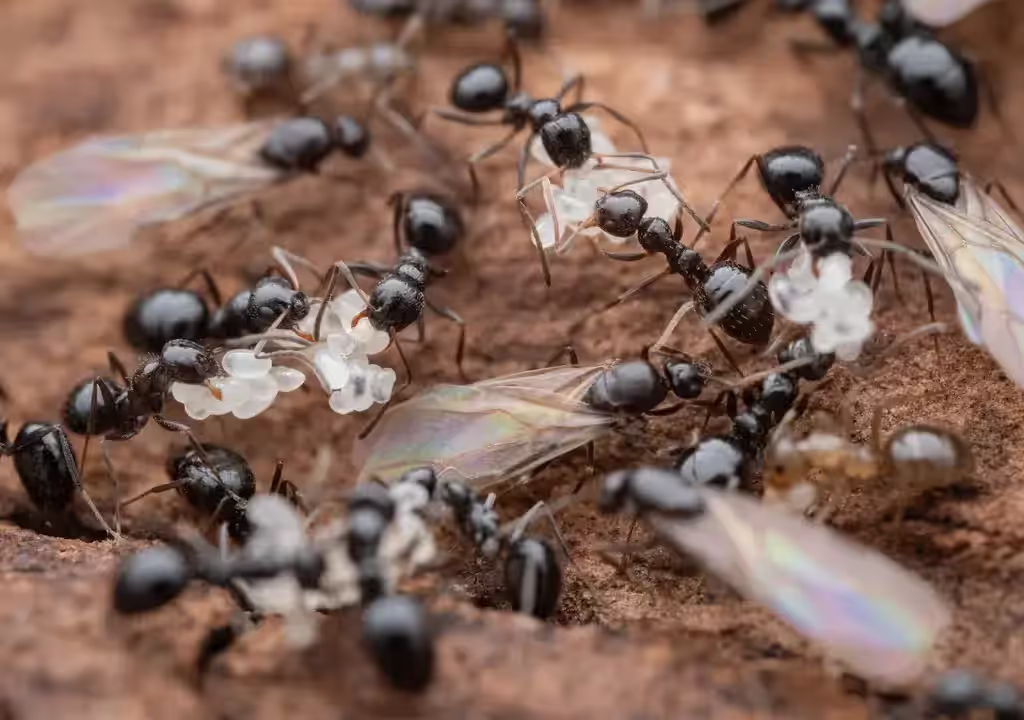


Ant Colony Castes: Queen, Workers, Males, and Brood Guide
Watching an ant colony is like watching a tiny society at work. Some ants care for the brood, some search for food, some defend the nest, and one or more queens produce the next generation.
If you are new to antkeeping, understanding ant colony castes will help you make sense of what you are seeing inside your nest or formicarium.
This beginner guide explains the main roles in an ant colony: queens, workers, males, and brood. It also covers worker jobs, major and minor workers, ant development stages, and why these roles matter for ant care.
What Are Ant Castes?
An ant caste is a group of ants within the colony that has a specific body type or role.
The main ant colony castes and groups are:
- Queens: reproductive females that lay eggs
- Workers: usually non-reproductive females that care for the colony
- Males: reproductive ants that mate with young queens
- Brood: developing ants, including eggs, larvae, and pupae
Strictly speaking, brood are not an adult caste. They are the developing stages of ants. However, antkeepers often talk about queen, workers, and brood together because they are the main parts of a growing captive colony.
A healthy ant colony depends on all of these roles working together.
The Queen Ant’s Role
The queen is the reproductive center of most ant colonies. Her main role is to lay eggs, allowing the colony to grow and replace workers that die.
In many species, the queen is much larger than the workers. She often has a large thorax because she once had flight muscles for her nuptial flight. After mating, many queens remove their wings and start searching for a place to found a colony.
A queen ant usually has:
- A larger body than workers of the same species
- A larger thorax
- A larger gaster, or abdomen
- Wing scars if she has removed her wings
- A slower, more protected role inside the colony
The queen does not “rule” the colony like a human queen. She does not give orders or control every worker. Instead, the colony works through chemical communication, instinct, and worker behavior.
Her importance comes from reproduction. Without a healthy queen, most colonies cannot produce new workers and will eventually decline.
Do All Colonies Have One Queen?
Not always.
Some ant colonies have one queen. This is called monogyny.
Other colonies can have multiple queens. This is called polygyny.
There are also unusual species where workers can reproduce, or where colonies have different reproductive systems. These exceptions are fascinating, but most beginner antkeeping species are easier to understand by starting with the basic queen-and-worker structure.
For beginners, the important question is:
Does your species naturally have one queen or multiple queens?
Do not place multiple queens together unless you know the species can safely found or live that way. In many species, queens will fight or kill each other.
Queen Ant vs Worker Ant
The queen and workers are usually both female, but they have very different roles.
Queen Ant
The queen’s main job is reproduction. She lays eggs and stays protected inside the nest.
Worker Ant
Workers do most of the colony’s daily tasks. They care for brood, search for food, clean the nest, defend the colony, and help maintain the nest environment.
The queen is usually larger, especially in the thorax and abdomen. Workers are usually smaller and more active.
In a young colony, workers will often stay close to the queen and brood. As the colony grows, more workers begin foraging outside the nest.
Worker Ant Jobs
Worker ants are the colony’s workforce. They do almost everything except mate and produce the main reproductive offspring in most species.
Common worker ant jobs include:
- Caring for eggs, larvae, and pupae
- Feeding the queen
- Feeding larvae
- Cleaning the nest
- Removing waste
- Foraging for food
- Finding water
- Defending the colony
- Digging or expanding the nest
- Moving brood to better humidity or temperature
- Helping regulate nest conditions
Worker jobs can change depending on colony needs. If the colony is hungry, more workers may forage. If brood need care, more workers may stay inside the nest.
Worker Age and Job Changes
In many ant species, worker jobs change with age. This is called age-based task division.
Young workers often stay inside the nest and work as nurses. They care for the queen and brood.
Older workers are more likely to forage outside the nest, where life is more dangerous.
A simple pattern looks like this:
- Young workers care for brood and queen.
- Middle-aged workers clean, maintain, and organize the nest.
- Older workers forage, explore, and defend outside the nest.
This pattern is flexible. Ant colonies adapt depending on what the colony needs.
Major and Minor Workers
Some ant species have workers of different sizes. This is called worker polymorphism.
Common worker types include:
Minor Workers
Minor workers are the smaller workers. They often care for brood, forage, clean, and perform general colony tasks.
Major Workers
Major workers are larger workers. In some species, they have large heads and stronger jaws. They may help with defense, cutting food, processing seeds, or carrying large items.
Soldiers
In some species, large major workers are often called soldiers. However, “soldier” does not always mean they only fight. Depending on the species, they may also help with food processing or other tasks.
Examples of ants with noticeable worker size differences include:
- Pheidole species
- Camponotus species
- Messor species
- Some harvester ants and big-headed ants
Not all ant species have majors or soldiers. Many species have workers that are all similar in size.
Male Ants
Male ants are part of the reproductive caste. They usually appear when a colony is mature enough to produce reproductive ants.
Male ants have one main purpose: to mate with young queens during nuptial flights.
Male ants often look very different from workers and queens. They may have:
- Wings
- Smaller heads
- Slender bodies
- Long antennae
- A more wasp-like shape
- Shorter lifespans
Male ants do not help with normal colony tasks. They do not care for brood, forage like workers, or build the nest. After mating, males usually die.
For beginner antkeepers, male ants are usually not seen until a colony is mature. If your young colony produces males very early, it may sometimes be a sign that the queen is infertile or that something unusual is happening.
Queen Alates and Nuptial Flights
When a mature colony is ready to reproduce, it may produce winged queens and males. These winged reproductive ants are called alates.
During a nuptial flight, males and young queens leave the nest to mate. After mating, a queen may remove her wings and search for a place to start a new colony.
This is how many antkeepers find new queens in the wild.
In captivity, producing alates does not always mean your colony will create new colonies. Most species need specific flight conditions, mating opportunities, and environmental triggers.
What Is Ant Brood?
Ant brood refers to the developing young inside the colony.
The brood includes:
- Eggs
- Larvae
- Pupae
Brood are not adult ants yet, but they are essential to colony growth. If your colony has healthy brood, that is usually a good sign.
Workers spend a lot of time caring for brood. They move brood to the best temperature and humidity, clean it, protect it, and feed the larvae.
Ant Brood Development Stages
Ants develop through complete metamorphosis. This means they go through several distinct life stages before becoming adults.
1. Eggs
Eggs are tiny, pale, and often kept in small piles. A healthy queen may lay eggs in batches, especially when conditions are good.
Eggs need stable humidity and protection. Workers often move them around the nest to keep them in the best conditions.
2. Larvae
Larvae are soft, white, grub-like young ants. They cannot walk or care for themselves.
Larvae need protein to grow. Workers feed them with processed food, insect pieces, or liquid food depending on the species.
If a colony has larvae, protein becomes especially important.
3. Pupae
After larvae grow enough, they become pupae. Pupae are the transformation stage between larvae and adult ants.
Depending on the species, pupae may be:
- Inside cocoons
- Exposed as naked pupae
Both are normal. Some species spin cocoons, while others do not.
4. Adult Ants
When development is complete, adult ants emerge from the pupae. New workers may look pale at first and darken as their exoskeleton hardens.
The first workers of a young colony are called nanitics. They are often smaller than later workers because the queen raised them using limited founding resources.
Why Workers Move Brood Around
If you watch your colony closely, you may see workers moving eggs, larvae, or pupae from one part of the nest to another.
This is normal behavior.
Workers move brood to control:
- Humidity
- Temperature
- Safety
- Cleanliness
- Access to care
- Development speed
For example, larvae may be moved closer to warmth, while eggs may be kept in a more humid area. Pupae may be placed in a drier chamber, depending on the species.
If workers constantly move brood, do not panic. They are usually adjusting conditions.
How Castes Work Together
An ant colony survives because each group supports the others.
The queen lays eggs.
Workers care for the queen, feed the larvae, maintain the nest, forage for food, and defend the colony.
Brood develop into the next generation of workers, queens, or males.
Males and young queens allow mature colonies to reproduce through nuptial flights.
No single ant understands the whole colony like a person would understand a city. Instead, the colony functions through many small behaviors, chemical signals, and interactions that create an organized system.
That is what makes ants so fascinating.
Why Castes Matter in Antkeeping
Understanding ant castes helps you care for your colony better.
For example:
- If your queen is missing or dead, the colony may eventually decline.
- If there is no brood, growth may have paused or there may be a queen issue.
- If larvae are present, the colony needs protein.
- If workers are pulling brood away from one area, humidity or temperature may be wrong.
- If only males appear in a young colony, the queen may be infertile.
- If majors appear, the colony is becoming more mature.
- If alates appear, the colony may be reaching reproductive maturity.
Knowing what each caste does helps you understand whether your colony is healthy, growing, stressed, or entering a seasonal pause.
Common Beginner Questions About Ant Castes
Can Worker Ants Become Queens?
In most ant species, workers cannot become queens. Queens and workers usually develop differently from the larval stage.
Some species have unusual reproductive workers, but this is not the normal beginner antkeeping situation.
Can a Colony Survive Without a Queen?
A queenless colony may survive for a while, but most queenless colonies cannot grow long term. Workers will eventually die of old age, and no new workers will replace them.
Some species have reproductive workers or can accept new queens, but these are exceptions.
Why Is My Queen Not Moving Much?
A calm queen that stays near the brood is usually normal. Queens do not need to forage or move around as much as workers.
If she is alive, protected, and has brood, low activity is usually not a problem.
Why Are My Workers Always Around the Brood?
Workers gather around brood to feed, clean, protect, and move it. This is healthy colony behavior.
Why Are Some Workers Bigger Than Others?
In polymorphic species, worker size differences are normal. Larger workers may be majors or soldiers. Smaller workers may be minors.
In young colonies, the first workers are often smaller nanitics. Later workers may be larger as the colony gets more food and support.
Simple Ant Colony Structure for Beginners
A basic beginner colony often looks like this:
-
Queen
Lays eggs and remains protected. -
Workers
Feed the queen, care for brood, forage, clean, and defend. -
Brood
Eggs, larvae, and pupae that become future workers or reproductive ants. -
Males and young queens
Produced later when the colony is mature enough to reproduce.
This structure may vary by species, but it is a strong foundation for understanding how ant colonies work.
Final Thoughts: Understanding Ant Colony Castes
Ant colonies are organized through specialized roles. The queen produces eggs, workers care for the colony, males help with reproduction, and brood become the next generation.
For beginner antkeepers, learning these roles makes the colony much easier to understand. You will know why workers gather around larvae, why the queen stays hidden, why protein matters during brood growth, and why different worker sizes appear as the colony matures.
The more you understand ant castes, the more rewarding antkeeping becomes. Instead of just seeing ants moving around, you begin to see a living colony system where every role supports the survival and growth of the whole colony.
Deixar um comentário