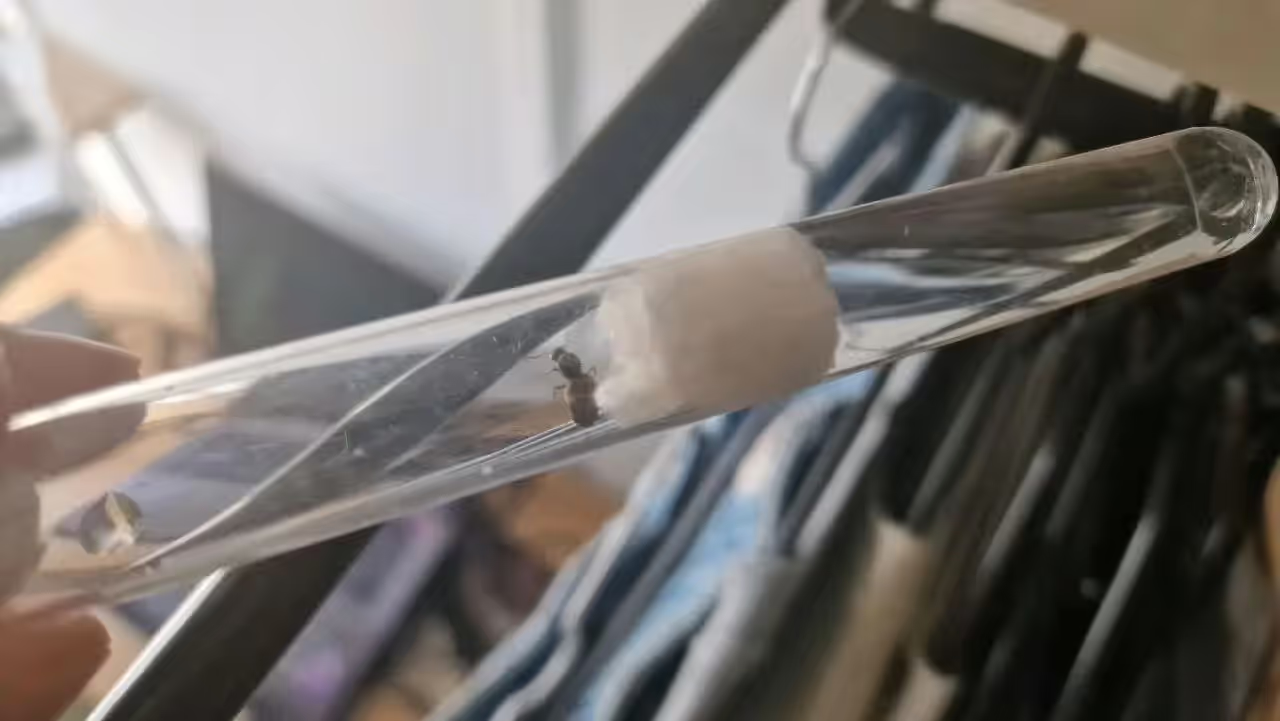


Ant Test Tube Setup Guide for Beginners
If you want to start antkeeping, a test tube setup is usually the best place to begin. Whether you found a queen ant during a nuptial flight or bought a small starter colony, a test tube provides a simple, safe, and humid founding chamber.
For most beginner species, a test tube setup is better than a large ant farm at the start. It gives the queen a small, secure space where she can settle, lay eggs, and raise her first workers without unnecessary stress.
This guide explains what a test tube setup is, how to make one, how to care for a queen inside it, when to feed, and when to move the colony into a larger setup.
What Is an Ant Test Tube Setup?
An ant test tube setup is a small founding chamber made from a test tube, water, and cotton. It creates a safe space with built-in humidity, similar to the small protected spaces queens use in nature when starting a colony.
A proper test tube setup gives the queen:
- A clean nesting chamber
- Access to moisture
- Darkness and security
- Protection from drying out
- A simple space that is easy to monitor
For a newly mated queen, this is often all she needs at first.
A test tube setup is commonly used for:
- Newly caught queen ants
- Founding queens
- Small colonies with a few workers
- Temporary housing during moves
- Backup housing when a nest becomes unsafe
It is one of the most important beginner tools in antkeeping.
What You Need
You do not need expensive equipment to make a test tube setup.
Basic supplies:
- A clean glass or plastic test tube
- Clean water
- Cotton balls
- A stick, skewer, or cotton-pushing tool
- A dark cover, such as foil, paper, or a test tube sleeve
- Optional: a small box or drawer for storage
Common test tube sizes include:
- 16 x 150 mm
- 18 x 180 mm
- 20 x 200 mm
Smaller species can use smaller tubes, while larger queens such as many Camponotus species may need more space.
Glass test tubes are easy to clean and observe. Plastic test tubes are lighter and less likely to break. Both can work if they are clean and safe.
How to Make an Ant Test Tube Setup
Follow these steps to create a simple queen ant test tube setup.
1. Add Water
Fill the test tube about one third to one half full with clean water.
Do not fill the tube too much. The queen needs a dry chamber with enough space to move, lay eggs, and care for brood.
You can use:
- Bottled water
- Filtered water
- Dechlorinated tap water
- Clean tap water if it is safe in your area
Avoid dirty water, scented water, or anything with additives.
2. Add the Water Cotton
Push a cotton ball into the tube until it touches the water and forms a firm barrier.
This cotton plug has two jobs:
- It stops the water from flooding the chamber.
- It slowly wicks moisture into the dry part of the tube.
The cotton should be firm enough to hold back the water, but not packed so tightly that no moisture can pass through. It should look secure and slightly damp on the queen’s side.
3. Create the Dry Chamber
The empty part of the tube becomes the queen’s nesting chamber.
This is where the queen will:
- Rest
- Lay eggs
- Care for larvae
- Keep pupae
- Raise her first workers
The chamber should be clean, dry enough for the queen to stand comfortably, and humid enough to stop brood from drying out.
4. Add the Queen
Gently guide the queen into the dry chamber.
Do not grab or squeeze her. Queens are fragile, especially after a nuptial flight.
You can guide her using:
- A soft paintbrush
- A piece of paper
- A leaf
- A small container
- Gentle tapping only when absolutely necessary
Move slowly and avoid panic. The goal is to get her into the tube with as little stress as possible.
5. Close the Opening
Place another cotton ball in the open end of the test tube.
This entrance cotton should be snug enough to stop the queen from escaping, but not so tight that airflow is blocked completely.
Do not use airtight caps for long-term housing unless there is another safe source of ventilation.
6. Cover the Tube
Cover most of the test tube with foil, paper, cardboard, or a test tube sleeve.
Queens prefer darkness during founding. Keeping the tube dark helps reduce stress and makes the queen feel secure.
You can leave a small viewing area or simply uncover the tube briefly during weekly checks.
Where to Keep the Test Tube
Place the test tube somewhere quiet, dark, and stable.
Good places include:
- A drawer
- A cupboard
- A closet
- A storage box
- A quiet shelf away from vibration
Avoid placing the tube:
- In direct sunlight
- Near speakers
- Near washing machines
- On a windowsill
- In areas with heavy foot traffic
- On a heat source without a thermostat
- Anywhere it can roll, fall, or overheat
A founding queen needs stability more than attention. The less you disturb her, the better her chances.
Does a Queen Ant Need Food in a Test Tube?
It depends on the species.
Fully Claustral Queens
Many common beginner queens are fully claustral. This means they can raise their first workers using stored energy from their body.
Fully claustral queens usually do not need food before the first workers arrive.
Examples often include many species of:
- Lasius
- Camponotus
- Tetramorium
- Messor
Species can vary, so always check the care requirements for your exact species.
For a fully claustral queen, unnecessary feeding can create problems such as:
- Mold
- Stress
- Brood disturbance
- Sticky messes
- Drowning risk
- Food waste inside the tube
Semi-Claustral Queens
Semi-claustral queens need food during the founding stage. These queens naturally leave the nest to forage before they have workers.
Semi-claustral queens should usually have:
- A small outworld or feeding area
- Tiny amounts of sugar water
- Small protein sources
- Minimal disturbance
Do not keep a semi-claustral queen sealed in a test tube without food unless the species care information says it is safe.
When to Feed a Test Tube Colony
For fully claustral queens, wait until the first workers arrive before feeding.
Once workers appear, offer tiny amounts of food.
Good first foods include:
- A tiny drop of sugar water
- A tiny drop of honey water
- A fruit fly
- A small piece of mealworm
- A tiny piece of cricket or roach
For very small colonies, less is better. A colony with five workers does not need a whole insect or a large drop of sugar water.
To reduce mess, you can place food:
- On a small piece of foil
- On parchment paper
- In a tiny feeding dish
- In a connected mini outworld
Avoid placing large pieces of food deep inside the test tube. If food molds inside the tube, it can be difficult to remove without disturbing the colony.
Should You Add an Outworld?
A queen alone usually does not need an outworld unless she is semi-claustral.
Once workers arrive, a small outworld can make feeding easier. An outworld is a small foraging area connected to the test tube.
A simple outworld helps because:
- Food can be placed outside the nest
- Leftovers are easier to remove
- Workers can forage naturally
- The test tube stays cleaner
- Liquid food is less likely to trap ants inside the nest
For a young colony, the outworld should be small and simple. A large outworld can stress a tiny colony.
Humidity in a Test Tube Setup
The water reservoir and cotton plug provide humidity automatically. This is one reason test tube setups work so well for beginner antkeeping.
Signs the humidity is probably fine:
- The water reservoir is still present
- The cotton near the water is moist
- The queen keeps brood near the cotton
- The brood does not look dried out
- There is no flooding
A little condensation can be normal, especially if temperature changes. Heavy condensation or water pooling near the brood can be a problem.
Do not spray water directly into a queen’s test tube. This can flood the chamber and stress or kill the queen.
If the water runs out, prepare a new test tube and let the colony move when possible.
Heating a Test Tube Setup
Some ants grow faster with gentle warmth, but heating is not always necessary.
Before heating, research your species. Some ants prefer cooler conditions, some need seasonal diapause, and some tropical species need stable warmth.
If you use heat:
- Heat only part of the test tube
- Create a temperature gradient
- Use a thermostat if possible
- Monitor temperature with a thermometer
- Keep the water reservoir from drying too quickly
- Never place the tube in direct sunlight
Do not heat the entire tube. The ants need a cooler area to move to if they get too warm.
Direct sunlight can overheat a test tube very quickly and can kill the queen or brood.
How Often Should You Check the Queen?
Founding queens should not be checked too often.
A good beginner routine is:
- Check briefly once per week
- Keep the tube dark the rest of the time
- Avoid opening the tube unless necessary
- Do not shake or roll the tube
- Record when eggs, larvae, pupae, and workers appear
Checking every day can stress the queen and may cause her to eat her eggs.
It is normal to be excited, but patience is one of the most important parts of antkeeping.
How Long Can Ants Stay in a Test Tube?
A colony can stay in a test tube longer than many beginners expect.
Depending on species and colony growth, ants may stay in a test tube for:
- A few months
- One year
- Sometimes longer
There is no need to move a small colony into a large formicarium too early. In fact, moving too early is a common beginner mistake.
A test tube is often better for a small colony because it is:
- Secure
- Humid
- Easy to defend
- Easy to monitor
- Less stressful than a large nest
Move the colony only when there is a good reason.
When Should You Move Ants Out of the Test Tube?
Consider moving the colony if:
- The water reservoir is empty
- The tube is too crowded
- Mold is spreading badly
- The cotton has failed
- The tube has flooded
- The colony is difficult to feed safely
- Workers are constantly trying to escape
- The colony is large enough for a small nest
Do not move ants just because you bought a formicarium. A small colony often does better in a test tube until it is ready.
How to Move Ants From a Test Tube
The safest method is to let the ants move on their own.
To move them:
- Prepare a fresh test tube or small nest.
- Connect the old tube to the new setup.
- Keep the new setup dark.
- Expose the old tube to light.
- Wait patiently.
The ants will usually move when the new setup feels better than the old one.
Avoid shaking, tapping, or dumping the ants unless there is an emergency such as flooding, toxic contamination, or severe mold.
Forced moves can injure the queen, scatter brood, and stress the colony.
Common Test Tube Setup Mistakes
Filling the Tube Too Much
If the tube is mostly water, the queen will not have enough chamber space. Fill only about one third to one half of the tube.
Packing the Cotton Incorrectly
If the water cotton is too loose, the tube may flood. If it is too tight, moisture may not pass through properly.
The cotton should be firm, secure, and slightly moist on the chamber side.
Checking Too Often
Too much disturbance can cause a queen to stop laying eggs or eat her brood.
Feeding Too Early
Fully claustral queens usually do not need food before workers. Feeding too early can create mold and stress.
Leaving Food Inside Too Long
Protein molds quickly. Once workers arrive, remove uneaten food within 24 hours.
Heating the Whole Tube
Always create a temperature gradient. Heating the entire tube can trap ants in unsafe temperatures.
Moving Too Early
Small colonies usually do not need a large nest. A test tube is often the safest home during early growth.
Using Dirty Materials
Always use clean test tubes, clean cotton, and safe water. Avoid chemicals, soap residue, scented materials, or contaminated containers.
Test Tube Setup Checklist
Before adding your queen, check:
- Is the test tube clean?
- Is the water clean?
- Is the tube filled about one third to one half with water?
- Is the water cotton secure?
- Is there a dry chamber for the queen?
- Is the entrance cotton snug but breathable?
- Is the tube covered and dark?
- Is the tube placed somewhere quiet?
- Is it safe from direct sunlight?
- Do you know whether the queen is fully claustral or semi-claustral?
After workers arrive, check:
- Do they have access to sugar?
- Are they getting small protein sources?
- Is old food removed?
- Is the water reservoir still full?
- Is the colony becoming crowded?
- Is mold under control?
- Is an outworld needed for easier feeding?
Basic Care While Ants Are in a Test Tube
Test tube care is simple, but consistency matters.
For a queen without workers:
- Keep her dark
- Keep her quiet
- Avoid feeding unless the species needs it
- Check briefly once per week
- Make sure the water reservoir is still present
For a small colony with workers:
- Offer tiny amounts of sugar water
- Offer small protein sources
- Remove old food quickly
- Keep the tube mostly dark
- Add a small outworld if feeding becomes difficult
- Avoid moving them too early
The goal is to provide stable conditions with minimal interference.
Final Thoughts: Why Test Tubes Are Best for Beginners
A test tube setup is one of the simplest and most effective ways to start antkeeping. It gives a founding queen the moisture, security, and darkness she needs while keeping care easy for the keeper.
For many beginner species, a queen can start her entire colony in a basic test tube setup. Once workers arrive, you can begin feeding small amounts and eventually connect a small outworld. Later, when the colony is large enough, you can move them into a proper formicarium.
Start simple. Keep the queen calm. Avoid overfeeding, overheating, and moving too early.
A test tube may look basic, but for a founding ant queen, it is often the perfect first home.
Deixar um comentário