
Vollenhovia penetrans
- Wetenschappelijke naam
- Vollenhovia penetrans
- Tribus
- Crematogastrini
- Subfamilie
- Myrmicinae
- Auteur
- Smith, 1857
- Verspreiding
- Gevonden in 0 landen
Introductie
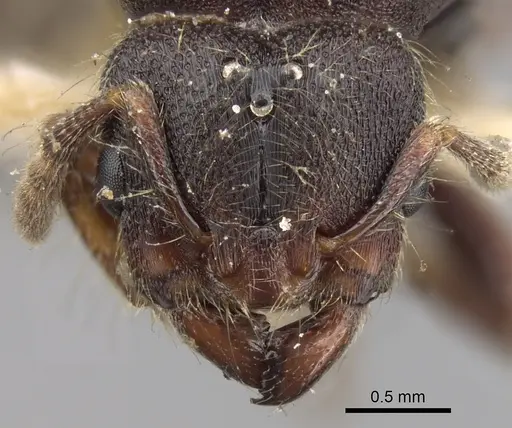
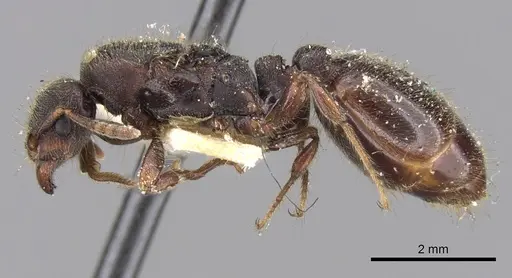
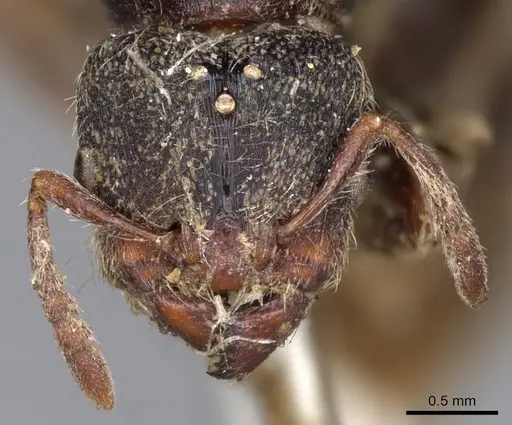
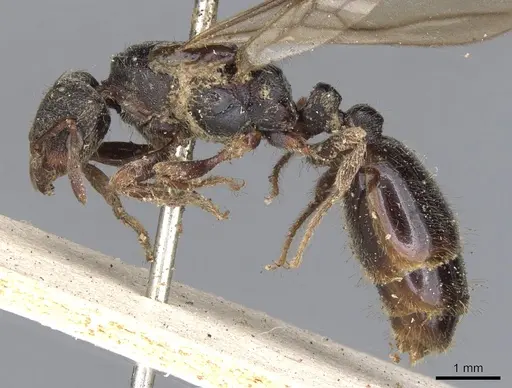
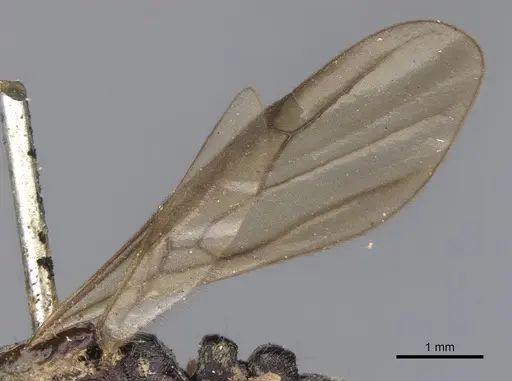
Vollenhovia penetrans is a little-known ant species originally described by Frederick Smith in 1857 from Borneo (Sarawak) as Atta penetrans . Only the queen caste is known, the worker caste has never been described, which makes this one of the most poorly documented ants in the world . Queens are black and shiny, with a finely longitudinally striated head and mesosomal dorsum. The mouth, clypeus, antennae, and legs are ferruginous (rusty reddish-brown). The thorax has oblong punctures that run into striae, and the wings are nearly transparent with a dark line along the costal vein . The species is recorded from Borneo, the Andaman and Nicobar Islands, Malaysia, Indonesia, and Singapore . Taxonomic confusion exists because Vollenhovia taxonomy relies on workers, and V. penetrans is extremely similar to V. brevicornis, V. pertinax, and V. oblonga laevithorax, some researchers consider them possible synonyms .
Quick Summary
- Difficulty: Unknown
- Origin & Habitat: Southeast Asia, recorded in Borneo (Sarawak), Andaman and Nicobar Islands, Malaysia, Indonesia, and Singapore. Natural habitat is undocumented, but based on the region it likely lives in tropical rainforests [2][3].
- Colony Type: Unknown, only the queen caste is known. Colony structure (single-queen vs multi-queen) has not been studied [2].
- Size & Growth:
- Queen: ~8.5 mm (4 lines in original description) [1]
- Worker: Undescribed, worker caste never collected [2]
- Colony: Unknown, no colony data exists
- Growth: Unknown
- Development: Unknown, development data completely absent (No colony development information exists. Even related species (V. brevicornis, V. pertinax) lack published rearing data, so timelines cannot be estimated.)
- Antkeeping:
- Temperature: Unknown, no thermal data. Given its tropical distribution, a warm range (24-26°C) is a reasonable starting guess, but there is no solid guidance from research.
- Humidity: Unknown, no published humidity data. High humidity typical of tropical rainforests is likely needed, but specific levels are not known.
- Diapause: Unknown, no seasonal data. Tropical species from this region may not require hibernation, but may slow activity during cooler periods.
- Nesting: Unknown, natural nesting sites are undocumented. Related Vollenhovia species typically nest in rotting wood, under stones, or in soil. A test tube setup or Y-tong nest would be a reasonable starting point, but success is uncertain.
- Behavior: Unknown, no behavioral observations exist for this species because workers have never been recorded. As a myrmicine ant (tribe Crematogastrini), it likely has a stinger used for smearing venom rather than stinging, but this is unverified for V. penetrans itself.
- Common Issues: species only known from queens, workers have never been described, making informed captive care impossible, no colony size, founding behavior, diet, or flight data exist, so every aspect of husbandry is a guess, taxonomic uncertainty, potential synonymy with V. brevicornis, V. pertinax, and V. oblonga laevithorax means the true identity of any colony would be questionable, without worker descriptions, even basic identification of a foundress is impossible using standard keys
Species overview and taxonomic challenges
Vollenhovia penetrans is a taxonomic enigma. Described by Smith in 1857 from a single queen collected in Borneo (Sarawak), it is still known only from the queen caste, the worker has never been found [2][4]. This is very unusual for ants. Because Vollenhovia taxonomy relies almost entirely on worker morphology, V. penetrans cannot be identified using standard keys for the region [4]. The species is also extremely similar to V. brevicornis, V. pertinax, and V. oblonga laevithorax, to the point that some authors consider them potential synonyms [2]. Records from the Andaman and Nicobar Islands may actually refer to one of these close relatives. Without workers, genetic analysis would be needed to confirm species identity, but no such data exists.
Distribution and habitat
The species is recorded across Southeast Asia: type locality Borneo (Sarawak) [1], plus the Andaman and Nicobar Islands (Indian territory), Malaysia, Indonesia, and Singapore [2][3]. An AntWeb specimen (CASENT0280819) from the Andaman Islands, collected by G. Rogers and verified by Bolton in 1976,matches the holotype [2]. Natural habitat is not documented, but based on the region it likely inhabits tropical rainforests.
Queen description
The queen measures about 8.5 mm (originally described as '4 lines') [1]. She is black and shining, with the head finely longitudinally striated. The mouth, clypeus, antennae, and legs are ferruginous. The thorax is elongate-ovate, with the prothorax front and legs ferruginous. The dorsal thorax has oblong punctures that run into striae, with an impunctate line in the middle of the mesothorax near the front. The metathorax is truncated, smooth and shining. Wings are nearly transparent with a dark line along the costal vein and a fringe of fine white hairs on the margins. The abdomen is elongate-ovate, dark reddish-black, with brighter segment margins. The petiole nodes are globose and punctured [1].
Current status and research gaps
Vollenhovia penetrans is one of the most poorly known ant species in Southeast Asia. There are no studies on its behavior, ecology, or colony biology. The following are all unknown: colony size, founding method, diet, nesting preferences, temperature and humidity requirements, nuptial flight timing, and any worker attributes. This lack of data means that even if a queen were captured, there is no baseline information to guide captive care. The species is essentially unkeepable in any informed manner until workers are discovered and described. [2][4]
Frequently Asked Questions
Can I keep Vollenhovia penetrans as a pet?
No meaningful care guidance exists. This species is known only from queens, workers have never been found, so all aspects of husbandry (feeding, temperature, nesting) are complete unknowns. Additionally, the taxonomic confusion means any colony's true species identity would be uncertain. It is not advisable to attempt keeping this species.
Where does Vollenhovia penetrans live?
It is recorded from Borneo (Sarawak), the Andaman and Nicobar Islands, Malaysia, Indonesia, and Singapore [2][3]. The type locality is Borneo.
What does Vollenhovia penetrans look like?
Queens are about 8-9 mm long (4 lines in the original description), black and shiny with finely striated head and thorax. The mouth, clypeus, antennae, and legs are rusty reddish-brown. The thorax has oblong punctures, and the wings are nearly transparent with a dark costal line. Workers have never been described [1].
Why are there no workers described for Vollenhovia penetrans?
This is simply a gap in scientific knowledge. The species was described in 1857 from a queen, and despite later collections across its range, workers have never been documented. This is rare but not unheard of, particularly for cryptic or rare species [2].
Is Vollenhovia penetrans the same as other Vollenhovia species?
Possibly. It is considered extremely similar to V. brevicornis, V. pertinax, and V. oblonga laevithorax, and some researchers think they could be synonyms [2]. The situation remains unresolved without more material, especially workers.
How big do Vollenhovia penetrans colonies get?
Unknown. No colony data exists because workers have never been found.
What do Vollenhovia penetrans eat?
Unknown. No dietary studies or observations exist. Related Vollenhovia are generalist foragers, but nothing specific is known for this species.
Do Vollenhovia penetrans ants sting?
Unknown, no behavioral data exists. As a myrmicine ant, it likely has a stinger, but whether it uses it aggressively has not been observed. The tribe Crematogastrini typically has a spatulate stinger used for smearing venom rather than piercing, but this is unconfirmed for V. penetrans.
When do Vollenhovia penetrans nuptial flights occur?
Unknown. The timing of reproductive flights has not been documented.
Is Vollenhovia penetrans a good species for beginners?
No. This species cannot be meaningfully kept because workers have never been described, leaving no baseline for care. Additionally, the taxonomic uncertainty makes proper identification impossible. It is not recommended for any keeper at this time.
Report an Issue
The current care sheet is based fully on literature. See inconsistencies, or something that's incorrect? Please , it will be resolved after review from an admin. Contributing to the blogs tab also helps providing information, to make us be able to further improve the caresheets. Thank you for your support!
References

Dit verzorgingsblad is gelicentieerd onder CC BY-SA 4.0 .
Community-blogs
CASENT0280819
Bekijk op AntWeb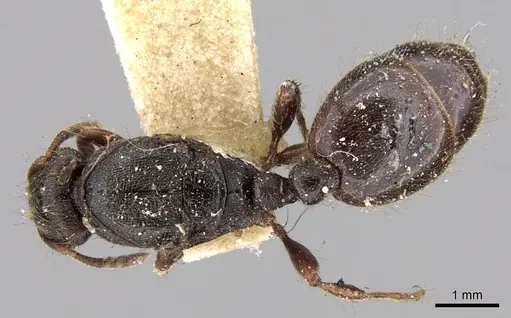
CASENT0901383
Bekijk op AntWeb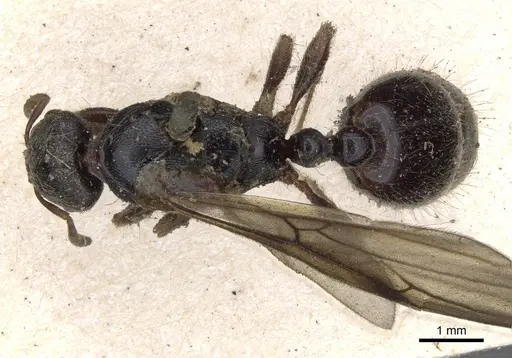
Literatuur
Verspreidingskaart laden...Producten laden...