
Tyrannomyrmex dux
- Wetenschappelijke naam
- Tyrannomyrmex dux
- Tribus
- Solenopsidini
- Subfamilie
- Myrmicinae
- Auteur
- Borowiec, 2007
- Verspreiding
- Gevonden in 0 landen
Introductie
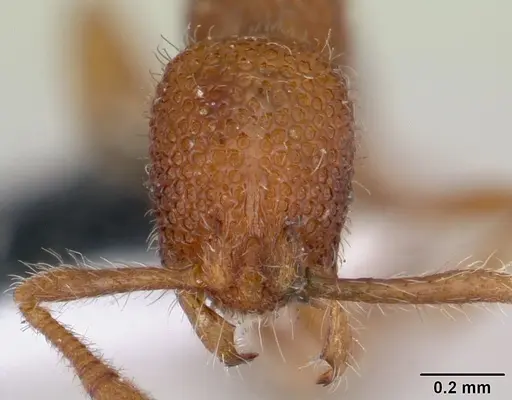
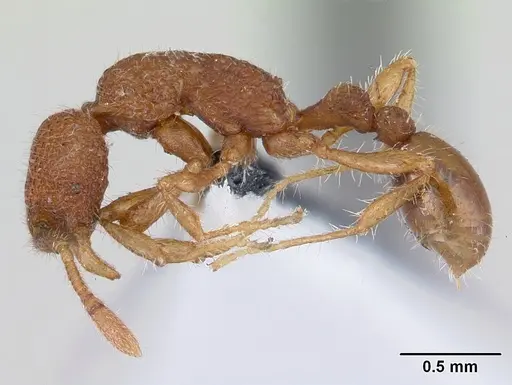
Tyrannomyrmex dux is one of the rarest ants in the world, known from a single worker specimen collected in 1999 from the Western Ghats of Kerala, southern India . Workers are tiny at just 3.11mm total length, with a reddish body and yellowish appendages . The genus Tyrannomyrmex is so rare that only a handful of specimens have ever been found across just a few species – these ants are true cryptophiles, living hidden in leaf litter where they escape notice . This species stands out from its relatives by dense erect hairs covering the mesosoma and heavily pitted (foveate) sculpture on the head and body . It belongs to the Solenopsidini tribe within Myrmicinae, and while the specimen shows an extruded sting, it is shorter than in the related Tyrannomyrmex rex . This is not a species for casual antkeeping – Tyrannomyrmex dux has never been kept in captivity and almost nothing is known about its biology. The genus is so poorly understood that even basic questions about colony structure, diet, and reproduction remain unanswered . If you are an advanced keeper interested in contributing to scientific knowledge of extremely rare species, this represents a genuine frontier.
Quick Summary
- Difficulty: Expert
- Origin & Habitat: Endemic to the Western Ghats mountains in Kerala state, southern India, specifically from Ponmudi hill resort at 1300-1500m elevation [1][2]. The single known specimen came from leaf litter in likely evergreen tropical forest [2].
- Colony Type: Unknown – only a single worker has ever been found. Colony structure (single-queen or multi-queen) is completely unstudied.
- Size & Growth:
- Queen: Unknown – no queen has ever been discovered or described [1].
- Worker: 3.11mm total length (TL) [1].
- Colony: Unknown – no colony has ever been observed [3].
- Growth: Unknown.
- Development: Unknown – development has never been observed. (No data exists on any life stage beyond the single worker holotype. Related species in Solenopsidini typically develop in 4-8 weeks at warm temperatures, but this is pure speculation for Tyrannomyrmex dux.)
- Antkeeping:
- Temperature: Unknown. Based on its origin in the Western Ghats at moderate elevation (1300-1500m), it likely prefers temperatures cooler than typical tropical species – possibly in the 20-25°C range. Start in the low-mid 20s and observe colony activity.
- Humidity: Likely requires high humidity given its leaf litter origin in the humid evergreen forests of the Western Ghats. Keep the nest substrate consistently moist but not waterlogged.
- Diapause: Unknown – no data on seasonal behavior. The Western Ghats experience a monsoon season with distinct wet and dry periods, so some form of seasonal adjustment may be needed.
- Nesting: In nature, it nests in leaf litter [2]. For captivity, a small test tube setup or small plaster nest with fine chambers would be appropriate given its tiny size. The nest should be scaled to its 3mm worker size.
- Behavior: Completely unknown. The genus is considered cryptobiotic – living hidden in leaf litter and soil [3]. Workers likely forage singly or in small groups in the litter layer. Escape prevention is critical due to its tiny 3mm size – use fine mesh barriers. Aggression levels are unknown but related Solenopsidini are typically docile. The specimen shows an extruded sting, suggesting a defensive capability, though the sting is shorter than in Tyrannomyrmex rex [1].
- Common Issues: no captive history – this species has never been successfully kept, so there is no established husbandry knowledge to draw upon., extreme rarity means no founding queens are available – colonies cannot be started., no data on diet – we do not know what this species eats in captivity., unknown colony structure means we cannot advise on multi-queen arrangements., tiny size creates significant escape risk and requires specialized tiny enclosures.
Why Tyrannomyrmex dux Is Extremely Challenging
This species represents one of the most difficult antkeeping challenges possible because it has essentially never been studied in the wild, let alone in captivity. The entire scientific knowledge of Tyrannomyrmex dux consists of a single worker specimen collected in 1999 from leaf litter in Kerala, India [1]. No queen, no brood, no colony structure, no behavioral observations, no diet data – nothing. The genus Tyrannomyrmex itself is known from only a handful of specimens across a few species, all collected by sifting leaf litter [2]. This means there is no captive breeding history, no established protocols, and no one to ask about what these ants need. You would be pioneering entirely new husbandry knowledge from scratch. This is genuinely expert-level territory and not a species to attempt unless you have extensive experience with difficult, data-poor species and the resources to experiment extensively.
Natural History – What We Know
The holotype worker was collected in June 1999 from Ponmudi hill resort, approximately 30km northeast of Trivandrum (now Thiruvananthapuram) in Kerala state, southern India [1]. The elevation was approximately 1300-1500 meters above sea level [1]. The specimen came from a leaf litter sample, meaning this ant lives in the forest floor layer like many other cryptic ant species [2]. The Western Ghats where it was found are a biodiversity hotspot with humid evergreen to semi-evergreen tropical forests. The collection date of late June corresponds to the monsoon season in Kerala, suggesting these ants are active during the wet season. The specimen is deposited in the Department of Biodiversity and Evolutionary Taxonomy at the University of Wroclaw in Poland [1]. Beyond these collection details, absolutely nothing else is known about this species' biology in the wild.
Taxonomy and Identification
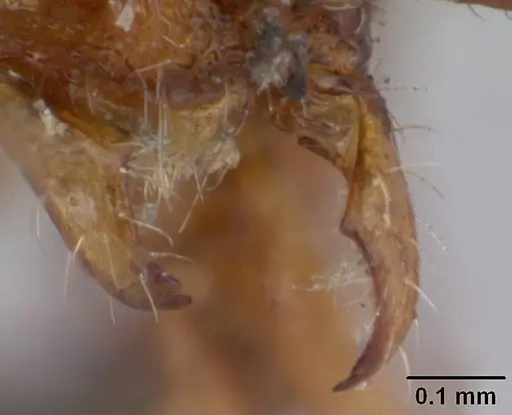
Tyrannomyrmex dux belongs to the subfamily Myrmicinae and tribe Solenopsidini [1]. It was described by Marek Borowiec in 2007 as the second known species in the genus (after Tyrannomyrmex rex) [4]. The species can be distinguished from T. rex by several key features: dense erect hairs cover the entire mesosoma (T. rex has almost no pilosity there), the sculpture is heavier with larger and more closely-spaced pits (foveae), and the petiole is more slender with a lower node [1]. Workers measure just 3.11mm total length, making them among the smaller Myrmicinae [1]. The body is reddish with yellowish appendages, and the head and mesosoma are heavily covered with distinctive foveae (circular pits) [1]. The specimen shows an extruded sting, though it is shorter than that of T. rex [1]. The genus name Tyrannomyrmex means 'tyrant ant' – these are small but apparently well-defended ants.
Housing and Care – Complete Speculation
Since no one has ever kept this species, all care recommendations are educated guesses at best. Based on its leaf-litter origin in humid evergreen forest, it likely needs small, humid enclosures with fine substrate. A small test tube setup or tiny plaster nest would be appropriate given the 3mm worker size. Escape prevention must be excellent – these tiny ants can squeeze through remarkably small gaps. For substrate, use fine, moisture-retaining material like coco fiber or fine soil. The elevation of 1300-1500m in the Western Ghats suggests it may prefer temperatures cooler than typical tropical ants – perhaps around 20-25°C. Humidity should be high, similar to other leaf-litter cryptic ants. Feeding is entirely unknown – you would need to experiment with small live prey (fruit flies, springtails), honey/sugar water, and other small arthropods. Start with tiny live prey and observe acceptance. This species is NOT recommended for beginners or even intermediate keepers due to the complete lack of any husbandry precedent. [1][2]
The Genus Tyrannomyrmex – A Mystery
The entire genus Tyrannomyrmex contains only a handful of species, all described from single specimens collected from leaf litter [2]. Fernández originally described the genus in 2003 from T. rex, and noted unusual features including modified setae on the mandibles and a long sting [1]. However, T. dux shows some differences from the original genus diagnosis – its mandibular setae appear simple rather than modified, and its sting is shorter [1]. The absence of a visible metapleural gland orifice has been noted in specimens examined by both Fernández (2003) and Borowiec (2007) [3]. This is highly unusual among Myrmicinae. All three previously known species were described from single specimens collected from leaf-litter samples in evergreen forests [2]. The genus remains one of the most poorly known ant groups globally, and any information about captive care would represent a genuine scientific contribution.
Frequently Asked Questions
Can I keep Tyrannomyrmex dux as a pet ant?
No. This species has never been kept in captivity and no one has ever found a colony or queen. There is no established husbandry knowledge, no captive breeding history, and no source for founding colonies. This is not a species available in the antkeeping hobby – it is known from a single worker specimen collected in 1999.
How big do Tyrannomyrmex dux colonies get?
Unknown – no colony has ever been observed. The only known specimen is a single worker. Related Solenopsidini species typically form colonies ranging from dozens to hundreds of workers, but there is no data specific to Tyrannomyrmex dux.
What do Tyrannomyrmex dux ants eat?
Unknown. We have no data on the diet of this species. As a member of Solenopsidini, related ants are often omnivorous with a tendency toward predatory habits, but this is pure speculation. If a colony were ever found, you would need to experiment with various small live prey, sugar sources, and other foods to determine acceptance.
Are Tyrannomyrmex dux good for beginners?
Absolutely not. This is an expert-only species that has never been kept in captivity. There is no care guide, no established protocols, and no source for founding colonies. Even experienced antkeepers would face a complete information vacuum when attempting to keep this species. If you are interested in rare ants, consider more established species with known care requirements.
Where does Tyrannomyrmex dux live in the wild?
Only known from the Western Ghats mountains in Kerala state, southern India, specifically from Ponmudi hill resort at 1300-1500m elevation [1]. The single specimen came from leaf litter in what is likely evergreen tropical forest [2].
Do Tyrannomyrmex dux need hibernation?
Unknown. The Western Ghats experience distinct seasons with a monsoon period (June-September) and dry season, but no data exists on whether this species has any form of dormancy or diapause. Without any captive observations, this question cannot be answered.
How long do Tyrannomyrmex dux workers live?
Unknown. No lifecycle data exists for this species. The only known specimen is the holotype worker collected in 1999,now preserved in a museum.
Can I find Tyrannomyrmex dux in the wild?
Extremely unlikely. This is one of the rarest ants in the world, known from a single specimen collected in 1999. Even professional myrmecologists have not found additional specimens despite targeted searches in the Western Ghats. The species is considered endemic to a very restricted range in Kerala.
What makes Tyrannomyrmex dux different from other ants?
It is one of the rarest and least-known ants in the world, known only from a single worker. The entire genus Tyrannomyrmex contains only a few species, all extremely cryptic. These ants have unusual features including heavily foveate (pitted) sculpture, dense pilosity, and a sting – though much of their biology remains mysterious [1].
Report an Issue
The current care sheet is based fully on literature. See inconsistencies, or something that's incorrect? Please , it will be resolved after review from an admin. Contributing to the blogs tab also helps providing information, to make us be able to further improve the caresheets. Thank you for your support!
References

Dit verzorgingsblad is gelicentieerd onder CC BY-SA 4.0 .
Community-blogs
CASENT0178233
Bekijk op AntWeb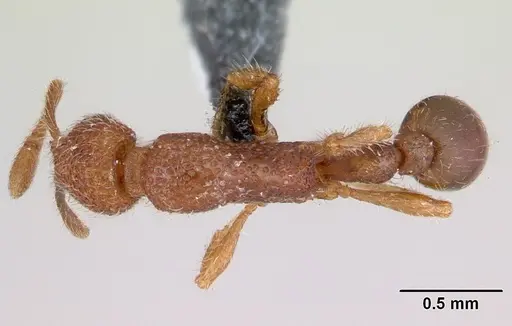
Literatuur
Verspreidingskaart laden...Producten laden...