
Tyrannomyrmex alii
- Wetenschappelijke naam
- Tyrannomyrmex alii
- Tribus
- Solenopsidini
- Subfamilie
- Myrmicinae
- Auteur
- Sadasivan & Kripakaran, 2017
- Verspreiding
- Gevonden in 0 landen
Introductie
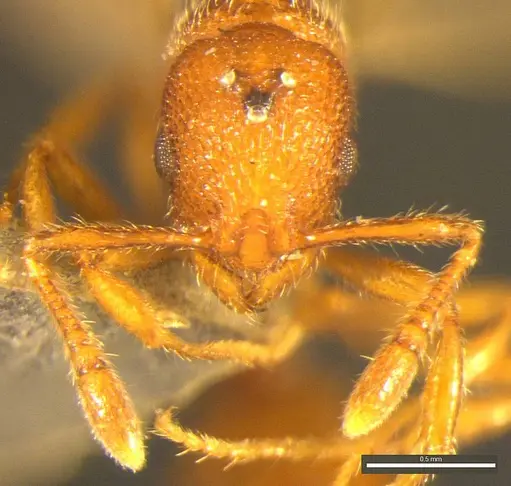
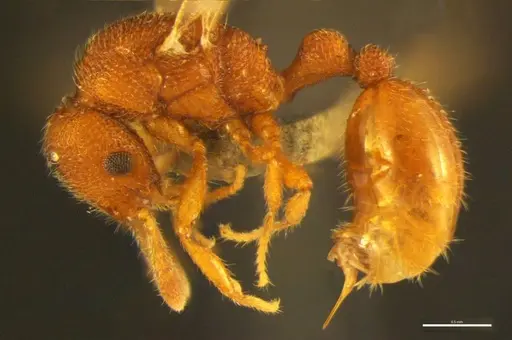
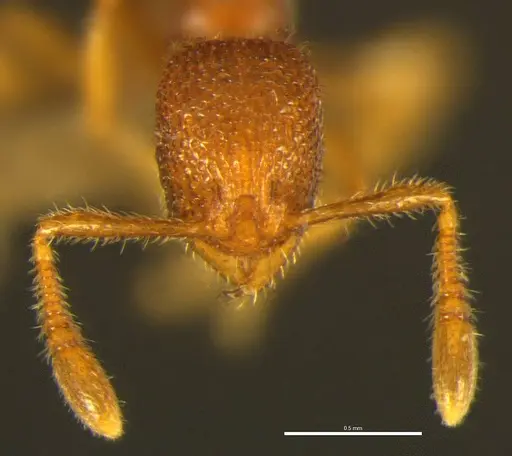
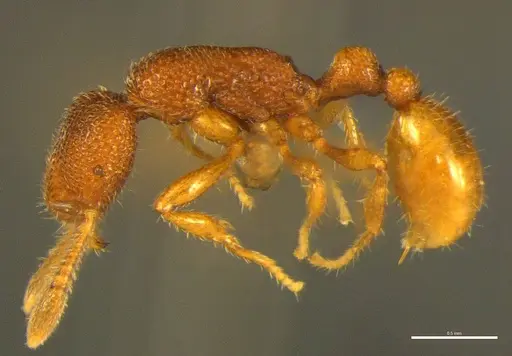
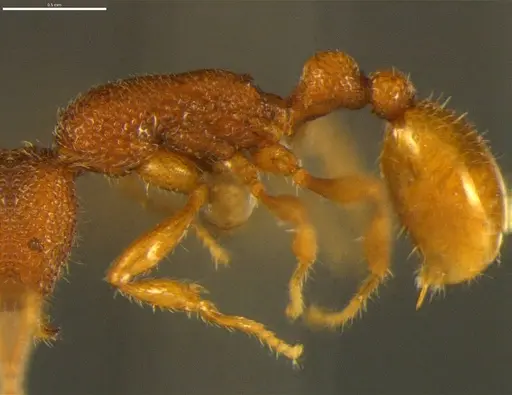
Tyrannomyrmex alii is a tiny, cryptic myrmicine ant described in 2017 from the Western Ghats of Kerala, India. Workers measure 2.9-3.15 mm in total length, with an orange-red body that darkens on the head and pronotum. Their eyes are extremely reduced - workers have just three ommatidia each, a clear sign of a subterranean lifestyle . They possess a well-developed sting at the tip of the abdomen . The genus Tyrannomyrmex contains only four known species, making it one of the rarest groups in the ant world. The only documented colony was found nesting in dry soil beneath a rotting log at 1100 m elevation, with about 52 individuals: one dealate queen,16 alate gynes, and 35 workers . This species is named after Prof. Musthak Ali, a prominent Indian myrmecologist. What makes Tyrannomyrmex alii special is how little we know about keeping it - no captive husbandry data exists. Keepers who manage to obtain a colony would be pioneering its care. The ants are slow-moving and docile, easy to handle. Their reduced eyes and specialized mandibular hairs reflect a hidden life under logs and in soil .
Quick Summary
- Difficulty: Expert
- Origin & Habitat: Western Ghats of Kerala, southern India, at 1100 m elevation in primary evergreen forest. Found nesting in dry soil under rotting logs in shady forest areas [1].
- Colony Type: Unknown, only one wild colony ever documented, with 1 dealate queen,16 alate gynes, and approximately 35 workers. No males were observed. The single queen could indicate monogyny, but polygyny cannot be ruled out [1].
- Size & Growth:
- Queen: 3.98 mm total length [1]
- Worker: 2.90-3.15 mm total length [1]
- Colony: Unknown, only one wild colony documented with ~52 individuals including all castes [1]
- Growth: Unknown, no captive breeding data available
- Development: Unknown, no development data available for this species (Development timeline is unconfirmed. Given the small colony size and cryptic lifestyle, expect a slow process.)
- Antkeeping:
- Temperature: Keep around 22-26°C. This species comes from 1100 m elevation in the Western Ghats, where evergreen forests maintain moderate temperatures year-round. Avoid high heat, they are adapted to cool, stable forest floor conditions.
- Humidity: Keep the nest substrate consistently moist but not waterlogged. Use a well-draining soil mix that holds some moisture, mimicking the dry soil under a rotting log with moisture from the wood [1].
- Diapause: Unknown, no data on overwintering requirements. The Western Ghats at 1100 m experience mild winters. A slight cooling period (15-18°C) for 2-3 months during winter is speculative but may help.
- Nesting: Subterranean nester. In captivity, provide deep soil setups with dark, enclosed chambers. A naturalistic setup with at least 5-8 cm of moist substrate and flat stones or rotting wood pieces mimics their natural microhabitat. Plaster or Y-tong nests with narrow chambers can also work if kept dark [1].
- Behavior: Docile and slow-moving. Workers can be picked up easily without rushing to escape. They have a well-developed sting but are not aggressive, stinging would be a last-resort defense [1]. Being subterranean, they likely prefer to stay hidden and may not venture into outworlds frequently. Escape risk is moderate: their tiny size (2.9-3.15 mm) means they can squeeze through small gaps, so use fine mesh or tight seals on all openings.
- Common Issues: no captive husbandry data exists, you are establishing the baseline for this species., extremely rare in the hobby, finding colonies is nearly impossible., slow growth expected due to small colony size and unknown development requirements., subterranean lifestyle means they may be difficult to observe and feed., escape risk due to tiny size, require fine mesh or tight seals., unknown optimal conditions, risk of colony collapse if temperature or humidity is outside their narrow preferences.
Discovery and Rarity
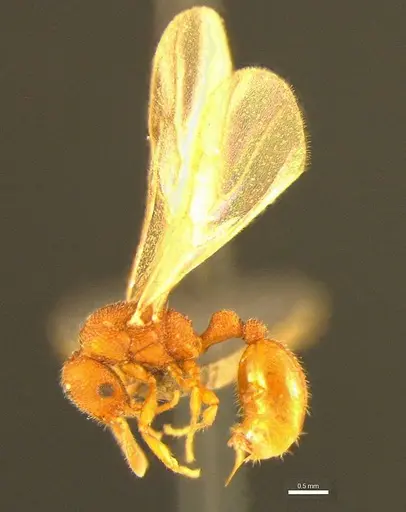
Tyrannomyrmex alii was described in 2017,making it a recently discovered species. The genus Tyrannomyrmex contains only four species, all extremely rare in the wild. This species was found in the Periyar Tiger Reserve in Kerala, India, at 1100 m elevation in a primary evergreen forest. The type colony was discovered by tray-sifting dry soil beneath a rotting log, a testament to their cryptic nature. About 52 individuals were found in 50 cm² of soil: one dealate queen (likely an alate that lost her wings prematurely),16 mature alate gynes, and approximately 35 workers. No males, pupae, larvae, or eggs were observed, suggesting the colony was preparing for nuptial flights [1].
For antkeepers, this rarity means Tyrannomyrmex alii is essentially unavailable in the hobby. If you ever obtain a colony, you would be among the first to document captive behavior. This makes them a species for dedicated specialists willing to record and share their findings.
Identification and Morphology
Workers are monomorphic with minor size variation, measuring 2.90-3.15 mm total length [1]. The most distinctive feature is the extremely small eyes, workers have only three ommatidia (individual eye lenses), each about the size of a single fovea (the pitted sculpture marks). This extreme eye reduction is a clear adaptation to subterranean life. The head is vertically ovoid, longer than wide, with a distinct median band of unsculptured area running from the clypeus to mid-head. Mandibles are triangular with a unique feature: specialized setae on the inner aspect that are cylindrical at the base and flatten into a scimitar shape at the tips, these may help with identification [1].
The mesosoma has a small blunt triangular propodeal tooth, and the petiole has an ill-defined peduncle occupying less than one third of its length. The gaster (abdomen) bears a robust and well-developed sting, this is one of the few Solenopsidini with a functional stinger [1]. Color is orange-red overall, with the head and pronotum darker, while the petiole, postpetiole, and gaster are more yellowish. All body hairs are white. Queens are larger at 3.98 mm and have much larger eyes with over 100 ommatidia, needed for dispersal during nuptial flights [1].
Natural History and Habitat
This species is hypothesized to be subterranean, nesting in soil under rotting logs and using the soil-leaf litter interface for foraging. This explains why all four Tyrannomyrmex species are known only from single foragers in leaf-litter samples, they rarely come to the surface. The small eyes, specialized mandibular hairs, and cryptic coloration all support this lifestyle. The colony was found in dry soil at the wood interface beneath a rotting log in a shady part of the forest near a tree buttress. Leaf litter was sparse, and no ants were found when soil surrounding the log was sifted, the colony was specifically localized to the log-soil interface [1].
The Western Ghats at 1100 m elevation have a tropical montane climate with moderate temperatures and high humidity during the monsoon. The evergreen forest provides consistent shade and leaf litter. In captivity, this translates to needing stable, moderate temperatures (not hot), good humidity with ventilation, and dark enclosed nesting spaces with access to a foraging area.
Feeding and Diet
As a member of the tribe Solenopsidini, Tyrannomyrmex alii likely has predatory tendencies. However, being a small subterranean ant, they probably target very small prey, micro-arthropods, springtails, and other tiny soil invertebrates. The specialized mandibular hairs may play a role in capturing or handling small prey. In captivity, offer small live prey such as springtails, fruit flies, and tiny crickets. Sugar sources may be accepted, try offering honey or sugar water, but don't rely on it as a primary food. Given their subterranean nature, they may be reluctant to forage in exposed areas, so place food near the nest entrance or in shallow dishes within their enclosure [1].
Housing and Nest Setup
Given their subterranean lifestyle, these ants need enclosed, dark nesting spaces. A deep soil-based naturalistic setup works best, use a container with at least 5-8 cm of moist but well-draining substrate (like a mix of soil and sand). Place flat stones or pieces of rotting wood on the surface to provide cover and potential nest sites. Alternatively, a plaster or Y-tong nest with narrow chambers can work, but ensure the nest chambers are dark and enclosed. Provide a water tube and keep the nest area consistently moist but not waterlogged. The foraging area should be simple, a shallow dish with small live prey placed near the nest entrance. Because they are slow and docile, you can use relatively simple escape prevention, but their small size means fine mesh on any openings is still necessary [1].
Care Challenges and Expectations
Keeping Tyrannomyrmex alii represents the ultimate challenge in antkeeping because no captive husbandry data exists. You will be pioneering the care of this species. Expect slow growth, small colonies with limited brood will take many months to produce significant numbers. They may be sensitive to temperature and humidity fluctuations, so stable conditions are essential. Do not disturb the colony frequently, subterranean ants stress easily when their nest is exposed. Be patient with feeding, if they don't immediately accept prey, try different small prey items or offer them at different times. Document everything: feeding acceptance, growth rate, behavior, and any mortality. This species is for expert antkeepers who treat their colonies as scientific observations and are willing to share findings with the community. [1]
Frequently Asked Questions
How rare is Tyrannomyrmex alii in the antkeeping hobby?
Extremely rare, this species was described in 2017 and has never been documented in the hobby. The only known wild colony was discovered in 2016 in Kerala, India. Finding a colony for sale is nearly impossible, making this one of the most exclusive species available to advanced keepers.
What do Tyrannomyrmex alii ants eat?
Based on their membership in the Solenopsidini tribe, they likely eat small live prey like springtails, fruit flies, and tiny soil arthropods. They may also accept sugar sources occasionally. Offer small live prey regularly and sugar water or honey as a supplement. Being subterranean, they may be reluctant foragers, place food near their nest entrance [1].
How big do Tyrannomyrmex alii colonies get?
Unknown, only one wild colony has ever been documented, containing approximately 52 individuals including one queen,16 alate gynes, and 35 workers. The maximum colony size in the wild is not known. In captivity, expect slow growth from small starting colonies [1].
What temperature do Tyrannomyrmex alii ants need?
Keep them around 22-26°C. This species comes from 1100 m elevation in the Western Ghats, where evergreen forests maintain moderate temperatures. Avoid high heat, they are adapted to cool, stable forest floor conditions rather than tropical heat.
Are Tyrannomyrmex alii good for beginners?
No, this is an expert-level species. There is no captive husbandry data whatsoever, making them one of the most challenging species to keep. They are also extremely rare and nearly impossible to obtain. Only advanced antkeepers willing to document new behaviors should consider this species.
How long does it take for Tyrannomyrmex alii to produce first workers?
Unknown, no development data exists for this species. Development time is likely slow due to the cryptic lifestyle and small colony size, but no specific timeline can be given [1].
What type of nest should I use for Tyrannomyrmex alii?
Use a deep soil-based naturalistic setup or a dark, enclosed plaster/Y-tong nest. They are subterranean and prefer dark, enclosed spaces. Provide at least 5-8 cm of moist substrate and include flat stones or rotting wood pieces for cover. They may not use exposed foraging areas, so keep the nest dark and quiet [1].
Do Tyrannomyrmex alii need hibernation?
Unknown, no data exists on their overwintering requirements. The Western Ghats at 1100 m experience mild winters. Consider a slight cooling period (15-18°C) for 2-3 months during winter months, but this is speculative. Monitor colony activity and adjust based on their response.
Why are Tyrannomyrmex alii so hard to find in the wild?
They are subterranean, nesting exclusively in soil under rotting logs and using the soil-leaf litter interface for foraging. Their small eyes and cryptic coloration are adaptations to this hidden lifestyle. They rarely come to the surface, making them nearly invisible to collectors. This is why all four Tyrannomyrmex species are known only from single foragers or very small colony fragments [1].
Report an Issue
The current care sheet is based fully on literature. See inconsistencies, or something that's incorrect? Please , it will be resolved after review from an admin. Contributing to the blogs tab also helps providing information, to make us be able to further improve the caresheets. Thank you for your support!
References

Dit verzorgingsblad is gelicentieerd onder CC BY-SA 4.0 .
Community-blogs
NCBS-AP037
Bekijk op AntWeb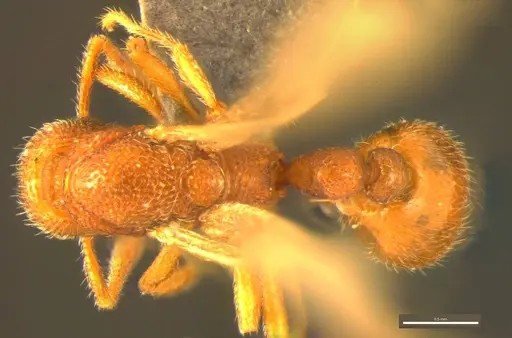
NCBS-AV849
Bekijk op AntWeb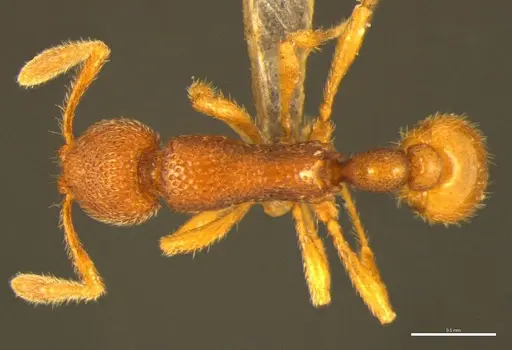
Literatuur
Verspreidingskaart laden...Producten laden...