
Shiny Harvester Ant
Trichomyrmex glaber
- Wetenschappelijke naam
- Trichomyrmex glaber
- Tribus
- Crematogastrini
- Subfamilie
- Myrmicinae
- Auteur
- André, 1883
- Nederlandse naam
- Shiny Harvester Ant
- Verspreiding
- Gevonden in 1 landen
Introductie
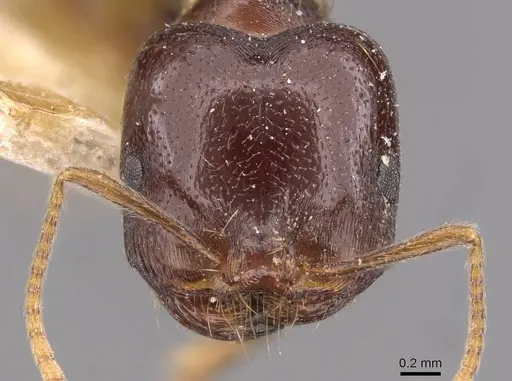
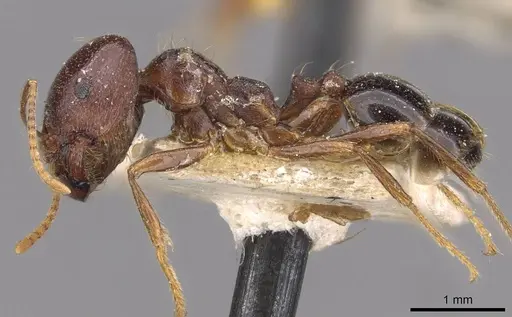
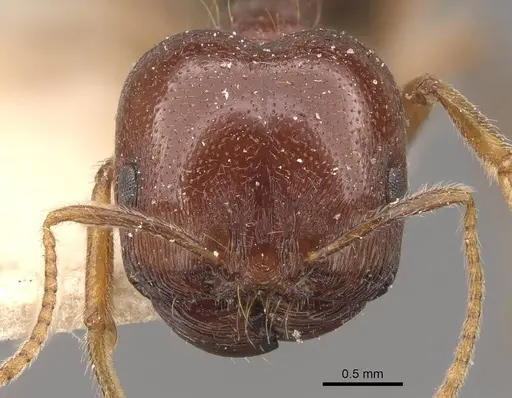
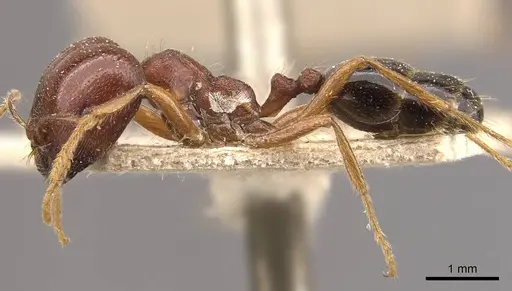
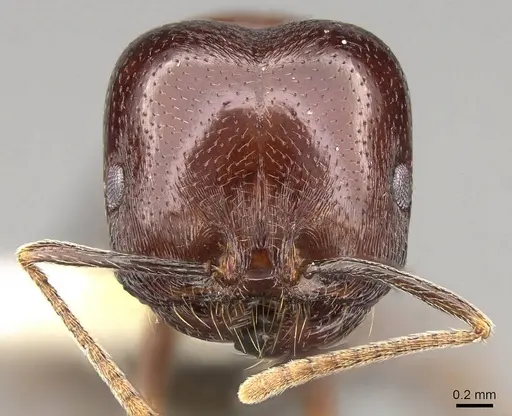
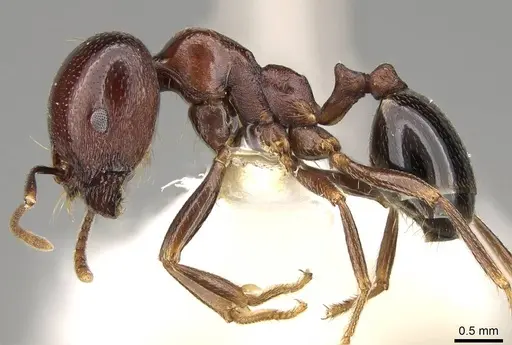
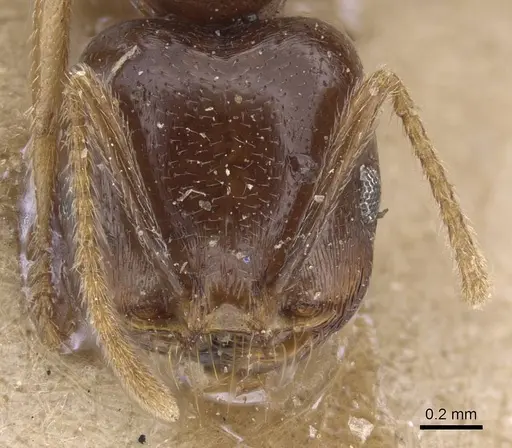
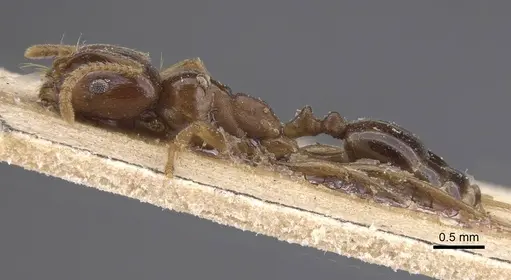
Trichomyrmex glaber is a small to medium-sized ant native to South Asia - India, Pakistan, Sri Lanka, Nepal, and Myanmar . Workers range from 3.5 to 7.5 mm, with distinct major and minor castes. Majors are larger and darker (brownish red to brownish black), while minors are smaller and lighter with clear reddish-yellow antennae and legs . The head and thorax are smooth and polished, giving a shiny appearance. This species belongs to the Myrmicinae subfamily and is part of the scabriceps group. In the wild, they are found in agricultural areas like cereal crops and grass fields, as well as around buildings and in trees .
Quick Summary
- Difficulty: Easy
- Origin & Habitat: Native to South Asia, India, Pakistan, Sri Lanka, Nepal, and Myanmar. Found in tropical and subtropical regions, typically in agricultural areas, grass fields, and around human settlements [1][2][4].
- Colony Type: Likely single-queen (monogyne) colonies based on typical genus patterns. Colony size in the wild reaches at least several dozen workers, with potential for larger colonies [5][6].
- Size & Growth:
- Queen: Unknown, estimated ~7-9 mm from related species.
- Worker: 3.5-7.5 mm (major and minor castes) [3]
- Colony: Unknown, estimated several hundred workers based on related species.
- Growth: Moderate, estimated from related tropical Myrmicinae
- Development: 6-8 weeks (estimated, actual timing depends on temperature) (Development time is estimated based on related species. Warmer conditions speed up growth.)
- Antkeeping:
- Temperature: Keep at 24-30°C. This is a tropical/subtropical species that prefers warmth. Room temperature (20-24°C) may slow growth. Avoid temperatures above 32°C [1].
- Humidity: Provide a gradient, keep the nest substrate slightly moist but not waterlogged. They are adaptable to varied conditions in the wild.
- Diapause: Unlikely required. This species comes from tropical/subtropical regions, so maintain warmth year-round.
- Nesting: Will accept Y-tong (AAC), plaster, soil nests, or 3D-printed nests. They naturally nest in soil and under stones in agricultural areas. Provide moist substrate for brood chambers.
- Behavior: Generally peaceful and non-aggressive. As a Myrmicinae, they use a 'smear' defense, they wipe venom onto enemies with a flattened stinger rather than piercing. Workers are active foragers and polymorphic (major and minor castes). They are known to forage in trees and buildings in the wild [5]. Due to their small size, standard barrier precautions are needed to prevent escapes.
- Common Issues: escape prevention is crucial, small workers can slip through tiny gaps in standard setups, overheating can be fatal, keep nest away from direct heat sources above 32°C, wild-caught colonies may carry parasites, quarantine if possible, mold can develop if the nest is too wet or food is left to decay
Housing and Nest Setup
Trichomyrmex glaber adapts well to various captive setups. Use Y-tong (AAC) nests, the porous material helps maintain humidity and gives workers good grip. Plaster and 3D-printed nests also work. For founding colonies, a test tube setup with a water reservoir works well. The nest should have chambers sized for their worker range (3.5-7.5 mm). Connect to an outworld for foraging. Because these ants are small, seal all connections carefully, they can squeeze through tiny gaps. Keep the foraging area shallow for easy observation and feeding. [5][6]
Feeding and Diet
They are omnivorous. Provide a constant sugar source, sugar water, honey, or diluted maple syrup. For protein, offer small insects like fruit flies, small crickets, or mealworms. In the wild, they forage in trees and buildings, likely scavenging and eating honeydew from aphids [7][4]. Feed protein 2-3 times per week and remove leftovers after 24 hours to prevent mold. This species accepts most standard ant foods.
Temperature and Seasonal Care
Keep the nest area at 24-30°C. Room temperature (20-24°C) is acceptable but will slow growth. Use a heating cable on one side to create a gradient if your room is cool. Avoid temperatures above 32°C as this can be fatal. Since this is a tropical species, no hibernation or diapause is needed, maintain warmth year-round [1].
Colony Development and Growth
Colony founding is not well documented, but based on typical Myrmicinae patterns, a queen likely seals herself in a small chamber and raises the first brood on stored reserves. First workers (nanitics) are smaller than mature workers. With optimal warmth (24-30°C), expect first workers within 6-8 weeks. The colony grows gradually as more workers emerge. Major workers may appear as the colony expands. Patience is needed during founding, avoid disturbing the queen. [7]
Behavior and Temperament
Trichomyrmex glaber is calm and non-aggressive. Workers are active foragers and explore their surroundings. They use a 'smear' defense, they have a flattened stinger to wipe venom on enemies. They are not known to sting people. Workers vary in size (3.5-7.5 mm) with distinct castes. They are adaptable, found in both agricultural fields and buildings [4][5]. Use standard barrier methods to prevent escapes.
Origin and Natural History
Trichomyrmex glaber is native to the Indomalaya region, India, Pakistan, Sri Lanka, Nepal, and Myanmar [1][2]. Described by André in 1883,it has been moved between genera (Monomorium, Holcomyrmex, then Trichomyrmex in 2015). In India, it occurs in many states including Tamil Nadu, Maharashtra, Karnataka, Gujarat, and others [1]. In Pakistan, it's found in Potohar Plateau and around Mansehra [6][5]. It lives in agricultural settings, cereal crops, grass fields, and on trees like Acacia and Dalbergia sissoo [4][5].
Common Problems and Solutions
The main issues are escape prevention (seal all gaps due to small size), temperature management (too cold slows growth, too hot can kill), and hygiene (remove uneaten food, avoid excess moisture). Wild-caught colonies may carry parasites, quarantine new colonies. Founding colonies can be slow, so don't disturb the queen. [7][4]
Where to Acquire
Not commonly available in the hobby. In the native range (India, Pakistan, Sri Lanka), you can look for queens after rains. Outside the native range, look for specialized breeders. Always check local regulations and never release non-native ants. Captive-bred colonies are healthier than wild-caught. [1][2]
Frequently Asked Questions
How long does it take for Trichomyrmex glaber to raise first workers?
Based on related tropical Myrmicinae, expect first workers in about 6-8 weeks under optimal conditions (24-30°C). Temperature has a big effect, warmer speeds development. Do not disturb the queen during founding.
What temperature do Trichomyrmex glaber ants need?
Keep them at 24-30°C. Room temperature (20-24°C) may work but slows growth. Avoid above 32°C. Use a heating cable if needed [1].
Do Trichomyrmex glaber ants need hibernation?
No. They come from tropical/subtropical areas, so keep them warm all year. Do not attempt to cool them for diapause [1].
How big do Trichomyrmex glaber colonies get?
Not well known. Based on related species, they likely reach several hundred workers. They don't form supercolonies. Growth is moderate [5][6].
What do Trichomyrmex glaber ants eat?
They eat sugar water, honey, or maple syrup as energy source. For protein, give fruit flies, small crickets, or mealworms 2-3 times per week. Remove leftovers after 24 hours [7][4].
Are Trichomyrmex glaber good for beginners?
Yes. They are calm, eat standard foods, and tolerate room temperatures. Just watch out for escapes due to their small size. They are a good choice for new ant keepers.
Can I keep multiple queens together in a Trichomyrmex glaber colony?
Not recommended. They are likely monogyne (single queen), and mixing queens could lead to fights. Start with one queen.
Do Trichomyrmex glaber ants sting?
They have a stinger but use it to smear venom, not to pierce. They are very calm and not dangerous to keepers. They usually flee rather than attack [4].
What size are Trichomyrmex glaber workers?
Workers range from 3.5-7.5 mm depending on caste. Minors are smaller (~3.5-4 mm), majors up to 7.5 mm. Queens are unknown but likely ~7-9 mm [3].
Where is Trichomyrmex glaber found in the wild?
In South Asia, India, Pakistan, Sri Lanka, Nepal, Myanmar. They live in agricultural fields, grass areas, and on trees near buildings [1][2][4].
When do Trichomyrmex glaber nuptial flights occur?
Not documented. As a tropical species, flights probably happen in warm months. If your colony produces alates, that's a sign it's ready to reproduce.
Why is my Trichomyrmex glaber colony dying?
Check temperature (too cold or too hot), humidity (too wet causes mold, too dry), food supply (lack of protein or sugar), and parasites in wild-caught colonies. Adjust conditions to 24-30°C and maintain good hygiene [7].
Report an Issue
The current care sheet is based fully on literature. See inconsistencies, or something that's incorrect? Please , it will be resolved after review from an admin. Contributing to the blogs tab also helps providing information, to make us be able to further improve the caresheets. Thank you for your support!
References

Dit verzorgingsblad is gelicentieerd onder CC BY-SA 4.0 .
Community-blogs
CASENT0908755
Bekijk op AntWeb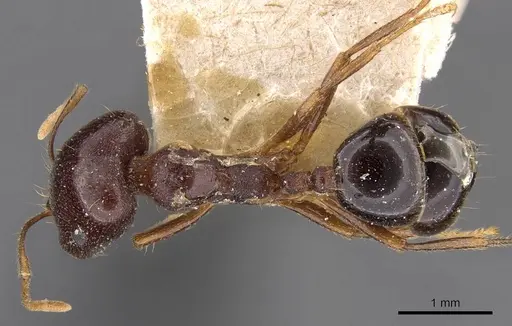
CASENT0908759
Bekijk op AntWeb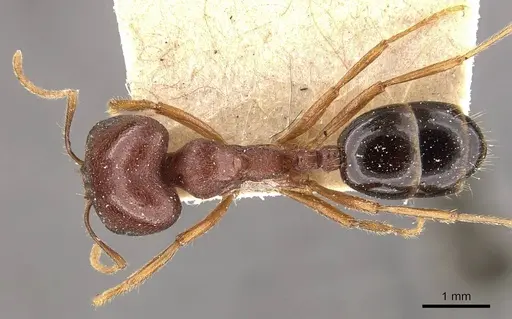
CASENT0914154
Bekijk op AntWeb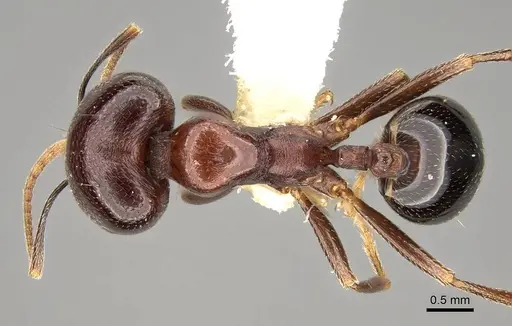
CASENT0915415
Bekijk op AntWeb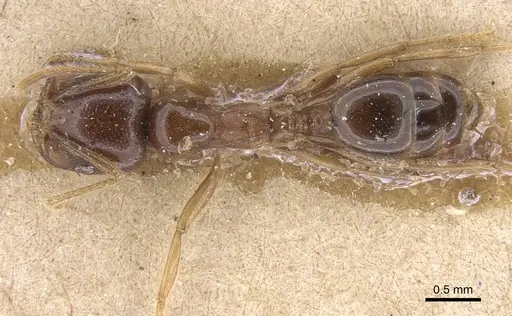
Literatuur
Verspreidingskaart laden...Producten laden...