
Tetramorium tanaense
- Wetenschappelijke naam
- Tetramorium tanaense
- Tribus
- Crematogastrini
- Subfamilie
- Myrmicinae
- Auteur
- Hita Garcia <i>et al.</i>, 2010
- Verspreiding
- Gevonden in 0 landen
Introductie
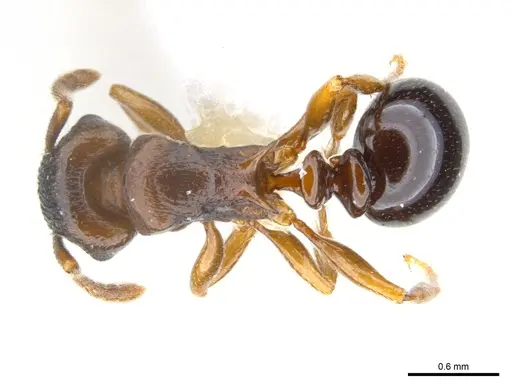
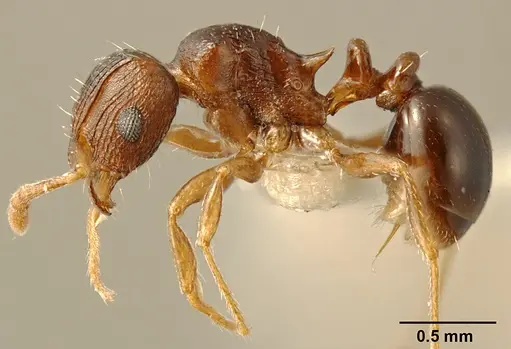
Tetramorium tanaense is a tiny African ant from the Tetramorium weitzeckeri species group. Workers are uniformly brown to dark brown, with an estimated total length of about 2.5-3 mm based on morphological measurements . This species is endemic to coastal forests of East Africa, known only from a few locations in Kenya and Tanzania, specifically the Tana River Delta, Arabuko Sokoke forest, and Ndimba Forest Reserve . What makes this species interesting is how little is known about its biology. Described in 2010,only the worker caste has been documented; no one has observed a living colony or studied its nesting, diet, or reproduction . This means keeping it in captivity would require careful experimentation. Like other members of its tribe, it likely uses a modified stinger to smear venom rather than sting [subfamily defense].
Quick Summary
- Difficulty: Unknown
- Origin & Habitat: Coastal forests of Eastern Africa, specifically Kenya and Tanzania. Found in the Tana River Delta region of coastal Kenya, Arabuko Sokoke forest, and Ndimba Forest Reserve in southeastern Tanzania near the Indian Ocean [2][1]. This is a tropical coastal habitat with warm temperatures and moderate to high humidity.
- Colony Type: Unknown, colony structure has not been documented. No data exists to confirm monogyny, polygyny, or any other social structure [1][2].
- Size & Growth:
- Queen: Not documented, no queens have been described in scientific literature [1].
- Worker: Approximately 2.5-3 mm total length (inferred from morphometric data) [1].
- Colony: Unknown, no colony size data exists.
- Growth: Unknown, development timeline has not been studied.
- Development: Unknown, no direct data. Based on typical Tetramorium patterns in tropical conditions, estimate 4-8 weeks from egg to first worker at optimal temperature, but this is a rough guess. (No biological data exists for this species. All development timelines are estimates based on related species.)
- Antkeeping:
- Temperature: Based on its coastal tropical habitat in Kenya and Tanzania [2], aim for warm conditions around 24-28 °C. A heating cable on one side of the nest can create a gradient if room temperature is below this range.
- Humidity: Coastal forest habitat suggests moderate to high humidity. Keep the nest substrate consistently moist but not waterlogged, damp to the touch with some drier areas available. The Tana River Delta region is relatively humid, so target a moist substrate.
- Diapause: Unknown, this is a tropical species from coastal Kenya/Tanzania where temperatures remain warm year-round. It likely does not require hibernation, but seasonal activity changes may occur. No research exists on overwintering behavior.
- Nesting: Natural nesting is unconfirmed, but members of the weitzeckeri group typically nest in soil or under stones in forest habitats. For captivity, a small test tube setup works for founding colonies. Once established, a small Y‑tong (AAC) or soil nest with tight chambers scaled to their tiny size is appropriate. Avoid large, open spaces.
- Behavior: Completely unstudied in captivity. Based on related Tetramorium species, they are likely ground‑dwelling foragers that hunt small prey and scavenge. Their tiny size (about 2.5-3 mm) means they are not aggressive and pose no stinging threat to humans. Escape prevention is critical, they can easily slip through small gaps. Like other Crematogastrini, they likely use a smearing defense with their venom rather than a piercing sting. Expect moderate activity, potential acceptance of small live prey and sugar sources.
- Common Issues: no biological data means all care is speculative, monitor colony behavior and adjust conditions accordingly, tiny size makes escape prevention essential, use fine mesh and tight‑fitting lids, unknown colony structure means founding behavior is unconfirmed, the queen may or may not require assistance, no documented diet acceptance, start with small live prey (fruit flies, springtails) and sugar water, observe what they accept, tropical species may be sensitive to temperature drops, keep warm and stable
Discovery and Identification
Tetramorium tanaense was described as a new species in 2010 by Hita Garcia, Fischer, and Peters, named after its type locality, the Tana River Delta in coastal Kenya [1]. It belongs to the Tetramorium weitzeckeri species group, a complex of closely related African ants that can be difficult to tell apart.
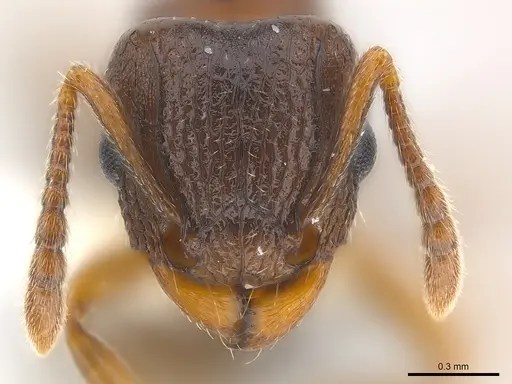
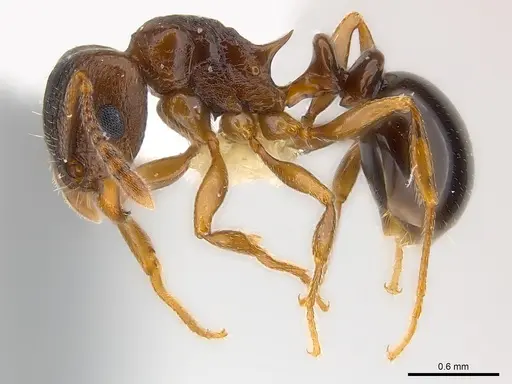
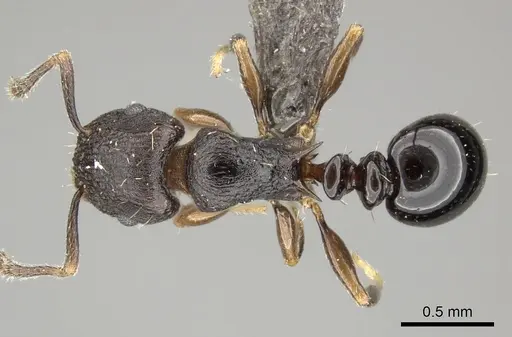
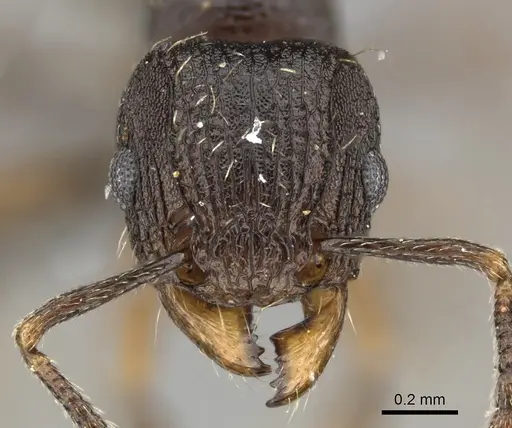
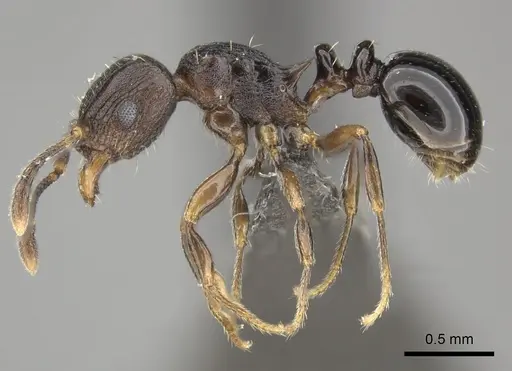
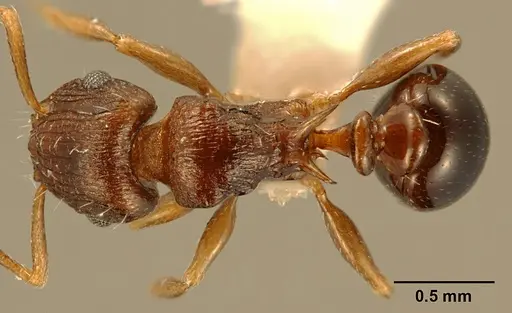
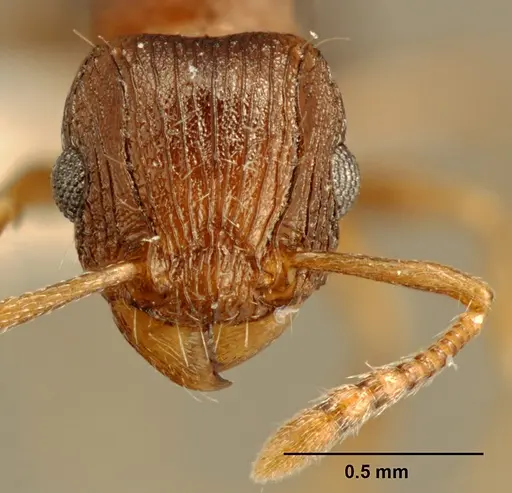
The species is identified by several key features: very long and sharp propodeal spines, moderately large eyes, and a mesosoma covered with fine longitudinal ridges with smooth, shiny surface [1]. Most distinctive is the complete absence of standing hairs on the first gastral tergite (the abdomen), which separates it from other species in the weitzeckeri complex [2]. Workers are uniformly brown to dark brown and measure around 2.5-3 mm in total length [1].
It closely resembles Tetramorium humbloti, and researchers note that more material might reveal they are actually the same species [1]. The similar Tetramorium sepultum has smaller eyes and shorter propodeal spines, while Tetramorium bendai has distinctly different sculpturing on the mesosoma [1].
Distribution and Habitat
This species has a limited distribution along the East African coast. It is known only from Kenya and Tanzania, making it an endemic species to this region [2]. The type locality is the Tana River Delta in coastal Kenya, where the original specimens were collected in 1977 near Lake Shakababo [1].
Additional records come from the Arabuko Sokoke forest on the Kenyan coast and Ndimba Forest Reserve in southeastern Tanzania, both close to the Indian Ocean [2]. These coastal forest habitats are characterized by warm temperatures year‑round and relatively high humidity. The Tana River Delta is a wetland area, suggesting this species may tolerate or prefer moist conditions.
The known range is quite restricted compared to some other Tetramorium species, which often have broader distributions. This limited distribution makes habitat conservation particularly important in the region.
What We Don't Know
Honestly, almost nothing is known about the biology of this ant. The scientific literature describes only the worker morphology, the physical appearance and measurements, with no observations of living colonies, nesting behavior, queen reproduction, colony size, diet, or any other aspect of their biology [1][2].
This is common for many African ant species, especially those described from limited specimens. The focus has been on correctly identifying and distinguishing them from related species, rather than studying their ecology. For antkeepers, this means you would essentially be a pioneer if you maintain this species.
All care recommendations must be based on inference from related species in the weitzeckeri group and general Tetramorium biology. Expect some experimentation to be necessary. The lack of data also means this species may be difficult to acquire, as it is not a commonly kept or traded species.
Housing and Setup
Given their tiny size and unknown specific requirements, start with a simple setup. A test tube setup works well for founding colonies, a small test tube with a water reservoir plugged with cotton provides appropriate humidity and a secure space for the queen and her brood.
For established colonies, use a small nest with chambers scaled to their tiny 2.5-3 mm worker size. Y‑tong (AAC) or soil nests work well. Keep chambers tight and passages narrow, these are small ants that can slip through surprisingly small gaps. Escape prevention is critical.
Place the nest in a warm area (24-28 °C) with moderate to high humidity. A small outworld for foraging allows you to offer food. Because they are so small, any gaps larger than 1 mm should be sealed. A layer of fluon or barrier tape around the edges of the outworld helps prevent escapes.
Feeding and Diet
No specific dietary data exists for this species [1]. Based on typical Tetramorium behavior, they likely are omnivorous scavengers and predators that forage on the forest floor. They probably accept small live prey like springtails, fruit flies, and other tiny insects.
Start by offering small live prey items. Because of their tiny size, even small fruit flies may need to be cut into pieces. Sugar sources like honey water or sugar water are likely accepted, offer these in a small container like a cotton ball in a bottle cap.
Feed small amounts every few days and remove uneaten prey after 24-48 hours to prevent mold. Adjust based on what the colony actually accepts. Some ant species ignore certain foods, so don't be surprised if experimental offerings are rejected.
Frequently Asked Questions
How do I care for Tetramorium tanaense ants?
Care is speculative since no biological data exists for this species [1]. Based on its coastal African habitat, provide warm temperatures (24-28 °C), moderate to high humidity, and small live prey. Start with a test tube setup for founding colonies, then move to a small Y‑tong or soil nest once established. Monitor your colony closely and adjust conditions based on their behavior and health.
What do Tetramorium tanaense eat?
Diet is unconfirmed [1]. Based on related Tetramorium species, they likely accept small live prey (springtails, fruit flies) and sugar sources (honey water, sugar water). Start with tiny prey items appropriate to their size and offer sugar water as a supplemental energy source.
How big do Tetramorium tanaense colonies get?
Unknown, no colony size data exists [1]. Most Tetramorium colonies range from dozens to a few hundred workers, but this is just an estimate. You would be contributing new knowledge to science by documenting your colony's growth.
Do Tetramorium tanaense ants sting?
These ants are tiny (2.5-3 mm) and belong to the Myrmicinae subfamily. Like other Crematogastrini, they likely use a modified stinger to smear venom rather than pierce skin. Their small size means any defensive reaction would be negligible to humans, they are not considered dangerous and pose no threat to keepers.
What temperature do Tetramorium tanaense ants need?
Based on their tropical coastal habitat in Kenya and Tanzania [2], aim for warm conditions around 24-28 °C. This is warmer than typical room temperature in many homes. Use a heating cable on one side of the nest to create a gentle gradient if needed.
Do Tetramorium tanaense need hibernation?
Unknown, this is a tropical species from coastal East Africa where temperatures remain warm year‑round [2]. It likely does not require a diapause or hibernation period. However, seasonal activity changes may occur, and you might notice reduced activity during cooler months.
How long does it take for Tetramorium tanaense eggs to become workers?
Unknown, no development data exists [1]. Based on typical Tetramorium patterns in tropical conditions, estimate roughly 4-8 weeks from egg to first worker at optimal temperature (around 26 °C). This is a rough guess since no specific research has been done on this species.
Is Tetramorium tanaense a good species for beginners?
Not recommended for beginners. This species has no documented care information, meaning you would essentially be experimenting with all aspects of its care. Additionally, it may be very difficult to acquire since it is not commonly kept or traded. Start with better‑documented species like Tetramorium caespitum or other common pet ants.
Where is Tetramorium tanaense found?
This species is endemic to the coastal forests of Kenya and Tanzania in East Africa. Known locations include the Tana River Delta in coastal Kenya, Arabuko Sokoke forest, and Ndimba Forest Reserve in southeastern Tanzania near the Indian Ocean [2][1].
Can I keep multiple Tetramorium tanaense queens together?
Unknown, colony structure has not been documented [1]. Most Tetramorium species are monogyne (single queen), but polygyny has been observed in some species. Do not attempt combining unrelated queens without specific evidence that this species tolerates it. Wait until you have an established colony before experimenting.
Report an Issue
The current care sheet is based fully on literature. See inconsistencies, or something that's incorrect? Please , it will be resolved after review from an admin. Contributing to the blogs tab also helps providing information, to make us be able to further improve the caresheets. Thank you for your support!
References

Dit verzorgingsblad is gelicentieerd onder CC BY-SA 4.0 .
Community-blogs
Literatuur
Verspreidingskaart laden...Producten laden...