
Tetramorium scabrosum
- Wetenschappelijke naam
- Tetramorium scabrosum
- Tribus
- Crematogastrini
- Subfamilie
- Myrmicinae
- Auteur
- Smith, 1859
- Verspreiding
- Gevonden in 0 landen
Introductie
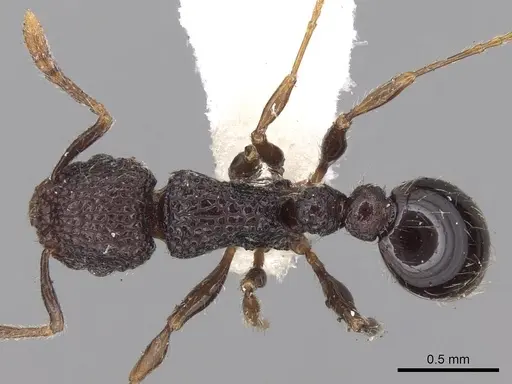
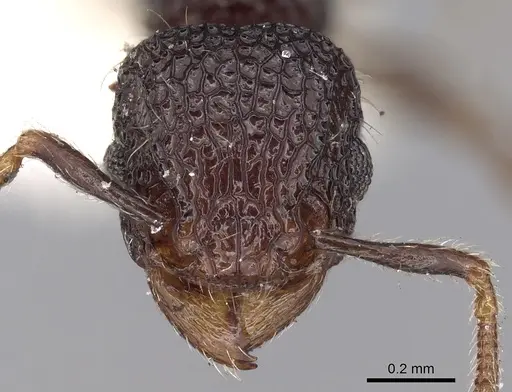
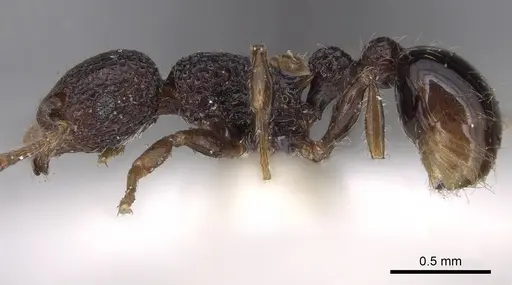
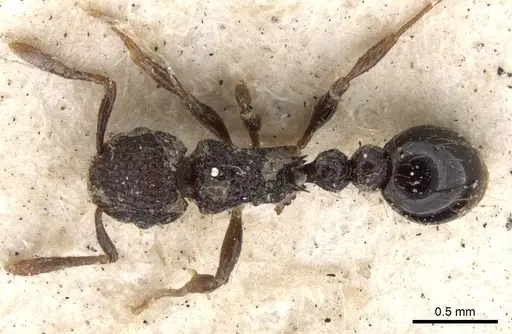
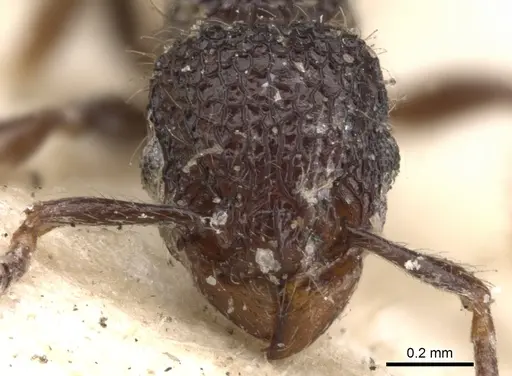
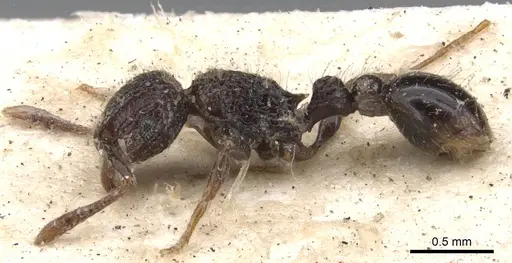
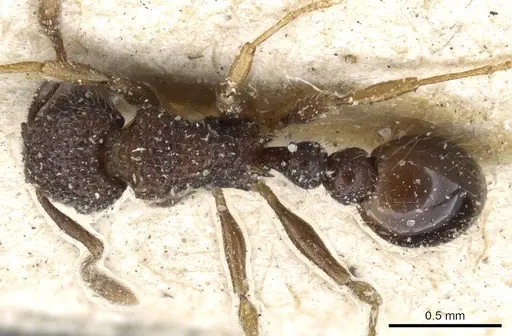
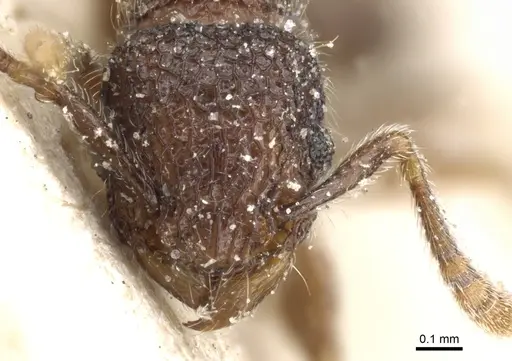
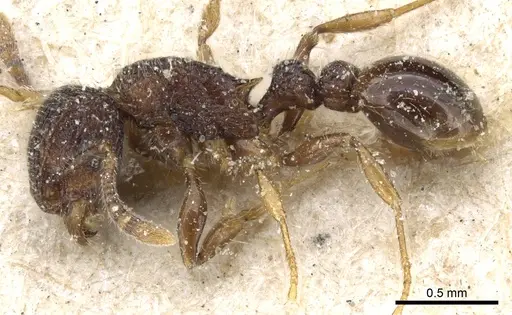
Tetramorium scabrosum is a small, dark ant species native to the Papuan region of Southeast Asia. Workers measure 2.33-2.66mm and have a dark brown to black (piceous) body with reddish-brown mandibles, antennae, and legs . Their head and thorax feature a rough, net-like sculpture pattern, while the abdomen is noticeably shinier . These ants have short metanotal spines on their rear section and rounded petiolar nodes . They are documented from New Guinea (Sorong and Yule Island), where they likely nest in soil or under stones in tropical environments . Beyond this basic morphology, very little is confirmed about their biology.
Quick Summary
- Difficulty: Easy
- Origin & Habitat: Native to the Papuan region, specifically documented in New Guinea (Sorong and Yule Island) [1]. They likely inhabit tropical environments and typically nest in soil or under stones.
- Colony Type: Not confirmed. No data on social structure is available for this species. Based on related Tetramorium species, they are probably monogyne (single queen), but this is unverified.
- Size & Growth:
- Queen: Unknown. Likely 4-6mm based on related Tetramorium species (inferred from genus).
- Worker: 2.33-2.66mm [1]
- Colony: Up to several hundred workers (estimated from genus patterns).
- Growth: Moderate (estimated)
- Development: Estimated 6-10 weeks at optimal temperature based on related Tetramorium species, but species-specific data is unconfirmed. (Development time is inferred from genus-level data. Specifics for Tetramorium scabrosum are unknown.)
- Antkeeping:
- Temperature: Likely best kept at 22-26°C, as a tropical species. Specific data missing, general Tetramorium care suggests warm conditions.
- Humidity: Moderate humidity is typical for tropical ants. Keep the nest substrate slightly moist but not waterlogged.
- Diapause: Not confirmed. As a tropical species, diapause is likely not required. They may slow down during cooler periods but should be kept active year-round.
- Nesting: Y-tong (AAC) nests with narrow chambers work well for their small size. Test tube setups are also suitable. Use fine mesh to prevent escapes.
- Behavior: Based on subfamily/tribe (Myrmicinae: Crematogastrini), their primary defense is a 'smear' mechanism using a modified flattened stinger that wipes venom onto enemies. They are generally non-aggressive and likely rely on fleeing and chemical alarms. Their small size (2-3mm) means they can escape through tiny gaps, use fine mesh barriers and tightly packed cotton in test tubes. Escape risk is high despite their docile nature.
- Common Issues: escape prevention is critical due to their tiny size, they can squeeze through standard test tube cotton if it becomes loose, colonies may decline if kept too cold, maintain warm temperatures for healthy brood development, overfeeding can lead to mold problems in nest setups, remove uneaten food promptly, wild-caught colonies may carry parasites, quarantine and monitor new colonies, test tube water reservoirs can flood if overfilled, use appropriate water chamber size
Housing and Nest Setup
For such small ants (2-3mm), Y-tong (AAC) nests with narrow chambers work excellently. The tight passages match natural tunneling behavior. Test tube setups are also suitable, use a water reservoir of appropriate size to prevent flooding. If using a naturalistic setup, provide a soil substrate that holds moisture well. Small formicariums with compact chambers are ideal. Most importantly, use extreme escape prevention: fine mesh on all openings, as these tiny ants can squeeze through gaps that seem impossible.
Feeding and Diet
Tetramorium ants are omnivorous and accept a wide variety of foods. Offer protein sources like small insects (fruit flies, pinhead crickets, mealworms), and provide sugar water or honey as an energy source. They may also collect honeydew. In captivity, a balanced diet of protein insects 2-3 times per week with constant access to sugar water works well. Remove uneaten prey after 24 hours to prevent mold. Their small size means even tiny food items are acceptable, they can tackle prey much larger than themselves through group effort.
Temperature and Care
Maintain temperatures around 22-26°C for optimal colony health and growth. As a tropical species, they do not require hibernation. Room temperature within this range is usually sufficient. If your space runs cool, a small heating cable on one side of the nest can create a beneficial gradient. Avoid placing them near drafts or air conditioning vents. Prolonged cold slows brood development significantly. Since species-specific data is scarce, these guidelines are based on general Tetramorium care.
Behavior and Temperament
These are peaceful ants that pose no threat to keepers. Workers are active foragers that search the outworld for food. Their primary defense is a 'smear' mechanism using a modified stinger that wipes venom onto enemies, but they are not known to be aggressive and will likely flee rather than fight. They communicate through chemical trails and quickly recruit nestmates to food. Their small size makes them appear delicate, but they are surprisingly resilient. They are primarily ground-dwelling and do not climb smooth surfaces well, though their tiny size allows them to find unexpected escape routes.
Colony Growth and Development
A newly mated queen likely seals herself in a claustral chamber (inferred from related species) and lays eggs after feeding on stored fat reserves. First workers (nanitics) are typically smaller than mature workers and are expected to emerge within 6-10 weeks under warm conditions. The colony grows gradually, expect the first 10-20 workers over a few months, then growth accelerates as the colony reaches several hundred workers. Brood development is temperature-dependent: warmer temperatures speed development, while cool conditions slow it significantly. Mature colonies are compact but active.
Frequently Asked Questions
Can I keep Tetramorium scabrosum in a test tube?
Yes, test tubes work well for this species. Use appropriate water chamber size to prevent flooding, and ensure the cotton is packed tightly, these tiny ants can push through loose cotton. Transfer to a larger formicarium once the colony reaches 30-50 workers.
How long until first workers appear?
Expect first workers (nanitics) in about 6-10 weeks at optimal temperature (22-26°C). This timeline is based on typical Tetramorium development patterns since species-specific data is unavailable.
Do Tetramorium scabrosum ants sting?
No, this species does not have a functional stinger for piercing. Their defense is a 'smear' mechanism using a modified stinger that wipes venom onto enemies. They are completely harmless to keepers.
What do Tetramorium scabrosum eat?
They are omnivorous. Offer small insects (fruit flies, pinhead crickets, mealworms) for protein, and sugar water or honey for energy. They will also collect honeydew if you keep aphids.
Are Tetramorium scabrosum good for beginners?
Yes, they are beginner-friendly. They are small, peaceful, and tolerate a range of conditions. The main challenge is escape prevention due to their tiny size.
Do they need hibernation?
No, as tropical ants they do not require hibernation. They may slow slightly during cooler periods but year-round active keeping at 22-26°C is appropriate.
How big do colonies get?
Based on typical Tetramorium patterns, colonies likely reach several hundred workers. They are not among the largest ant species.
When should I move them to a formicarium?
Move from test tube to formicarium once the colony reaches 30-50 workers. They do well in compact nests like Y-tong (AAC) setups scaled to their small size.
Why are my ants dying?
Common causes include: too cold temperatures (keep above 22°C), escape through tiny gaps, mold from overfeeding, or parasites from wild-caught colonies. Check temperature first, then review escape prevention.
Can I keep multiple queens together?
Not recommended. While colony structure is not fully studied, combining unrelated queens typically leads to fighting. Start with a single queen for best success.
What temperature is best?
Keep them at 22-26°C. This tropical species thrives in warm conditions. Room temperature in this range is ideal, avoid cool locations.
How often should I feed them?
Offer protein insects 2-3 times per week. Provide sugar water constantly, check and refresh every few days. Remove uneaten prey after 24 hours.
Report an Issue
The current care sheet is based fully on literature. See inconsistencies, or something that's incorrect? Please , it will be resolved after review from an admin. Contributing to the blogs tab also helps providing information, to make us be able to further improve the caresheets. Thank you for your support!
References

Dit verzorgingsblad is gelicentieerd onder CC BY-SA 4.0 .
Community-blogs
Literatuur
Verspreidingskaart laden...Producten laden...