
Tetramorium sabatinellii
- Wetenschappelijke naam
- Tetramorium sabatinellii
- Tribus
- Crematogastrini
- Subfamilie
- Myrmicinae
- Auteur
- Radchenko & Scupola, 2015
- Verspreiding
- Gevonden in 0 landen
Introductie
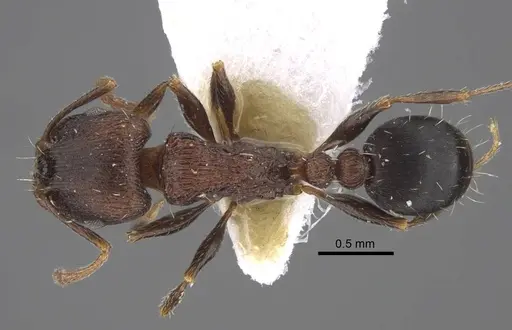
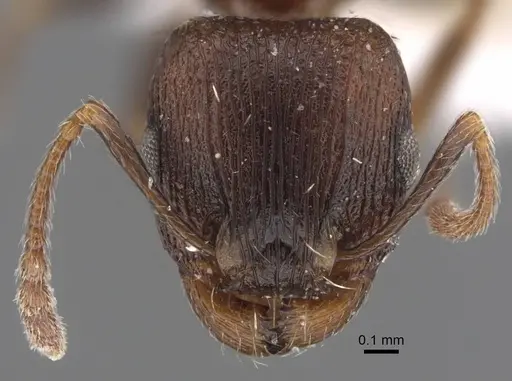
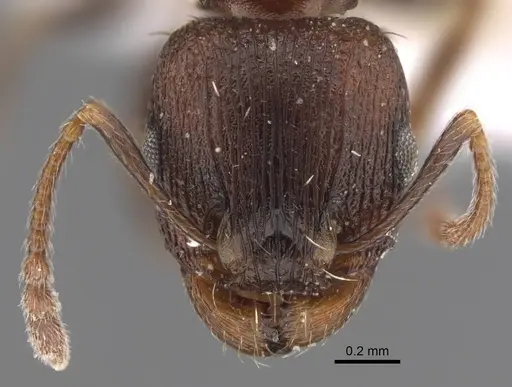
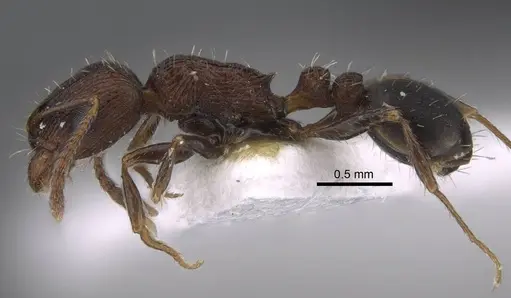
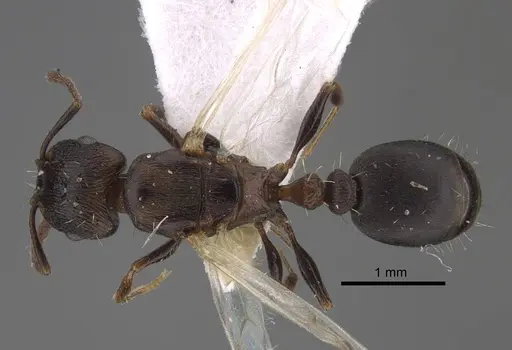
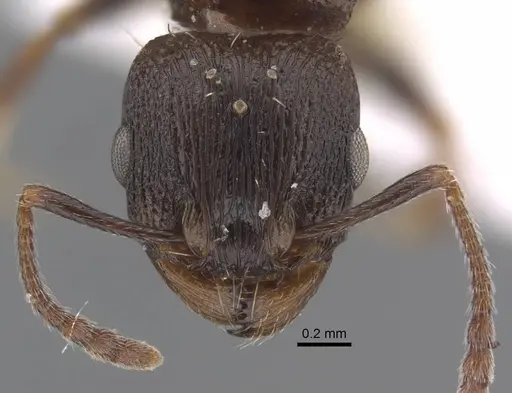
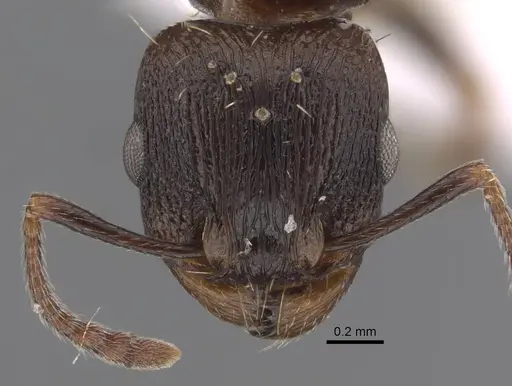
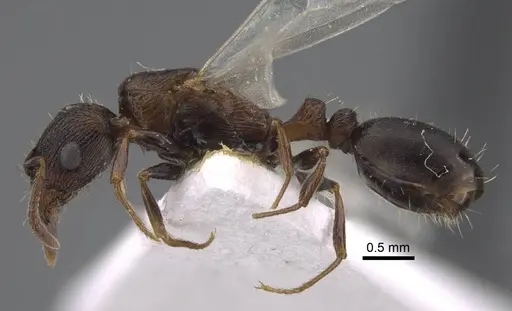
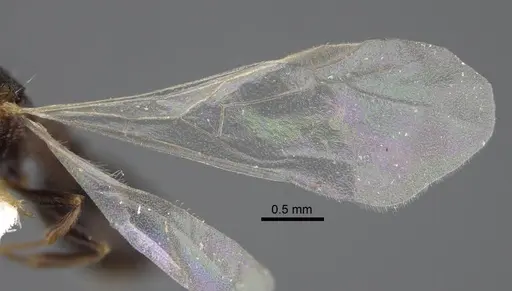
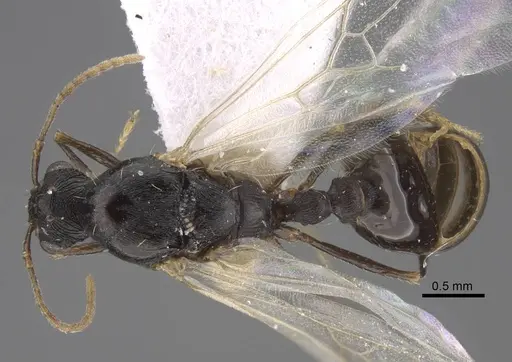
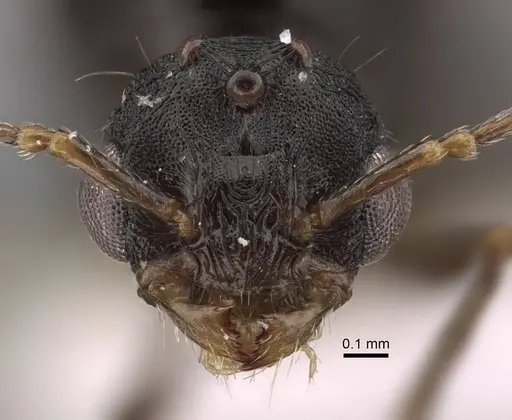
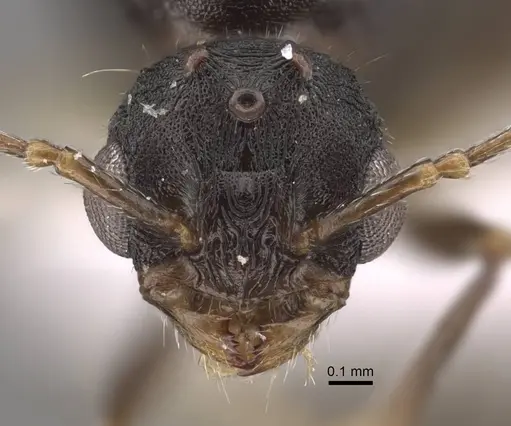
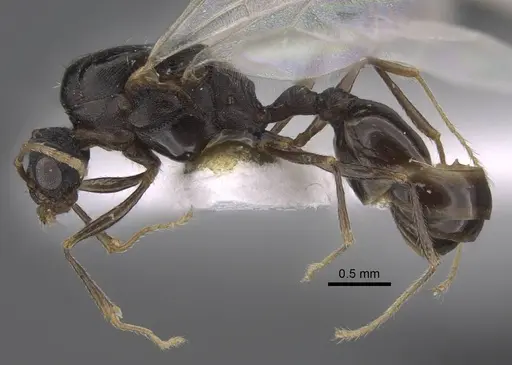
Tetramorium sabatinellii is a small ant species described from Jordan in 2015,belonging to the Tetramorium striativentre species group . Workers are very small (total length likely around 2-3 mm based on genus patterns). They have a black body with brownish mandibles and legs, and can be identified by their completely striato-punctated first gastral tergite - a feature that sets them apart from similar species like Tetramorium kabulistanicum and Tetramorium pisarskii, which only have this sculpture on the basal half . The species was discovered nesting in soil under a stone in a semi-desert area with sparse vegetation at 686 m altitude, roughly 50 km south of Amman along the road to Aqaba . This is a newly described ant known only from its type locality in Jordan, making it a rare species for ant keepers . Like most Tetramorium, it probably nests in the ground and eats a mix of proteins and sugars. Since it comes from a hot, dry region, it should prefer warmer, drier conditions than temperate ants.
Quick Summary
- Difficulty: Medium
- Origin & Habitat: Semi-desert area with sparse vegetation in Jordan,686 m altitude. Nest found in soil under a stone [1].
- Colony Type: Monogyne (single queen), inferred from typical Tetramorium genus patterns.
- Size & Growth:
- Queen: Total length unknown, based on genus Tetramorium, estimated around 3-4 mm (inferred).
- Worker: Total length unknown, based on genus Tetramorium, estimated around 2-3 mm (inferred).
- Colony: Unknown, the type series contained 44 workers,1 queen, and 1 male, but actual colony size may be larger [1].
- Growth: Moderate (estimated from genus patterns).
- Development: 6-10 weeks (estimated based on typical Tetramorium development). (Development time hasn't been studied for this species. The estimate assumes warm temperatures (24-28 °C).)
- Antkeeping:
- Temperature: Keep at 22-28 °C. As a semi-desert species, they prefer warm conditions but avoid extreme heat above 30 °C. A heating cable on one side of the nest creates a suitable gradient.
- Humidity: Low to moderate, semi-desert habitat means they prefer drier conditions. Keep the nest substrate lightly moist but allow drying between waterings. Avoid constant saturation.
- Diapause: Probably minimal or none. Given their Jordanian origin, true hibernation is unlikely. They may slow down in cooler months but can be kept at room temperature year-round.
- Nesting: Natural nesting is in soil under stones [1]. In captivity, Y-tong (AAC) or plaster nests work well. Provide a thin layer of dry to slightly damp substrate for burrowing.
- Behavior: Typical Tetramorium behavior, workers are active foragers and moderately aggressive when defending the nest. They belong to the Crematogastrini tribe, so they have a modified, flattened stinger used to smear venom onto enemies rather than piercing flesh. This species is omnivorous, accepting both protein and sugar. Escape risk is moderate due to small size, use fine mesh barriers.
- Common Issues: small size requires effective escape prevention (use fine mesh barriers)., overheating risk, semi-desert species but still need moderate temperatures, avoid extremes above 30 °C., captive care unstudied, this species has never been kept in ant farms, advice is based on genus patterns., moisture sensitivity, too much humidity may cause problems given semi-desert origin, keep substrate dryer than for rainforest species.
Origin and Natural Habitat
Tetramorium sabatinellii was discovered in Jordan, making it one of the more recently described species available to ant keepers [1]. The type locality is a semi-desert area along the Amman-Aqaba road, about 50 km south of Amman at an elevation of 686 m [1]. The nest was found in soil under a stone, which is typical for many ground-nesting Tetramorium species [1].
Jordan's climate features hot, dry summers and mild winters, with sparse vegetation in semi-desert regions. The species is known only from this single locality [2]. For captive care, replicate these conditions, warm temperatures and lower humidity than rainforest species.
Temperature and Care
As a semi-desert species from Jordan, Tetramorium sabatinellii prefers warmer temperatures than many common ant species. Keep the nest area at 22-28 °C, with a slight gradient so workers can choose their preferred zone. A heating cable on one side of the nest works well.
Avoid temperatures above 30 °C, as even heat-adapted species can suffer from overheating. Room temperature (around 22-24 °C) is usually fine. During winter, a slight temperature drop is acceptable but not required, true hibernation is unlikely given the warm origin. Monitor colony behavior and adjust if workers seem sluggish or overly clustered.
Feeding and Diet
Tetramorium species are typically omnivorous, eating both protein and carbohydrates. Offer small protein sources like fruit flies, small crickets, or tiny pieces of mealworm. Because the workers are very small, chop prey into appropriately sized bits. Provide sugar water or honey water at all times as an energy source.
Feed protein 2-3 times per week. Remove uneaten prey after 24-48 hours to prevent mold. Live prey is usually better accepted than dried options.
Nesting Preferences
In the wild, this species nests in soil under stones in semi-desert areas [1]. In captivity, mimic these conditions with a Y-tong (AAC) or plaster nest that offers both dry and slightly moist zones. Keep the substrate lightly moist but allow the surface to dry between waterings. Avoid the constant saturation used for rainforest species.
Adding a thin layer of substrate in the outworld can encourage natural foraging and digging behaviors.
Colony Structure and Development
Based on typical Tetramorium patterns, this species likely forms single-queen (monogyne) colonies [1]. The type nest series included one queen along with 44 workers and one male, suggesting an established colony [1].
Development time hasn't been studied directly. From similar Tetramorium species, egg to worker probably takes about 6-10 weeks at optimal temperatures (24-28 °C). The first workers (nanitics) will be smaller than mature workers. Colony growth is expected to be moderate, with several months needed to reach significant numbers. The maximum colony size is unknown.
Behavior and Temperament
Tetramorium sabatinellii workers are active foragers, typical of the genus. They are moderately aggressive when defending their nest but not particularly territorial away from it. Workers are small (under 3 mm total length) but numerous enough to protect the colony effectively.
As members of the Crematogastrini tribe, they have a modified, flattened stinger used to smear venom onto enemies rather than piercing flesh, a defense mechanism known as 'smearing'. Despite having a stinger, the small size means any sting to humans would be negligible. Escape risk is moderate to high due to their size, use fine mesh or talcum powder barriers at all outworld connections.
Frequently Asked Questions
How long does it take for Tetramorium sabatinellii to produce first workers?
Development time hasn't been studied for this species. Based on typical Tetramorium patterns, expect 6-10 weeks from egg to first worker at warm temperatures (24-28 °C). The first workers (nanitics) will be smaller than mature workers.
What temperature do Tetramorium sabatinellii ants need?
Keep them at 22-28 °C. Since they come from a semi-desert region in Jordan, they prefer warm conditions but avoid extreme heat above 30 °C. A heating cable on one side of the nest creates a useful gradient.
Are Tetramorium sabatinellii good for beginners?
This species is rated as medium difficulty. It is a newly described ant with no captive history, so some trial and error is expected. Their small size and specific humidity needs require attention. Beginners may want to start with better-known species first.
What do Tetramorium sabatinellii ants eat?
They are omnivorous like most Tetramorium species. Offer small protein sources (fruit flies, tiny crickets, chopped mealworms) 2-3 times per week. Keep sugar water, honey water, or similar carbohydrates available at all times. Size food appropriately for their tiny workers.
Do Tetramorium sabatinellii ants sting?
They have a modified stinger used for smearing venom (typical of the Crematogastrini tribe), not for stinging in the usual sense. Because the workers are very small (around 2-3 mm), any contact with humans would be negligible.
How big do Tetramorium sabatinellii colonies get?
Colony size has not been documented. The type series contained 44 workers,1 queen, and 1 male, but this may only represent a portion of the colony. Based on other Tetramorium species, mature colonies might reach several hundred workers, but this is speculative.
Do Tetramorium sabatinellii need hibernation?
Probably not. As a species from Jordan with a semi-desert origin, they likely do not require true hibernation. They may show reduced activity during cooler months but can be kept at room temperature year-round. Avoid sudden temperature drops.
Can I keep multiple Tetramorium sabatinellii queens together?
Not recommended. Based on typical Tetramorium colony structure, this species likely forms single-queen (monogyne) colonies. Keeping multiple unrelated queens together has not been studied and would probably result in fighting.
What humidity level do Tetramorium sabatinellii need?
Lower humidity than rainforest species, their semi-desert origin means they prefer drier conditions. Keep the nest substrate lightly moist but allow drying between waterings. Think 'damp, not wet'.
When should I move Tetramorium sabatinellii to a formicarium?
Wait until the colony has at least 20-30 workers before considering a formicarium. Test tubes are suitable for founding and small colonies. Move to a larger nest only when the colony outgrows the test tube and has a steady population.
Where is Tetramorium sabatinellii found in the wild?
Only known from Jordan, specifically 3.6 km north of Al Zumayla along the Amman-Aqaba road at 686 m elevation [1]. This is the type locality and the species has not been found elsewhere. It nests in soil under stones in semi-desert areas with sparse vegetation.
Is Tetramorium sabatinellii safe to keep in captivity?
Yes, this species is completely safe. They are not aggressive toward keepers, and their small size means any defense mechanism is negligible. They are not known to be invasive. As a newly described species, ensure your source is reputable.
Report an Issue
The current care sheet is based fully on literature. See inconsistencies, or something that's incorrect? Please , it will be resolved after review from an admin. Contributing to the blogs tab also helps providing information, to make us be able to further improve the caresheets. Thank you for your support!
References

Dit verzorgingsblad is gelicentieerd onder CC BY-SA 4.0 .
Community-blogs
Literatuur
Verspreidingskaart laden...Producten laden...