
Tetramorium mpala
- Wetenschappelijke naam
- Tetramorium mpala
- Tribus
- Crematogastrini
- Subfamilie
- Myrmicinae
- Auteur
- Hita Garcia & Fischer, 2014
- Verspreiding
- Gevonden in 1 landen
Introductie
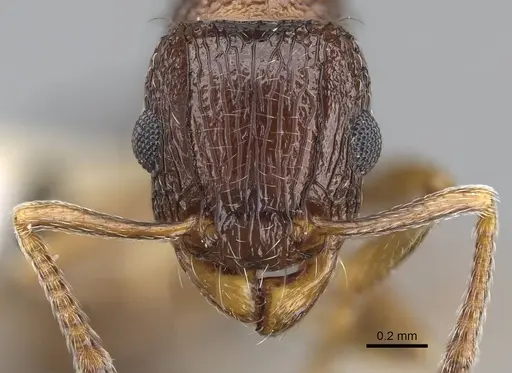
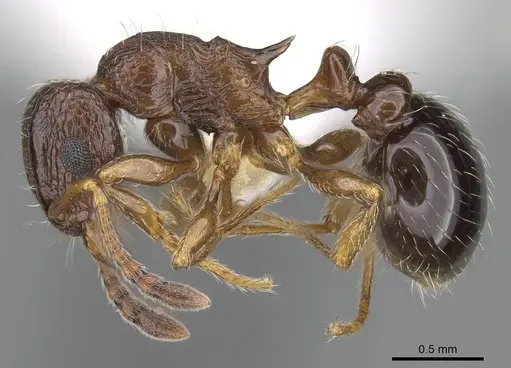
Tetramorium mpala is a small, ground-dwelling ant species known only from the Mpala Research Centre in Laikipia, central Kenya. Workers have the largest eyes of any species in the Tetramorium weitzeckeri complex, and the first segment of their gaster is covered in long, fine hairs that lie flat against the body. Their body is chestnut brown to dark brown, with the gaster noticeably darker than the rest of the body, and they have long, sharp propodeal spines. The petiolar node has a unique squamiform shape .\n\nThis species was discovered in Acacia woodland savannah at 1650 m elevation, where it forages on the ground alongside other Tetramorium species including T. edouardi, T. zonacaciae, and T. weitzeckeri . The high elevation of its habitat suggests it may prefer cooler conditions than many tropical ants.
Quick Summary
- Difficulty: Unknown, insufficient captive data
- Origin & Habitat: Mpala Research Centre, Laikipia, Kenya (0.29° S,36.9° E), elevation 1650 m in Acacia woodland savannah [1]
- Colony Type: Unknown, only worker caste has been described, colony structure unconfirmed
- Size & Growth:
- Queen: Unknown, queen caste not yet described [1]
- Worker: Size data unavailable, only morphological measurements (head length, mesosomal length) are known, not total body length [1]
- Colony: Unknown, no colony data available
- Growth: Unknown, no development data available
- Development: Unknown, development has not been studied (Based on typical Tetramorium genus patterns, expect 6-10 weeks from egg to first worker at optimal temperature, but this is a rough estimate)
- Antkeeping:
- Temperature: Based on high elevation (1650 m) habitat in central Kenya, likely prefers cooler conditions. Start around 20-24°C and observe colony activity. Avoid overheating above 28°C.
- Humidity: Acacia woodland savannah typically has moderate humidity. Keep nest substrate moderately moist but not waterlogged, with some drier areas available.
- Diapause: Unknown, no seasonal data exists. Central Kenya has mild temperatures year-round, so diapause may not be required, but if activity drops in winter a slight temperature reduction (3-5°C for 2-3 months) could be considered
- Nesting: Ground-nesting species that forages on the ground. A naturalistic setup with soil or a Y-tong/plaster nest works. Provide a connection to an outworld for foraging.
- Behavior: This is a small ground-dwelling Tetramorium species. Based on genus behavior, they are likely active foragers that search for small prey and tend honeydew-producing insects. Workers are very small (under 4 mm), so escape prevention must be excellent, they can squeeze through tiny gaps. Temperament is likely similar to other Tetramorium: generally non-aggressive but will defend the nest if threatened. Like other Myrmicinae, this species has a functional stinger, but uses a 'smear' defense: a flattened stinger wipes venom onto enemies instead of piercing.
- Common Issues: queen and colony structure completely unknown makes captive breeding very difficult, only worker caste described, no information on founding behavior or colony development, escape prevention is critical due to very small worker size, no captive husbandry data exists, experimental species with significant unknowns, co-occurs with other Tetramorium species suggesting potential competition in multi-species setups
Species Identification and Distinction
Tetramorium mpala is a member of the Tetramorium weitzeckeri species complex. This species stands out because of its very large eyes, the largest in the entire complex, while related species have much smaller eyes. The other key feature is the long, fine hairs on the first segment of the gaster (abdomen). These hairs lie flat or nearly flat against the body (subdecumbent to decumbent). Most other species in the complex either lack long hairs entirely or have hairs that stand up straight (suberect to erect) [1].\n\nThe petiolar node (the waist segment) has a unique squamiform shape, in profile it is about three times higher than it is long, giving a compressed, scale-like appearance. This differs from typical Tetramorium node shapes and was one of the reasons this species was described as new [1].
Natural Habitat and Distribution
This species is currently known only from its type locality at the Mpala Research Centre in Laikipia, central Kenya. The area sits at approximately 1650 m elevation and consists of Acacia woodland savannah, scattered Acacia trees with grass underneath. This is a relatively high-altitude location compared to many tropical ant habitats [1].\n\nAt Mpala, Tetramorium mpala co-occurs with three other Tetramorium species: T. edouardi, T. zonacaciae, and T. weitzeckeri. The holotype worker was collected while foraging on the ground in April 2001. Beyond this, very little is known about the species' natural history or behavior in the wild [1].
Housing and Nesting
Since this is a ground-dwelling species that forages on the ground, a naturalistic setup with a soil chamber works well. Keep the soil moderately moist but never waterlogged. A Y-tong (AAC) nest or plaster nest with a connection to an outworld also works. Given their very small size, ensure all connections and barriers are secure, these ants can escape through gaps that seem impossibly small.\n\nScale nest chambers appropriately for a small Tetramorium species. Provide a water tube or moisture reservoir to maintain humidity, but ensure no risk of flooding. The outworld should allow for foraging, these ants likely search for small prey items and may tend honeydew-producing insects like other Tetramorium species do.
Feeding and Diet
Based on typical Tetramorium behavior, this species likely has an omnivorous diet. They probably forage for small insects and other arthropods as protein sources, and also consume honeydew from aphids and scale insects. In captivity, offer small protein sources like fruit flies, pinhead crickets, and tiny mealworms. Provide sugar as diluted honey or sugar water, though acceptance may vary.\n\nFeed small amounts of protein two to three times per week, and provide a constant sugar source. Remove any uneaten prey after 24-48 hours to prevent mold. Since workers are very small, prey items should be appropriately sized, nothing larger than the ant's head.
Temperature and Seasonal Care
The high elevation (1650 m) of the type locality suggests this species may prefer cooler conditions than typical tropical ants. Start with temperatures in the 20-24°C range and observe colony activity. If workers consistently cluster near the heated area, you can slightly increase temperature. If they avoid heated areas, reduce temperature. Avoid temperatures above 28°C, as this species may not be adapted to extreme heat.\n\nCentral Kenya has relatively mild seasonal variation, so this species may not require a true diapause. However, if you notice reduced activity during winter months, reducing temperature slightly (by 3-5°C) for two to three months may be appropriate, but this is speculative.
Challenges and Unknowns
Tetramorium mpala presents significant challenges for antkeepers because it is one of the least studied ant species in captivity. The queen caste has never been described, so we don't know what the queen looks like or how large she is. Colony structure (monogyne vs polygyne) is completely unknown. Founding behavior, development time, and colony size estimates are all unconfirmed.\n\nThis species should be considered experimental in antkeeping. If you obtain a colony, expect a learning curve and be prepared to adapt your care based on observed behavior. Document your observations carefully, any captive husbandry data would be valuable for advancing our understanding of this species. The lack of baseline data also means there's significant risk of colony failure, especially during founding [1].
Frequently Asked Questions
How do I keep Tetramorium mpala ants?
Since this species has never been kept in captivity before, there is no established husbandry protocol. Based on its natural habitat (Acacia woodland at 1650 m elevation in Kenya), start with moderate temperatures around 20-24°C, moderately moist nest substrate, and small appropriately-sized prey. This is an experimental species, expect to adapt your care based on what you observe [1].
What do Tetramorium mpala ants eat?
Based on typical Tetramorium diet, they likely eat small insects and arthropods, plus honeydew from aphids and scale insects. Offer small protein sources like fruit flies, tiny crickets, or small mealworms. Provide sugar water or diluted honey as a constant carbohydrate source. Acceptance may vary, experiment to see what your colony prefers.
What temperature do Tetramorium mpala ants need?
Based on their high-elevation Kenyan habitat, they likely prefer cooler conditions than typical tropical ants. Start around 20-24°C and adjust based on colony behavior. Avoid temperatures above 28°C. If workers cluster near heat sources, increase slightly, if they avoid heated areas, reduce temperature [1].
How big do Tetramorium mpala colonies get?
Unknown, colony size has not been documented. Most Tetramorium species form colonies of several hundred to a few thousand workers, but without data on this specific species, we cannot make reliable estimates [1].
Do Tetramorium mpala ants need hibernation?
Unknown, no seasonal data exists. Central Kenya has mild temperatures year-round, so a true diapause may not be required. If you notice reduced activity in winter, a slight temperature reduction (3-5°C for 2-3 months) may be appropriate, but this is speculative [1].
Are Tetramorium mpala ants good for beginners?
No, this species is not recommended for beginners. The queen has never been described, colony structure is unknown, and no captive husbandry data exists. This is an experimental species with significant unknowns that make successful captivity challenging even for experienced keepers [1].
Can I keep multiple Tetramorium mpala queens together?
Unknown, colony structure (monogyne/polygyne) has not been documented for this species. Without knowing whether they naturally form single-queen or multi-queen colonies, combining unrelated queens is not recommended [1].
How long does it take for Tetramorium mpala to develop from egg to worker?
Unknown, development has not been studied. Based on typical Tetramorium genus patterns, expect approximately 6-10 weeks from egg to first worker at optimal temperature, but this is a rough estimate with low confidence.
Do Tetramorium mpala ants sting?
Tetramorium belongs to the Myrmicinae subfamily, which includes species with functional stingers. However, Tetramorium ants are generally not aggressive and rarely sting. Their small size also means any sting would be very mild. This species uses a 'smear' defense: a flattened stinger wipes venom onto enemies rather than stinging.
Why is Tetramorium mpala so hard to find?
This species is only known from a single location, the Mpala Research Centre in Kenya. It was described in 2014 and remains one of the rarest ant species in the hobby. No wild colonies have been exported, and no captive breeding has been established. Any specimens would be extremely rare [1].
What makes Tetramorium mpala different from other Tetramorium?
Tetramorium mpala has the largest eyes of any species in the Tetramorium weitzeckeri species complex, nearly double the eye size of most related species. It also has distinctive long, fine hairs lying flat against its gaster. These features make it easily distinguishable under magnification [1].
Report an Issue
The current care sheet is based fully on literature. See inconsistencies, or something that's incorrect? Please , it will be resolved after review from an admin. Contributing to the blogs tab also helps providing information, to make us be able to further improve the caresheets. Thank you for your support!
References

Dit verzorgingsblad is gelicentieerd onder CC BY-SA 4.0 .
Community-blogs
CASENT0247445
Bekijk op AntWeb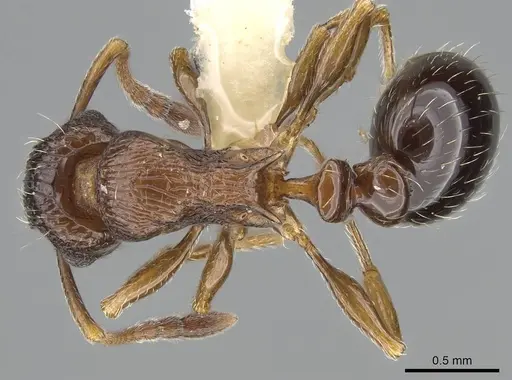
Literatuur
Verspreidingskaart laden...Producten laden...