
Terataner steinheili
- Wetenschappelijke naam
- Terataner steinheili
- Tribus
- Crematogastrini
- Subfamilie
- Myrmicinae
- Auteur
- Forel, 1895
- Verspreiding
- Gevonden in 1 landen
Introductie
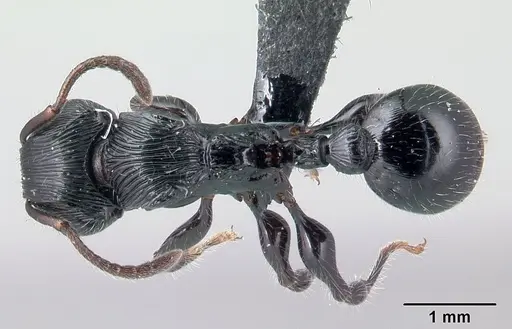
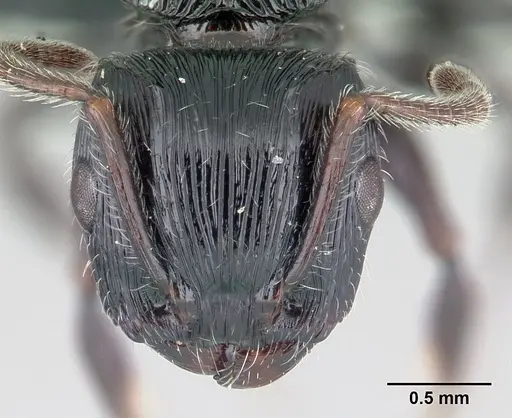
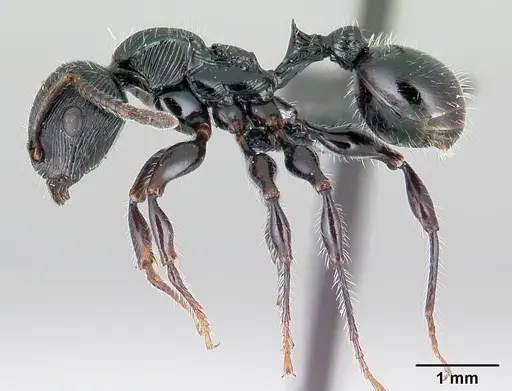
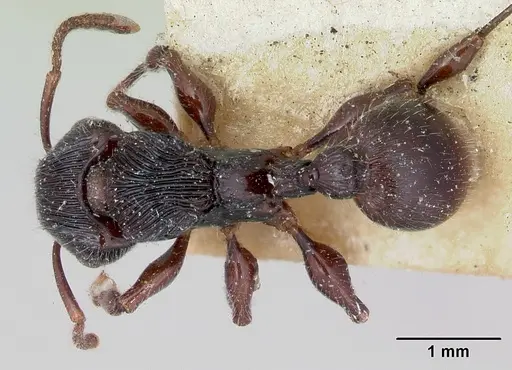
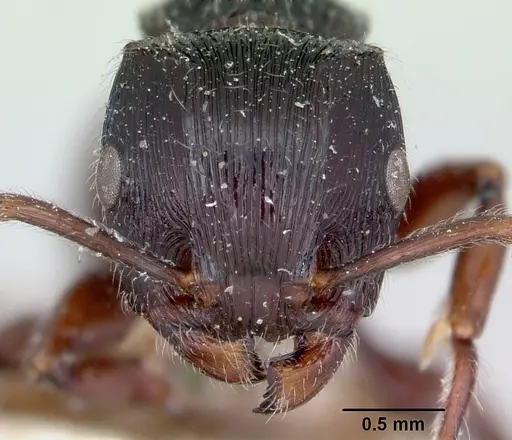
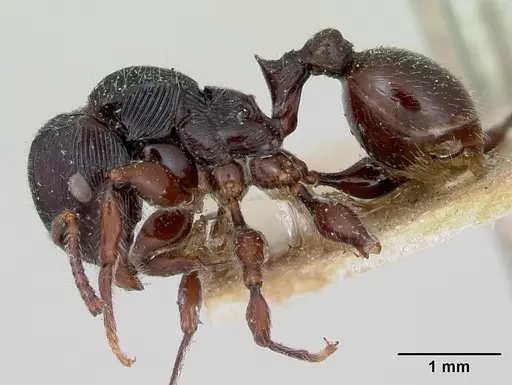
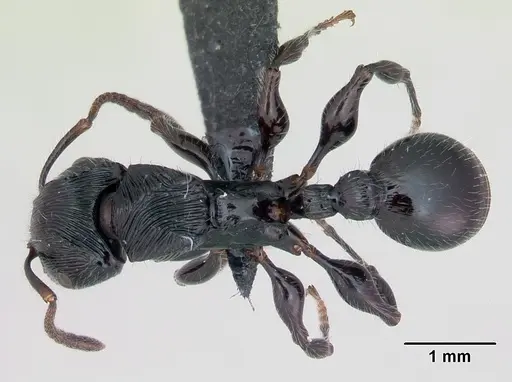
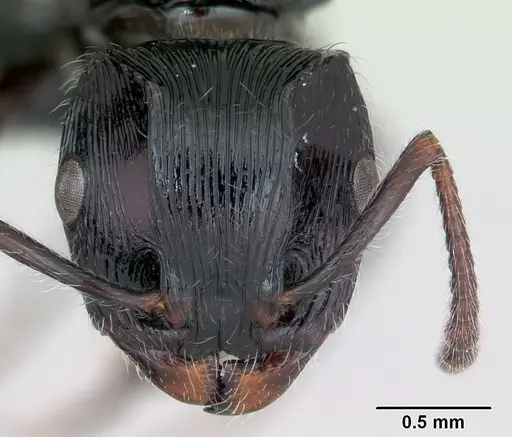
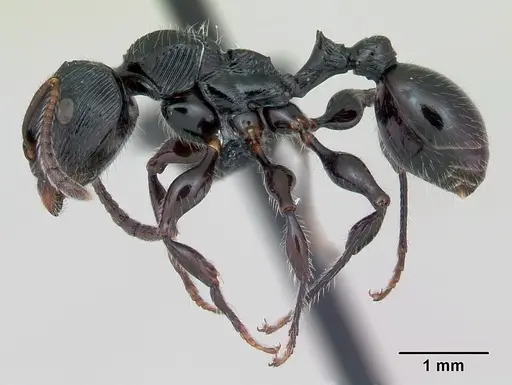
Terataner steinheili is a Myrmicinae ant from Madagascar. Workers have a distinctly rounded postpetiole (the segment behind the waist) and diagonal ridges on the side of the pronotum. The metanotal groove is visible but not deeply impressed . This species was first described in 1895 as Atopomyrmex steinheili before being moved to the genus Terataner in 1912 . It's found only in central and eastern parts of Madagascar . These ants live in tropical forest environments, likely nesting in rotting wood or soil cavities. This species belongs to tribe Crematogastrini, which uses a 'smear' defense - a modified flattened stinger that wipes venom onto attackers rather than piercing them. This is unusual among ants and makes them interesting to observe. Very little is known about their biology in the wild or in captivity, so keeping them requires patience and a willingness to experiment.
Quick Summary
- Difficulty: Expert
- Origin & Habitat: Endemic to Madagascar, recorded from central and eastern parts of the island [1][2]. Inhabits tropical forest environments with warm, humid conditions.
- Colony Type: Colony structure is unconfirmed. Based on typical Myrmicinae patterns, likely forms single-queen (monogyne) colonies, but this has not been documented.
- Size & Growth:
- Queen: size data unavailable, no body measurements have been published for this species
- Worker: size data unavailable, no body measurements have been published for this species
- Colony: Unknown, no research data exists on maximum colony size
- Growth: Unknown, growth rate has not been documented
- Development: Estimated 6-10 weeks based on typical Myrmicinae development at tropical temperatures (Development timeline is inferred from related genera, no species-specific data exists)
- Antkeeping:
- Temperature: Keep at 24-28°C. Madagascar's tropical climate means these ants need consistent warmth. A heating cable on one side of the nest creates a gradient, letting the colony self-regulate. Avoid temperatures below 20°C.
- Humidity: High humidity is essential, aim for a damp forest floor feel. Keep the nest substrate consistently moist but not waterlogged. Provide a water tube for drinking. Good ventilation is needed to prevent mold.
- Diapause: Unlikely, as a tropical species from Madagascar, they probably do not require a true diapause. A slight reduction in temperature during cooler months (to 20-22°C) may be natural but is not necessary.
- Nesting: In the wild they likely nest in rotting wood or soil cavities. In captivity, use a Y-tong (AAC) or plaster nest that holds moisture well. Avoid completely dry setups.
- Behavior: Behavior is not well documented. Based on tribe patterns, they belong to Crematogastrini and use a 'smear' defense mechanism: a modified spatulate stinger that applies venom topically (not piercing). This is unlikely to be dangerous to humans but is unusual. They probably have a moderate temperament, not especially aggressive but capable of defending the colony. Foraging likely includes small insects and honeydew. Escape risk is moderate for their size, use standard barriers like fluon or oil.
- Common Issues: this species is extremely rare in the antkeeping hobby, finding a colony will be very difficult, no captive breeding data exists, making successful husbandry a challenge even for experienced keepers, high humidity needs can lead to mold problems if ventilation is inadequate, temperature must be consistently warm, cold spells can halt brood development or kill the colony, diet preferences are unknown, you may need to experiment with various protein sources, defense mechanism is unusual but not typically dangerous to humans
Distribution and Natural Habitat
Terataner steinheili is endemic to Madagascar, found only in central and eastern parts of the island [1][2]. Madagascar has a tropical climate with warm temperatures year-round and distinct wet and dry seasons. Eastern Madagascar receives heavy rainfall from trade winds, creating humid forest habitats. These ants likely live on the forest floor or in rotting wood in these environments. In captivity, you need to replicate these conditions: warm temperatures (24-28°C) and high humidity. A naturalistic setup with moisture-retaining substrate works well.
Nest Preferences and Housing
In the wild, Terataner species likely nest in rotting wood or soil cavities, common nesting sites for forest-dwelling Myrmicinae. For captivity, a Y-tong (AAC) nest or plaster nest provides good moisture retention while allowing you to observe the colony. The nest should be kept humid but with adequate ventilation to prevent mold. A test tube setup can work for founding colonies but may need to be upgraded as the colony grows. Because this species is not well-documented, start with standard Myrmicinae housing and adjust based on colony behavior. If workers cluster near moisture, increase humidity, if they avoid certain areas, reduce it.
Feeding and Diet
Diet has not been documented for this species. Based on typical Myrmicinae behavior, they likely accept protein sources like small insects (fruit flies, pinhead crickets, mealworms) and may also tend aphids for honeydew. Offer sugar water or honey as an energy source. Start with small prey items and observe acceptance. Remove uneaten prey after 24-48 hours to prevent mold. Since this species is poorly known, be prepared to experiment with different food types. Fresh water should always be available.
Temperature and Seasonal Care
As a tropical species from Madagascar, Terataner steinheili requires warm conditions. Maintain temperatures between 24-28°C for optimal brood development. A heating cable placed on one side of the nest creates a temperature gradient, allowing the ants to regulate their own exposure. Unlike temperate species, these ants likely do not require a true diapause period. However, a slight seasonal temperature variation may be natural, you could reduce temperatures by a few degrees during the cooler months (to around 20-22°C) but maintain activity year-round. Avoid temperatures below 20°C for extended periods.
Defense Mechanism
Terataner steinheili belongs to the tribe Crematogastrini, known for a unique 'smear' defense. Instead of piercing with a stinger, these ants have a modified, flattened spatulate stinger that wipes or smears venom onto attackers. This venom is applied topically and may deter predators by creating an irritating or sticky coating. In captivity, this behavior is rarely observed but worth noting, it is not typically dangerous to humans, though direct handling should be avoided.
Colony Development and Growth
No specific data exists for this species' development timeline. Based on typical Myrmicinae patterns, expect 6-10 weeks from egg to first worker at optimal temperatures (around 26°C). The first workers (nanitics) will likely be smaller than mature workers. Colony growth rate is unknown but is probably moderate, not as fast as some tropical pioneers but faster than slow-growing desert species. Patience is essential, especially since this species is rarely kept and documented growth data does not exist. Monitor brood development and adjust temperature and feeding to optimize colony health.
Frequently Asked Questions
How do I care for Terataner steinheili ants?
This is an expert-level species due to limited documentation. Provide warm temperatures (24-28°C), high humidity, and protein-rich foods. Use a moisture-retaining nest like Y-tong or plaster. Start with small prey and sugar sources, adjusting based on acceptance. This species is rarely available in the hobby and requires experience with exotic tropical ants.
What do Terataner steinheili ants eat?
Diet is not documented, but likely accepts small insects (fruit flies, pinhead crickets, mealworms) and sugar sources (honey water, sugar water). Start with varied offerings and remove uneaten food after 24 hours. Fresh water must always be available.
What temperature do Terataner steinheili ants need?
Keep them warm at 24-28°C. Madagascar is tropical, so these ants expect consistent warmth year-round. A heating cable on part of the nest creates a gradient. Avoid temperatures below 20°C.
Do Terataner steinheili ants need hibernation?
Unlikely, as a tropical species from Madagascar, they probably do not require a true diapause. A slight temperature reduction during cooler months (to around 20-22°C) may be natural but is not required.
How big do Terataner steinheili colonies get?
Colony size is unknown, no research data exists on maximum colony size for this species. There are no documented observations of wild colony sizes.
Can I keep multiple Terataner steinheili queens together?
Colony structure is unconfirmed. Based on typical Myrmicinae patterns, they likely form single-queen colonies. Combining unrelated queens is not recommended without documented evidence of polygyny in this species.
How long does it take for Terataner steinheili to raise first workers?
Estimated 6-10 weeks from egg to first worker at optimal temperature (around 26°C), based on typical Myrmicinae development. No species-specific data exists.
Where is Terataner steinheili found?
This species is endemic to Madagascar, found only in central and eastern parts of the island [1][2]. It cannot be found anywhere else in the world.
Are Terataner steinheili ants aggressive?
Temperament is not documented. Based on tribe patterns (Crematogastrini), they have a smear defense mechanism rather than typical stinging. They likely have a moderate temperament, not particularly aggressive but capable of defending the colony. Standard observation protocols apply.
Is Terataner steinheili suitable for beginners?
No, this is an expert-level species. It is rarely available in the antkeeping hobby, has no captive breeding documentation, and requires specific tropical conditions (warmth, high humidity) that must be carefully maintained. Experience with exotic species is recommended.
Report an Issue
The current care sheet is based fully on literature. See inconsistencies, or something that's incorrect? Please , it will be resolved after review from an admin. Contributing to the blogs tab also helps providing information, to make us be able to further improve the caresheets. Thank you for your support!
References

Dit verzorgingsblad is gelicentieerd onder CC BY-SA 4.0 .
Community-blogs
Literatuur
Verspreidingskaart laden...Producten laden...