
Temnothorax melleus
- Wetenschappelijke naam
- Temnothorax melleus
- Tribus
- Crematogastrini
- Subfamilie
- Myrmicinae
- Auteur
- Forel, 1904
- Verspreiding
- Gevonden in 0 landen
Introductie
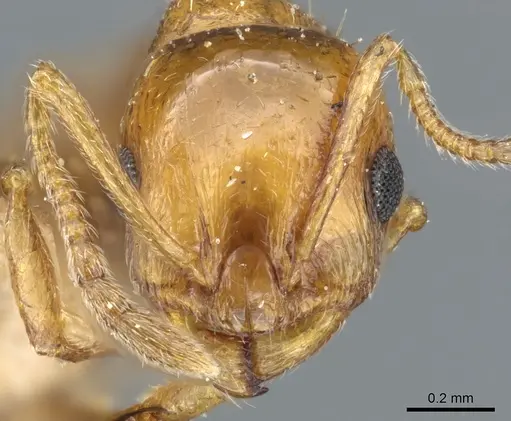
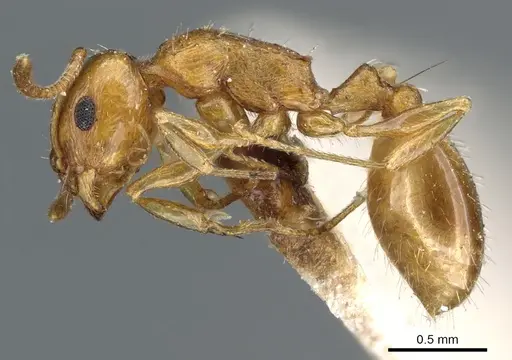
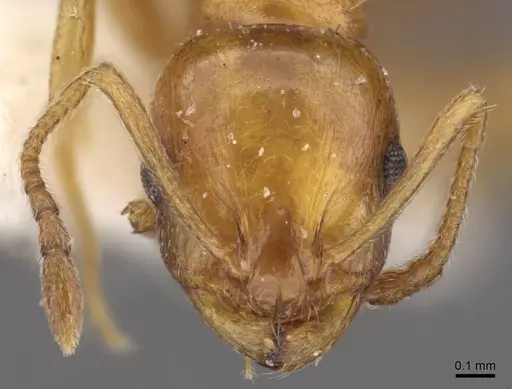
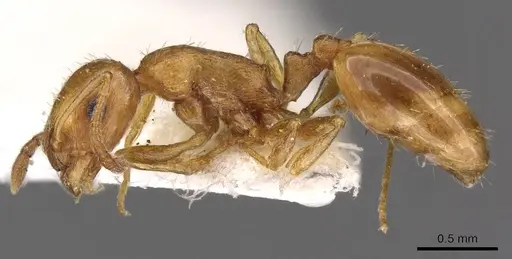
Temnothorax melleus is a small myrmicine ant from Central Asia, recorded in Kazakhstan, Kyrgyzstan, Mongolia, Turkmenistan, and Uzbekistan . It was originally described as Leptothorax bulgaricus var. melleus by Forel in 1904 and later raised to full species . This ant lives in forest steppe habitats in the Mongolian Altai region at elevations around 1600 m . It is rare and restricted to a single phytogeographical region . Exact worker and queen sizes have not been measured for this species - based on typical Temnothorax, workers are likely 2-4 mm and queens 3-5 mm. Their color is typical dark brown to black for the genus.
Quick Summary
- Difficulty: Medium
- Origin & Habitat: Central Asia, found in Kazakhstan, Kyrgyzstan, Mongolia, Turkmenistan, Uzbekistan. Lives in forest steppe of the Mongolian Altai region, often at 1600 m elevation [2][3][4].
- Colony Type: Likely monogyne (single queen) based on typical Temnothorax colony structure, but not directly documented for this species.
- Size & Growth:
- Queen: ~3-5 mm, inferred from Temnothorax genus
- Worker: ~2-4 mm, inferred from Temnothorax genus
- Colony: Unknown, typical Temnothorax reach up to 200 workers, very little recorded for this species
- Growth: Moderate (inferred from genus)
- Development: Estimated 6-10 weeks at 20-22°C based on typical Temnothorax development (Direct observations for this species are unavailable)
- Antkeeping:
- Temperature: Based on its cool forest steppe origin, keep at room temperature 18-22°C. A slight temperature gradient can help. Do not exceed 25°C for long periods [2][3].
- Humidity: Provide a humidity gradient: a dry section in the nest and one area with slightly moist substrate. Forest steppe is not wet, avoid waterlogging.
- Diapause: Yes, needs a winter diapause. Reduce to 5-10°C for 3-4 months. This is essential for colony health because native winters are cold [2][3][4].
- Nesting: Y-tong (AAC) nests or test tubes with small chambers work well. Keep chambers tight, these tiny ants like narrow spaces. Provide an outworld with fine mesh for ventilation.
- Behavior: Peaceful and shy. Workers flee rather than fight. As a member of tribe Crematogastrini, they use a modified spatulate stinger to smear venom on enemies, not pierce. This venom is not dangerous to humans. Escape risk is high due to tiny size, use fine mesh on all openings.
- Common Issues: tiny size makes escape prevention critical, they can slip through standard barrier gaps, poorly documented species, most care advice is inferred from the genus, winter diapause must not be skipped, beginners often overlook this and colonies weaken, small young colonies are sensitive to disturbance during founding, wild caught colonies may carry parasites, quarantine and observe before mixing with others
Temperature and Care
Temnothorax melleus lives in cool forest steppe of Central Asia, so you should keep your colony at room temperature, 18-22°C is ideal [2][3]. These ants don't need extra heating, too much heat can stress them. You can offer a small warm spot (up to 24°C) on one side of the nest, creating a gradient so workers can choose what they prefer. During winter, give the colony a proper diapause: lower the temperature to 5-10°C for 3-4 months. This is important because they evolved in a harsh continental climate. Without cooling, the colony may weaken and not reproduce well [4].
Housing and Nesting
Because these ants are very small, choose a nest with tight chambers. Y-tong (AAC) blocks with 1-2 mm wide chambers work great. Test tubes are fine for founding colonies. Connect the nest to an outworld using tubing with secure seals, even a tiny gap is an escape route. Use very fine mesh (like 0.5 mm) on any ventilation holes. Keep the nest area dark, Temnothorax species prefer dark nesting sites. A water reservoir in the nest, separated by a cotton wick, provides humidity without flooding the chambers. [1]
Feeding and Diet
Like other Temnothorax, T. melleus is omnivorous. Offer small protein prey such as fruit flies, pinhead crickets, or pieces of mealworm 2-3 times per week. Also provide sugar water or honey water once or twice a week. For a founding queen, give tiny prey items (e.g., half a fruit fly) once every few days. Remove uneaten prey after 24 hours to prevent mold. As the colony grows, increase food size. A mature colony can handle larger prey, but always gauge their appetite, overfeeding can lead to mold.
Colony Development
A mature Temnothorax melleus colony is small, likely under 200 workers [4]. Growth is moderate: expect a single founding queen to produce her first workers in about 6-10 weeks. The founding stage is critical, do not disturb the queen once she is sealed in her chamber. She will raise the first brood on her own metabolic reserves. After the first workers (nanitics) appear, start offering small prey. The colony will grow slowly in the first year, increasing in each subsequent year. Patience is needed, they don't boom like some larger species.
Seasonal Care and Overwintering
Since Temnothorax melleus comes from a region with cold winters, you must simulate a proper diapause. In late autumn, gradually reduce feeding and lower the temperature. Move the colony to an unheated space (e.g., a basement or a fridge at 5-10°C) for 3-4 months. Check the water supply occasionally, but do not feed, the ants will be dormant. In spring, slowly warm them back to room temperature over 1-2 weeks. Within a few weeks the queen will start laying again [2][3][4].
Behavior and Temperament
These ants are shy and non‑aggressive. Their main defense is to smear venom using a modified spatulate stinger, typical of tribe Crematogastrini. They do not sting in the usual sense, and the venom is not harmful to people. Workers are quick to flee and rarely fight back. Because they're so tiny, they can squeeze through almost any gap, always use fine mesh barriers and check all seals. Early colonies are very sensitive to disturbance, keep inspections minimal until you have 20-30 workers.
Frequently Asked Questions
How long until first workers appear?
Based on typical Temnothorax development, expect first workers after 6-10 weeks at 20-22°C. This is an estimate, direct data for T. melleus is lacking.
Do Temnothorax melleus sting?
They can't sting in the normal sense. Instead, they smear a venom using a flattened stinger. This is harmless to humans.
What size colony does this species reach?
Probably under 200 workers, that's normal for the genus. Nothing is published for this exact species [4].
Can I keep multiple queens together?
It's unknown. Most Temnothorax are monogyne. It's safest to house queens separately.
Do they need hibernation?
Yes, they need a winter diapause. Cool them to 5-10°C for 3-4 months. This is essential for long‑term health [2][3][4].
What do they eat?
Offer small insects (fruit flies, micro crickets) and sugar water. Feed protein 2-3 times per week, sugar once or twice.
Are they good for beginners?
Medium difficulty. Their care is straightforward but tiny size and need for hibernation makes them a bit harder than robust species. Beginners who pay attention can keep them.
When should I move them to a formicarium?
You can keep them in a test tube until they have 30-50 workers. Then move to a Y‑tong nest with small chambers. Do it when the test tube water runs out.
Why are my ants dying?
Most common: no hibernation, overheating, too much moisture, or parasites from wild‑caught colonies. Check temperature and humidity first.
What temperature should I keep them at?
Room temperature 18-22°C works fine. They don't need extra heat [2][3].
Report an Issue
The current care sheet is based fully on literature. See inconsistencies, or something that's incorrect? Please , it will be resolved after review from an admin. Contributing to the blogs tab also helps providing information, to make us be able to further improve the caresheets. Thank you for your support!
References

Dit verzorgingsblad is gelicentieerd onder CC BY-SA 4.0 .
Community-blogs
CASENT0904746
Bekijk op AntWeb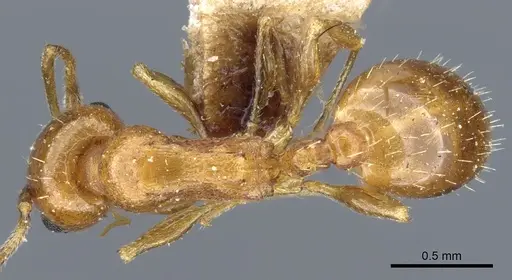
CASENT0909015
Bekijk op AntWeb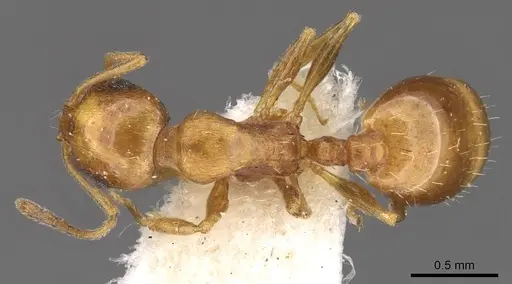
Literatuur
Verspreidingskaart laden...Producten laden...