
Temnothorax iris
- Wetenschappelijke naam
- Temnothorax iris
- Tribus
- Crematogastrini
- Subfamilie
- Myrmicinae
- Auteur
- Roger, 1863
- Verspreiding
- Gevonden in 0 landen
Introductie
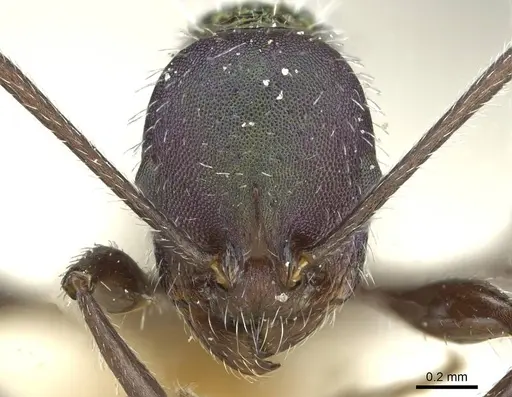
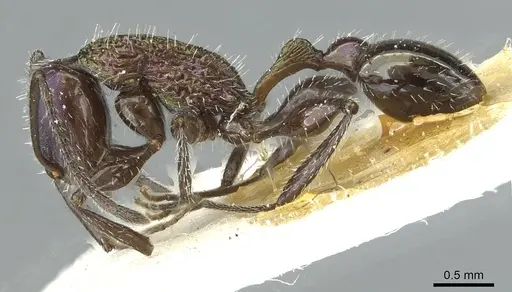
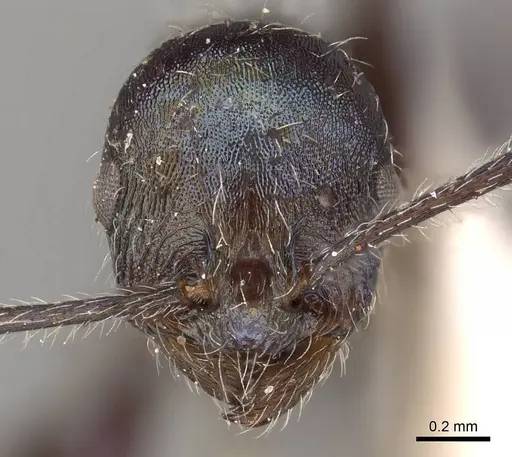
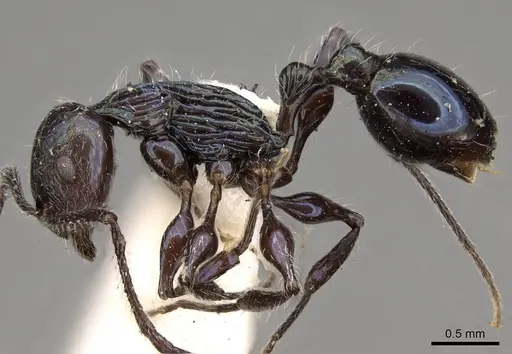
Temnothorax iris is a small Caribbean ant species native to Cuba . Workers are tiny, typically measuring 2-3 mm, with the genus known for their delicate build and slender appearance. The species was originally described as *Macromischa iris* in 1863 before being reclassified into *Temnothorax* . These ants are part of a group of Caribbean species that have adapted to tropical forest environments, likely nesting in small cavities such as rotting wood, under bark, or in rock crevices. As with other *Temnothorax* species, they form relatively small colonies with typically a single queen, and they are generally peaceful ants that prefer to avoid confrontation rather than engage in aggressive territorial behavior.
Quick Summary
- Difficulty: Medium
- Origin & Habitat: Cuba [1], these ants inhabit tropical forest environments, where they nest in small cavities within rotting wood, under loose bark, or in rock crevices. They prefer humid microhabitats with stable temperatures.
- Colony Type: Likely monogyne (single‑queen colonies) based on typical genus patterns. Many *Temnothorax* species have ergatoid (wingless) replacement reproductives that can take over if the primary queen dies.
- Size & Growth:
- Queen: Estimated 4-5 mm based on typical *Temnothorax* queen sizes
- Worker: Estimated 2-3 mm based on typical *Temnothorax* worker sizes
- Colony: Up to 300 workers (estimated based on genus patterns)
- Growth: Moderate
- Development: Estimated 6-10 weeks at optimal temperature (Development time depends strongly on temperature, warmer conditions within safe ranges typically speed it up.)
- Antkeeping:
- Temperature: Keep around 22-26°C. As a Caribbean species, they prefer warmth but tolerate typical room temperature. Avoid prolonged temperatures below 18°C or above 30°C.
- Humidity: High humidity (aim for 60-80%) is important. The nest substrate should remain consistently moist but not waterlogged, matching their natural damp forest floor habitat.
- Diapause: Likely no true diapause needed, they are a tropical species and do not experience cold winters. You may see slightly reduced activity during cooler periods, but they remain active year‑round.
- Nesting: Use a small nest with tight chambers scaled to their tiny size. Y‑tong (AAC) nests, plaster nests, or test tubes with a water reservoir work well. They prefer dark, humid chambers.
- Behavior: These ants are peaceful and tend to flee rather than fight. They have a modified stinger used to smear venom (not to sting), so they are harmless to humans. Escape prevention is critical due to their very small size, they can squeeze through gaps under 1 mm. Use fine mesh on ventilation and seal all connections tightly.
- Common Issues: escape prevention is difficult, their tiny size lets them slip through seemingly impossible gaps., humid conditions can lead to mold if ventilation is poor., colonies grow slowly, which may test a beginner's patience., wild‑caught colonies may carry mites or other parasites., overfilling water reservoirs in test tubes can flood the nest.
Housing and Nest Setup
For such tiny ants, housing must be scaled down and escape‑proof. A test tube with a water reservoir works well for founding colonies, use a small tube, a cotton plug at one end holding water, and cover the rear to keep it dark. For growing colonies, Y‑tong (AAC) or plaster nests with small chambers are ideal. Avoid oversized chambers, ants feel exposed if the space is too large. Keep the nest dark, and seal all connections with fine mesh to prevent escapes. A small outworld provides foraging space.
Feeding and Diet
Like most Temnothorax, these ants are omnivorous. Offer small protein sources such as fruit flies, pinhead crickets, or tiny pieces of mealworm. They also accept sugar sources like diluted honey or sugar water, though they may not show strong interest. Feed small amounts every few days and remove leftovers promptly to prevent mold. Freshly killed insects are usually preferred over live prey.
Temperature and Seasonal Care
Aim for a stable 22-26°C. Room temperature is often suitable, but monitor during cooler months. They do not require hibernation, but you may notice less activity during winter. Avoid placing the nest near air conditioning vents or drafts. If your home gets below 18°C, use a small heating mat on one side of the nest to create a gentle gradient. Never expose them to direct sunlight, which can cause overheating and drying.
Colony Growth and Development
Colony growth is moderate but steady. A newly mated queen will raise the first nanitic workers from her own reserves. Expect 6-10 weeks from egg to first worker at optimal temperature. Colonies may reach up to 300 workers, but this takes patience. The queen can live for several years, and many Temnothorax species produce ergatoid (wingless) replacement queens, if your primary queen dies, a worker might take over egg‑laying duties.
Handling and Observation
These ants are best observed rather than handled, they are small, fast, and fragile. Watch for foragers exploring the outworld. They recruit nestmates to good food sources via chemical trails. Avoid frequent nest disturbance, which stresses the colony. If you need to move them, gently coax them out when most workers are in the outworld.
Frequently Asked Questions
How long does it take for Temnothorax iris to get their first workers?
At optimal temperature (22-26°C), expect 6-10 weeks from egg to first worker. This is based on related species, exact timing for Temnothorax iris is unstudied.
Can I keep Temnothorax iris in a test tube?
Yes. A small test tube with a water reservoir (cotton ball) and a dark cover works well for founding. Ensure the opening is sealed with fine mesh to prevent escapes.
Do Temnothorax iris ants sting?
No, they do not sting in the usual sense. They belong to the tribe Crematogastrini, which uses a modified stinger to smear venom onto enemies, this is harmless to humans. They are completely non‑aggressive.
How big do Temnothorax iris colonies get?
Mature colonies are estimated to reach up to 300 workers. This is small compared to many ant species, but colonies can persist for years with good care.
What do Temnothorax iris eat?
They accept small insects (fruit flies, small mealworms) and sugar sources like honey water. Feed small amounts every few days and remove uneaten food.
Are Temnothorax iris good for beginners?
They are of moderate difficulty. Their small size requires careful escape prevention, and the slow growth can test patience. They are safe and fascinating to watch, making them a good choice for patient keepers.
Do Temnothorax iris need hibernation?
No, as a tropical species they do not require hibernation. They stay active year‑round, though activity may slow slightly during cooler periods.
Why are my Temnothorax iris escaping?
Their tiny size lets them squeeze through gaps under 1 mm. Use fine mesh (less than 0.5 mm) on all ventilation, seal all joints, and check for any cracks.
When should I move my colony to a formicarium?
Wait until the colony has around 50 workers and the test tube becomes crowded. A Y‑tong or plaster nest with small chambers is ideal.
Can I keep multiple queens together?
Not recommended. Temnothorax iris is likely monogyne, so co‑founding is unlikely to succeed. Keep each queen separately.
Why is my colony declining?
Common causes include improper humidity (too dry or too wet), temperature stress, mold from overfeeding, or parasites from wild‑caught colonies. Check and adjust your care gradually.
Report an Issue
The current care sheet is based fully on literature. See inconsistencies, or something that's incorrect? Please , it will be resolved after review from an admin. Contributing to the blogs tab also helps providing information, to make us be able to further improve the caresheets. Thank you for your support!
References

Dit verzorgingsblad is gelicentieerd onder CC BY-SA 4.0 .
Community-blogs
CASENT0912949
Bekijk op AntWeb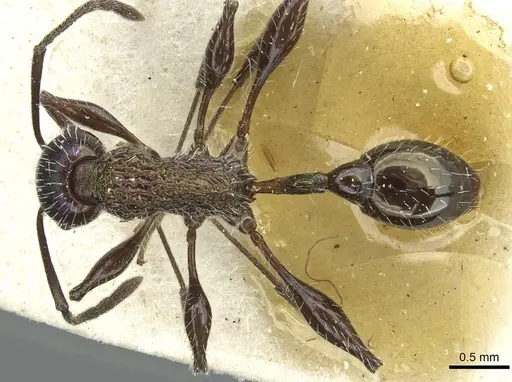
CASENT0914183
Bekijk op AntWeb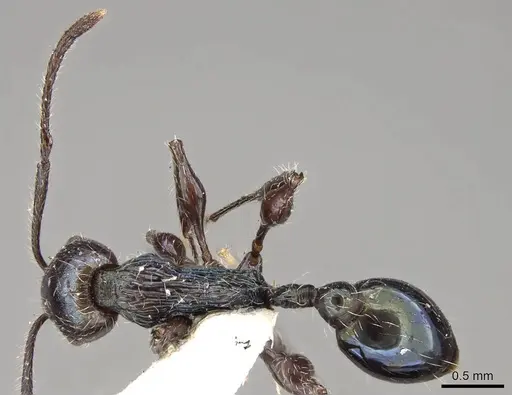
Literatuur
Verspreidingskaart laden...Producten laden...