
Temnothorax himachalensis
- Wetenschappelijke naam
- Temnothorax himachalensis
- Tribus
- Crematogastrini
- Subfamilie
- Myrmicinae
- Auteur
- Bharti <i>et al.</i>, 2012
- Verspreiding
- Gevonden in 1 landen
Introductie
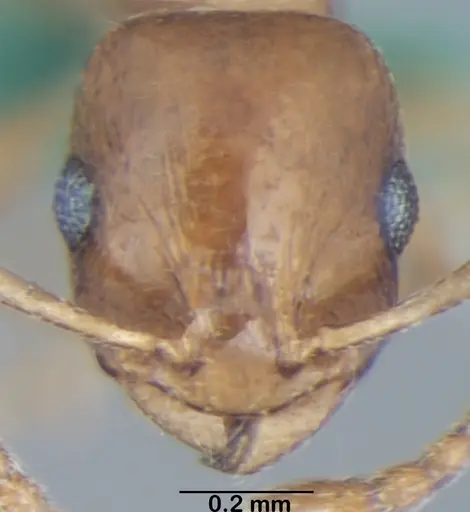
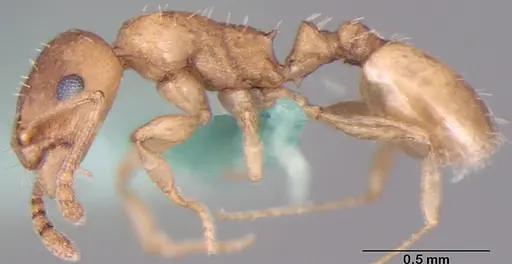
Temnothorax himachalensis is a tiny yellow ant endemic to the high altitudes of the Indian Himalayas. Workers measure 2.35-2.79 mm from head to tip, making them one of the smaller ant species you'll encounter . They have a yellow to dark yellow body often with a brownish patch on the upper side of the gaster, an angular petiole, and relatively long propodeal spines . This species was only described in 2012 and is named after its type locality in Himachal Pradesh . What makes T. himachalensis interesting is its adaptation to high-altitude Himalayan environments. Found at elevations around 2800 m, these ants nest under stones near rivers . They differ from similar yellow species like Temnothorax pallidus by having a visible metanotal groove and a distinctly angular petiole . Little is known about their colony biology or queen, so keeping them is a challenge best left to experienced antkeepers.
Quick Summary
- Difficulty: Hard
- Origin & Habitat: Endemic to the Indian Himalayas, found in Jammu & Kashmir and Himachal Pradesh at elevations around 2800 m [1][2]. Natural habitats include sandy soil on open hill slopes with scattered vegetation and mountainous areas beside rivers, nesting under stones [1].
- Colony Type: Unknown, no data on queen number or social structure has been published. Based on typical Temnothorax patterns, they are likely monogyne (single queen), but this is speculative.
- Size & Growth:
- Queen: Unknown, the queen has not been described in the literature [1]
- Worker: 2.35-2.79 mm [1]
- Colony: Unknown, no data. Most Temnothorax species reach up to a few hundred workers, but this is an unconfirmed estimate.
- Growth: Unknown, no data. Related Temnothorax species show moderate growth, but specific timing for this species is unconfirmed.
- Development: Estimated 6-10 weeks based on related species, but unconfirmed for this species (Development time is inferred from related Temnothorax, no specific data exists for T. himachalensis.)
- Antkeeping:
- Temperature: Based on the high-altitude Himalayan habitat, they likely prefer cool conditions (18-22 °C). Avoid letting the temperature rise above 25 °C, as this could stress the colony [1].
- Humidity: Moderate, keep the nest substrate slightly damp but not waterlogged. Their habitat near rivers suggests they appreciate moisture [1].
- Diapause: Likely required, most Himalayan species experience a winter dormancy. A cool period at 10-15 °C for 2-3 months is recommended, but specific data is unavailable.
- Nesting: In nature they nest under stones [1]. Provide tight, narrow chambers in Y-tong, plaster, or 3D-printed nests. A naturalistic setup with flat stones on damp substrate can mimic their wild habitat.
- Behavior: Peaceful and shy. When threatened, they flee rather than fight. Their primary defense is smearing venom from a modified, flattened stinger (common to the Crematogastrini tribe). Escape risk is extreme due to their tiny size, they can squeeze through gaps that seem small.
- Common Issues: escape risk is extreme due to tiny size (2.35-2.79 mm), standard barriers may not work, so use fine mesh and tight-sealing lids., limited scientific knowledge about queen biology, founding behavior, and colony development makes care advice mostly speculative., high-altitude origin means they prefer cool conditions and may suffer if kept above 25 °C., rare in the hobby, obtaining replacement queens or colonies is very difficult if the colony dies.
Housing and Nest Setup
Because workers are just 2.35-2.79 mm long [1], they need tight, small chambers. A Y-tong (AAC) nest with narrow lanes or a small plaster nest works well. The chambers should feel snug, big open spaces may stress the colony. In the wild they nest under stones near mountain rivers [1], so you could also use a naturalistic setup: a flat stone placed on a layer of damp substrate. Whatever you choose, escape prevention is critical. Use fluon on the outworld rim and fine mesh on any ventilation holes. The outworld can be a small plastic container with a test tube for water and a tiny dish for food.
Temperature and Seasonal Care
This high-altitude species comes from a cool environment (around 2800 m elevation) [1]. Keep the nest at 18-22 °C, this matches their natural habitat. Temperatures above 25 °C may harm them. If your room runs warm, place the nest in a cooler spot or use a small fan to avoid overheating. For winter, give them a dormancy period: drop the temperature to 10-15 °C for 2-3 months. During this time, reduce food but keep a water source available. This hibernation seems to be important for colony health, though specific details for this species are not documented.
Feeding and Diet
The diet is unknown for this specific species, but most Temnothorax are omnivorous. Offer sugar water or diluted honey as a constant energy source. For protein, provide tiny insects like fruit flies or small springtails once or twice a week. Remove any leftovers after 24 hours to prevent mold. Prey should be no larger than the workers themselves, these ants are too small to handle large items.
Humidity and Water
Aim for moderate moisture, keep the nest substrate slightly damp but not soaking wet. Their natural habitat is near rivers [1], so they appreciate some humidity. Connect a water tube to the nest for constant access. Avoid condensation pooling, if you see that, reduce moisture. If the nest looks dry and ants crowd the water tube, increase moisture slightly. Good ventilation helps prevent mold while holding the right humidity level.
Colony Development
Almost nothing is known about colony development. The queen has not been described, and no reports exist on founding, brood duration, or colony growth. Based on other Temnothorax species, the queen might be claustral (sealed in a chamber using her own body reserves), but that is a guess. Expect the first workers to be smaller than normal. Be patient and disturb the nest as little as possible during the fragile early stages. Keep them cool and stable.
Handling and Temperament
Temnothorax himachalensis is peaceful and shy. Workers will run and hide rather than fight. Like many members of the tribe Crematogastrini, they defend themselves by smearing venom using a flattened stinger, they cannot sting or bite effectively. Their tiny size (2.35-2.79 mm) [1] means they can slip through what looks like a closed lid. Always use fluon, fine mesh, and tight seals. When watching the colony, you'll see small, busy foragers searching for food, they are interesting to observe despite their size.
Frequently Asked Questions
How long does it take for Temnothorax himachalensis to have first workers?
There is no specific data for this species. Related Temnothorax species often take 6-10 weeks from egg to worker at around 20 °C, but this is an estimate. Actual timing for T. himachalensis remains unknown.
What temperature do Temnothorax himachalensis ants need?
Keep them cool at 18-22 °C. This high-altitude Himalayan species prefers moderate temperatures and may suffer if kept above 25 °C. Avoid any heat source that could warm the nest [1].
Do Temnothorax himachalensis ants sting?
No, they do not have a functional stinger for piercing. Instead, they use a modified, flattened stinger to smear venom onto attackers (a defense typical of the Crematogastrini tribe). They are completely harmless to keepers.
How big do Temnothorax himachalensis colonies get?
No data exists. Most Temnothorax species form small colonies of up to a few hundred workers, but this is an unconfirmed guess for T. himachalensis.
Can I keep Temnothorax himachalensis in a test tube?
A test tube is a good starting point, especially if you have a newly caught queen. However, since the queen is unknown, it's hard to say if she will found successfully. For an established colony, move them to a small Y-tong or plaster nest with narrow chambers.
Do Temnothorax himachalensis need hibernation?
Based on their high-altitude Himalayan habitat, they likely need a cool winter dormancy. A period at 10-15°C for 2-3 months is recommended, but this has not been confirmed experimentally.
What do Temnothorax himachalensis eat?
They are probably omnivorous, like most Temnothorax. Offer sugar water or honey water for energy and small insects (fruit flies, springtails) for protein once or twice a week.
Are Temnothorax himachalensis good for beginners?
This species is rated hard. Their tiny size makes escape prevention difficult, and very little is known about their care in captivity. They are also rarely available. Beginners are better off starting with a more studied, larger species.
Where is Temnothorax himachalensis found?
The species is endemic to the Indian Himalayas, recorded in Jammu & Kashmir and Himachal Pradesh at elevations around 2800 m [1][2].
Why are my Temnothorax himachalensis dying?
Because so little is known, any problem is hard to diagnose. Common speculative causes include overheating (above 25°C), poor escape prevention (they may have escaped), mold from overwatering, or disturbance during founding. Start by checking the temperature and moisture levels.
Report an Issue
The current care sheet is based fully on literature. See inconsistencies, or something that's incorrect? Please , it will be resolved after review from an admin. Contributing to the blogs tab also helps providing information, to make us be able to further improve the caresheets. Thank you for your support!
References

Dit verzorgingsblad is gelicentieerd onder CC BY-SA 4.0 .
Community-blogs
ANTWEB1008014
Bekijk op AntWeb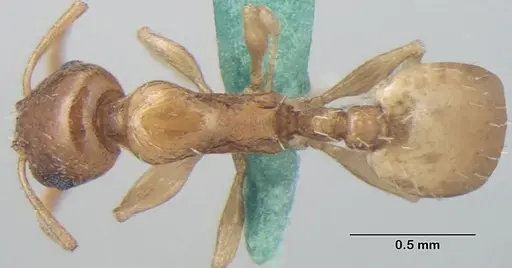
Literatuur
Verspreidingskaart laden...Producten laden...