
Tapinoma wroughtonii
- Wetenschappelijke naam
- Tapinoma wroughtonii
- Tribus
- Tapinomini
- Subfamilie
- Dolichoderinae
- Auteur
- Forel, 1904
- Verspreiding
- Gevonden in 0 landen
Introductie
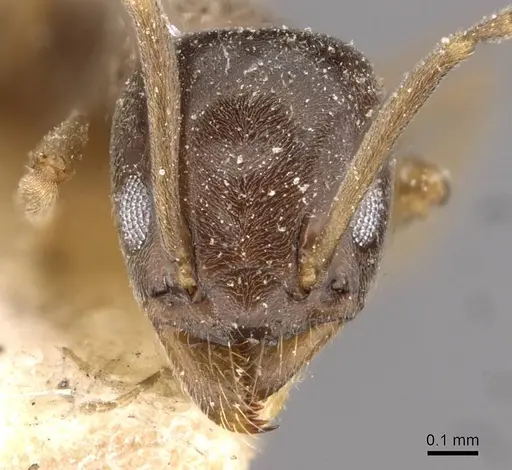
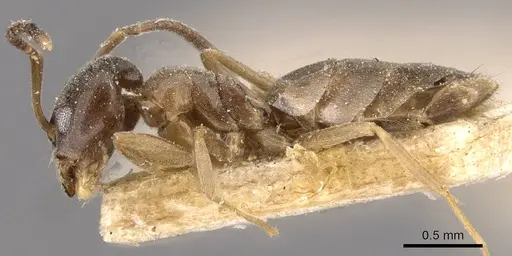
Tapinoma wroughtonii is a small ant species belonging to the subfamily Dolichoderinae. Workers are tiny, typically 2-3 mm (estimated from genus), with a dark brown to black coloration. The species was first described by Forel in 1904 from India and is found across the Himalayan region at elevations between 2000-2700 meters . It has also been recorded in Korea . Like all Dolichoderinae ants, they lack a functional stinger; instead, they defend themselves by exuding sticky, foul-smelling cyclopentanoid monoterpenes from an anal gland as a smear defense. This defense is not formic acid.
Quick Summary
- Difficulty: Easy
- Origin & Habitat: Native to the Himalayan region, with recorded populations in India (Haryana, Jammu & Kashmir, Karnataka, West Bengal) and Pakistan (Jhelum valley, Kashmir, Gor, Gilgit-Baltistan) [4][5]. Also reported from the Democratic People's Republic of Korea and Republic of Korea [3]. In their Himalayan habitat, they live at elevations of 2000-2700 meters where temperatures are cooler and seasonal variation is pronounced [2].
- Colony Type: Unconfirmed, no specific data on queen number or social structure is available for this species. Colony structure is unknown.
- Size & Growth:
- Queen: Not documented, estimated 4-5 mm from genus Tapinoma patterns (inferred).
- Worker: 2-3 mm (estimated from genus Tapinoma).
- Colony: Not documented, unknown.
- Growth: Not documented, likely moderate based on related Tapinoma species (inferred).
- Development: Unknown, no data available. (Development times are not recorded for this species.)
- Antkeeping:
- Temperature: Keep cool,20-24°C, inferred from high-altitude Himalayan origin [2]. Avoid overheating, room temperature is often suitable. Provide a temperature gradient if possible.
- Humidity: Moderate. Keep nest substrate moist but not waterlogged. No specific data, adjust based on colony behavior.
- Diapause: Likely required given the Himalayan and Korean distribution [2][3]. Provide a winter rest period of 2-3 months at 10-15°C during autumn/winter. This is inferred from climate, not confirmed.
- Nesting: In nature, nests in soil under stones at elevations 2000-2700 m [2]. In captivity, use a formicarium with soil or plaster chambers. Provide some moisture and a dark, concealed nesting area. Test tubes work for founding colonies.
- Behavior: Generally docile and non-aggressive. Defense: exudes foul-smelling fluid from the anal gland (smear defense), no sting. Escape risk is moderate due to small size, use fine mesh and tight seals. Active foragers.
- Common Issues: escape prevention is critical due to small size, use fine mesh and tight-fitting lids., sensitive to overheating, keep away from direct heat sources and avoid temperatures above 28°C., winter dormancy is likely required, colonies not given a rest period may decline., limited species-specific information means most care parameters are inferred from genus patterns., wild-caught colonies from high altitudes may struggle to adapt to lowland conditions.
Temperature and Care
Tapinoma wroughtonii comes from high-altitude Himalayan regions where temperatures are cooler than typical tropical ant habitats. Keep the nest area at 20-24°C, this range supports normal colony activity without overheating. Unlike many ant species that thrive in warmth, this species is adapted to more temperate conditions, so avoid placing their setup near heat sources or in direct sunlight. A heating cable is generally not necessary and could harm the colony. Room temperature is often ideal. If you notice workers clustering away from any heat source, the temperature is too warm. During summer months, ensure they are not exposed to temperatures above 28°C for extended periods [2].
Housing and Nesting
In their natural Himalayan habitat, these ants nest in soil under stones at elevations between 2000-2700 meters [2]. For captivity, a standard formicarium with soil chambers or a plaster nest works well. The nest should have some moisture but not be soggy, these ants are adapted to seasonal variation and can handle drier conditions better than waterlogged ones. For founding colonies, a simple test tube setup with a water reservoir works fine. Provide some form of cover or darkening since they prefer nesting in concealed spaces. The outworld should allow for foraging, these are active ants that will readily search for food outside the nest area.
Feeding and Diet
Like other Tapinoma species, T. wroughtonii likely has an omnivorous diet. They probably consume honeydew from aphids and scale insects in nature, along with small insects and other protein sources. In captivity, offer sugar water or honey as a constant carbohydrate source. For protein, small insects like fruit flies, pinhead crickets, or mealworms work well. Feed protein 2-3 times per week, removing any uneaten prey after 24 hours. Specific dietary data for this species is not available [1].
Seasonal Care and Overwintering
Given their presence in Korea and the high Himalayan altitudes, these ants almost certainly require a winter dormancy period. During autumn, gradually reduce the temperature to around 10-15°C and maintain this for 2-3 months. This mimics the natural seasonal cycle they experience in their native habitat where winters are cold and prolonged. During this period, reduce feeding significantly, the colony will be less active and consume less. Do not feed during deep hibernation. In spring, gradually warm them back to room temperature and resume normal feeding. Colonies that are not allowed this rest period may become stressed and decline over time. This diapause is inferred from climatic data and not directly confirmed [2][3].
Behavior and Temperament
Tapinoma wroughtonii is a relatively docile species. Like other members of the Dolichoderinae subfamily, they do not have a functional stinger, their primary defense is exuding sticky, foul-smelling cyclopentanoid monoterpenes from an anal gland. This smear defense can be irritating but is not dangerous to humans. They are not particularly aggressive and are unlikely to bite. Their small size (2-3 mm workers) means they can be overlooked, but they are active foragers that will explore their environment. Colony structure is unconfirmed, typical Tapinoma patterns suggest possible polygyny, but no specific data exists.
Frequently Asked Questions
How long does it take for Tapinoma wroughtonii to raise first workers?
Specific development data is not available for this species. Development times are unknown. Be patient with founding colonies.
Can I keep multiple queens together in one colony?
Colony structure is unconfirmed for this species. Some Tapinoma are polygynous, but no data exists for T. wroughtonii. Starting with one queen is safest. If attempting multiple queens, monitor for aggression.
What temperature range is best for Tapinoma wroughtonii?
Keep them at 20-24°C. Their high-altitude Himalayan origin suggests they prefer cooler conditions than many tropical ants. Room temperature is often ideal. Avoid temperatures above 28°C and keep them away from direct heat sources or sunlight [2].
Do Tapinoma wroughtonii need hibernation?
Almost certainly yes, based on their Himalayan and Korean distribution [2][3]. Provide a winter rest period of 2-3 months at 10-15°C during autumn and winter. This is inferred from climate data, skipping hibernation may harm colony health.
Are Tapinoma wroughtonii good for beginners?
Yes, they are considered an easy species to keep. They are docile, don't sting, and have relatively simple care requirements. The main challenges are ensuring proper escape prevention (they are small) and providing the likely needed winter dormancy. However, many details about their biology are unknown, so beginners should be prepared to adapt care based on observation.
What do Tapinoma wroughtonii eat?
They are likely omnivorous. Offer sugar water or honey as a constant carbohydrate source. For protein, provide small insects like fruit flies, small crickets, or mealworms 2-3 times per week. Remove uneaten food promptly to prevent mold.
How big do Tapinoma wroughtonii colonies get?
Colony size is not documented for this species. Based on related Tapinoma species, they may reach several hundred workers, but this is unconfirmed.
When should I move my colony to a formicarium?
You can keep a founding colony in a test tube until it reaches around 50-100 workers (estimated). Once the test tube becomes crowded or the water reservoir needs frequent refilling, it's time to move to a proper formicarium. Make sure the new setup has appropriate humidity and a suitable nesting area.
Report an Issue
The current care sheet is based fully on literature. See inconsistencies, or something that's incorrect? Please , it will be resolved after review from an admin. Contributing to the blogs tab also helps providing information, to make us be able to further improve the caresheets. Thank you for your support!
References

Dit verzorgingsblad is gelicentieerd onder CC BY-SA 4.0 .
Community-blogs
CASENT0249773
Bekijk op AntWeb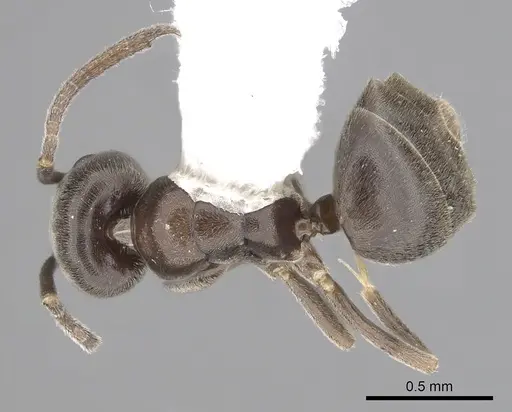
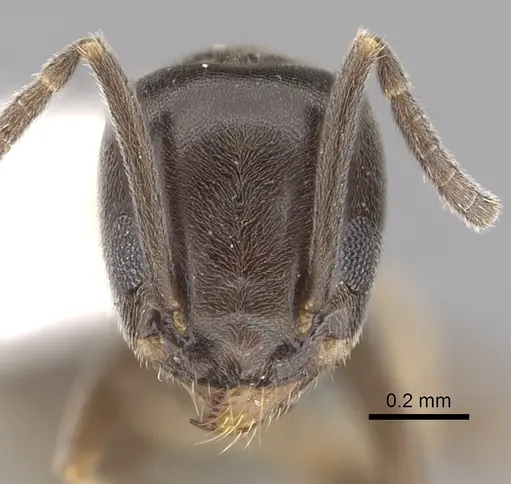
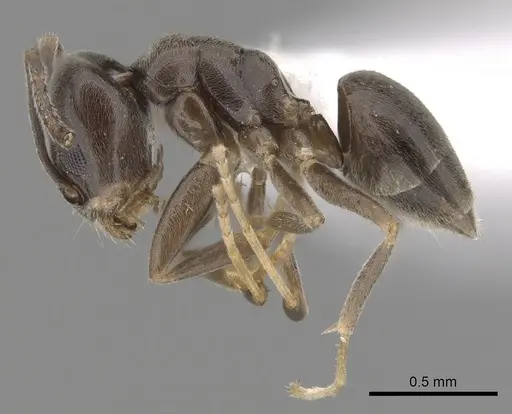
CASENT0909764
Bekijk op AntWeb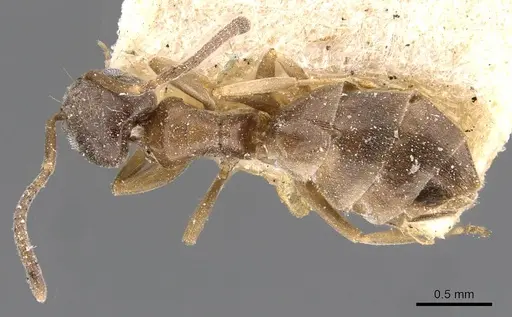
Literatuur
Verspreidingskaart laden...Producten laden...