
Tapinoma darioi
- Wetenschappelijke naam
- Tapinoma darioi
- Tribus
- Tapinomini
- Subfamilie
- Dolichoderinae
- Auteur
- Seifert <i>et al.</i>, 2017
- Verspreiding
- Gevonden in 4 landen
Introductie
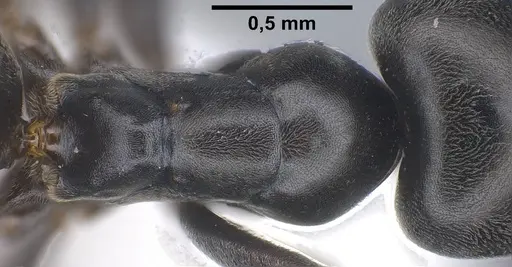
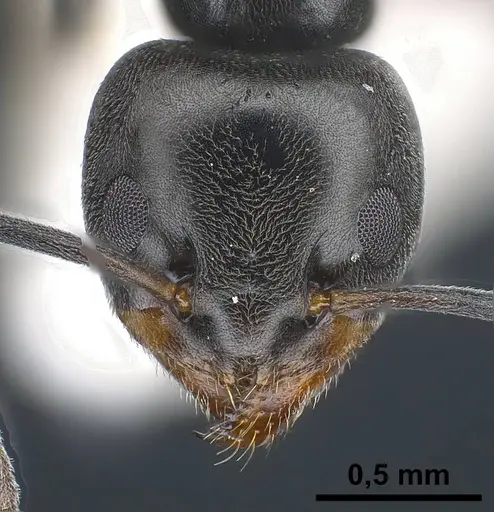
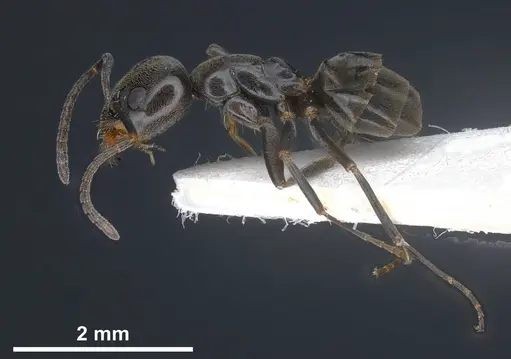
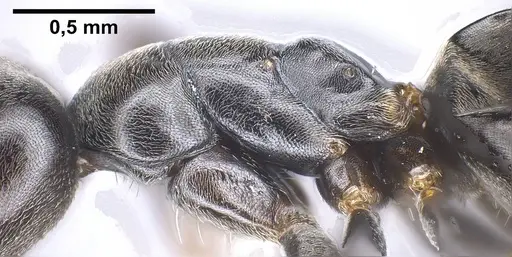
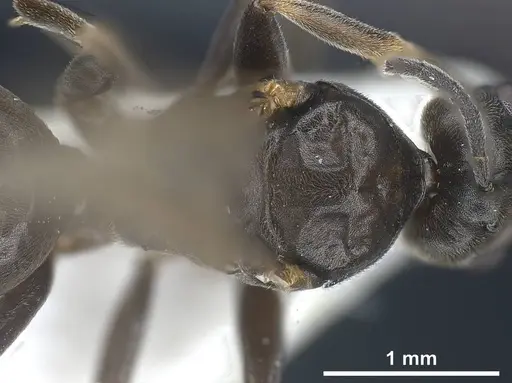
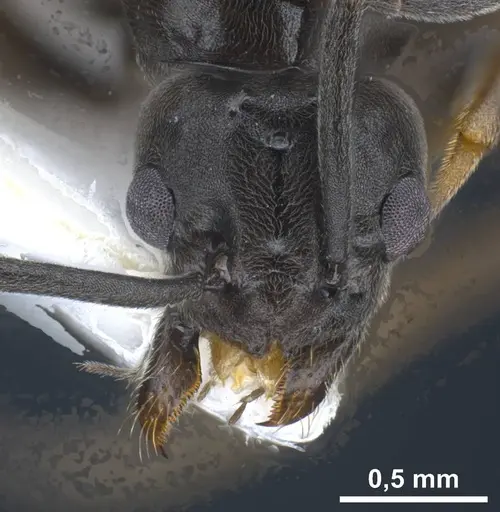
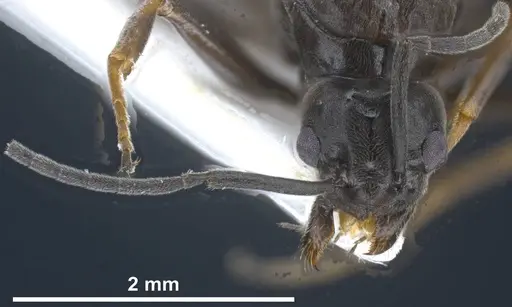
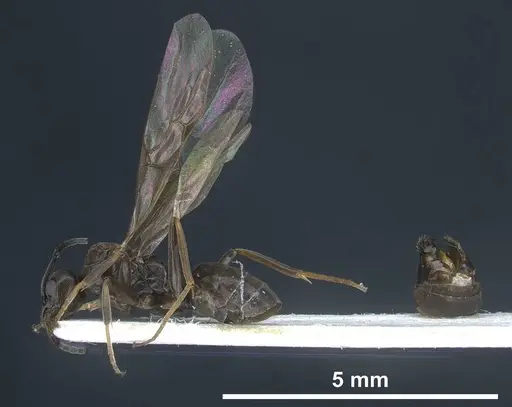
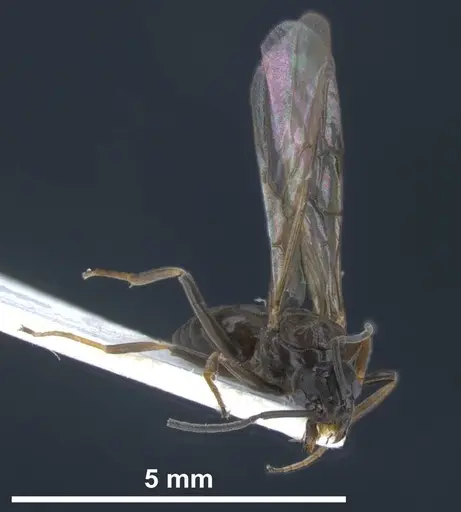
Tapinoma darioi is a small, dark ant species from the Tapinoma nigerrimum complex, described in 2017. Workers are the smallest of the four cryptic species in this group . Their body is dark to blackish brown with reddish brown or yellowish mandibles. This species is closely tied to coastal Mediterranean areas, from northeastern Spain through southern France, Corsica, and the Italian coast down to Rome . It thrives in open, disturbed habitats with strong human influence and also occurs in natural sand dune systems. Unlike its relative Tapinoma magnum, T. darioi specifically inhabits dunes and avoids Mediterranean scrub . T. darioi forms supercolonies, extremely large, polygynous (multiple queen) colonies that are polydomous (many connected nest sites). In some Mediterranean locations, this species makes up 95% of all ants present . It has been observed limiting the spread of the invasive Argentine ant (Linepithema humile) in southern France . Introduced populations exist in the Netherlands, Switzerland, and France, where it can become a nuisance in buildings.
Quick Summary
- Difficulty: Medium
- Origin & Habitat: Mediterranean coastal areas from Spain to Italy, also introduced to Netherlands, Switzerland, and France. Prefers coastal dunes and open disturbed sites with weak tree cover [2].
- Colony Type: Extremely polygynous and polydomous supercolonies, multiple queens cooperate across many connected nest sites [2].
- Size & Growth:
- Queen: Size data unavailable. Based on related Tapinoma species, queens probably reach 4–5 mm.
- Worker: Size data unavailable, workers are the smallest in the Tapinoma nigerrimum complex, head measurements suggest a total body length of roughly 2–3 mm [1].
- Colony: Supercolonies can span over 200 meters with millions of workers [2].
- Growth: Moderate
- Development: 6–8 weeks (inferred from related Tapinoma species, no direct data). (Development time depends on temperature, optimal at 24–28°C.)
- Antkeeping:
- Temperature: Keep at 24–28°C for optimal activity and brood development. In northern introduced areas, colonies remain active until late December at 3°C (cloudy) or -2°C (sunny) and resume in late February at 6°C [2].
- Humidity: Moderate, they nest in well-draining coastal dune sand. Keep substrate moist but with good drainage, avoid waterlogging.
- Diapause: Yes, colony activity slows in winter. Provide 2–3 months at 5–10°C. In northern Europe, foraging continues until late December and resumes by late February [2].
- Nesting: Deep subterranean nests reaching 1 m in the wild. In captivity, provide at least 15–20 cm of substrate. Y-tong (AAC) or deep soil nests work well. Because they are polydomous, use multiple chambers connected by tubing.
- Behavior: T. darioi is highly active and aggressive when defending its territory. As a Dolichoderinae ant, it lacks a sting and instead exudes a sticky, foul-smelling substance from the anal gland. Foraging is diurnal in cooler months (Feb–May) and crepuscular/nocturnal in summer (June–Nov) [2]. They use mass recruitment to large food items and have been observed using tools, dropping twigs or pebbles into liquid food [2]. Their tiny size makes escape prevention critical.
- Common Issues: tiny size makes escape prevention extremely important, use fine mesh on all openings., supercolonial growth requires much more space than typical ants, colonies can quickly outgrow standard formicariums., can become a household pest in cooler introduced areas, nests in buildings., 80% of their diet [2]., colony contains many queens, which complicates management if space becomes limited.
Housing and Nest Setup
Tapinoma darioi needs housing that accommodates its subterranean, supercolonial lifestyle. In the wild, nests reach 1 m deep with crater-like entrances made of ejected soil [1]. Provide at least 15–20 cm of substrate in captivity. Y-tong (AAC) nests work well, or use a naturalistic setup with deep soil. Because they are polydomous (multiple connected nests), give them several chambers linked by tubing. Use fine mesh on all openings, their tiny size lets them slip through gaps that hold larger ants. Include a water tube for humidity, but avoid flooding as their deep nests can become waterlogged. Fluon barriers are recommended on escape-prone surfaces.
Feeding and Diet
The diet of T. darioi is dominated by honeydew, which accounts for over 80% of their food intake [2]. They tend aphids extensively, including on trees, in the herb layer, and on root aphids. In shaded spots, workers guard aphid colonies 24 hours a day. Provide sugar water (1:3 ratio) or diluted honey constantly, this is critical for colony health. They also accept nectar, elaiosomes from myrmecochorous plants, and fallen sweet fruit [2]. Protein comes from insects, snails, and spiders, making up roughly 15% of their diet, they mainly scavenge carcasses rather than hunt. Feed small insects (fruit flies, small crickets, mealworms) regularly. They can carry items up to 6 mm and use mass recruitment to break down larger prey.
Temperature and Seasonal Care
Keep T. darioi at 24–28°C for best activity and brood development. They are Mediterranean ants that prefer warmth but tolerate cooler conditions. In northern Europe they forage until late December at near-freezing temperatures and resume in late February at 6°C [2]. Use a heating cable on one side of the nest to create a thermal gradient. During winter, they need a diapause period, reduce temperature to 5–10°C for 2–3 months. This mimics their natural cycle and supports healthy colony growth. Do not keep them active year-round. In their active season, they shift foraging times: diurnal in spring (Feb–May) and crepuscular/nocturnal in summer (June–Nov) [2].
Colony Structure and Growth
T. darioi is one of the most polygynous ant species known, supercolonies contain many cooperating queens across multiple nest sites. This fundamentally changes how you manage them. A founding colony may start with one queen, but established colonies have many egg-laying queens. Mating probably happens inside the nest or within the supercolony area, not during dramatic nuptial flights [2]. Alates (winged reproductives) develop from late April to June (average May 22 ± 20 days) [2]. Growth is moderate, expect 6–8 weeks from egg to first worker (inferred). Colonies can become massive, so plan for expansion space from the start.
Behavior and Defense
This species is highly territorial and aggressive in defense. As a Dolichoderinae ant, it lacks a functional sting and instead exudes a sticky, foul-smelling substance from the anal gland, avoid getting this on your skin or near your eyes. They use sophisticated recruitment: when a large food item is found, many workers assemble, disassemble it, and carry pieces back individually [2]. They also show tool use, occasionally dropping small twigs or pebbles into liquid food and retrieving them after they absorb liquid [2]. Because of their tiny size and excellent escape skills, use fluon barriers and fine mesh on all enclosures.
Frequently Asked Questions
Can I keep Tapinoma darioi in a test tube?
You can start a colony in a test tube for founding, but because of their supercolonial nature and deep nesting needs, you'll need to upgrade to a larger naturalistic setup or Y-tong formicarium within a few months. They require much more space than typical ants.
How long does it take for Tapinoma darioi to produce first workers?
Based on related Tapinoma species, expect 6–8 weeks from egg to first worker at optimal temperature (24–28°C). Specific development data for T. darioi is not available, so this is an estimate.
Are Tapinoma darioi good for beginners?
Medium difficulty, they are more challenging than simple species due to their need for deep nesting space, escape potential through tiny gaps, and supercolonial management. Their constant demand for sugar and potential to become a household pest in cooler climates adds complexity.
Do Tapinoma darioi need hibernation?
Yes, they require a winter rest period. In northern Europe, colonies remain active until late December and resume in late February. Provide 2–3 months at 5–10°C during winter [2].
What do Tapinoma darioi eat?
Their diet is about 80% honeydew from aphids. In captivity, provide constant access to sugar water (diluted honey or sugar water at 1:3 ratio). They also accept small insects, nectar, and fruit. Feed small insects 2–3 times per week and keep sugar available at all times [2].
How big do Tapinoma darioi colonies get?
Extremely large, supercolonies can extend over 200 meters in the wild with millions of workers. In captivity, a colony can quickly outgrow standard formicariums. Plan for significant expansion space from the start [2].
Can I keep multiple queens together?
Yes, T. darioi is naturally polygynous (multiple queens per colony) and forms supercolonies. Unlike many species where queens fight, this species cooperates. However, combining unrelated foundresses has not been studied [2].
Why are my Tapinoma darioi escaping?
Their tiny size (likely around 2–3 mm body length) lets them squeeze through the smallest gaps. Use fine mesh on all openings, apply fluon to barrier surfaces, and check all connections for gaps. Escape prevention must be excellent with this species.
Is Tapinoma darioi invasive?
In its native Mediterranean range it is not invasive, but it has been introduced to northern Europe (Netherlands, Switzerland, France) with plant material and can become a nuisance in buildings. It has not shown the same impact as Tapinoma magnum [5][6].
Report an Issue
The current care sheet is based fully on literature. See inconsistencies, or something that's incorrect? Please , it will be resolved after review from an admin. Contributing to the blogs tab also helps providing information, to make us be able to further improve the caresheets. Thank you for your support!
References

Dit verzorgingsblad is gelicentieerd onder CC BY-SA 4.0 .
Community-blogs
ANTWEB1038033
Bekijk op AntWeb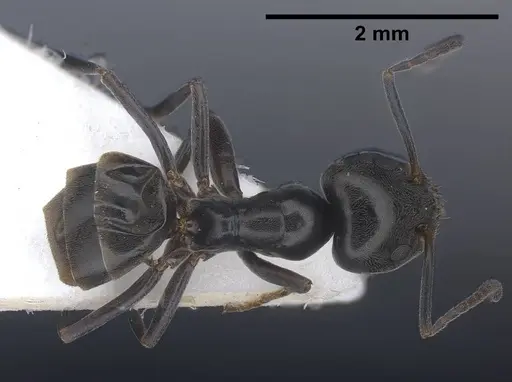

ANTWEB1038034
Bekijk op AntWeb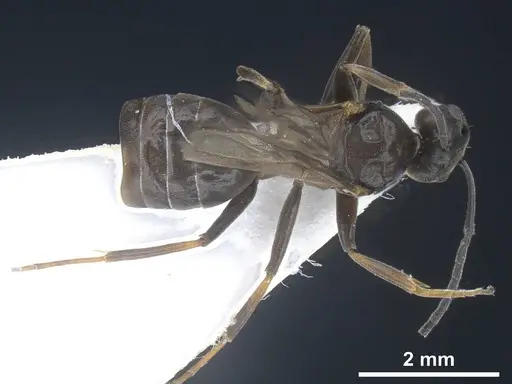
Literatuur
Verspreidingskaart laden...Producten laden...