
Strumigenys strigatella
- Wetenschappelijke naam
- Strumigenys strigatella
- Tribus
- Attini
- Subfamilie
- Myrmicinae
- Auteur
- Bolton, 2000
- Verspreiding
- Gevonden in 0 landen
Introductie
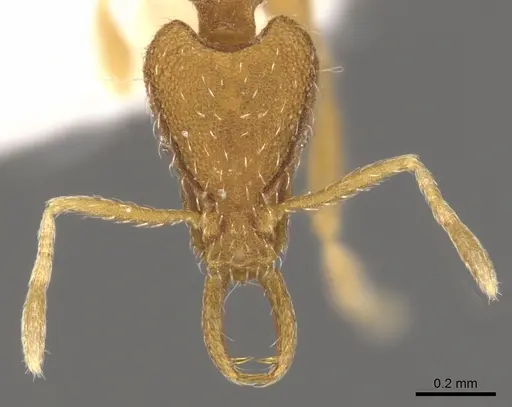
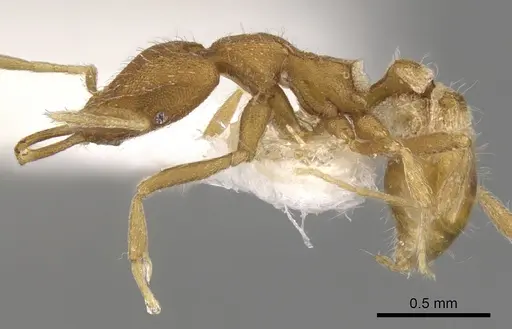
Strumigenys strigatella is a tiny, rare ant from the Ryukyu Islands of Japan, specifically northern Okinawa . Workers are about 2.3-2.6 mm in total length, with a brown body and a unique combination of a rough side and long grooves on the first gaster segment . They belong to the godeffroyi complex within the Strumigenys godeffroyi group . This species was described by Bolton in 2000 and has only been found in a few places, including rotting chinquapin tree trunks at a wood-chipping factory and in natural forests . They look similar to the more common Strumigenys lewisi, but you can tell them apart by the fine rough spots on the side of the middle body and the shape of their head . These ants are specialized predators, hunting tiny soil creatures like springtails. They have a functional sting, but it’s not medically significant and they rarely use it on humans. This species is for expert keepers only, because of their tiny size, specialized diet, and the challenges of keeping such a rare ant.
Quick Summary
- Difficulty: Expert
- Origin & Habitat: Northern Okinawa Island, Japan (Ryukyu Islands). Found in rotting wood of chinquapin tree trunks at a wood-chipping factory and in natural forests at locations including Yona, River Fukugawa, and Mt. Terukubi [1][2].
- Colony Type: Likely single-queen colonies (monogyne) based on the type series, which included one queen and about 25 workers [2]. Colony structure in captivity is unconfirmed.
- Size & Growth:
- Queen: Size data unavailable. The single queen in the type series likely matches the worker size range (~2.3-2.6 mm), but this is not confirmed [2].
- Worker: 2.3-2.6 mm total length [2], with some sources citing 2 mm [1].
- Colony: Unknown in the wild. Based on related Strumigenys species, colonies probably reach several dozen to a few hundred workers at most.
- Growth: Slow, Strumigenys colonies typically grow slowly due to their specialized predatory lifestyle.
- Development: Estimated 8-12 weeks under warm conditions, inferred from related Myrmicinae species. (Not directly documented for this species. Keep at 24-28°C and provide a stable environment.)
- Antkeeping:
- Temperature: Keep at 24-28°C. These are subtropical ants from Okinawa. A gentle gradient with a heating cable on one side works well. Avoid prolonged temperatures below 20°C. Inferred from natural habitat.
- Humidity: High humidity (70-85%). They live in rotting wood in humid forests. Keep the nest substrate consistently moist but not waterlogged. Provide good ventilation to prevent mold. Inferred from natural habitat.
- Diapause: No, being a subtropical species from Okinawa, they do not require hibernation. They may show reduced activity during cooler periods. Inferred from distribution.
- Nesting: They naturally nest in rotting wood (chinquapin tree trunks) [1]. In captivity, use a piece of rotten wood or a well-humidified Y-tong/plaster nest with tight chambers scaled to their tiny size (2 mm workers). Inferred from natural nesting data.
- Behavior: Strumigenys strigatella workers are active hunters that specialize in catching tiny prey like springtails. They have a functional sting, but they are not aggressive toward keepers. Escape prevention is critical because they are so small (2 mm), they can squeeze through standard mesh barriers. Use fine mesh (0.5 mm or finer) and seal all gaps. Colonies are peaceful and focused on hunting.
- Common Issues: escape prevention is critical, tiny ants can slip through normal mesh, use fine mesh and seal all gaps, specialized diet makes feeding hard, they need live springtails or other micro-prey, slow growth, colonies remain small for months, which can test your patience, high humidity requirements can cause mold if ventilation is poor, wild-caught colonies may have parasites or be injured during collection
Housing and Nest Setup
Strumigenys strigatella naturally nests in rotting wood, especially chinquapin tree trunks in its native Okinawa habitat [1]. For captivity, provide a naturalistic setup with a piece of rotten wood or a well-humidified plaster/Y-tong nest. The chambers must be tiny, workers are only about 2.3-2.6 mm long [2]. Use tight connections and top-notch escape prevention. A test tube with a small piece of rotten wood can work for founding colonies, but even standard cotton barriers may not be enough, consider adding petroleum jelly or fine mesh over the opening. Keep the nest very humid (70-85%) to mimic the subtropical forest floor.
Feeding and Diet
This is the toughest part of keeping Strumigenys strigatella. They are specialized predators that hunt tiny arthropods. Their main prey in the wild are springtails (collembola). In captivity, you must provide live springtails as a staple. Other tiny prey like booklice (psocids), dust mites, or fruit fly larvae may also work. Do not give sugar water or standard ant feeds, these ants are obligate predators. Feed 2-3 times a week, adjusting based on how much the colony eats. A well-fed colony will have workers actively hunting and bringing prey back to the nest.
Temperature and Humidity
Since they come from the subtropical Ryukyu Islands, Strumigenys strigatella need warm, humid conditions. Keep the nest at 24-28°C, with a slight gradient so workers can choose. Use a heating cable on one side. Avoid letting the temperature drop below 20°C for long. Humidity should stay high (70-85%). The nest substrate should feel consistently damp but not soaking wet. Provide a water tube for drinking. Good ventilation is crucial to stop mold, but don't let the nest dry out. [1]
Colony Development
Colony growth is slow, which is typical for Strumigenys. A founding queen lays only a few eggs and raises the first workers (nanitics) alone. The time from egg to worker is estimated at 8-12 weeks under good conditions, though this isn't documented for this species. Colonies stay small, probably under 100 workers for many months. Even established colonies don't get huge. Be patient and don't disturb the queen during founding, stress can make her eat the brood. Once workers appear, they'll start hunting and the colony will slowly grow.
Behavior and Handling
Workers are active hunters but not aggressive to humans. They have a functional sting, but it's tiny and not used for defense against large creatures, it's for catching prey. These ants are not dangerous to you. Because they are only about 2 mm long, they are very delicate, handle them gently and avoid unnecessary disturbances. The biggest concern is escape, their tiny size lets them slip through gaps that would stop most ants. Use fine mesh (0.5 mm or finer), tight-sealing lids, and barrier gel around enclosure edges. Check for escapes every day, especially after feeding.
Frequently Asked Questions
How long does it take for Strumigenys strigatella to get their first workers?
The exact timeline isn't known for this species, but based on related Strumigenys, expect 8-12 weeks from egg to worker at 24-28°C. Growth is slow, so be patient.
What do Strumigenys strigatella ants eat?
They need live tiny prey. Best is springtails (collembola). Other options include booklice, dust mites, and fruit fly larvae. They do not eat sugar or ant pellets.
Can I keep Strumigenys strigatella in a test tube?
Yes, a test tube works for founding, but you must prevent escapes. These ants are tiny (2 mm) and can crawl past standard cotton plugs. Add petroleum jelly around the rim or use fine mesh over the opening.
Do Strumigenys strigatella need hibernation?
No, they do not need hibernation. As a subtropical species from Okinawa, they stay active year-round at warm temperatures. They may slow down slightly if it gets cooler, but no diapause required.
Are Strumigenys strigatella good for beginners?
No. Their specialized diet (live springtails), tiny size (escape risk), and rarity make them a challenge even for experienced antkeepers. Not recommended for beginners.
How big do Strumigenys strigatella colonies get?
Colony size is unknown for this rare species. Based on related species, probably a few dozen to a few hundred workers at most. They never reach the huge colony sizes of common species.
What temperature should I keep Strumigenys strigatella at?
Keep them at 24-28°C. Use a heating cable on one side of the nest to create a gradient. Avoid temperatures below 20°C for more than a short time.
Why are my Strumigenys strigatella dying?
Common causes: escaped (check for gaps), starved (are you feeding live springtails?), too dry (need 70-85% humidity), too cold (55°F/13°C is too low), or parasites from wild-caught colonies. Check all conditions.
When should I move Strumigenys strigatella to a formicarium?
Wait until the colony has at least 20-30 workers and is hunting actively. Moving too early can cause stress. A naturalistic setup with rotten wood is better than standard plastic nests for this wood-nesting species.
Report an Issue
The current care sheet is based fully on literature. See inconsistencies, or something that's incorrect? Please , it will be resolved after review from an admin. Contributing to the blogs tab also helps providing information, to make us be able to further improve the caresheets. Thank you for your support!
References

Dit verzorgingsblad is gelicentieerd onder CC BY-SA 4.0 .
Community-blogs
CASENT0900805
Bekijk op AntWeb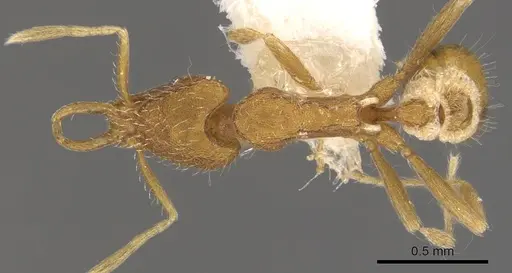
Literatuur
Verspreidingskaart laden...Producten laden...