
Strumigenys signeae
- Wetenschappelijke naam
- Strumigenys signeae
- Tribus
- Attini
- Subfamilie
- Myrmicinae
- Auteur
- Forel, 1905
- Verspreiding
- Gevonden in 3 landen
Introductie
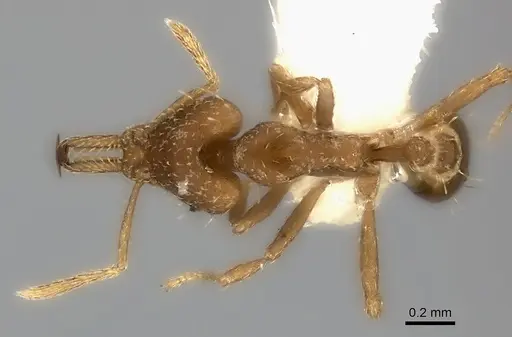
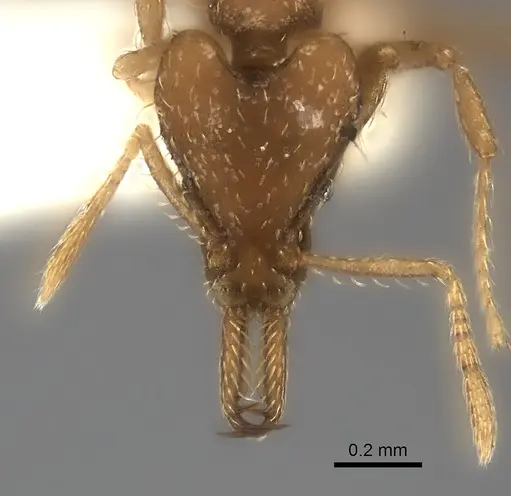
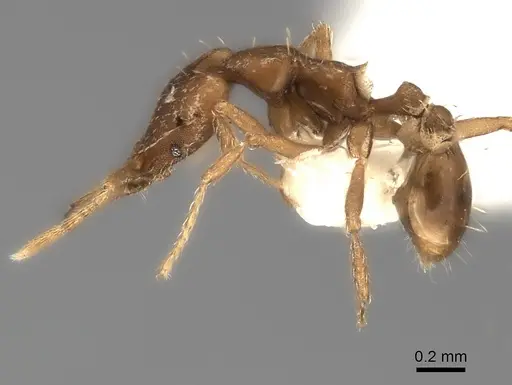
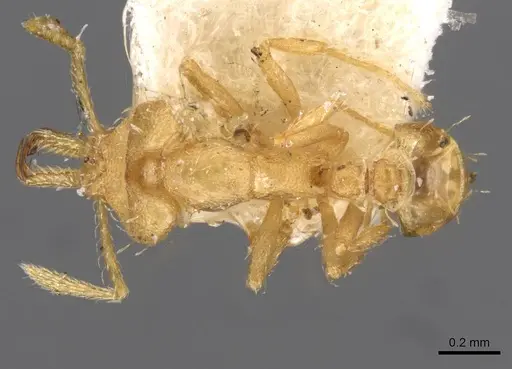
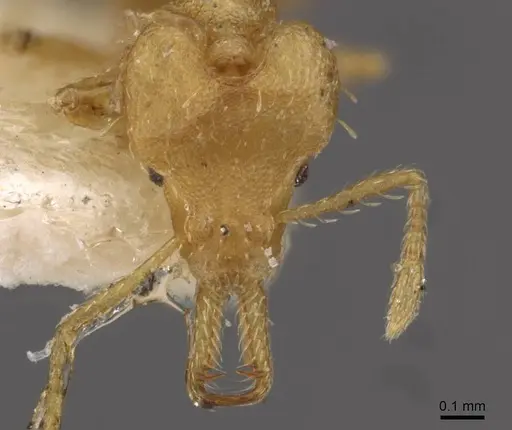
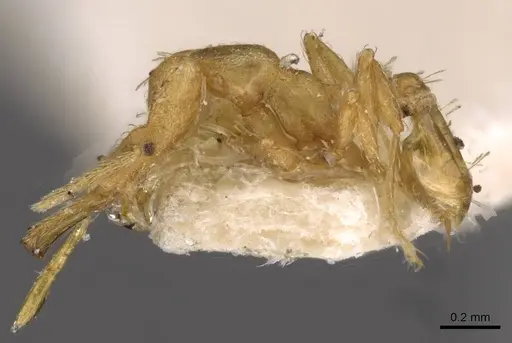
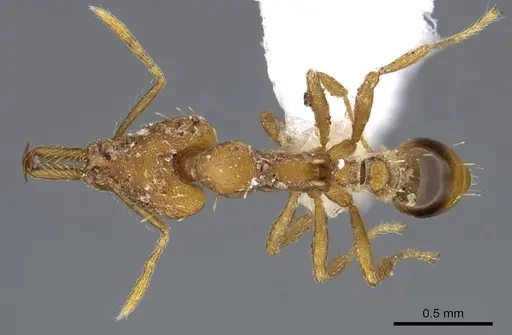
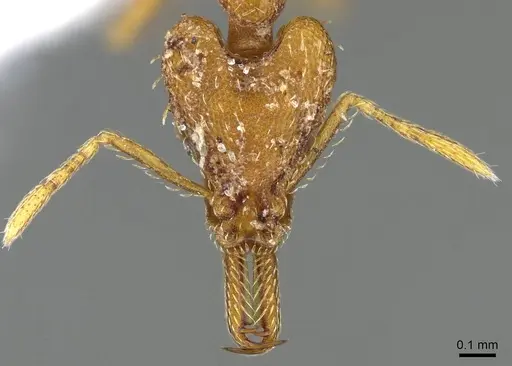
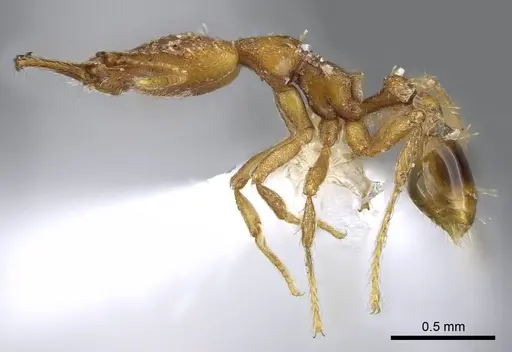
Strumigenys signeae is a tiny predatory ant, with workers measuring about 2.5-2.9mm in total length . This species belongs to the Strumigenys godeffroyi group, specifically the signeae complex, and is distinguished by a broad translucent cuticular lamella on the inner mandibular margin and a row of stout projecting hairs along the dorsolateral margin of the head . It is native to Southeast Asia, recorded across Borneo, Brunei, Indonesia, Malaysia, the Philippines, Singapore, Thailand, and Vietnam . These ants inhabit leaf litter and the forest floor in rainforests and wet forests, making them a typical litter-dwelling species .
Quick Summary
- Difficulty: Medium
- Origin & Habitat: Southeast Asia: Borneo, Brunei, Indonesia, Malaysia, Philippines, Singapore, Thailand, Vietnam. Found in primary forest, lowland disturbed forest, and dipterocarp forest leaf litter at low to mid elevations [2][3][4].
- Colony Type: Unconfirmed, likely single-queen based on genus patterns, but this has not been documented for this species.
- Size & Growth:
- Queen: Size data unavailable, queens have not been described.
- Worker: 2.5-2.9mm [1]
- Colony: Unknown, related Strumigenys species typically form small colonies, but no specific data for S. signeae.
- Growth: Unknown, no documented data
- Development: Unknown, no published data on development time (Based on a single observation from AntWiki, first-brood workers (nanitics) can be notably smaller (as small as 2.1mm) than mature workers [1].)
- Antkeeping:
- Temperature: Tropical rainforest species, keep warm, around 24-28°C, year-round. A gentle gradient is recommended [1].
- Humidity: High humidity required (70-85%). Keep the nest substrate consistently moist but not waterlogged, mimicking damp forest floor conditions [1].
- Diapause: No, tropical species, does not require hibernation. Maintain warm conditions year-round [1].
- Nesting: Y-tong (AAC) or plaster nests with small chambers work well. These tiny ants need tight spaces. Provide a moisture source (e.g., water reservoir) for humidity. A test tube setup can be used for founding [1].
- Behavior: Strumigenys signeae is shy and non-aggressive towards keepers, but they have a functional stinger (typical of myrmicine ants). Their tiny size makes them excellent escape artists, use fine mesh (≤0.5mm) on all openings. Workers forage individually through leaf litter, hunting micro-arthropods. They are sensitive to disturbance and should be left undisturbed as much as possible [1].
- Common Issues: tiny size means escapes are likely without fine mesh barriers, high humidity requirements can lead to mold if ventilation is poor, specialized predatory diet requires a constant supply of live micro-prey (e.g., springtails), slow or uncertain colony growth can frustrate beginners who overfeed or disturb the nest, wild-caught colonies may carry parasites that kill them in captivity
Housing and Nest Setup
Strumigenys signeae requires careful housing due to its tiny size. A Y-tong (AAC) or plaster nest with small chambers works best, chambers should be tight and scaled to the 2.5-2.9mm worker body size. These ants need high humidity, so a nest with a built-in water reservoir or moisture chamber is ideal. Avoid large open spaces, these tiny ants feel exposed and stressed in spacious enclosures. Use a small outworld for feeding and connect it to the nest with flexible tubing. Escape prevention is critical: use fine mesh (at least 0.5mm) on all openings and apply fluon to the rim of the outworld. A small test tube setup can work for founding colonies, but transfer to a proper nest once the colony reaches 10-15 workers [1].
Feeding and Diet
This species is a specialized predator with a high nitrogen isotope signature (δ15Ncor=5.99), indicating a diet primarily of small insects and arthropods [3]. In captivity, feed live springtails as the primary food, they are the ideal size and provide proper nutrition. Other acceptable prey includes tiny isopods, booklice (psocids), fruit flies, and other micro-arthropods. Do not rely on sugar sources or honey, Strumigenys are not interested in carbohydrates and may ignore sweet liquids. Feed small prey items 2-3 times per week, removing uneaten prey after 24 hours to prevent mold. A healthy colony will actively hunt and capture prey within hours. If workers ignore prey, try smaller items or different species of springtails [3][1].
Temperature and Humidity
As a tropical rainforest species from Southeast Asia, Strumigenys signeae needs warm and humid conditions year-round. Keep the nest at 24-28°C, this is optimal for their metabolism and brood development. Temperature drops below 22°C can slow activity and may stress the colony. Use a heating cable on one side of the nest to create a gentle gradient if your room temperature is below 24°C. Place the heating on top of the nest, not underneath, to avoid drying out the substrate. Humidity should be maintained at 70-85%, achieved by keeping the water reservoir filled and misting the outworld occasionally. Balance humidity with adequate ventilation to prevent mold growth. The substrate should feel damp to the touch but never soggy [1].
Behavior and Colony Dynamics
Strumigenys signeae is a shy, non-aggressive species that prefers to avoid confrontation. Workers forage individually rather than in groups, hunting through leaf litter and substrate for small prey. They are not known to form large supercolonies, expect modest colony sizes (exact number unknown). Workers are slow-moving compared to many ants and spend most of their time in the nest or immediate area. Unlike some Strumigenys species, S. signeae does not have trap-jaw mandibles, it uses standard mandibles to capture prey [1]. The colony will be most active at night when humidity is higher. Do not disturb the nest frequently, these ants are sensitive to vibration and may abandon brood if stressed [1].
Growth and Development
Colony growth is relatively slow compared to many ant species. A newly established colony may take several months to produce its first workers from founding. The first brood typically produces nanitics (first-generation workers) that are smaller than normal workers, this is normal and they will be replaced by larger workers in subsequent broods. The exact timeline for growth is undocumented, but patience is key. Warm temperatures and consistent prey will speed development. Do not expect rapid exponential growth, Strumigenys colonies tend to plateau at moderate sizes [1].
Frequently Asked Questions
Can I keep Strumigenys signeae in a test tube?
Yes, a test tube setup works for founding colonies. Use a small test tube with a cotton ball providing water access, and keep it humid. However, transfer to a proper nest (Y-tong or plaster) once the colony reaches 10-15 workers, as they need more space and better humidity control [1].
What do Strumigenys signeae ants eat?
They are specialized predators that eat small live prey. Feed them live springtails as their primary food, this is the ideal size and nutrition. Other acceptable foods include tiny isopods, booklice, and fruit flies. They are not interested in sugar or honey [3][1].
How long does it take for first workers to appear?
This is undocumented for this species. Based on tropical Strumigenys, it may take several weeks to a few months at optimal temperatures (24-28°C), but there is no published data [1].
Are Strumigenys signeae good for beginners?
They are considered medium difficulty. While not aggressive, their tiny size and specific dietary needs (live micro-prey) make them challenging for complete beginners. They require excellent escape prevention and consistent access to live prey [1].
Do Strumigenys signeae need hibernation?
No. Being a tropical species from Southeast Asia, they do not require hibernation. Keep them warm year-round at 24-28°C [1].
Why are my Strumigenys signeae dying?
Common causes include: escape (their tiny size allows them to squeeze through small gaps), starvation (need constant live prey), low humidity (below 70%), temperature stress (below 22°C or above 32°C), or mold from excessive moisture without ventilation. Check these parameters first [1].
How big do Strumigenys signeae colonies get?
Colony size is undocumented. Based on related Strumigenys species, colonies likely remain under 100 workers, but no specific data exists [1].
When should I move them to a formicarium?
Move to a proper nest (Y-tong or plaster) when the colony reaches 10-15 workers or when the test tube becomes crowded. A small formicarium with proper humidity control is better for their long-term health [1].
Can I keep multiple queens together?
This has not been documented for this species. Strumigenys species typically have single-queen colonies. Do not attempt to combine unrelated queens, they will likely fight and stress the colonies [1].
Report an Issue
The current care sheet is based fully on literature. See inconsistencies, or something that's incorrect? Please , it will be resolved after review from an admin. Contributing to the blogs tab also helps providing information, to make us be able to further improve the caresheets. Thank you for your support!
References

Dit verzorgingsblad is gelicentieerd onder CC BY-SA 4.0 .
Community-blogs
Literatuur
Verspreidingskaart laden...Producten laden...