
Strumigenys ocypete
- Wetenschappelijke naam
- Strumigenys ocypete
- Tribus
- Attini
- Subfamilie
- Myrmicinae
- Auteur
- Bolton, 2000
- Verspreiding
- Gevonden in 0 landen
Introductie
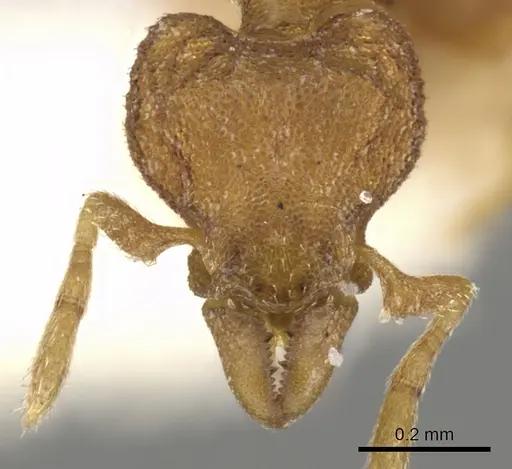
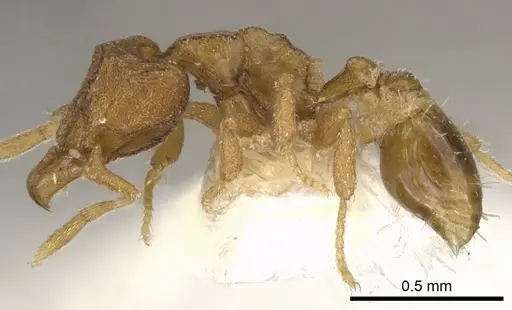
Strumigenys ocypete is a tiny predatory ant, with workers measuring 2.0 mm in total length . They are native to Borneo, Indonesia, and Malaysia, where they live in lowland rainforests, often on logs or in leaf litter . Workers have a distinctive, jagged crest across the top of the head and a flat, scale‑like hair sticking forward from the sharply angled antenna scape . Their biology is poorly known: no queens have been described, and basic data on colony size, founding, and behavior are missing. Due to their minute size and likely specialized diet, they are considered expert‑level to keep.
Quick Summary
- Difficulty: Expert
- Origin & Habitat: Indomalayan region: Borneo, Indonesia, Malaysia. Lowland rainforest, found on logs and in leaf litter [1][2].
- Colony Type: Unknown. No published data on colony structure. Based on most Strumigenys species, they may be monogyne (single queen), but this is unconfirmed.
- Size & Growth:
- Antkeeping:
- Temperature: Unknown. As a lowland tropical species, it likely needs warm, stable conditions (roughly 24-28°C), but exact requirements are not documented.
- Humidity: High humidity needed, based on rainforest leaf litter habitat, keep the nest substrate consistently moist but not waterlogged.
- Diapause: No. This is a tropical species that does not require hibernation. Keep temperatures stable year‑round.
- Nesting: Natural nesting habits unknown. In captivity, small chambers (Y‑tong or plaster) with moist substrate are commonly used for tiny Strumigenys.
- Behavior: Behavior is poorly documented. Workers are likely timid and rely on fleeing rather than aggression. Escape prevention is critical, at 2 mm they can squeeze through gaps invisible to the naked eye.
- Common Issues: escape prevention is critical, their tiny 2 mm size means they can escape through gaps invisible to the naked eye, requires very high humidity, which can lead to mold if ventilation is poor, no confirmed information on diet in captivity, likely needs live micro‑prey such as springtails, but this is unverified, wild‑caught colonies may carry parasites that are difficult to detect, because so little is known about this species, keepers must rely on careful observation and adjust care as needed
Housing and Nest Setup
Because we know almost nothing about the natural nests of Strumigenys ocypete, keepers should start with a small, dark, and humid setup. A Y‑tong (AAC) nest with very narrow chambers or a small plaster nest works well. Make sure the nest has a water reservoir to keep the substrate constantly damp but not waterlogged. The outworld can be a small container, colonies stay tiny. Escape prevention is absolutely essential: use fluon on the inner walls, seal all joints, and check for gaps smaller than 1 mm. These ants are far smaller than most antkeepers are used to.
Feeding and Diet
The natural diet of Strumigenys ocypete is unknown. Most Strumigenys species are specialized predators of springtails, so offering live springtails (Collembola) is a good starting point. Other tiny live prey such as booklice (Psocoptera), soil mites, or fruit fly larvae may also work. They are very unlikely to accept sugar water, honey, or dead insects, these are not scavengers. Feed small amounts every 2‑3 days and remove leftover prey after 24 hours to stop mold. If your colony does not seem to eat, try different kinds of micro‑prey. Because all dietary information is based on related species, you may need to experiment.
Temperature and Humidity
Although published temperature and humidity requirements do not exist, Strumigenys ocypete comes from lowland rainforest, so keepers should aim for warm and humid conditions. Keep the nest area around 24‑28°C using a heating cable on one side if needed, place the heat on top of the nest, not underneath, to avoid drying the substrate. Humidity should be very high: the nest substrate should feel damp, and condensation may appear on the walls of a sealed outworld if ventilation is insufficient. Good ventilation is still important to prevent mold, but avoid drafts that dry the nest out. A small mesh lid on the outworld combined with a sealed humid nest often works.
Colony Development
No data exists on colony development for Strumigenys ocypete. If you acquire a queen, expect a slow process. Founding is unconfirmed, it is unknown whether the queen hunts during founding or relies on stored reserves. The first workers likely appear slowly, but the timing is completely unknown. Be patient and do not disturb the queen. Once the colony is established, growth may remain slow, and mature colony size is unknown, probably under 100 workers, but this is speculation.
Behavior and Temperament
Strumigenys ocypete has not been studied in terms of behavior. Based on the subfamily, they have a functional sting and could use it in defense, but it is not medically significant to humans. Workers are likely nervous and will hide rather than attack. Their small size means they are easily overlooked, so check the nest carefully before cleaning. They probably hunt by ambush, standing still and waiting for tiny prey to come close, but no one has confirmed this for the species.
Frequently Asked Questions
Can I keep Strumigenys ocypete in a test tube?
A test tube with a water reservoir might work for a founding queen, but since nesting habits are unknown, a small Y‑tong or plaster nest with a moisture section is often easier to maintain. The key is to keep the nest dark and humid.
How long does it take for the first workers to appear?
This is unknown for Strumigenys ocypete. There are no published data on development times. Be prepared to wait several months and avoid disturbing the queen.
What do Strumigenys ocypete eat?
The natural diet is not documented, but most Strumigenys are specialized predators of springtails. Start with live springtails and try other tiny live prey such as booklice or fruit fly larvae. They are unlikely to accept sugar or dead insects.
Are Strumigenys ocypete good for beginners?
No. This is an expert‑level species. Very little is known about its care, so even experienced keepers may struggle. Beginners should start with well‑documented species like Lasius or Camponotus.
How big do Strumigenys ocypete colonies get?
Unknown. No colony size has been recorded for this species. By comparison to other Strumigenys, colonies likely stay small, but this is speculation.
Do they need hibernation?
No. This is a tropical lowland species and does not require a winter diapause. Keep them warm and stable year‑round.
Why are my Strumigenys ocypete dying?
Common problems include: escape (even tiny gaps can let them out), mold caused by too much humidity with too little ventilation, temperatures below 22°C, or a lack of suitable live prey. Because so little is known, check all conditions and try offering different live foods.
When should I move them to a formicarium?
There is no specific guidance for this species. As a general rule for tiny colonies, wait until you see at least a few workers before moving. Use a small nest to avoid stressing them.
Can I keep multiple queens together?
This is not recommended because the colony structure is unknown. Most Strumigenys are monogyne, but there is no data for S. ocypete. Combining queens is risky and may lead to fighting.
Report an Issue
The current care sheet is based fully on literature. See inconsistencies, or something that's incorrect? Please , it will be resolved after review from an admin. Contributing to the blogs tab also helps providing information, to make us be able to further improve the caresheets. Thank you for your support!
References

Dit verzorgingsblad is gelicentieerd onder CC BY-SA 4.0 .
Community-blogs
CASENT0217341
Bekijk op AntWeb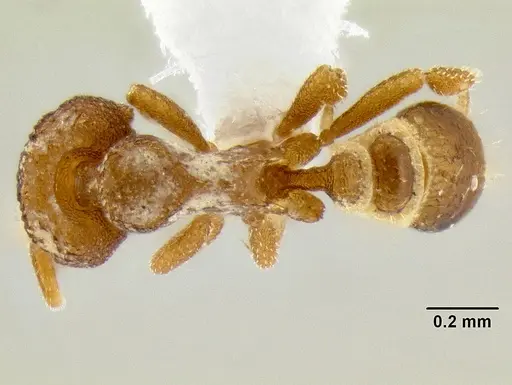
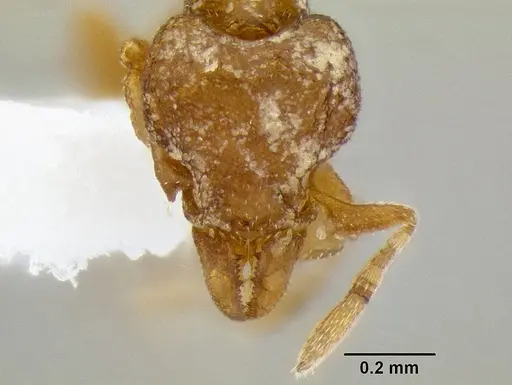
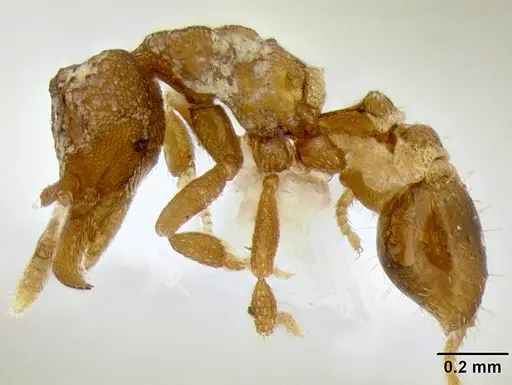
CASENT0900141
Bekijk op AntWeb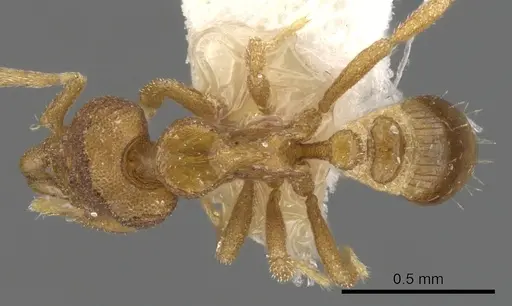
Literatuur
Verspreidingskaart laden...Producten laden...