
Strumigenys mendezi
- Wetenschappelijke naam
- Strumigenys mendezi
- Tribus
- Attini
- Subfamilie
- Myrmicinae
- Auteur
- Booher, 2021
- Verspreiding
- Gevonden in 0 landen
Introductie
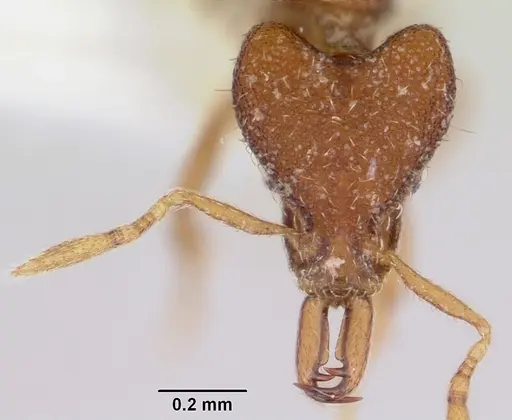
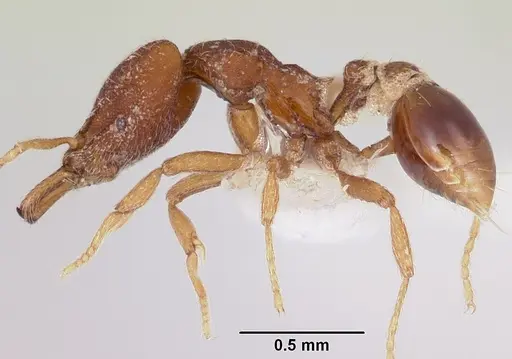
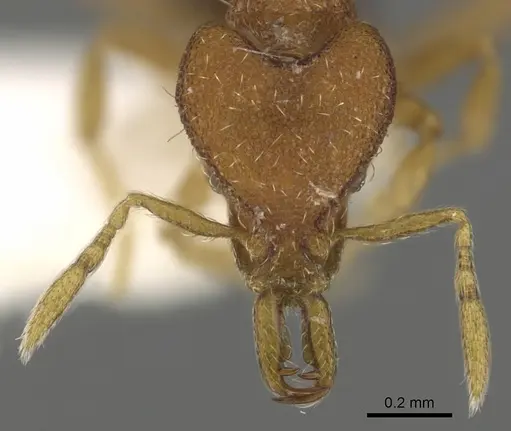
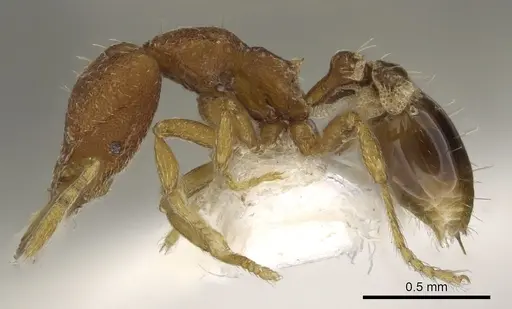
Strumigenys mendezi is a minute predatory ant species recently described in 2021,native to the mountainous regions of Arizona in the United States. Workers are extremely small - barely visible to the naked eye as more than a moving speck . These tiny ants belong to the tribe Attini (fungus-growers) but are themselves predators, not fungus-growers. They inhabit dense oak-juniper woodland at higher elevations, living freely in leaf litter rather than in association with other ant species - a key distinction from their close relative Strumigenys arizonica, which is an obligate guest in Trachymyrmex arizonensis nests .
Quick Summary
- Difficulty: Expert
- Origin & Habitat: Arizona, USA, specifically the Chiricahua Mountains and Coconino County regions. Found in dense gray oak, juniper, emory oak woodland at elevations around 1890 m, collected by sifting leaf litter under oak stumps in shaded areas [1][2].
- Colony Type: Likely monogyne (single queen colonies). Colony structure is unconfirmed but follows typical Strumigenys patterns of small colonies.
- Size & Growth:
- Queen: Unconfirmed, only workers have been described [1]
- Worker: Size data unavailable, no total length measurements available. Based on related Strumigenys species, workers are very small, likely under 2 mm total length.
- Colony: Likely small, probably under 100 workers based on typical Strumigenys colony sizes and the species' recent discovery status
- Growth: Slow, inferred from typical Strumigenys development patterns
- Development: Unknown, no direct development data exists. Based on related Strumigenys species, estimate 8-12 weeks at optimal temperature. Signal as estimated. (Temperature dependency unknown, estimate based on genus patterns.)
- Antkeeping:
- Temperature: Cool to moderate conditions. Based on their Arizona mountain habitat (elevations around 1890 m), aim for 18-22 °C. Avoid overheating, they naturally occur in shaded woodland floor conditions [1].
- Humidity: Moderate to high. These leaf-litter ants prefer consistently moist substrate. Keep the nest substrate damp but not waterlogged, with some drier areas available.
- Diapause: Likely yes, Arizona mountains experience cold winters. Expect a winter rest period around 10-15 °C for 2-3 months. More research needed on specifics [1].
- Nesting: Naturalistic setup with fine substrate works best. They live in leaf litter in nature, so a setup with small chambers, soil, and decaying wood fragments mimics their natural environment. Y-tong or plaster nests with very small chambers may work but these ants are so tiny that standard small-species setups may still be too large.
- Behavior: Extremely cryptic and slow-moving. As predators of micro-arthropods (primarily springtails), they use their trap-jaw mandibles to capture prey. They have a functional stinger (typical of Myrmicinae) but it is rarely used and not medically significant to humans. They are not aggressive toward keepers and pose no threat. Escape prevention is critical, their minute size means they can squeeze through gaps invisible to the naked eye. They are rarely seen above ground and spend most of their time in the substrate or within nest structures.
- Common Issues: escape prevention is critical, they are tiny enough to pass through standard mesh and gaps in lids., slow growth and cryptic behavior make it difficult to monitor colony health., dietary challenges, requires small live prey (springtails, micro-arthropods) which may be difficult to culture reliably., limited information, this species was only described in 2021,so care is not well-established., humidity management is tricky, too wet causes mold, too dry kills them.
Housing and Escape Prevention
Housing Strumigenys mendezi presents unique challenges due to their minute size. Workers are extremely small, barely visible to the naked eye [1]. Standard ant keeping equipment is designed for ants at least 3-4 mm, so you will need to take extra precautions. Use only the finest mesh available (at least 0.5 mm or finer) on all ventilation holes. Apply fluon or similar barriers to all edges, these tiny ants will find any microscopic gap. Test tube setups may work but ensure the cotton plug is packed tightly. A naturalistic setup with a thin layer of moist soil, leaf litter, and small hiding structures works well since they naturally live in forest floor debris [1]. Keep the setup in a shaded area, they are shade-dwelling ants from oak-juniper woodland.
Feeding and Diet
Strumigenys are specialized predators, and Strumigenys mendezi is no exception. In the wild, they prey on micro-arthropods, particularly springtails (Collembola) [2]. In captivity, your primary food source should be live springtails, these are essential and should form the bulk of their diet. Other small live prey may be accepted experimentally: tiny soil mites, booklice (psocids), and newly hatched pinhead crickets. Do not rely on sugar sources, these ants are predators, not sugar-seekers. Feed small prey items every few days, adjusting based on consumption. Remove uneaten prey to prevent mold. Because of their tiny size, even a single springtail is a significant meal for them.
Temperature and Seasonal Care
Based on their Arizona mountain habitat at elevations around 1890 m, these ants prefer cool to moderate temperatures [1]. Aim for 18-22 °C in the nest area. Avoid any overheating, they naturally occur in shaded woodland floor conditions where temperatures remain moderate. During winter, expect them to slow down significantly. Arizona mountains experience cold winters, so a diapause period at 10-15 °C for 2-3 months is likely appropriate, though this specific requirement has not been documented. Monitor colony activity, if workers become sluggish and cluster together, they may be entering winter rest. Provide a temperature gradient so they can choose their preferred zone.
Understanding This Species
Strumigenys mendezi was only described in 2021,making it one of the newest ant species in the hobby [1]. It was discovered by ant specialist Stefan Cover and formally named by Douglas Booher. The species is morphologically very similar to Strumigenys arizonica, the two can only be distinguished by the absence of flagellate pronotal humeral setae in Strumigenys mendezi [1]. Unlike Strumigenys arizonica (which lives inside Trachymyrmex arizonensis fungus gardens and eats springtails from the host's refuse chambers), Strumigenys mendezi is a freely living species with no obligate associations with other ants [1][2]. This means you do not need a host ant colony, they can live independently. However, because the species is so newly described, established care protocols do not exist. Be prepared to experiment and document your observations carefully.
Frequently Asked Questions
How long does it take for Strumigenys mendezi to produce first workers?
The exact development timeline is unknown, this species was only described in 2021 and no captive breeding data exists. Based on related Strumigenys species, expect 8-12 weeks from egg to worker at optimal temperature (around 20 °C). Be patient, these are slow-growing ants even by Strumigenys standards.
What do Strumigenys mendezi ants eat?
They are specialized predators. Their primary food should be live springtails (Collembola), which they hunt using their trap-jaw mandibles. Other tiny live prey may be accepted experimentally, but do not rely on sugar water or honey, these are not sugar-feeding ants.
Can I keep Strumigenys mendezi in a test tube?
Test tubes can work but require extra precautions. The main concern is their extremely small size, workers are barely visible to the naked eye [1]. You must use tightly packed cotton and apply fluon barriers to prevent escapes. A naturalistic setup with moist soil and leaf litter may be more suitable since they naturally live in forest floor debris.
Are Strumigenys mendezi good for beginners?
No, this is an expert-level species. They were only described in 2021,so established care protocols do not exist. Their minute size makes escape prevention extremely difficult, and they require a constant supply of live springtails. Only experienced antkeepers should attempt this species.
What temperature do Strumigenys mendezi need?
Keep them cool to moderate at 18-22 °C. Based on their Arizona mountain habitat at around 1890 m elevation, they prefer conditions much cooler than most tropical ant species [1]. Avoid overheating.
How big do Strumigenys mendezi colonies get?
Colony size is not documented, but based on typical Strumigenys patterns and their recent discovery status, colonies likely remain small, probably under 100 workers. They are cryptic ants that spend most of their time hidden in substrate.
Do Strumigenys mendezi need hibernation?
Likely yes. Their native habitat in Arizona's mountains experiences cold winters. Expect a winter rest period at 10-15 °C for 2-3 months, though this specific requirement has not been directly documented.
Why are my Strumigenys mendezi escaping?
Their minute size (barely visible to the naked eye) makes escape prevention critical [1]. Standard ant keeping equipment has gaps too large for them. Use the finest mesh available (0.5 mm or finer), apply fluon to all edges and lid seams, and check for any microscopic gaps. Even a tiny crack is an escape route for these ants.
Is Strumigenys mendezi a parasite?
No. While their close relative Strumigenys arizonica is an obligate guest in Trachymyrmex arizonensis nests, Strumigenys mendezi is a freely living species with no obligate associations with other ants [1][2]. They live independently in leaf litter.
Report an Issue
The current care sheet is based fully on literature. See inconsistencies, or something that's incorrect? Please , it will be resolved after review from an admin. Contributing to the blogs tab also helps providing information, to make us be able to further improve the caresheets. Thank you for your support!
References

Dit verzorgingsblad is gelicentieerd onder CC BY-SA 4.0 .
Community-blogs
CASENT0102674
Bekijk op AntWeb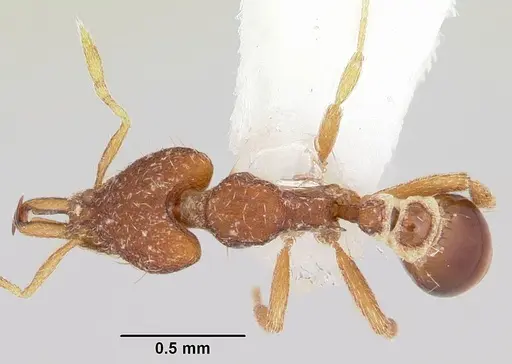
CASENT0900884
Bekijk op AntWeb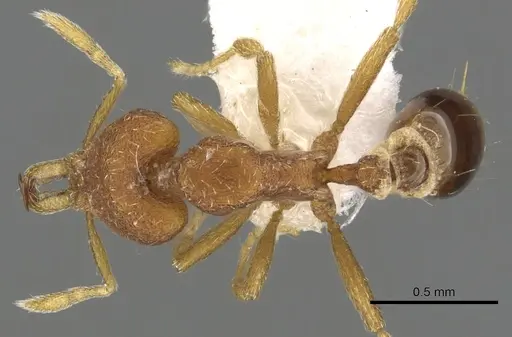
Literatuur
Verspreidingskaart laden...Producten laden...